
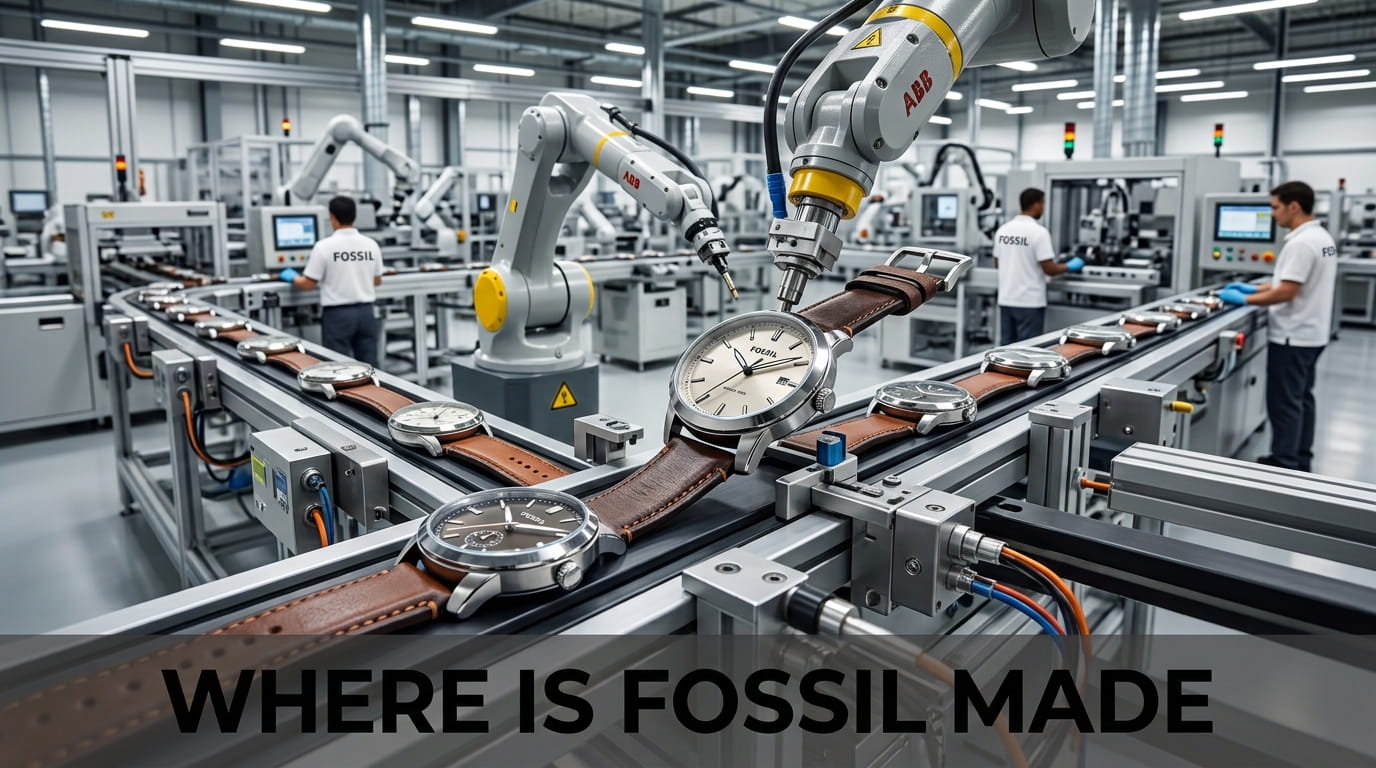
Fossil is one of those brands that feels American down to its bones.
The name alone conjures up Texas, denim jackets, and retro leather watch straps.
But a name and a headquarters address do not tell you where a product actually gets built.
Fossil has been through a wild few years, including a real bankruptcy filing in 2025.
That makes the question of where its watches come from even more relevant right now.
This article walks through the company’s founding, its ownership, and exactly where its watches are assembled today.
So let’s get started.
Table of Contents
Where Is Fossil Made?
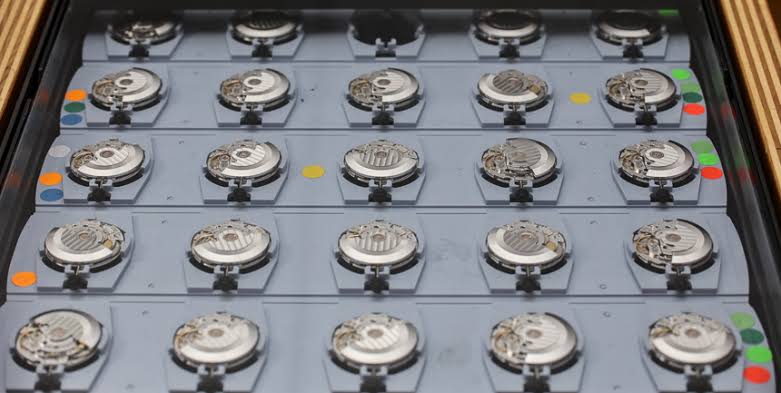
Fossil watches are designed at the company’s headquarters in Richardson, Texas, but they are manufactured almost entirely overseas.
You can see the brand’s own description of its business on its official site at fossil.com.
The bulk of Fossil’s fashion watches are assembled in southern China, particularly in factories in Guangdong province and Hong Kong.
That has been true since close to the beginning, since Fossil has relied on Chinese manufacturing partners since it was founded in 1984.
Some production also happens in India, where partner factories handle a portion of the lineup.
Higher end pieces are a different story.
Fossil’s Swiss made lines, most notably Zodiac and Michele Watch, are produced in Switzerland rather than Asia.
So the honest answer is that Fossil is a company that designs in Texas and builds nearly everywhere else, with China doing the heaviest lifting.
Who Owns Fossil?
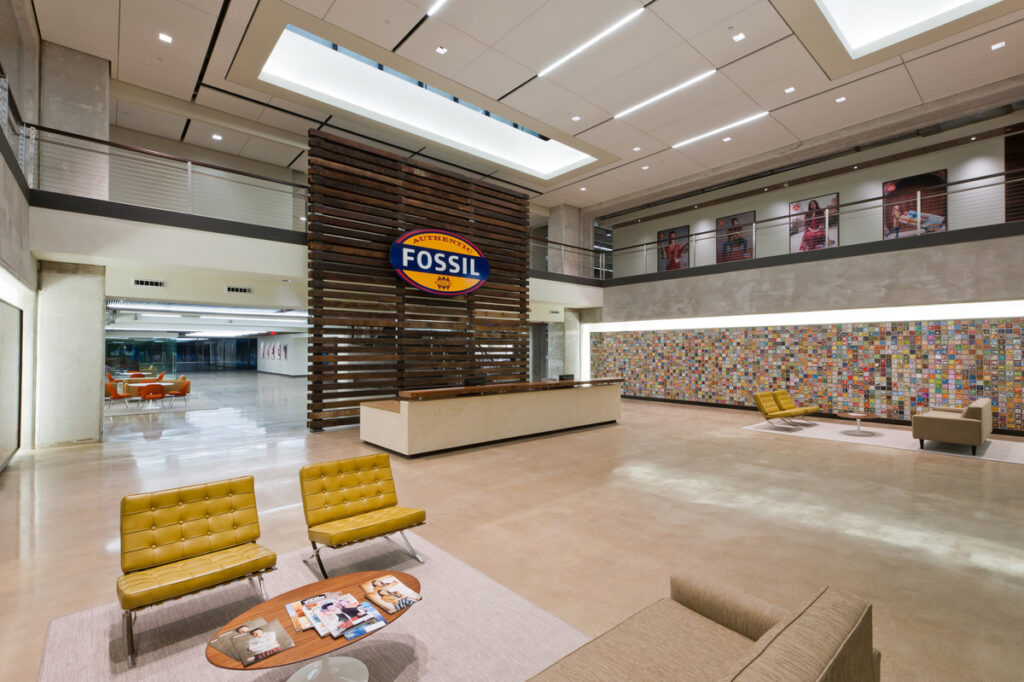
Fossil is owned by its shareholders as a publicly traded company.
It trades on the Nasdaq exchange under the ticker symbol FOSL.
That is different from being controlled by one wealthy founder or a private equity firm.
It also means the company answers to public investors, which matters given the financial turmoil described later in this article.
Fossil Group also owns or licenses a portfolio of other watch and accessory brands, including Skagen, Michele Watch, and Zodiac, alongside licensed lines for fashion houses.
Where Did Fossil Come From?
Fossil began in 1984, founded by a young entrepreneur named Tom Kartsotis.
Kartsotis had dropped out of Texas A&M and was living in Dallas when he started the company, originally under the name Overseas Products.
His older brother Kosta Kartsotis, who worked in merchandising for a Dallas department store chain, encouraged him to get into the watch business.
The brand’s early identity leaned hard on nostalgia, with retro designs inspired by advertising from the 1930s, 1940s, and 1950s.
That vintage aesthetic, paired with affordable pricing, helped Fossil grow quickly through the late 1980s and into the 1990s.
Decades later, the company still calls Richardson, Texas home, even though very little of what it sells is physically produced there.
How Fossil’s Manufacturing Actually Works
Fossil does not own its own factories in the way a company like an automaker might.
Instead, it works through partner manufacturers, contracting out production to facilities that specialize in watch assembly.
Production takes place across Fossil’s partner factories in China, India, Hong Kong, and Switzerland, according to industry reporting on the brand’s supply chain.
This is standard practice across the fashion watch industry, where design, movement sourcing, and final assembly can all happen in different countries.
Components like quartz movements are frequently sourced from established movement makers rather than built in house.
The result is a genuinely global supply chain wrapped around a brand identity that still reads as distinctly American.
Does Fossil Make Anything In The USA?
Fossil does not market its mainline watches as Made in USA, and there is no evidence that its everyday fashion watches are assembled domestically.
The company’s American identity is really about its origin story, its headquarters, and its design language rather than its factory floors.
This is a common pattern among heritage American brands that were founded decades ago and gradually shifted production abroad as the watch industry globalized.
Shoppers looking specifically for a Made in USA watch would need to look toward niche American watchmakers rather than a mass market brand like Fossil.
Fossil vs Timex: Who Makes Each?
Timex is a useful comparison because it is another storied American watch brand with a very different manufacturing footprint.
Timex was founded in 1854 and built its reputation on affordable, rugged, reliable timepieces.
Like Fossil, Timex stopped manufacturing in the United States years ago, shifting production to the Philippines, China, and India after ceasing domestic production in 2001.
Its main assembly hub is in Cebu, Philippines, while China handles many of its digital and fashion focused models.
Interestingly, Timex has dipped a toe back into domestic production with a small collection called American Documents, first released in 2019 and still sold today.
Fossil has not made a similar move, so on the Made in USA question, Timex currently has a slight edge through that one specialty line, even though both brands remain overwhelmingly Asian made overall.
What Is Next For Fossil?
The last year has been a rough one for Fossil, and it is worth understanding why.
The company’s sales fell sharply, dropping from about 1.7 billion dollars in 2022 to roughly 1.1 billion dollars in 2024, while its net loss grew to around 106 million dollars in 2024.
Competition from smartwatches, changing consumer habits since the pandemic, and rising tariffs on imported goods all contributed to the decline.
In October 2025, Fossil filed a restructuring application in the High Court of England and Wales, followed by a Chapter 15 petition in the United States Bankruptcy Court for the Southern District of Texas.
The US court granted recognition of the restructuring plan in November 2025, which included refinancing a 150 million dollar credit facility with JPMorgan Chase and a 150 million dollar bond with Bank of New York Mellon, plus additional funding to keep operations running.
As part of the shakeup, Fossil closed stores through early 2026, ending one recent quarter with 193 locations worldwide, down from 220 the year before, though by December 2025 its stock had also seen a sharp rally as investors bet on a turnaround.
None of this changes where the watches are physically made, but it does suggest Fossil’s overseas manufacturing model will likely continue as the company works to stabilize its finances in 2026.
For more brand supply chain breakdowns like this one, see our guides on Seiko Watches and Bulova Watches.
Frequently Asked Questions About Where Fossil Is Made
Is Fossil an American company?
Yes, Fossil is headquartered in Richardson, Texas, and was founded there in 1984.
Its corporate structure, design teams, and public stock listing are all based in the United States.
However, being an American company is different from manufacturing products domestically, and Fossil’s actual watch production happens almost entirely overseas.
Are Fossil watches made in China?
Most of them, yes.
The majority of Fossil’s fashion watches are assembled in factories in southern China, particularly in Guangdong province and Hong Kong, a relationship that dates back to the company’s founding in 1984.
Some production is also spread across India, with Switzerland reserved for the brand’s higher end Zodiac and Michele Watch lines.
Is Fossil going out of business?
Not necessarily, though the company has been through serious financial distress.
Fossil filed for Chapter 15 bankruptcy recognition in the United States in late 2025 after a restructuring process in the United Kingdom, closing dozens of stores in the process.
By December 2025, its stock had rallied sharply, suggesting investors saw a path toward stabilization, though the situation remained fluid heading into 2026.
Does Fossil make anything in the United States?
There is no clear evidence that Fossil manufactures its mainline watches domestically.
The brand’s American identity comes from its headquarters, founders, and design heritage rather than factory locations.
Shoppers specifically seeking domestically produced watches would generally need to look at smaller, specialty American watchmakers instead.

I am Jack Neel, a mechanical engineer, researcher, and writer. I created this website to share my knowledge about different brands and products with you. I research the manufacturers behind the brands and provide you with the information you need to make smart buying decisions.