
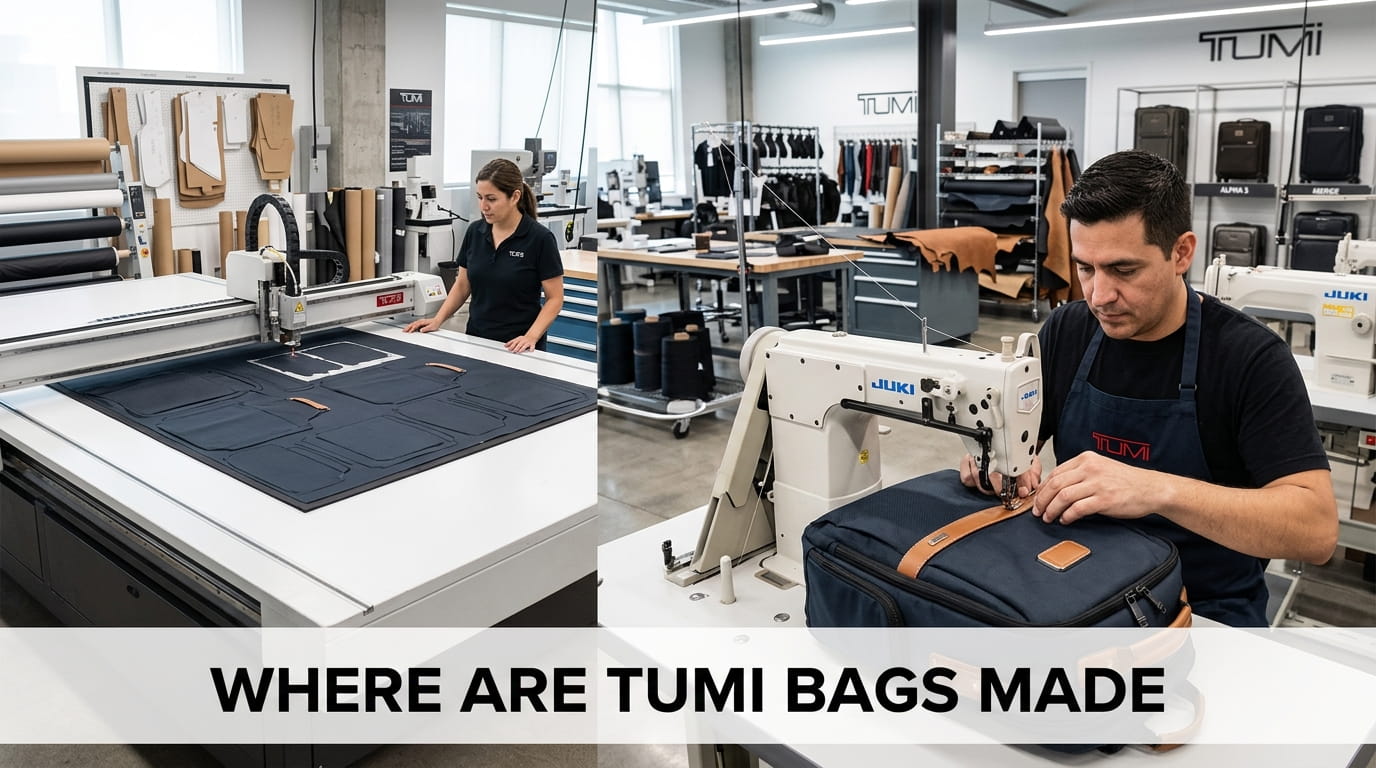
Tumi luggage shows up in first class cabins and airport lounges around the world.
The brand has a reputation for being tough, expensive, and quietly prestigious.
People who buy Tumi often assume they are paying for premium craftsmanship from a small workshop somewhere.
The real story is bigger and more corporate than that.
Tumi is now part of one of the largest luggage companies on the planet.
Understanding who owns Tumi, and where its bags actually get built, changes how you see that price tag.
So let’s get started.
Table of Contents
Where Are Tumi Bags Made?
Tumi bags are manufactured across several countries in Asia and the Caribbean rather than in a single home factory.
You can browse the brand’s current lineup on its official site at tumi.com.
China and Thailand serve as hubs for hard shell luggage made from aluminum and polycarbonate, along with precision hardware components.
Vietnam is another major production base, a country where Samsonite, Osprey, and dozens of other global luggage brands also manufacture.
The Dominican Republic plays a distinct role, handling the heavy duty assembly of Tumi’s soft sided ballistic nylon bags for the American market.
Tumi appears to choose these locations based on specific industrial capabilities rather than chasing the lowest possible labor cost.
So a Tumi hard case and a Tumi ballistic nylon briefcase may come from entirely different countries, even though both carry the same logo.
Who Owns Tumi?
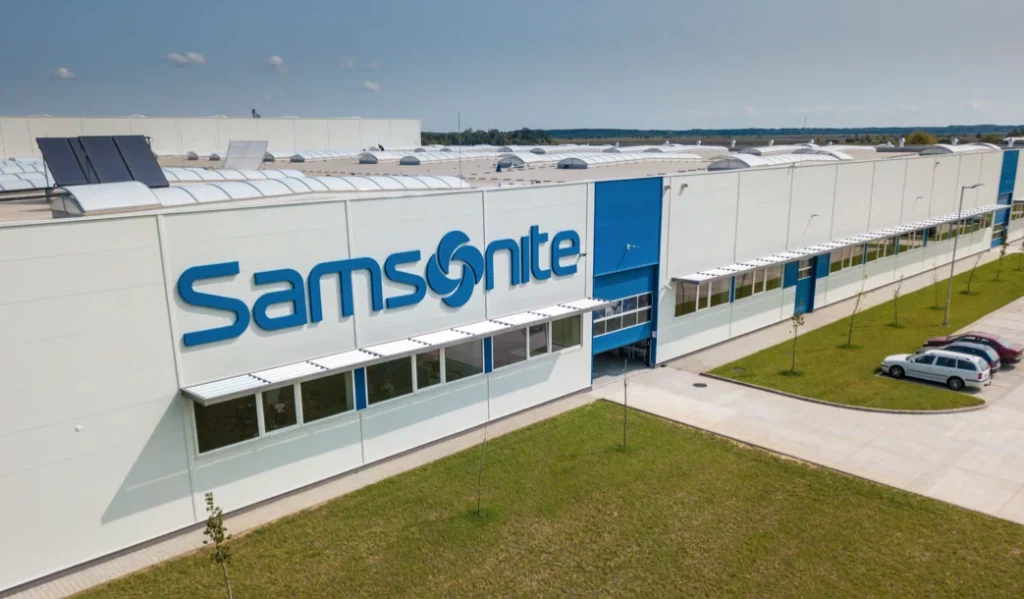
Tumi is owned by Samsonite, the world’s largest luggage company.
Samsonite completed its acquisition of Tumi on August 1, 2016, in a deal worth about 1.8 billion dollars.
Tumi shareholders received 26.75 dollars per share in cash, and Tumi became an indirect wholly owned subsidiary of Samsonite.
At the time, it was the largest acquisition Samsonite had made since its own public offering in 2011.
That means Tumi now sits alongside American Tourister and Samsonite’s other travel brands under one large corporate parent.
Where Did Tumi Come From?
Tumi’s story starts far from any factory floor.
Founder Charlie Clifford launched the company in 1975 after finishing a stint with the Peace Corps in Peru.
He started small, working with a partner to import leather bags from Colombia on a total investment of around 10,000 dollars.
The name Tumi comes from a ceremonial Peruvian knife, a nod to Clifford’s time in South America.
From that modest beginning, the brand grew into a globally recognized name in business travel gear, eventually going public before its acquisition by Samsonite in 2016.
How Tumi’s Global Supply Chain Works
Tumi does not rely on one flagship factory the way some smaller heritage brands do.
Instead, it runs a network of manufacturing partners spread across multiple countries, each chosen for a specific specialty.
Hard shell cases require precision molding and metalwork, which is why China and Thailand handle much of that category.
Soft sided bags built from ballistic nylon require different sewing and assembly skills, which is part of why the Dominican Republic handles a large share of that work for the US market.
This kind of specialized, multi country sourcing is now standard across the luggage industry, not unique to Tumi.
Is Tumi Made In The USA?
No, Tumi does not manufacture its luggage in the United States.
The brand’s origins and headquarters are American, and its design and engineering work happens domestically, but the physical production takes place overseas in Asia and the Caribbean.
This is a common gap in the luggage industry between brand identity and factory location, and Tumi does not appear to make any Made in USA claims about its core product lines.
Shoppers who want an American made bag would need to look toward smaller specialty luggage makers rather than a major global brand like Tumi.
Tumi vs Away: Who Makes Each?
Away is a useful comparison because it represents the newer, direct to consumer wave of luggage brands that emerged in the 2010s.
Away manufactures its luggage in China, leaning heavily on design and online pricing rather than the multi country sourcing model Tumi uses.
Tumi, by contrast, spreads production across China, Vietnam, Thailand, and the Dominican Republic, giving it a more diversified manufacturing footprint.
Both brands share China as a common manufacturing base, particularly for hard shell suitcases.
The practical difference for shoppers is that Tumi sits at a noticeably higher price point and leans on decades of brand heritage, while Away built its business more recently around simpler pricing and marketing.
What Is Next For Tumi?
Tumi continues to operate as a growth brand inside the much larger Samsonite portfolio.
The company has kept expanding its collections, including newer lines built with more sustainable materials and recycled components.
Samsonite has also continued using Tumi’s strength in business travel gear, including co branded partnerships with airlines that offer special pricing to frequent flyers.
Given how central Asian manufacturing has become to Tumi’s cost structure, shifts in tariffs or trade policy affecting China and Vietnam could influence pricing or sourcing decisions in the years ahead.
For now, there is no public indication that Tumi plans to bring meaningful production back to the United States.
For more brand supply chain breakdowns like this one, see our guides on Hydro Flask and Coach Handbags.
Frequently Asked Questions About Where Tumi Is Made
Are Tumi bags made in China?
Some of them, yes.
China is one of Tumi’s primary manufacturing hubs, particularly for hard shell luggage made from aluminum and polycarbonate.
However, not all Tumi products come from China, since the brand also relies heavily on Vietnam, Thailand, and the Dominican Republic depending on the product type.
Does Samsonite own Tumi?
Yes, Samsonite has owned Tumi since completing its acquisition on August 1, 2016.
The deal was valued at about 1.8 billion dollars, and Tumi now operates as an indirect wholly owned subsidiary of Samsonite.
It remains a distinct brand with its own identity, but its corporate ownership sits under the much larger Samsonite umbrella.
Is Tumi a luxury brand?
Tumi is generally positioned as a premium or aspirational travel brand rather than a true ultra luxury label.
Its pricing sits well above mass market luggage, and it has built a strong reputation among business travelers.
That premium positioning comes from design, durability, and brand heritage rather than the products being handmade in a single boutique workshop.
Why does Tumi manufacture in so many different countries?
Tumi spreads production across multiple countries because different product categories require different manufacturing skills.
Hard shell cases need precision molding capabilities found in places like China and Thailand, while soft sided ballistic nylon bags require different assembly expertise, much of which happens in the Dominican Republic.
This specialization allows Tumi to match each product type with a factory network suited to build it well.

I am Jack Neel, a mechanical engineer, researcher, and writer. I created this website to share my knowledge about different brands and products with you. I research the manufacturers behind the brands and provide you with the information you need to make smart buying decisions.