
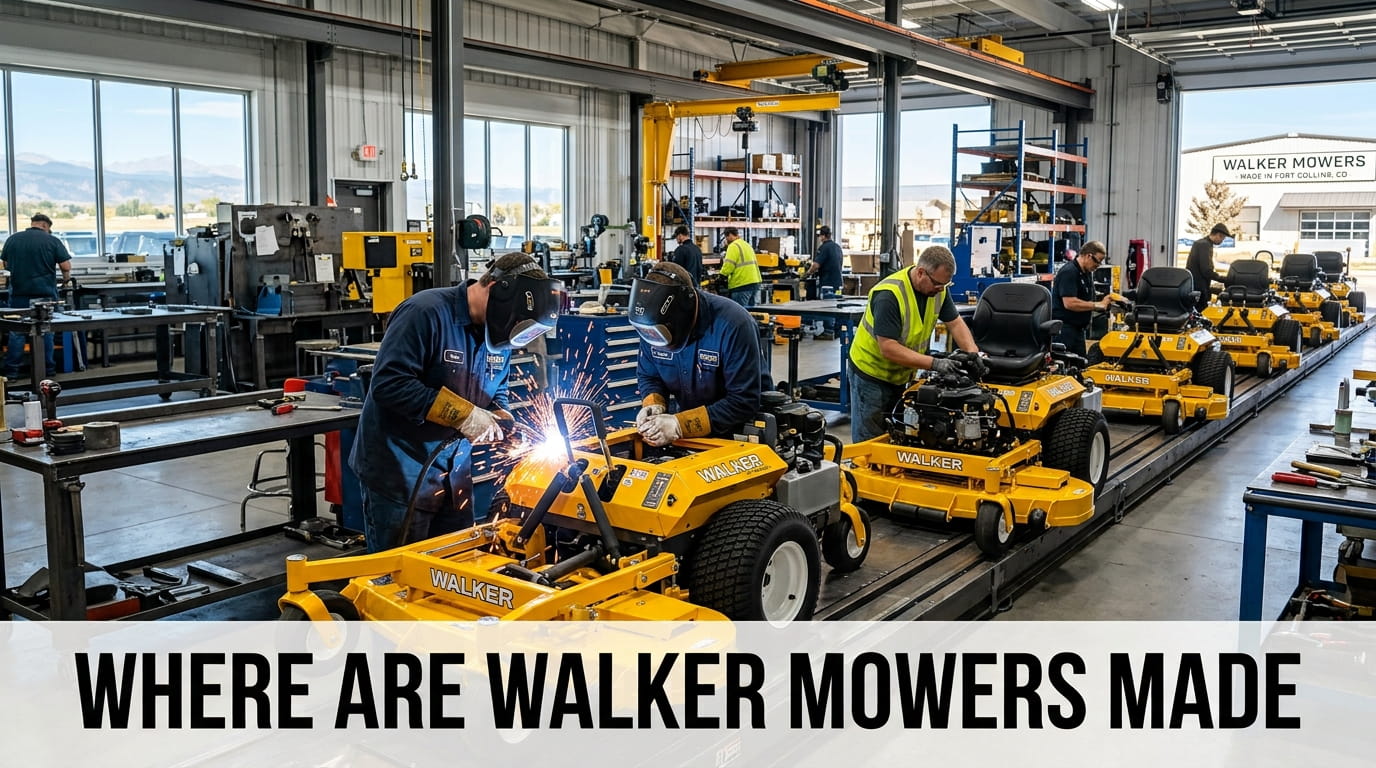
Walker Mowers holds a near cult reputation among professional landscapers who value cut quality and collection performance above raw acreage speed. The brand is instantly recognisable by its front mounted deck layout.
Walker Manufacturing Company is an independent family owned business, now in its third generation of Walker family leadership, based just outside Fort Collins, Colorado.
So where are Walker mowers actually made and are they worth the premium in 2026? This guide covers the family, the Colorado factory, how much is truly American made and honest owner feedback. Read this first.
Table of Contents
Who Owns Walker Mowers
Walker Mowers is owned by the Walker family and has no outside investors, no bankers and no public shareholders.
Bob Walker served as president and stated plainly that the company does its own product development and has no plans to sell or go public.
Leadership has since passed to the third generation, with Ted Walker on engineering and Ryan Walker on business operations, a transition covered by Lawn and Landscape.
Where Are Walker Mowers Made
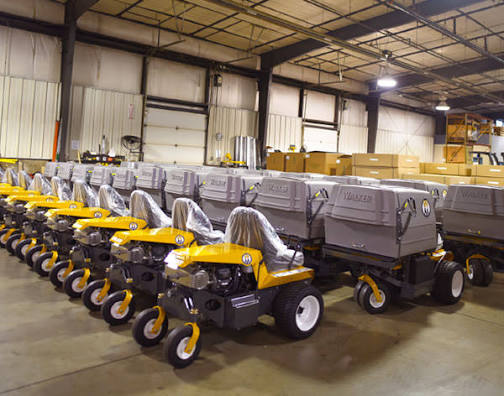
Walker mowers are made in a single factory just outside Fort Collins, Colorado, where the company builds every machine it sells.
According to Walker Manufacturing, the plant covers 216,000 square feet, employs around 200 people, and the company prefers to insource rather than outsource its production work.
The industry directory listing at Green Industry Pros confirms the Fort Collins address and notes the mowers are distributed into 28 other countries.
A Look At Walker Mowers History
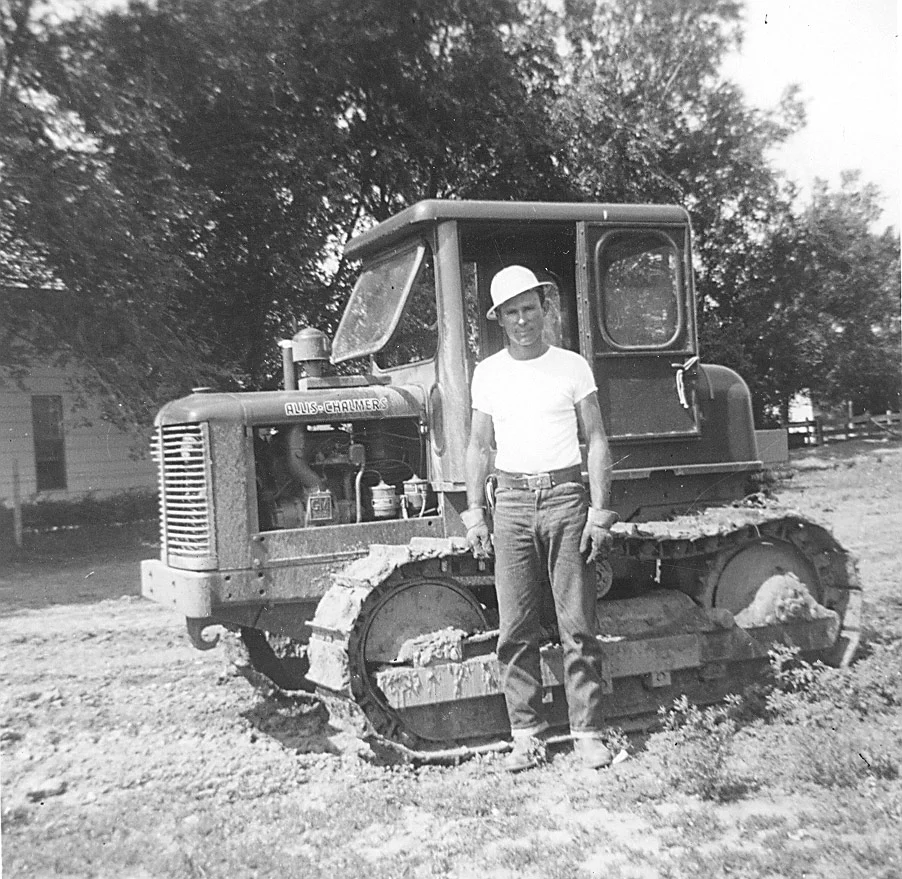
The story begins in 1954 when Max Walker moved from farming into manufacturing golf cars, a venture that went bankrupt in 1969.
The company restarted making cab coolers in 1972, moved to Colorado in 1974, and produced its first lawnmower in 1977 after Bob and Dean Walker joined the business.
Walker took ten years of making mowers before turning a profit on them, which explains a great deal about how patiently the company still operates.
Walker Mowers And Made In USA Considerations
Walker is one of the strongest American manufacturing stories in the mower industry, and the company is deliberate about keeping it that way.
A high percentage of the materials and components used to build a Walker mower are of United States origin, and the company insources work that most competitors would farm out.
Some components are still bought in, notably engines from Kawasaki and other suppliers, which is universal across the industry. Our Exmark mowers guide covers how a larger competitor handles the same sourcing question.
Walker Mowers Warranty And Customer Support
Walker sells exclusively through independent distributors and dealers rather than big box retail, which shapes the entire ownership experience.
The company works with 49 independent distributors worldwide and around 1,200 dealers, so parts and service access is generally strong in covered territories.
Warranty terms vary by model and by commercial or residential use, and the dealer network handles claims directly rather than routing everything through a corporate call centre.
Walker Compared To Other Mower Brands
Walker is a different machine from a conventional zero turn, since the front mounted deck lets the operator see the cut and trim precisely around obstacles.
Against Exmark and Scag, Walker is slower on wide open acreage but far better at collection, cut quality and detailed trimming work on maintained properties.
Against Toro and other large manufacturers, Walker is much smaller and more specialised, and it competes on build quality rather than price. Our Toro mowers guide shows the contrast in scale.
Walker holds around two percent of national annual mower sales, which tells you it is a specialist tool rather than a volume commodity machine.
Is Walker Mower Really Good
Owner sentiment on Walker mowers is among the most positive in the entire outdoor power equipment market, and it comes from working professionals.
Cut quality is the dominant compliment, with landscapers describing the finish as noticeably better than conventional zero turns and worth the slower ground speed on quality focused accounts.
The grass collection system draws equal praise, since the Walker catcher genuinely picks up clippings and leaves rather than blowing them across the lawn.
Serviceability is the third theme, with the tilt open body giving direct access to the engine and drivetrain, which owners say saves real time on maintenance.
The main criticisms are price and speed, since a Walker costs considerably more than a comparable conventional zero turn and covers less ground per hour on open properties.
The honest verdict for 2026 is that Walker is genuinely excellent for detailed residential and commercial maintenance work, but it is the wrong tool for large acreage mowing, and buyers on price alone will not see the value.
Walker Mowers Frequently Asked Questions
Where Are Walker Mowers Made
Walker mowers are made in a 216,000 square foot factory just outside Fort Collins, Colorado, where the company builds every machine.
Who Owns Walker Mowers
Walker Manufacturing is an independent family owned company now run by the third generation of the Walker family with no outside investors.
Are Walker Mowers Made In The USA
Yes, Walker mowers are built in Colorado and a high percentage of the materials and components used are of United States origin.
Are Walker Mowers Worth The Money
Walker is worth it in 2026 for landscapers who need superior cut quality and grass collection, but not for large open acreage mowing.

I am Jack Neel, a mechanical engineer, researcher, and writer. I created this website to share my knowledge about different brands and products with you. I research the manufacturers behind the brands and provide you with the information you need to make smart buying decisions.