
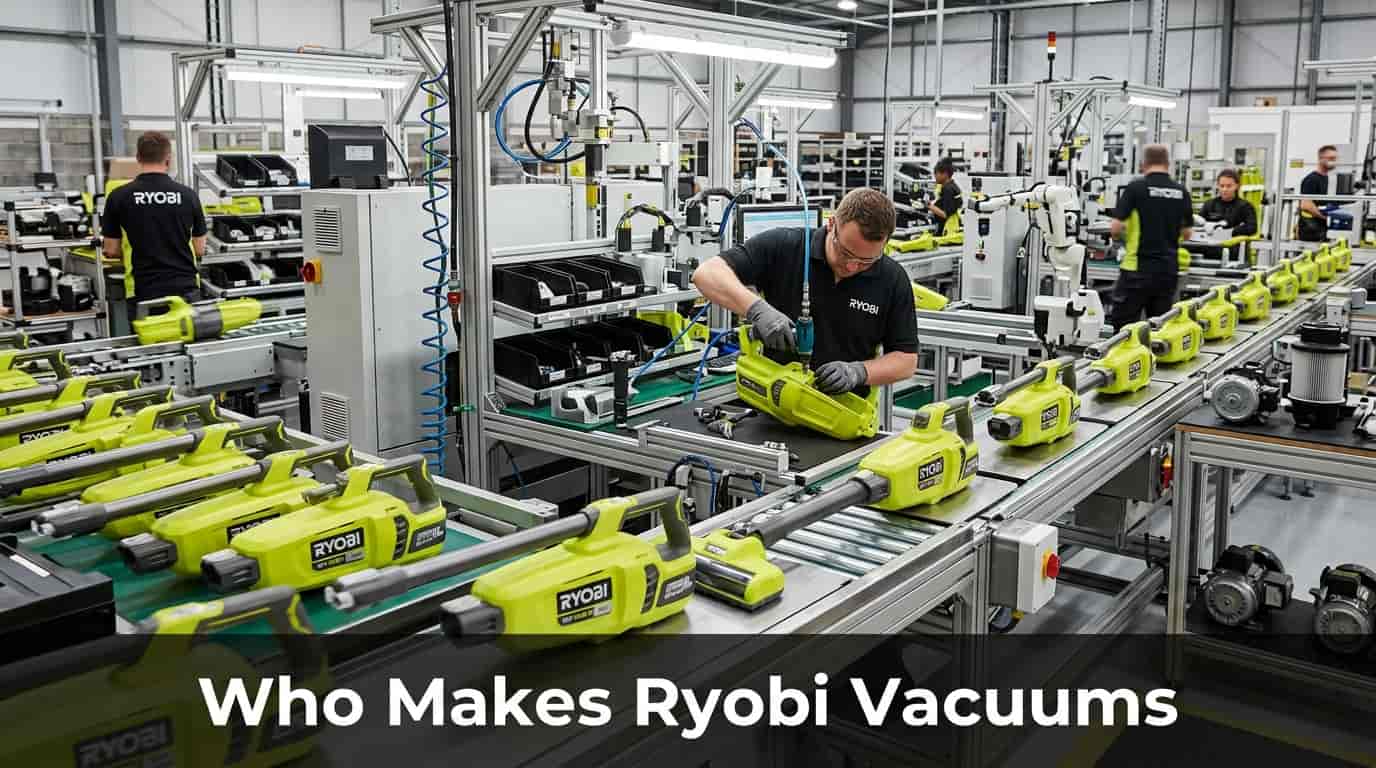
Ryobi vacuums are made by Techtronic Industries, commonly known as TTI, a Hong Kong based company that licenses the Ryobi name for power tools and outdoor equipment worldwide.
The Ryobi trademark itself is owned by Ryobi Limited of Japan, but TTI holds the exclusive license to design, manufacture, and sell Ryobi branded tools and vacuums across most of the world.
TTI is one of the largest power tool companies globally and also owns Milwaukee Tool, giving it a huge footprint across both professional and consumer cleaning and tool products.
So how does one Hong Kong based company end up controlling such a wide range of familiar tool and vacuum brands?
This guide will explore how TTI licenses and builds Ryobi vacuums, where they are manufactured, how the lineup compares to competitors, and what buyers should know about warranty support in 2026.
So let’s get started.
Table of Contents
The Company Behind Ryobi Vacuums

Techtronic Industries is headquartered in Hong Kong and holds an exclusive worldwide license from Ryobi Limited of Japan to produce power tools, outdoor equipment, and shop vacuums under the Ryobi name.
TTI acquired the Ryobi tool license around the year 2000, building it into one of its largest brand divisions alongside Milwaukee Tool, which it owns outright rather than under license.
TTI is a publicly traded company and reports billions of dollars in annual revenue across its full brand portfolio, which also includes Hoover, Oreck, and Vax through a separate floor care division.
Background on TTI corporate structure and its brand portfolio is documented on Wikipedia.
History Of The Ryobi Vacuum Business
Ryobi built its reputation primarily as a power tool brand, and vacuums entered the lineup as an extension of its cordless battery ecosystem rather than as a standalone product category.
This approach lets Ryobi vacuum owners use the same battery packs across drills, saws, and vacuums, a strategy that has become common across the broader cordless tool industry.
TTI reports billions of dollars in annual global revenue, giving it substantial purchasing power over component suppliers and factories across its entire vacuum and tool lineup.
Where Are Ryobi Vacuums Made

Ryobi vacuums are manufactured through TTI production facilities, which are predominantly based in China, consistent with the broader manufacturing pattern across TTI entire tool and vacuum portfolio.
Design and engineering work happens across TTI global offices, while assembly is concentrated in its Chinese factory network to keep costs competitive.
Independent reviews comparing Ryobi cordless wet and dry models are covered by trade press outlets that test tool brand vacuums.
Ryobi Vacuum Product Lineup
The Ryobi lineup includes wet and dry shop vacuums for garages and job sites, along with cordless stick vacuums built on the same eighteen volt and forty volt battery platforms used across its tool lineup.
Several models are marketed specifically for quick cleanup tasks rather than whole home carpet cleaning, positioning Ryobi closer to a tool brand extension than a dedicated vacuum company.
Several Ryobi shop vacuums also include blower functionality, letting the same unit clear leaves and debris outdoors in addition to standard indoor cleanup tasks.
Ryobi Vacuums Vs Milwaukee Vacuums
Ryobi and Milwaukee vacuums are both owned or licensed by TTI, but they target different customers within the same parent company.
Milwaukee is positioned as the professional tradesperson brand with a higher price point, while Ryobi is aimed at homeowners and DIY users looking for more affordable tools and vacuums.
Both brands share some underlying engineering resources through TTI, though the two product lines remain marketed and sold separately.
Current product lineups and specifications are listed on the official Ryobi website for shoppers comparing models.
Ryobi Vacuum Recalls And Safety History
Ryobi has not faced a major vacuum specific recall in the 2024 to 2026 window, though TTI broader tool portfolio has seen isolated recalls tied to battery or charger issues in the past.
Buyers should check the Consumer Product Safety Commission for the current recall status on any specific Ryobi model before purchasing.
Ryobi Vacuum Support And Warranty Information
Ryobi vacuums typically include a three year limited warranty, which is longer than many competing shop vacuum brands offer as standard.
Customers filing a claim generally register the product online and provide proof of purchase before a repair or replacement can be processed through TTI authorized service centers.
Battery packs used across Ryobi tools and vacuums are often covered separately, so buyers should check specific terms for the battery versus the vacuum unit itself.
Replacement filters, hoses, and battery packs are sold separately, which helps extend the usable life of an older Ryobi vacuum without a full replacement purchase.
Is Ryobi A Good Vacuum Brand
Ryobi vacuums are generally well reviewed for the price, particularly among homeowners who already own Ryobi tools and can share battery packs across devices.
Common feedback notes that Ryobi vacuums are less powerful than dedicated whole home vacuum brands, but well suited for garage, workshop, and quick cleanup tasks.
Overall, Ryobi is considered a smart value pick for buyers already inside its battery ecosystem, and shoppers wanting stronger suction may want to compare it against Dyson vacuums before deciding.
Households that already own several Ryobi power tools often find the shared battery system to be the deciding factor when choosing a vacuum over a competing standalone brand.
Frequently Asked Questions About Ryobi Vacuums
Who owns Ryobi vacuums?
Ryobi vacuums are made by Techtronic Industries, a Hong Kong based company that holds an exclusive license from Ryobi Limited of Japan to build and sell Ryobi branded products.
Is Ryobi the same company as Milwaukee Tool?
Both brands are part of the TTI portfolio, though Milwaukee is owned outright by TTI while Ryobi operates under an exclusive license from Ryobi Limited.
Are Ryobi vacuums made in China?
Yes. Ryobi vacuums are manufactured predominantly in China through TTI production network, consistent with the rest of its tool and vacuum lineup.
How long is the Ryobi vacuum warranty?
Most Ryobi vacuums include a three year limited warranty, which is longer than the standard coverage offered by many competing shop vacuum brands.

I am Jack Neel, a mechanical engineer, researcher, and writer. I created this website to share my knowledge about different brands and products with you. I research the manufacturers behind the brands and provide you with the information you need to make smart buying decisions.