
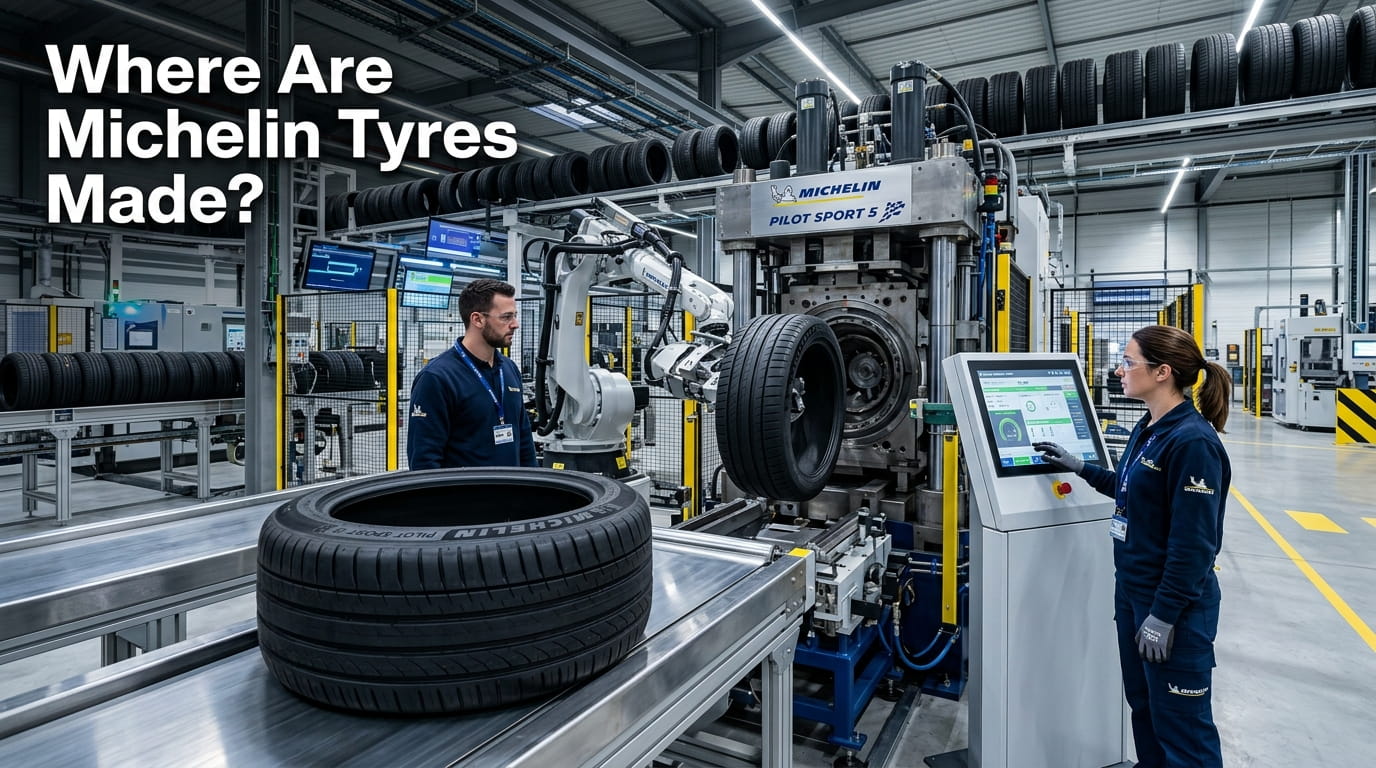
Michelin tyres are made by Compagnie Générale des Établissements Michelin, a French publicly traded company headquartered in Clermont-Ferrand, France, and the largest tyre manufacturer in the world by revenue.
Michelin is known for its Bibendum mascot (the Michelin Man), its position at the top of tyre performance rankings, its famous restaurant guide, and a reputation for engineering innovation that includes the radial tyre, the most significant advance in tyre technology of the 20th century.
Michelin tyres are produced by Michelin, a company listed on the Euronext Paris exchange and one of the largest manufacturers in France, with over 125 production facilities in 26 countries employing approximately 132,000 people worldwide.
Knowing who makes Michelin tyres helps buyers understand the company behind a brand that consistently tops performance tests and why Michelin tyres cost more than most competitors.
This article covers Michelin’s founding, manufacturing locations, US presence, tyre lineup, and how Michelin compares to Bridgestone and Goodyear.
So let’s get started.
Table of Contents
Who Owns Michelin?
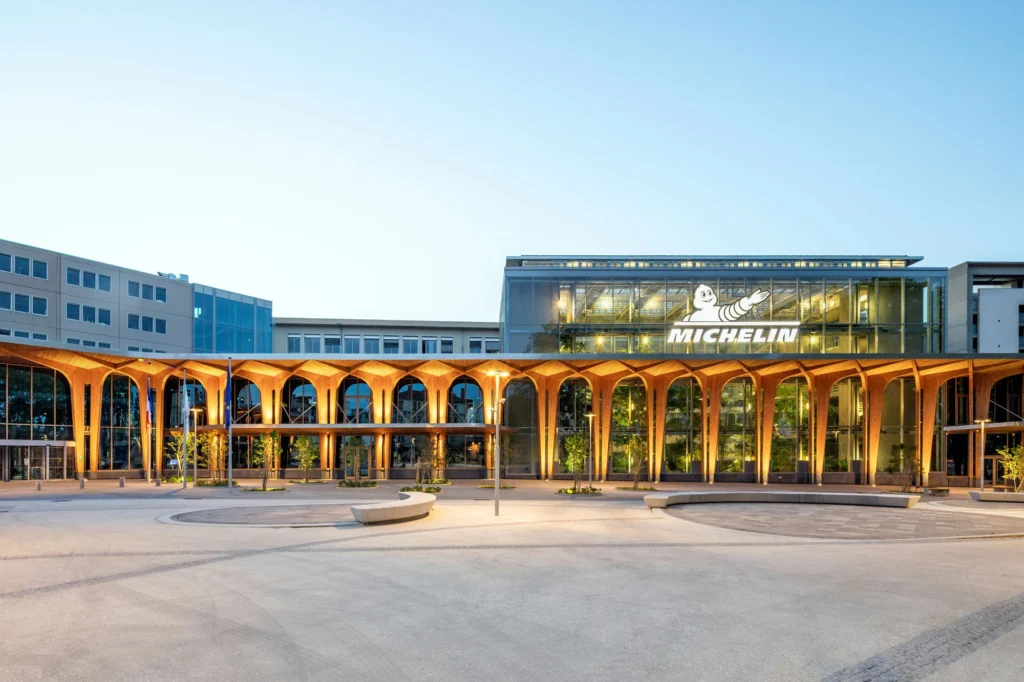
Michelin is a publicly traded French company listed on the Euronext Paris exchange. No single shareholder holds a majority stake. The Michelin family retains a significant but minority ownership position alongside large institutional investors.
Michelin operates as a partnership limited by shares, a corporate structure that gives the managing partners significant authority over the company’s long-term direction, protecting it from short-term shareholder pressure.
Michelin has no foreign parent company. It operates as an independent French corporation that has never been acquired by a rival tyre maker, unlike Cooper (Goodyear), Firestone (Bridgestone), or Kelly-Springfield (also Goodyear).
When Was Michelin Founded?
Michelin was founded in 1889 by brothers Édouard and André Michelin in Clermont-Ferrand, in the Auvergne region of France, initially producing rubber goods including bicycle tyres.
In 1895, the brothers equipped a car with pneumatic tyres for the Paris-Bordeaux-Paris race, one of the first long-distance automobile races, demonstrating the practicality of pneumatic rubber tyres for motor vehicles.
Michelin invented the radial tyre in 1946, introducing a design where the cords run perpendicular to the direction of travel rather than diagonally. The radial construction became the global standard for vehicle tyres and remains the basis of virtually every car tyre made today.
Where Are Michelin Tyres Made?
Michelin operates more than 125 manufacturing facilities across 26 countries, giving it one of the most geographically distributed production footprints in the tyre industry.
In the United States, Michelin operates a significant manufacturing presence. The company runs multiple plants in South Carolina, including Greenville, Spartanburg, and Lexington. Additional US plants are in Fort Wayne, Indiana, and Dothan, Alabama.
South Carolina is the heart of Michelin’s US operations. Michelin North America is headquartered in Greenville, South Carolina, and the company employs more than 20,000 people in the US, making it one of South Carolina’s largest private employers.
What Tyre Lines Does Michelin Offer?
Michelin’s US passenger tyre lineup covers grand touring, performance, and all-season categories. The Michelin Pilot Sport series covers ultra-high-performance summer and all-season tyres. The CrossClimate series targets all-weather performance. The Premier and Defender series serve the grand touring segment.
For trucks and SUVs, Michelin offers the Defender LTX, Agilis, and LTX M/S 2 lines. Off-road-capable buyers can choose from the BFGoodrich lineup, which is a brand owned by Michelin and positioned specifically at off-road and all-terrain buyers.
The full Michelin range is available at major tyre retailers and at Michelin’s official US website. Michelin also produces aircraft, motorcycle, bicycle, and agricultural tyres under its brand and licensed labels.
Michelin vs Bridgestone vs Goodyear: Who Makes Each?
All three are the largest tyre manufacturers in the world, each from a different country. Michelin is French. Bridgestone is Japanese, headquartered in Tokyo and the largest tyre maker globally by production volume. Goodyear is American, headquartered in Akron, Ohio.
Michelin consistently leads in performance tyre rankings and is considered the most premium of the three by consumers and automotive journalists. Bridgestone competes at the same tier with its Potenza and Turanza lines. Goodyear’s Eagle F1 series targets the same performance category at a slightly lower price.
All three have significant US manufacturing. Bridgestone makes tyres in Tennessee and elsewhere. Goodyear makes tyres in Ohio and other states. Michelin makes tyres in South Carolina and Indiana.
Frequently Asked Questions About Where Michelin Tyres Are Made
Are Michelin tyres made in the USA?
Yes. Michelin operates multiple manufacturing plants in South Carolina (Greenville, Spartanburg, Lexington), Indiana (Fort Wayne), and Alabama (Dothan). The Greenville, South Carolina campus serves as Michelin North America’s headquarters, and the company employs over 20,000 people in the US.
Is Michelin the best tyre brand?
Michelin consistently ranks at or near the top in independent tyre performance tests conducted by organizations including Consumer Reports, Auto Express, and Auto Bild. The Pilot Sport and CrossClimate lines regularly earn top marks for wet braking, dry handling, and tread life. Whether Michelin is “the best” depends on the specific vehicle application and driving needs.
Does Michelin own BFGoodrich?
Yes. Michelin acquired BFGoodrich in 1990 and operates it as a subsidiary brand targeting off-road, all-terrain, and truck tyre buyers. The BFGoodrich All-Terrain T/A KO2 is one of the most popular off-road light truck tyres in the US market.
When did Michelin invent the radial tyre?
Michelin patented the radial tyre in 1946. The design, where cords run radially from bead to bead perpendicular to the direction of travel, allowed for a more flexible sidewall and a stiffer tread area, dramatically improving grip, fuel efficiency, and tyre life compared to the bias-ply designs that preceded it.

I am Jack Neel, a mechanical engineer, researcher, and writer. I created this website to share my knowledge about different brands and products with you. I research the manufacturers behind the brands and provide you with the information you need to make smart buying decisions.