
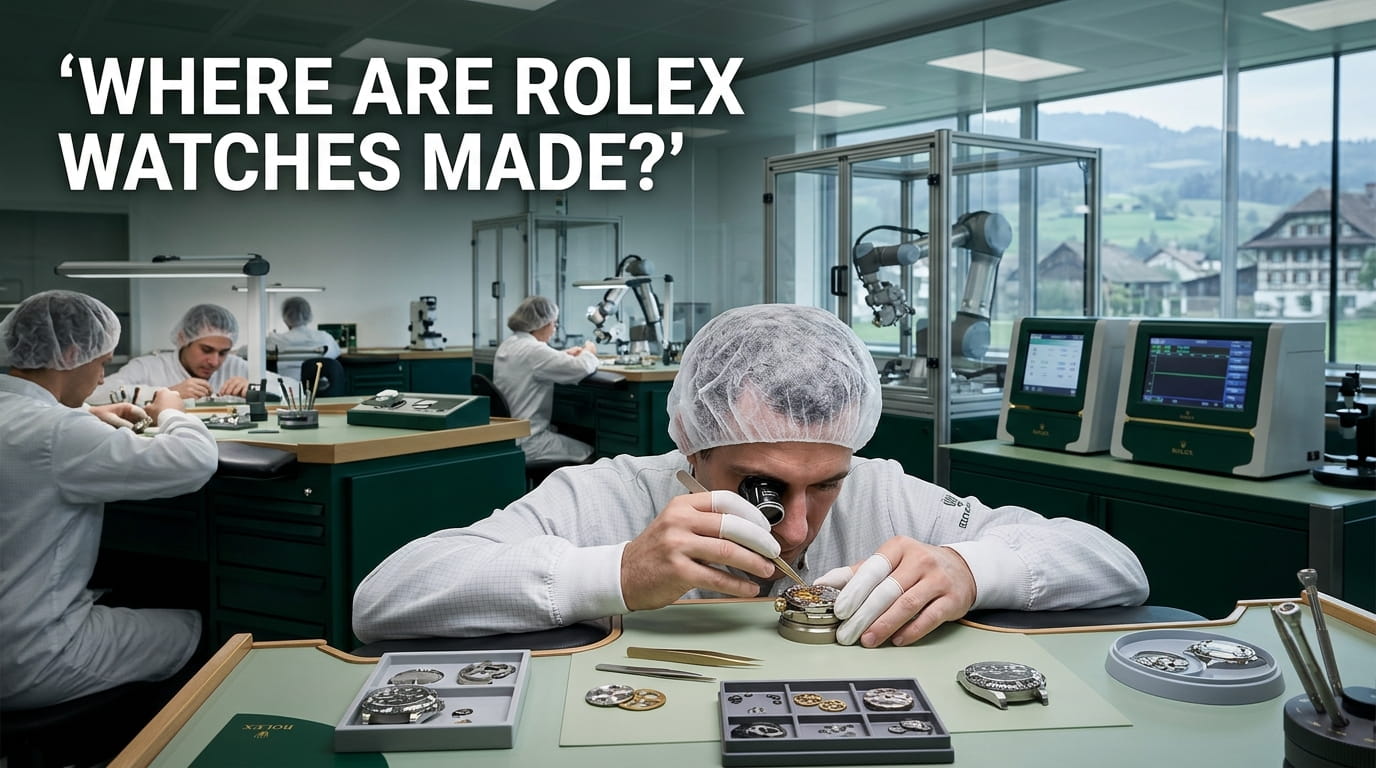
Rolex watches are made entirely in Switzerland, with manufacturing operations concentrated in Geneva and the surrounding Swiss region. The full collection is showcased at the official Rolex website.
Rolex is known for its exceptional durability, timeless design, and a level of quality control that has made it the most recognized luxury watch brand in the world.
Rolex SA is a private company owned by the Hans Wilsdorf Foundation, a non-profit entity established by the brand’s founder that has held ownership of Rolex since 1960, making Rolex one of the few major luxury brands with no shareholders and no public listing.
Knowing who makes Rolex and where it is produced helps buyers understand the brand’s Swiss heritage, its unique ownership structure, and why a Rolex holds its value better than almost any other luxury watch.
This article covers Rolex’s founding, its Swiss manufacturing facilities, the watches it produces, and how it compares to Omega, Patek Philippe, and other Swiss luxury rivals.
So let’s get started.
Table of Contents
Who Owns Rolex?
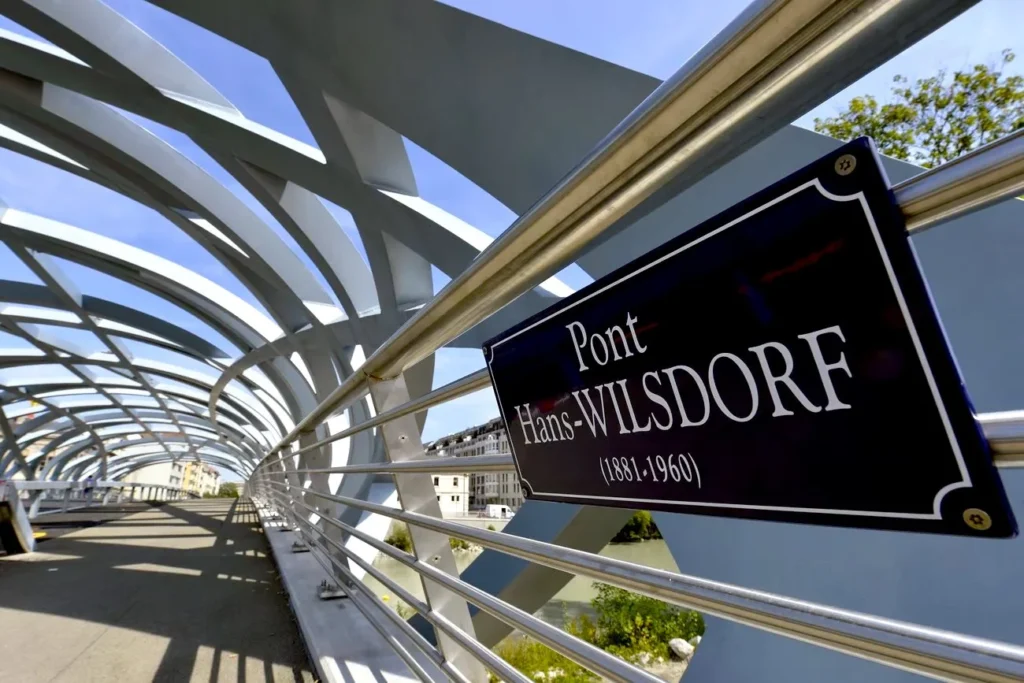
Rolex is owned by the Hans Wilsdorf Foundation, a Geneva-based private charitable foundation that holds 100% of Rolex SA.
The foundation was established by Hans Wilsdorf, the brand’s founder, in 1944 and inherited ownership of Rolex upon his death in 1960. Its charitable mission focuses on supporting humanitarian and educational causes in Switzerland.
Because Rolex has no shareholders, it reports no earnings, pays no dividends, and has no obligation to disclose financial performance. This makes it one of the most private major companies in the world.
When Was Rolex Founded?
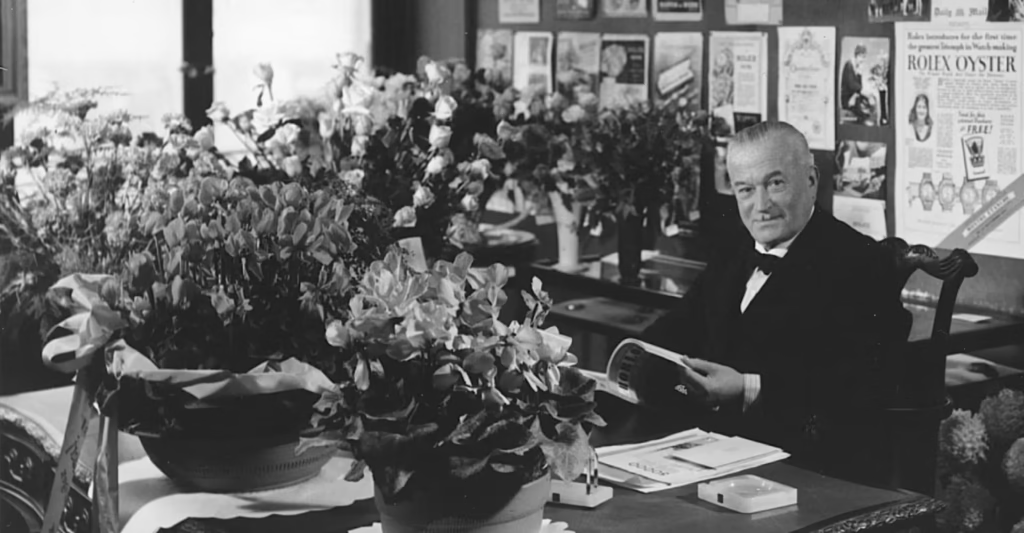
The Rolex name was registered as a trademark in 1908. The company moved its headquarters to Geneva, Switzerland in 1919 to benefit from Switzerland’s watchmaking expertise and favorable tax environment.
Rolex pioneered several watchmaking milestones, including the first waterproof watch case (the Oyster, 1926), the first self-winding mechanism with a perpetual rotor (1931), and the first watch to display two time zones simultaneously (the GMT-Master, 1954).
Where Are Rolex Watches Made?
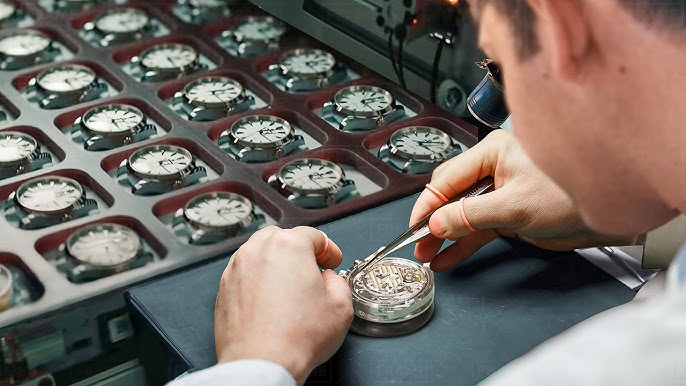
Every Rolex watch is made in Switzerland, a legal requirement to carry the Swiss Made designation, which Rolex strictly adheres to and actively promotes.
Rolex’s primary manufacturing campus is in Geneva, where movements are assembled, cases and bracelets are finished, and final quality inspection is conducted. A second major facility in Biel/Bienne produces cases and bracelets.
Rolex produces its own movements, cases, dials, hands, and bracelets in-house, making it one of the few truly vertically integrated watch manufacturers in the world. It does not outsource these components to third parties.
What Watches Does Rolex Currently Make?
Rolex produces a tightly controlled lineup of watches spread across two collections: Oyster Perpetual and Cellini.
The Oyster Perpetual family includes the Submariner, Datejust, Day-Date, Daytona, GMT-Master II, Explorer, Milgauss, Sea-Dweller, Sky-Dweller, and Yacht-Master. These are the watches most buyers associate with the Rolex name.
The Cellini collection covers Rolex’s more classical, dress watch designs. Rolex produces approximately 800,000 to one million watches per year and intentionally limits supply to maintain demand and exclusivity.
Rolex vs Omega vs Patek Philippe: Who Makes Each?
All three are Swiss luxury watchmakers but operate under very different ownership structures. Rolex is privately owned by the Hans Wilsdorf Foundation. Omega is owned by the Swatch Group, a publicly traded Swiss holding company. Patek Philippe is owned by the Stern family, who have privately held the brand since 1932.
Rolex is the most recognized brand globally and the market leader in luxury watch sales. Patek Philippe is considered the pinnacle of watchmaking prestige, with some complications taking years to produce. Omega has broad appeal through its association with the Olympic Games and NASA, having been the official watch of American astronauts since 1965.
All three manufacture their watches in Switzerland. Omega is based in Biel/Bienne. Patek Philippe is headquartered and manufactured in Geneva, the same city as Rolex’s primary campus.
Does Rolex Hold Its Value?
Rolex watches are widely regarded as one of the strongest value-holding purchases in the luxury goods market.
Popular models like the Submariner, GMT-Master II, and Daytona have consistently sold on the secondary market for prices above their retail cost, a phenomenon driven by limited supply and high demand.
The brand’s consistent quality, controlled production volumes, and strong resale demand make Rolex watches unusual among luxury goods in their ability to retain or appreciate in monetary value over time.
Frequently Asked Questions About Where Rolex Watches Are Made
Are Rolex watches made in China?
No. Every Rolex watch is manufactured in Switzerland. Rolex does not outsource manufacturing to China or any country outside Switzerland. The Swiss Made designation on every Rolex confirms this standard.
Is Rolex publicly traded?
No. Rolex SA is a private company with no public shareholders. It is owned entirely by the Hans Wilsdorf Foundation, a Geneva-based charitable organization. Rolex has no obligation to disclose financial results and does not trade on any stock exchange.
How many Rolex watches are made each year?
Rolex is estimated to produce between 800,000 and one million watches annually. The company does not officially confirm production numbers. Rolex deliberately limits production to maintain scarcity and sustain demand, which is why popular models have long waiting lists at authorized dealers.
Who founded Rolex?
Rolex was founded in 1905 in London by Hans Wilsdorf and Alfred Davis. Wilsdorf drove the company’s growth, registered the Rolex trademark in 1908, moved the business to Geneva in 1919, and founded the Hans Wilsdorf Foundation in 1944 to ensure perpetual private ownership of the brand after his death.
I am Jack Neel, a mechanical engineer, researcher, and writer. I created this website to share my knowledge about different brands and products with you. I research the manufacturers behind the brands and provide you with the information you need to make smart buying decisions.