
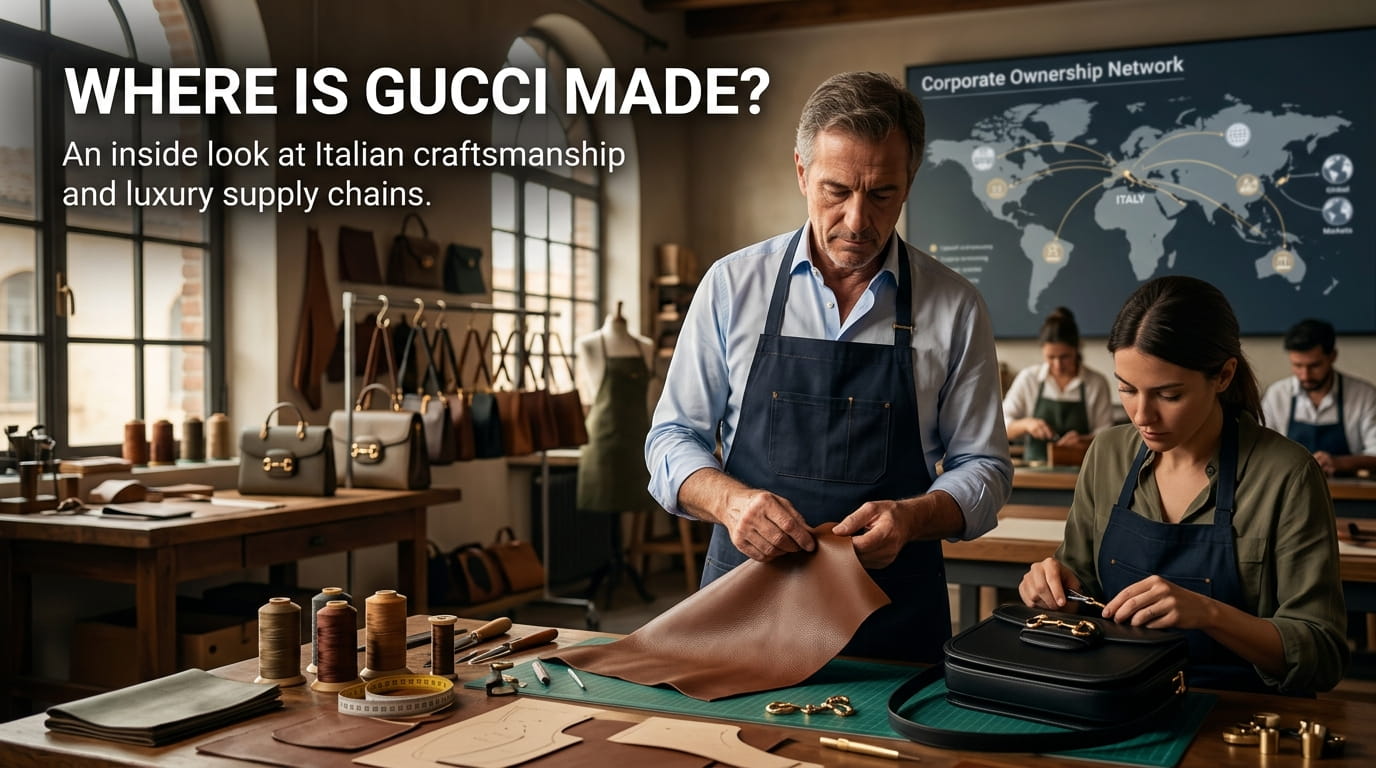
Gucci products are made by Guccio Gucci S.p.A., an Italian luxury fashion house headquartered in Florence, Italy, owned by Kering Group, the French luxury goods conglomerate.
Gucci is known for its interlocking double-G logo, its horsebit hardware, its Florence leather goods heritage, and a transformation under creative directors Tom Ford and Alessandro Michele that turned it from a heritage brand into one of the most powerful luxury names in global fashion.
Gucci is owned by Kering S.A., a French publicly traded luxury conglomerate listed on the Euronext Paris exchange under ticker KER, which also owns Yves Saint Laurent, Bottega Veneta, Balenciaga, Alexander McQueen, Brioni, and several other luxury brands.
Knowing who makes Gucci helps buyers understand the Italian craftsmanship heritage, French corporate ownership, and manufacturing model behind one of the most imitated brands in the world.
This article covers Gucci’s ownership, founding, where its products are made, its current offerings, and how Gucci compares to Louis Vuitton and Prada.
So let’s get started.
Table of Contents
Who Owns Gucci?
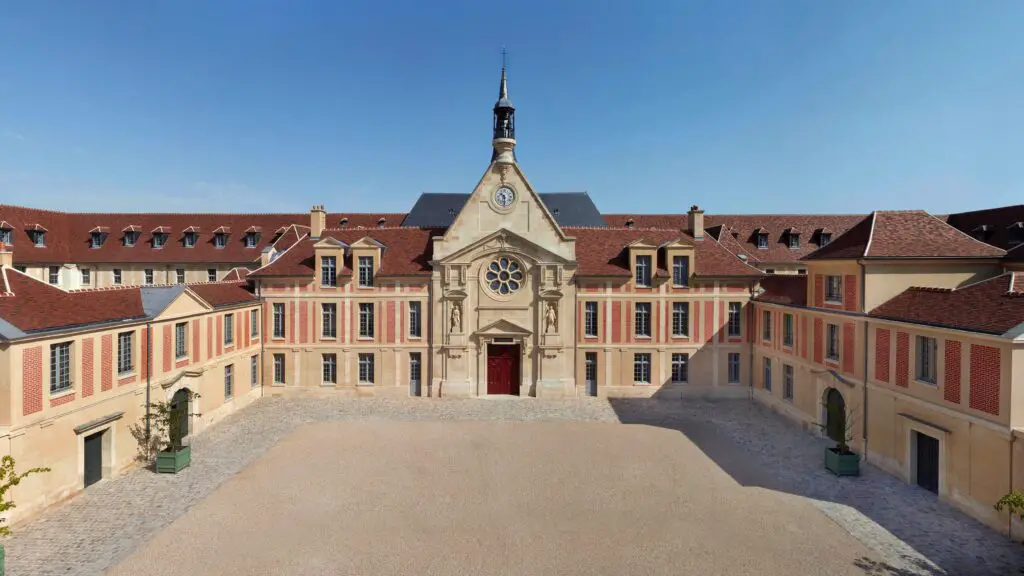
Gucci is owned by Kering S.A., a French luxury goods holding company publicly traded in Paris. Kering acquired full control of Gucci in 2004 after a lengthy corporate battle with LVMH, the rival French luxury group that had attempted a hostile acquisition.
François-Henri Pinault, the son of Kering founder François Pinault, serves as chairman and CEO of Kering. The Pinault family controls Kering through their holding company Artémis, giving them majority voting power over one of the most powerful luxury groups in the world.
Gucci is Kering’s most important brand by revenue, generating approximately €7 to €9 billion annually in recent years, which represents roughly half of Kering’s total group revenue. Gucci’s performance directly determines Kering’s overall financial results.
When Was Gucci Founded?
Gucci was founded in 1921 by Guccio Gucci in Florence, Italy. Guccio had worked as a porter at the Savoy Hotel in London and was inspired by the luxury luggage he observed wealthy guests carrying. He returned to Florence and opened a leather goods shop focused on quality luggage and equestrian accessories.
The horsebit hardware that is now one of Gucci’s most iconic design elements originated in the brand’s equestrian accessories from the 1950s. The double-G logo was introduced as a tribute to Guccio Gucci’s initials after his death in 1953.
Gucci expanded internationally in the 1960s and 1970s and opened stores in New York, London, and Paris. Family disputes in the 1980s and 1990s nearly destroyed the brand before Investcorp acquired it and brought in Tom Ford and Domenico De Sole to revive it in the 1990s.
Where Is Gucci Made?
Gucci manufactures its products primarily in Italy, maintaining the Made in Italy designation as a cornerstone of its luxury positioning. Leather goods, shoes, and accessories are produced at Gucci’s manufacturing facilities in and around Florence, Tuscany.
Gucci’s primary leather goods production facility, known as the Gucci Artisan Hub, is located in Scandicci, a suburb of Florence, where the brand employs hundreds of skilled leather artisans producing its handbags, wallets, and small leather goods.
Ready-to-wear clothing is produced at Gucci’s directly owned manufacturing facilities and through a network of carefully selected Italian partner manufacturers. The full current collection is available at Gucci’s official US website.
What Does Gucci Make?
Gucci’s product range spans handbags, shoes, ready-to-wear clothing, belts, eyewear, watches, jewelry, fragrance, and home décor. Handbags represent the largest revenue category, with iconic styles including the GG Marmont, Dionysus, Bamboo, and Horsebit families generating year-round demand.
Gucci Beauty covers a growing makeup and fragrance portfolio. The Gucci home collection includes tableware, textiles, and furniture in the brand’s distinctive aesthetic. Gucci also produces timepieces and fine jewelry at higher price points.
Licensed products including eyewear (produced by Marchon Eyewear) and some fragrance lines extend the brand’s reach, though core leather goods remain the heart of the business and the primary driver of brand equity.
Gucci vs Louis Vuitton vs Prada: Who Makes Each?
All three are Italian or French luxury fashion brands but with different ownership. Gucci is owned by Kering (French). Louis Vuitton is owned by LVMH Moët Hennessy Louis Vuitton S.E., the world’s largest luxury goods conglomerate, also French and controlled by Bernard Arnault’s family through the Christian Dior holding. Prada is owned by the Prada Group, an Italian publicly traded company controlled by the Prada and Bertelli families.
Louis Vuitton is the world’s most valuable luxury brand by brand value rankings and generates significantly more revenue than Gucci. Gucci is typically the second or third most valuable luxury fashion brand globally. Prada positions itself as more intellectually rigorous and less logo-forward than either Gucci or Louis Vuitton.
All three manufacture their products primarily in Italy, though Louis Vuitton also maintains French manufacturing for some leather goods and special items. Prada’s Miu Miu line is also manufactured in Italy.
Frequently Asked Questions About Where Gucci Is Made
Is Gucci made in Italy?
Yes. Gucci manufactures its core products, including leather handbags, shoes, and accessories, in Italy, primarily at facilities in Florence and Scandicci, Tuscany. The Made in Italy designation is a key part of Gucci’s luxury brand positioning.
Is Gucci owned by LVMH?
No. Gucci is owned by Kering, which is a separate French luxury group from LVMH. Kering and LVMH are fierce rivals in the global luxury market. LVMH owns Louis Vuitton, Dior, Fendi, Givenchy, and many other brands. Kering owns Gucci, Saint Laurent, Bottega Veneta, and Balenciaga, among others.
When did Kering buy Gucci?
Kering (then called PPR, or Pinault-Printemps-Redoute) began acquiring Gucci in 1999 and completed full ownership in 2004 after a complex corporate battle that included a poison pill defense against LVMH’s attempted hostile acquisition. The total cost of the acquisition was approximately €7 billion.
Who is the current Gucci creative director?
Sabato De Sarno became Gucci’s creative director in January 2023, succeeding Alessandro Michele who had held the role since 2015. De Sarno joined from Valentino and presented his first Gucci collection for Spring/Summer 2024. His approach marks a shift toward quieter elegance from the maximalism of the Michele era.

I am Jack Neel, a mechanical engineer, researcher, and writer. I created this website to share my knowledge about different brands and products with you. I research the manufacturers behind the brands and provide you with the information you need to make smart buying decisions.