
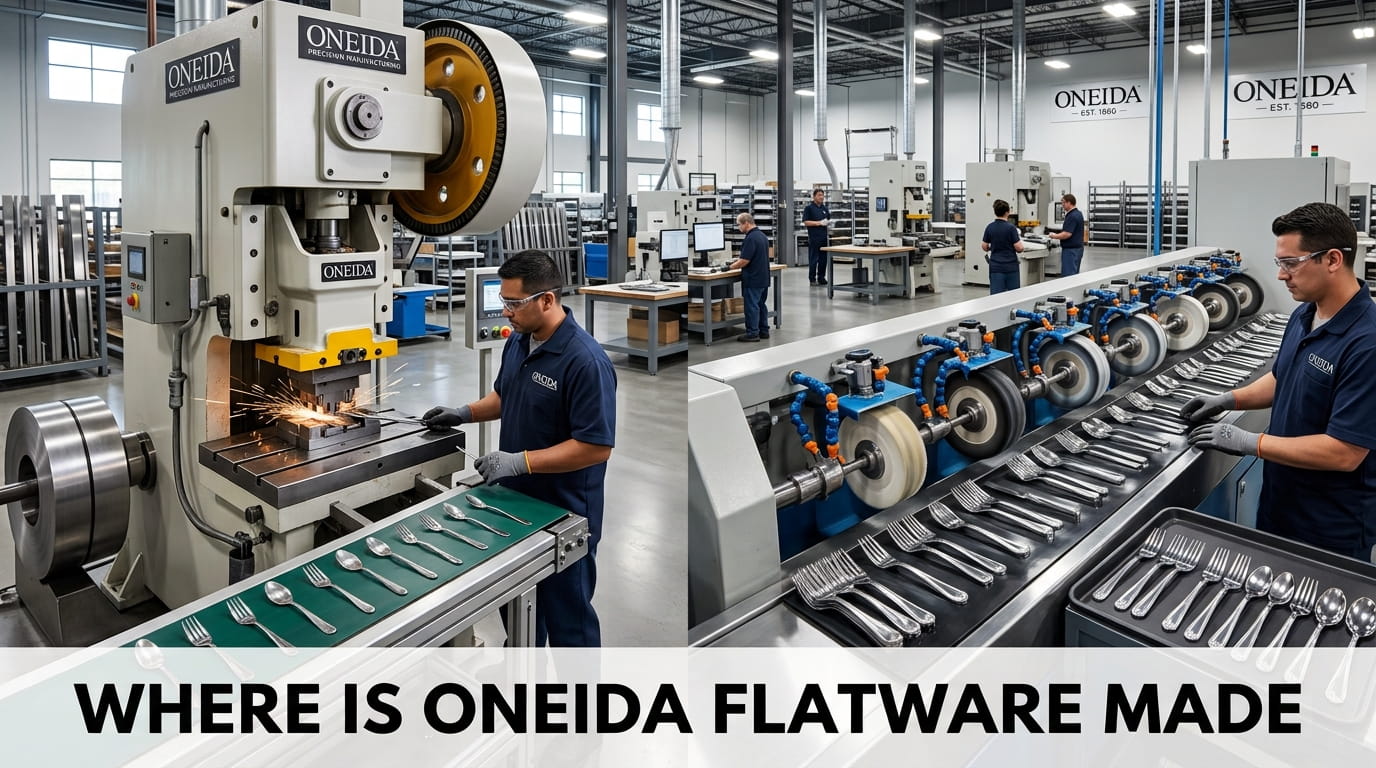
Oneida flatware is not made in the USA.
Production moved overseas after Oneida sold its historic Sherrill, New York factory in 2005, and most current Oneida flatware is manufactured in China.
Oneida is owned by Centre Lane Partners, a private equity firm that also owns Anchor Hocking, Corelle, Pyrex, and Instant Pot.
This article covers who owns Oneida today, where its flatware is actually manufactured, what happened to its original US factory, and its founding history.
So let’s get started.
Table of Contents
Who Owns Oneida?

Oneida is owned by Centre Lane Partners through The Oneida Group, which also controls Anchor Hocking.
Current collections are shown on Oneida’s official website.
Oneida merged with Anchor Hocking in 2012 under the name EveryWare Global, which later renamed itself The Oneida Group in 2017.
Centre Lane Partners, the same private equity firm behind the 2023 and 2024 restructuring of Instant Brands, now owns Oneida alongside Pyrex, Corelle, CorningWare, Instant Pot, Lenox, and Reed and Barton.
This means Oneida sits within one of the largest single ownership groups covering legacy American kitchen and tableware brands.
Where Is Oneida Flatware Made?
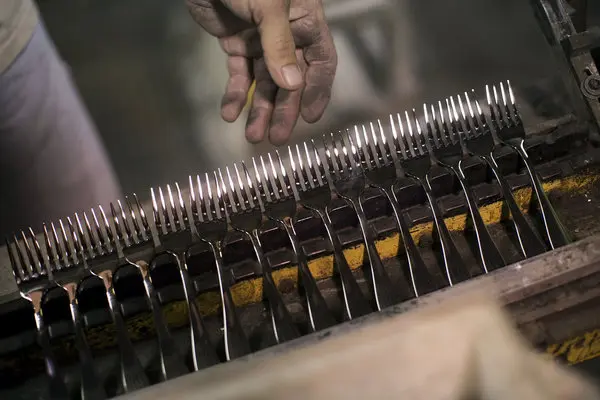
Oneida flatware is not made in the USA.
Most current Oneida products are manufactured overseas, primarily in China, following the company’s exit from domestic flatware production in 2005.
Oneida’s original factory town of Sherrill, New York was once known as the Silver City, employing as many as 2,000 workers and producing more than 3 million pieces of flatware per week at its peak.
Oneida sold off its remaining overseas factories in Mexico, China, and Italy in November 2003, then sold its Sherrill, New York manufacturing facility to former company officials in March 2005.
Since that sale, the Oneida brand name has continued as a marketing and distribution business rather than a domestic manufacturer.
What Happened to Oneida’s Original Factory?
Two former Oneida Ltd officials, Matthew Roberts and Greg Owens, purchased the Sherrill, New York factory and its tooling in March 2005 when Oneida exited domestic flatware production.
They formed a new company called Sherrill Manufacturing.
Sherrill Manufacturing now produces flatware under its own Liberty Tabletop brand in the same building where Oneida silversmiths once worked.
The company markets itself as the only remaining flatware manufacturer in the United States, and now offers around 40 flatware designs.
Sherrill Manufacturing is entirely separate from the Oneida brand itself. The current owners of Sherrill have no ownership stake in Oneida, Anchor Hocking, or Centre Lane Partners.
What Oneida Flatware Patterns Are Popular Today?
Oneida markets its current flatware around a mix of casual everyday patterns and more formal designs.
Most modern pieces are built from 18/0 stainless steel, a grade that omits nickel and offers a lower cost point than the 18/10 steel used in premium flatware lines.
The brand continues to market its patterns around its 1880 founding heritage, offering dozens of designs across casual and formal dining categories.
Because Oneida no longer manufactures domestically, some buyers who want the historical Oneida design catalog paired with current US production look to Liberty Tabletop instead.
Some Liberty Tabletop patterns, including Betsy Ross and Pearl, were developed using equipment and processes that originated with Oneida before the 2005 factory sale.
Shoppers comparing specific patterns should check the steel grade listed on the product page, since 18/10 stainless steel resists tarnishing and corrosion more effectively than 18/0.
When Was Oneida Founded?
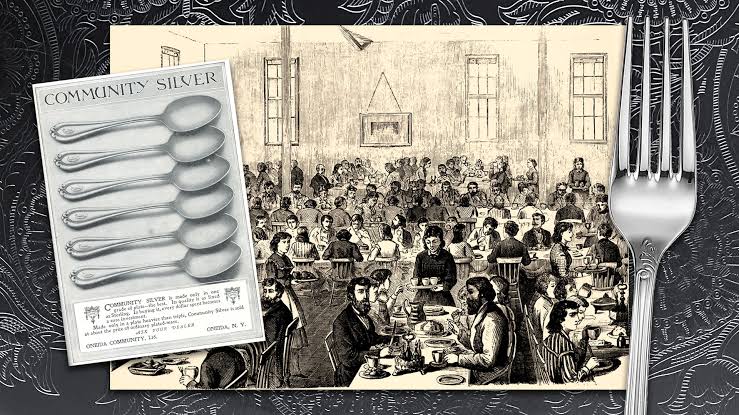
Oneida traces its origins to 1848, when John Humphrey Noyes founded a religious community known as the Oneida Community in upstate New York.
The community initially manufactured animal traps before shifting into silverware production.
The company officially entered the flatware business as Oneida Community Ltd in 1877, and by the 1980s Oneida made at least half of all flatware purchased in the United States.
Oneida introduced stainless steel flatware production in 1961, which eventually overtook its original silver plated lines.
During both World Wars, Oneida’s factories shifted production to support the war effort, manufacturing items including ammunition clips, combat knives, and surgical instruments.
Oneida vs Liberty Tabletop: Which Is Better Quality?
Reviewers who have compared current Oneida flatware against Liberty Tabletop consistently note a quality gap that traces directly back to where each brand manufactures.
Multiple flatware review sites describe imported Oneida pieces as feeling lighter and thinner than older, domestically made Oneida sets.
Some owners report rust developing on newer pieces within a year of regular use.
Liberty Tabletop, built from 18/10 stainless steel at the same Sherrill, New York facility Oneida once operated, is generally described as heavier and more substantial in hand.
Liberty Tabletop backs its construction with a 25 year warranty.
Some reviewers note that certain Liberty Tabletop patterns run shorter in handle length than older Oneida sets, so buyers used to older Oneida flatware may want to check dimensions before purchasing.
Liberty Tabletop typically costs more than mass market Oneida, with a 45 piece set often running 200 to 300 dollars depending on pattern.
Shoppers who care primarily about brand name recognition often stick with imported Oneida, while those prioritizing long term durability and domestic manufacturing tend to gravitate toward Liberty Tabletop despite the higher upfront cost.

I am Jack Neel, a mechanical engineer, researcher, and writer. I created this website to share my knowledge about different brands and products with you. I research the manufacturers behind the brands and provide you with the information you need to make smart buying decisions.