
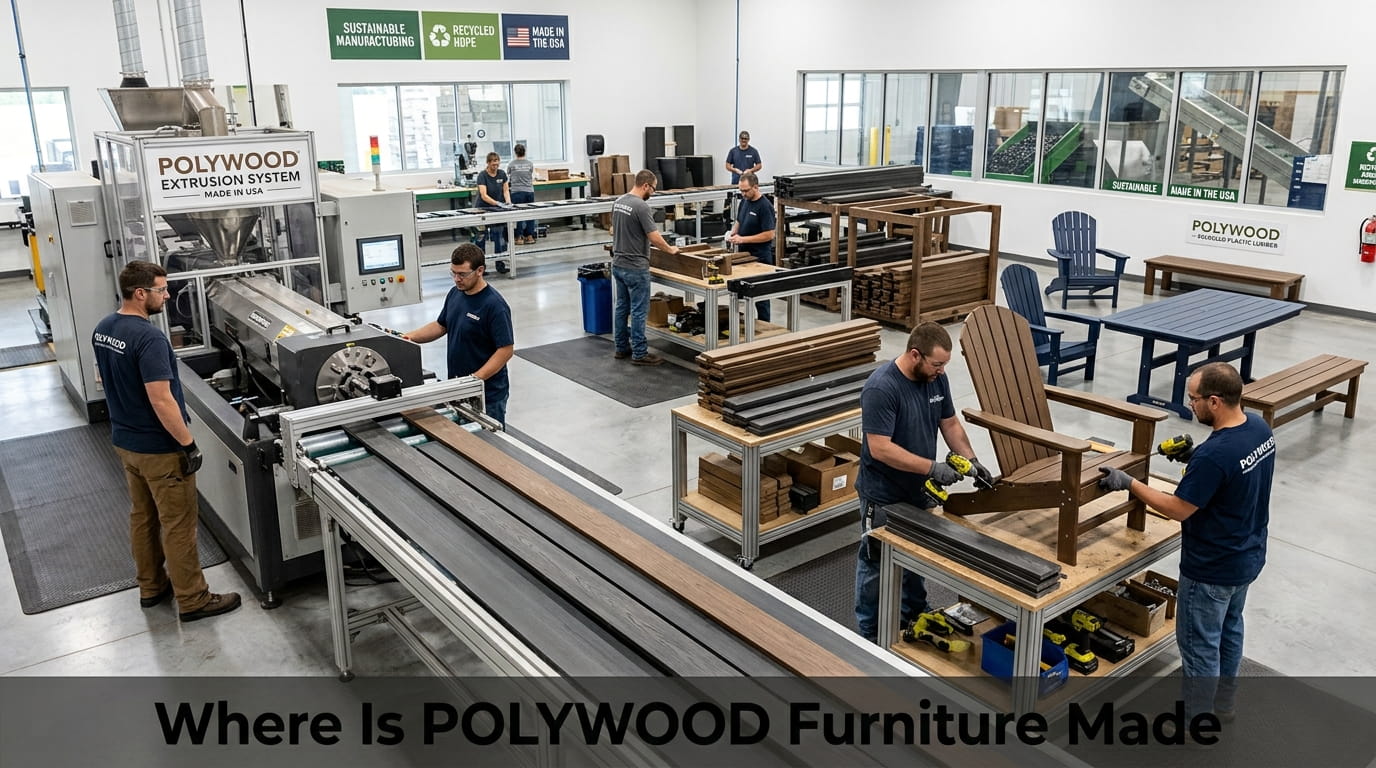
POLYWOOD furniture is made in the USA at the company’s own facilities in Syracuse, Indiana and Roxboro, North Carolina.
POLYWOOD has manufactured its recycled plastic outdoor furniture domestically since the brand was founded in 1990.
The company processes an average of 400,000 recycled plastic containers every day at its US facilities, converting milk jugs, detergent bottles, and other household plastics into the lumber used to build its furniture.
This article covers who owns POLYWOOD, where its furniture is actually manufactured, whether the quality holds up, and its founding history.
So let’s get started.
Table of Contents
Who Owns POLYWOOD?

POLYWOOD is operated by Poly-Wood Inc, a privately held company headquartered in Syracuse, Indiana.
Current collections are shown on POLYWOOD’s official website.
POLYWOOD was founded by two high school friends who started the company in a garage.
It has grown into a large scale domestic manufacturer while remaining privately held rather than being acquired by a larger furniture conglomerate.
Shoppers should note that a separate, unrelated website called polywood-furniture.com has generated significant customer complaints online.
That business is not affiliated with the genuine POLYWOOD brand, which operates exclusively through polywood.com and its authorized retail partners.
Where Is POLYWOOD Furniture Made?
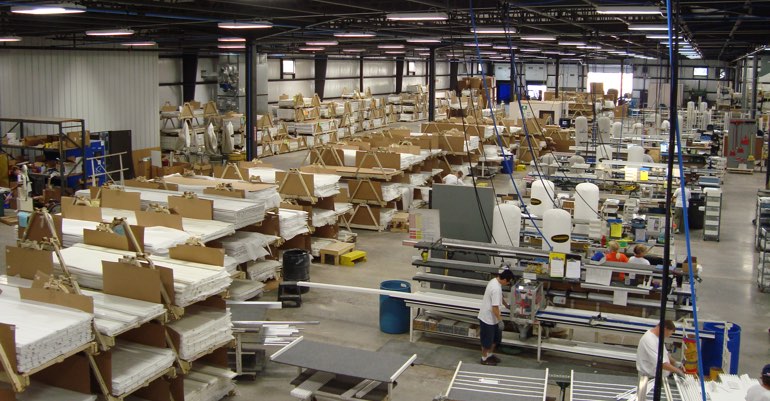
POLYWOOD furniture is manufactured entirely in the United States.
The company operates an on site recycling plant in Syracuse, Indiana, where post industrial and post consumer HDPE plastic is converted into POLYWOOD’s proprietary lumber.
That lumber is then finished into furniture at facilities in Syracuse and Roxboro, North Carolina.
POLYWOOD describes its production as a closed loop system, since roughly 99 percent of manufacturing scraps are reground and fed back into new lumber rather than discarded.
The company has continued expanding its domestic operations rather than shifting any production overseas.
Because every stage of production happens at POLYWOOD’s own US facilities, the company has a stronger claim to Made in USA status than many furniture brands that only handle final assembly domestically.
POLYWOOD vs Trex Outdoor Furniture: How Do They Compare?
Trex is best known for composite decking, but its Trex Outdoor Furniture line is actually manufactured by POLYWOOD under a licensing agreement.
This means both brands build their furniture from the same genuine POLYWOOD HDPE lumber at the same underlying facilities.
The real differences between the two come down to design direction rather than material or durability.
Trex collections, including Cape Cod, Yacht Club, and Monterey Bay, are styled to color match Trex composite decking with a sleeker, more architectural look.
POLYWOOD’s own catalog leans toward classic Adirondack styling and offers a noticeably wider range of collections and colors than the Trex branded line.
Pricing between the two brands is broadly comparable for equivalent pieces like Adirondack chairs, and both carry a 20 year residential warranty on the lumber itself.
What Colors and Collections Does POLYWOOD Offer?
POLYWOOD organizes its furniture into several collection tiers, ranging from its original Classic Adirondack line to newer designs like the PW Designer Series.
Because POLYWOOD’s HDPE lumber is colored all the way through rather than painted or stained on the surface, scratches and scuffs are far less noticeable than on traditional painted wood furniture.
The brand offers color options ranging from classic white, black, and sand tones to more vibrant choices.
Industry comparisons consistently note that POLYWOOD offers the deepest selection of colors and collections among HDPE furniture brands.
Because the furniture is solid HDPE rather than hollow or lightweight aluminum, individual pieces can weigh anywhere from 40 to 70 pounds depending on the design.
When Was POLYWOOD Founded?
POLYWOOD was founded in 1990 in Syracuse, Indiana, when two friends set out to convert plastic waste into durable outdoor furniture.
They built their first Adirondack chair from recycled milk jugs and detergent bottles.
The company was the first to manufacture outdoor furniture from recycled plastic lumber.
It launched during a period when government mandated recycling programs were expanding across the United States and creating a surplus of recyclable HDPE plastic.
POLYWOOD has continued to expand its product lineup into seven categories of outdoor furniture and accessories.
The company introduced its POLYWOOD Select collection in 2025 to mark 35 years of domestic manufacturing.
Is POLYWOOD Good Quality?
POLYWOOD’s HDPE lumber is widely praised for durability, since it does not rot, splinter, or require sanding, staining, or repainting the way traditional wood furniture does.
The company backs its furniture with a 20 year warranty on most collections, which reviewers cite as a meaningful sign of confidence in the product’s longevity.
Complaints tend to center on order fulfillment and customer service rather than the furniture material itself.
Better Business Bureau reviews describe cases of misdrilled holes, missing hardware during assembly, and disputes over warranty claims filed shortly after coverage periods expired.
Shoppers report the strongest experiences when purchasing through authorized dealers rather than encountering shipping delays on large custom orders.
Overall, the underlying material and construction of POLYWOOD furniture is considered a genuine strength of the brand.
Order accuracy and post purchase support are the areas most likely to generate frustration.
Buyers weighing POLYWOOD against imported alternatives often find the higher price justified by both the warranty length and the fully domestic supply chain, since few competitors can match production happening entirely on US soil from raw plastic to finished product.

I am Jack Neel, a mechanical engineer, researcher, and writer. I created this website to share my knowledge about different brands and products with you. I research the manufacturers behind the brands and provide you with the information you need to make smart buying decisions.