
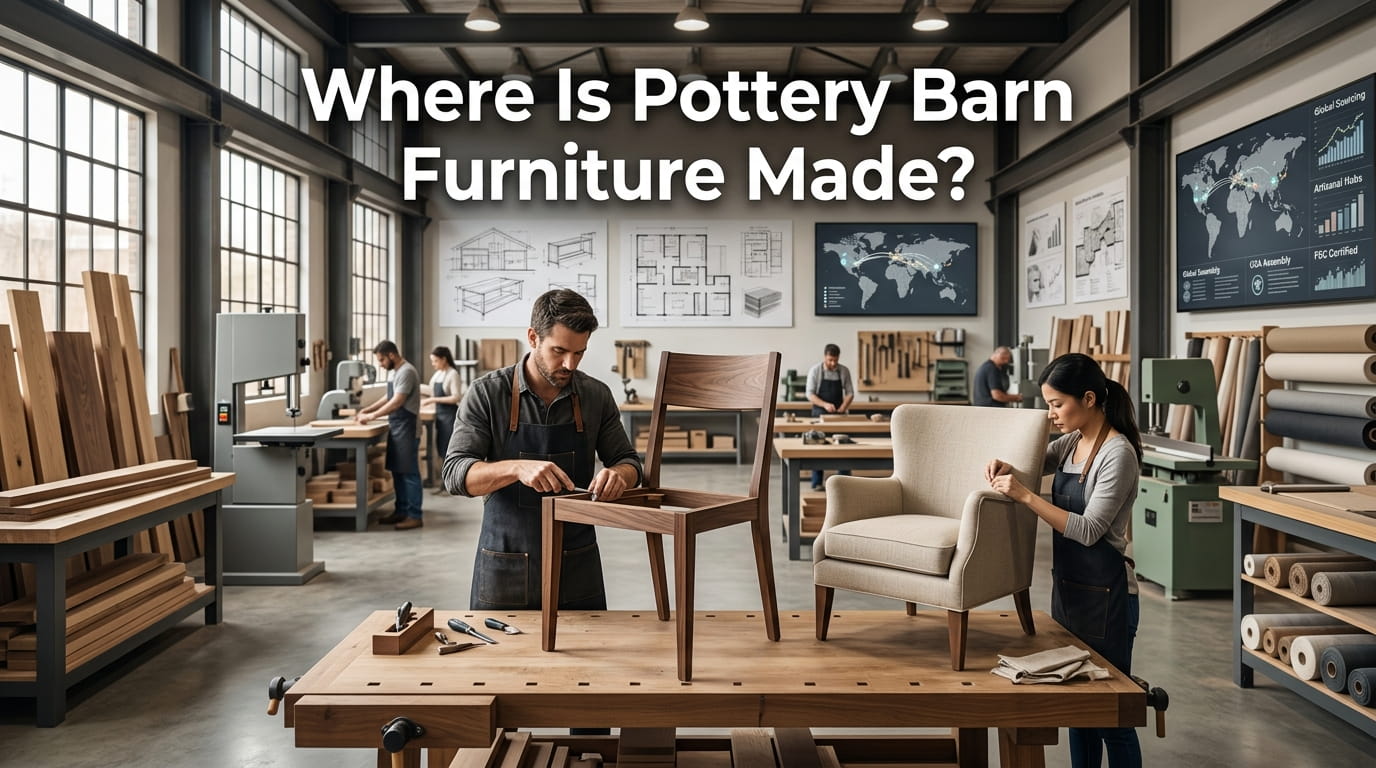
Pottery Barn furniture is sourced from manufacturers around the world, with most pieces produced in Asia, Eastern Europe, and Central America rather than the United States.
Pottery Barn is a lifestyle and home furnishings retail brand owned by Williams-Sonoma, Inc., headquartered in San Francisco, California.
Williams-Sonoma, Inc. trades on the New York Stock Exchange under the ticker WSM and also owns West Elm, Pottery Barn Kids, and Pottery Barn Teen.
How much of Pottery Barn’s furniture is actually made in America, and where do specific product categories come from?
This guide will cover Pottery Barn’s ownership, sourcing practices, product quality, and how it compares to other premium home furnishing retailers.
So let’s get started.
Table of Contents
Who Owns Pottery Barn?

Williams-Sonoma acquired the Pottery Barn brand in 1986 and has grown it into one of the most recognized home furnishings names in the United States.
The parent company also owns West Elm, Pottery Barn Kids, Pottery Barn Teen, Williams-Sonoma, and Rejuvenation.
Williams-Sonoma, Inc. trades on NYSE under the ticker WSM and operates over 600 stores globally.
Where Is Pottery Barn Furniture Made?
Some upholstered pieces assembled in the United States use domestically sourced frames and fabrics, but this represents a small portion of the overall catalog.
Williams-Sonoma has made sustainability commitments around sourcing, including responsible wood sourcing certifications on select collections.
Each product page on the Pottery Barn website lists the country of origin, allowing buyers to check sourcing before purchasing.
Is Any Pottery Barn Furniture Made in the USA?
A limited number of Pottery Barn upholstered pieces are assembled in the United States from domestically sourced components.
The brand’s “Made in USA” offerings are a small subset of the full catalog and are typically flagged on the product page.
Most case goods including dining tables, bed frames, and storage furniture are imported, primarily from Vietnam and India.
Buyers looking for fully American-made furniture will find the selection limited at Pottery Barn compared to brands like Stickley, Hancock and Moore, or Maiden Home.
Is Pottery Barn Furniture Good Quality?
Pottery Barn occupies the upper-mid-market tier, offering better quality than mass-market brands like IKEA or Wayfair-label furniture at a higher price point.
Upholstered pieces typically use kiln-dried hardwood frames and high-density foam cushioning, and many are offered in a range of fabric options.
Case goods vary in quality by collection, with some lines offering solid wood construction and others using veneer over engineered wood at lower price points.
Consumer reviews are generally positive for the brand’s styling and initial quality, with some concerns about long-term durability at the higher end of its price range.
How Does Pottery Barn Compare to West Elm?
Both Pottery Barn and West Elm are owned by Williams-Sonoma, Inc., but they target different aesthetic and age demographics.
Pottery Barn leans toward a classic, traditional American aesthetic with warm tones and timeless silhouettes.
West Elm positions itself as more modern and contemporary, targeting younger homeowners with a Scandinavian-influenced design language.
Both brands source primarily from overseas manufacturers, and both offer some US-assembled upholstered options within their catalogs.
Where Can You Buy Pottery Barn Furniture?
Pottery Barn sells through its own retail stores, its website at potterybarn.com, and through select design trade programs.
The brand operates hundreds of store locations across the United States and also ships internationally.
In-store design associates are available to assist with room planning and furniture selection at no additional charge.
For other furniture brand comparisons, also read about where West Elm furniture is made, where Crate and Barrel furniture is made, and where Restoration Hardware furniture is made.

I am Jack Neel, a mechanical engineer, researcher, and writer. I created this website to share my knowledge about different brands and products with you. I research the manufacturers behind the brands and provide you with the information you need to make smart buying decisions.