
T-fal is one of those brands everyone recognizes from the little red dot on the pan handle.
It has been in American kitchens since the early 1960s.
But the name itself has a French accent hiding underneath it.
Tefal, as it is known everywhere outside North America, was born in France and built the entire idea of nonstick cooking.
So where do those pans actually come from today.
The answer is more complicated than the brand’s marketing lets on.
So let’s get started.
Table of Contents
Where Is T-fal Cookware Made?
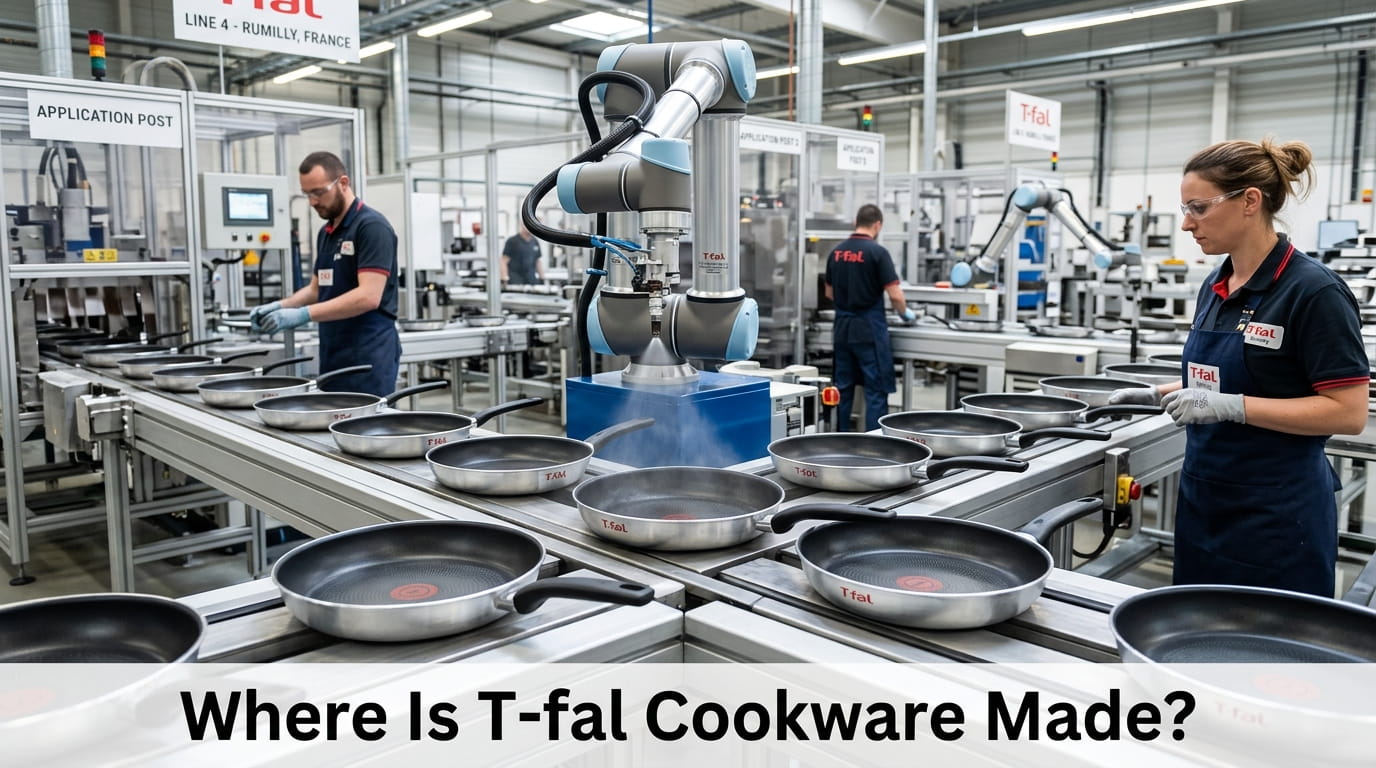
T-fal cookware is made mostly in China today, even though the brand was founded in France and is still headquartered there through its parent company, Groupe SEB, whose official site is groupeseb.com.
Some premium and specialty lines are still produced in France.
A smaller share of pans sold in the United States are finished or assembled domestically, sometimes labeled Made in USA.
But the bulk of everyday T-fal nonstick cookware, the kind found at Walmart, Target, and Amazon, comes out of factories in China.
Handles and some components are reportedly still made in France for certain lines.
The full picture depends heavily on which specific product you are holding.
We will break that down piece by piece below.
Who Owns T-fal?
T-fal is not an independent company.
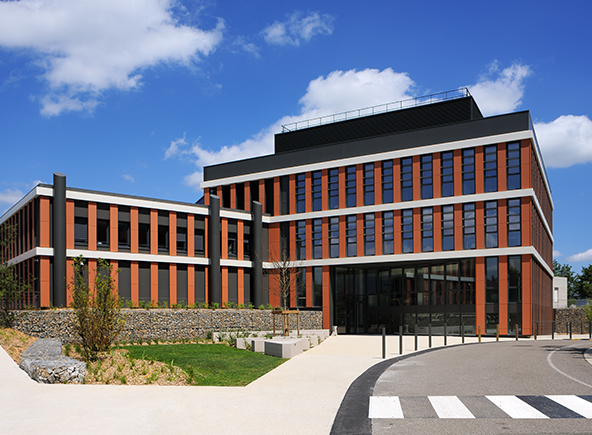
It is a brand owned by Groupe SEB, a large French houseware group.
Groupe SEB acquired Tefal in 1968, folding it into a growing portfolio of kitchen and home appliance brands.
The group also owns Calor, Rowenta, Krups, Moulinex, All Clad, and Lagostina, among others.
Groupe SEB traces its own roots back to 1857, when a tinsmith named Antoine Lescure opened a workshop in France.
So while T-fal feels like a standalone American brand on store shelves, it is really one label inside a much larger French industrial group.
Where Did T-fal Come From?
The story starts with a French engineer named Marc Gregoire.
Gregoire worked with lubricating materials and had experience with Teflon coatings.
As the popular version of the story goes, his wife suggested he try coating her cooking pans the same way he coated his fishing gear.
The result was the first nonstick frying pan, and Gregoire founded Tefal in 1956.
The name Tefal is a blend of Teflon and Aluminium.
When the company launched in the United States around 1960, it had to rename itself T-fal, since DuPont objected that Tefal was too close to its Teflon trademark.
By the summer of 1961, the young company was reportedly shipping more than a million pans a month.
Where Are T-fal Factories Actually Located?
Groupe SEB is genuinely still a French manufacturer at scale, at least in part.
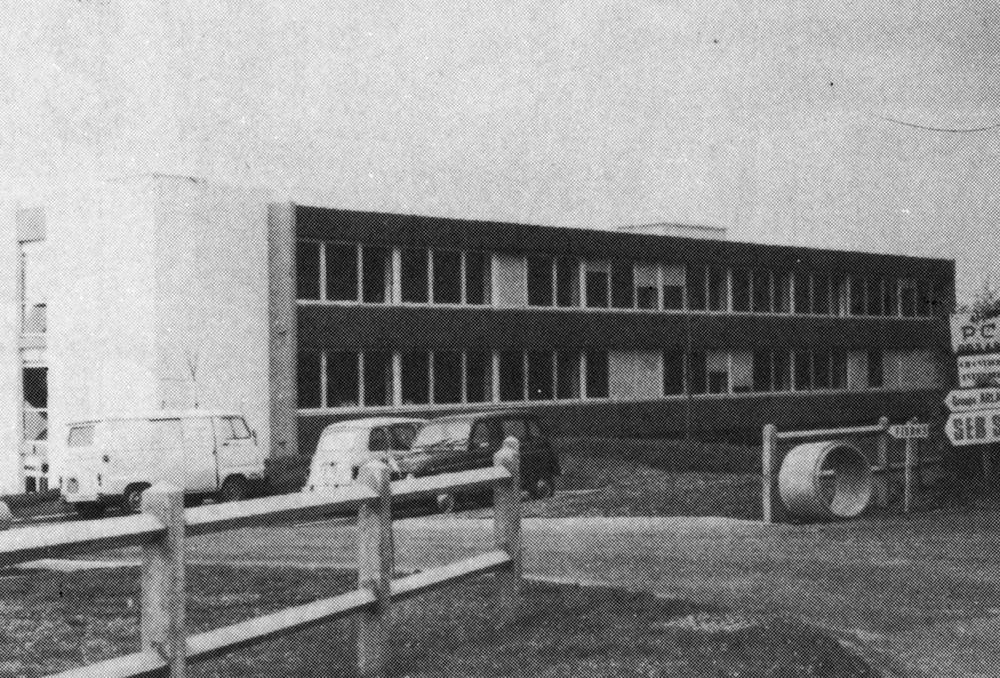
The company says it runs eleven industrial sites in France and invests tens of millions of euros there every year.
One of its most significant French sites is in Rumilly, in the Haute Savoie region, which has long been tied to Tefal’s nonstick production heritage.
At the same time, Groupe SEB has been expanding aggressively in China.
The company opened a major new manufacturing and research hub in Shaoxing, China, with serial production reportedly ramping up in early 2026.
China also represents a very large share of Groupe SEB’s global sales, which helps explain why so much production has shifted there over the decades.
Independent brand investigators who contacted T-fal customer service directly were told a similar story, that most cookware pieces come from China or other parts of Asia, while some components like handles may still be produced in France.
Does T-fal Really Make Cookware in the USA?
This is the part where the marketing and the reality can pull apart.
T-fal’s American website leans on its origin story, its decades of history, and its French nonstick heritage.
Nowhere does it prominently claim that most current cookware is manufactured in the United States.
Some reporting points to a South Carolina facility connected to T-fal production for the American market, though this appears to cover only a portion of items rather than the full product range.
One brand investigation outlet reported that after contacting T-fal support twice, representatives gave inconsistent answers, first saying China, then France, then settling on China or other parts of Asia for most products.
That kind of inconsistency is a signal in itself.
It suggests there is no clean, simple, single answer, and that shoppers should not assume Made in USA just because the brand feels familiar and American in stores.
Why Did T-fal Move So Much Production to China?
The short answer is cost and scale.
Nonstick cookware is a high volume, price sensitive category, and Chinese manufacturing has offered lower labor and production costs for decades.
Groupe SEB is a public company that has to answer to shareholders and compete on shelf price against many other cookware brands.
Building specialty and premium lines in France while mass producing everyday pans in China lets the company protect its heritage image while still competing on price where it matters most.
It is a strategy shared by many legacy Western brands that were founded decades before globalized manufacturing became the norm.
T-fal vs Calphalon: Who Makes Each?
Calphalon is one of T-fal’s closest competitors in the mainstream nonstick cookware aisle.
Like T-fal, Calphalon was originally an American company, based in Ohio, that made its cookware domestically for years.
After being acquired by Newell Brands in 1998, most Calphalon production also shifted overseas, primarily to China.
Calphalon does still manufacture some higher end lines domestically, including certain hard anodized and commercial pieces made in Ohio facilities.
That mirrors T-fal’s approach fairly closely, a mostly China based supply chain with a smaller domestic or origin country line reserved for premium products.
Neither brand can honestly claim to be fully made in its home country anymore, and shoppers looking for genuinely domestic cookware from either brand need to check specific collections rather than trust the brand name alone.
What Is Next for T-fal?
Groupe SEB has been dealing with real financial pressure heading into 2026.
The company issued a profit warning tied partly to tariff exposure, since a meaningful share of its cookware supply chain runs through China, and United States tariffs on Chinese made cookware have pushed effective duty rates into the 25 to 30 percent range.
Analysts lowered growth and profit estimates for the group as a result.
At the same time, Groupe SEB has continued investing in its Shaoxing, China hub, suggesting the company still sees China as central to its long term manufacturing strategy rather than a temporary arrangement.
On the regulatory side, new state level PFAS restrictions in Maine and Colorado are set to limit sales of several specific T-fal cookware and electrics lines starting in 2026, following similar rules already active in Minnesota.
Consumers should expect T-fal pricing on some China made cookware to keep climbing in the United States as tariffs and compliance costs work their way through the supply chain.
For more brand supply chain breakdowns like this one, see our guides on All-Clad and Caraway Cookware.
Frequently Asked Questions About Where T-fal Cookware Is Made
Is any T-fal cookware made in France?
Yes, at least some T-fal and Tefal cookware, particularly higher end and specialty lines, continues to be produced at Groupe SEB facilities in France.
The company operates eleven industrial sites there and has historically tied its nonstick heritage to French production, especially around the Rumilly area.
That said, French made cookware appears to represent a smaller share of what actually reaches store shelves compared to Chinese production.
Is T-fal cookware made in China?
Yes, the majority of T-fal cookware sold today is made in China.
This includes many of the everyday nonstick lines found at major retailers in the United States.
Customer service representatives contacted directly by outside investigators have confirmed that most pieces, aside from some components like handles, come from Chinese or other Asian factories.
Does T-fal make anything in the USA?
Some reporting points to limited domestic production tied to certain T-fal cookware sold in the American market, including references to a South Carolina facility.
However, this does not appear to cover the brand’s full product range, and T-fal does not prominently market a broad Made in USA claim the way some competitors do.
Shoppers who specifically want domestic cookware should check individual product packaging rather than assume based on the brand’s American retail presence.
Who really owns T-fal today?
T-fal is owned by Groupe SEB, a French houseware and small appliance conglomerate that acquired the Tefal brand in 1968.
Groupe SEB also owns several other well known kitchen brands, including Calor, Rowenta, Krups, Moulinex, and All Clad.
The group traces its origins back to a French tinsmithing workshop founded in 1857, making it a genuinely old industrial company that has grown through decades of acquisitions.

I am Jack Neel, a mechanical engineer, researcher, and writer. I created this website to share my knowledge about different brands and products with you. I research the manufacturers behind the brands and provide you with the information you need to make smart buying decisions.