
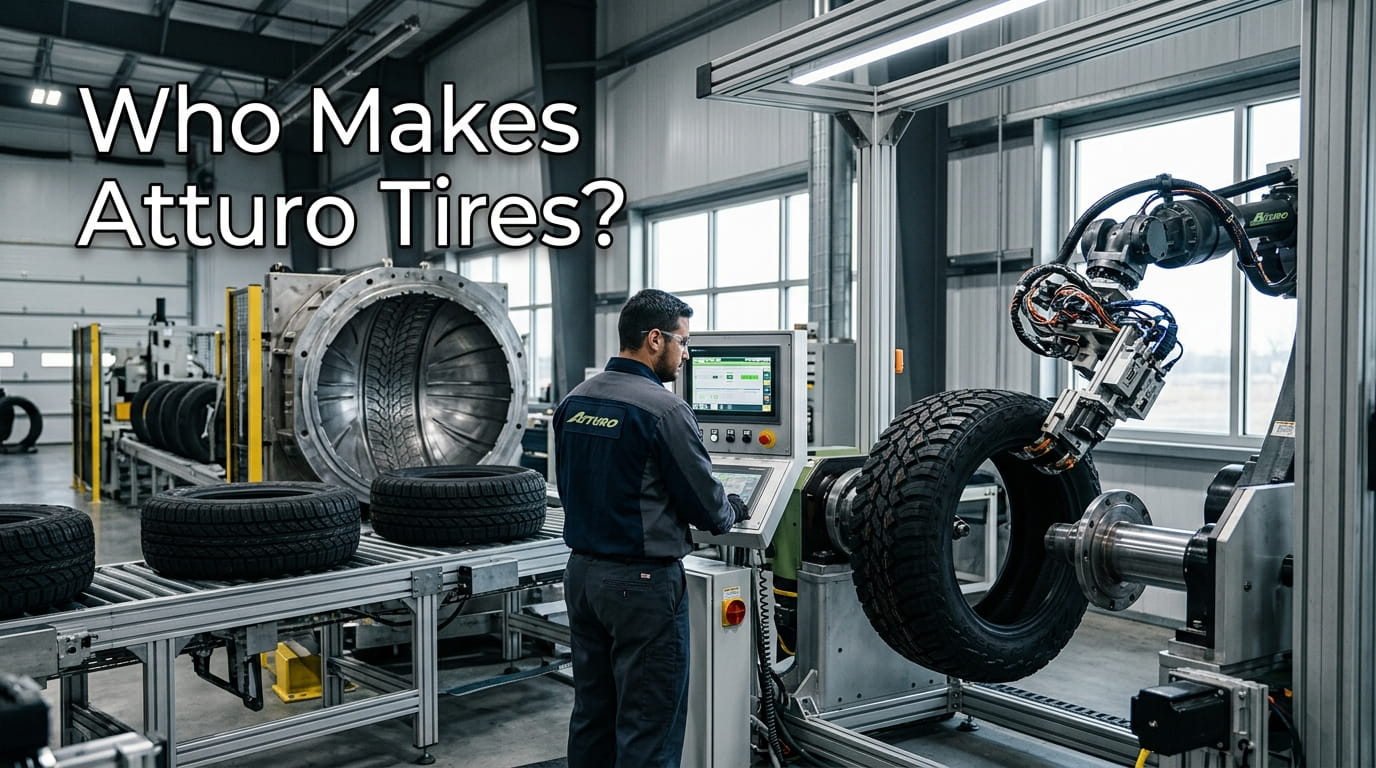
Atturo tires are made by Federal Corporation, a Taiwanese tire manufacturer, at production facilities in Taiwan and Thailand, under contract with Atturo Tire Corp., an independent American tire brand headquartered in Waukegan, Illinois.
Atturo built its reputation as a budget-friendly alternative for light truck, SUV, and crossover owners who want aggressive off-road styling and solid performance without paying the premium prices of Michelin, BFGoodrich, or Toyo.
Atturo Tire Corp. is a privately held American company founded in 2009 by Michael Mathis, who serves as president, headquartered in Waukegan, Illinois; Atturo is not a subsidiary of any major tire conglomerate and controls its own product development, marketing, and distribution independently.
Knowing who makes Atturo tires helps buyers understand whether they are getting a product backed by serious manufacturing infrastructure or simply an unfamiliar label on an unknown factory’s output.
This article covers the manufacturer behind Atturo, where the tires are produced, the brand’s product lineup, and how Atturo compares to Falken on value and country of manufacture.
So let’s get started.
Table of Contents
Who Makes Atturo Tires?
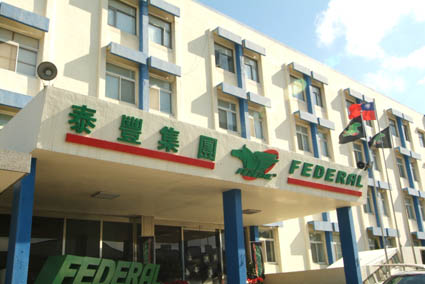
Atturo tires are manufactured by Federal Corporation, a Taiwanese tire company with over 80 years of total tire production experience. Federal Corp. operates primary production facilities in Taiwan and Thailand, with a limited number of certain Atturo models produced in China.
In an interview with Modern Tire Dealer, Atturo president Michael Mathis confirmed Taiwan and Thailand as the brand’s main sourcing locations, describing the approach as working with established manufacturing partners who have the equipment and expertise for the specific tire categories Atturo targets.
Atturo is not a pure private-label brand controlled by a larger corporation. The company owns its tire designs, controls its product development process, and manages its own distribution to more than 30 countries.
What Atturo outsources is the physical manufacturing, which Federal Corp. handles to Atturo’s specifications.
This arrangement is common among mid-tier and budget tire brands that want to bring competitive products to market without the capital investment of building their own production facilities.
Federal Corporation itself is not a generic factory producer. It has been making tires since the mid-20th century, has OEM supply relationships with automotive manufacturers, and has won awards including Ford Q1 and Honda quality certifications.
It entered a technical cooperation agreement with Sumitomo Rubber Industries in the 1980s that has contributed to ongoing process improvements. Atturo’s access to this manufacturer gives the brand a more credible production foundation than many other budget tire labels.
Where Are Atturo Tires Made?
The majority of Atturo tires are manufactured in Taiwan and Thailand. Taiwan is Federal Corp.’s home country and hosts its most sophisticated production infrastructure, while the Thailand facility allows for cost-effective manufacturing of high-volume models.
A limited number of Atturo models are also produced in China for specific market requirements or tire specifications that the Taiwan and Thailand facilities do not handle.
Atturo distributes from its Illinois headquarters to a dealer and wholesale network across North America, Europe, and other international markets.
The brand’s distribution footprint of over 30 countries gives it a scale that allows Federal Corp. to plan longer production runs, which in turn contribuves to the competitive pricing Atturo achieves relative to premium brands with higher overhead costs.
The country of origin for a specific Atturo tire can typically be found on the tire’s sidewall or on documentation provided at point of purchase. U.S. trade regulations require the country of manufacture to be clearly marked on imported tires.
What Tires Does Atturo Make?
Atturo’s product lineup focuses on light truck, SUV, and crossover fitments rather than passenger car or commercial truck segments.
The flagship Trail Blade series covers multiple off-road and all-terrain configurations: the Trail Blade M/T is a mud-terrain tire with aggressive lug patterns for serious off-road use; the Trail Blade A/T is an all-terrain option balancing off-road grip with on-road refinement; and the Trail Blade X/T, introduced at the SEMA show in 2014, was the first commercially available hybrid off-road tire bridging the gap between all-terrain and mud-terrain performance.
The AZ series covers on-road performance applications for SUVs and trucks, with the AZ800 and AZ850 targeting buyers who want a sportier appearance without sacrificing everyday drivability. Atturo also produces the ST series of specialty trailer tires for buyers who need rated load capacity for hauling applications.
One notable limitation across some Atturo all-terrain models is the absence of the Three-Peak Mountain Snowflake (3PMSF) rating, which certifies severe winter traction performance.
Buyers in regions with significant snowfall should verify whether the specific Atturo model they are considering carries this rating before purchasing if winter capability is a priority.
Atturo vs. Falken: How Do They Compare?
Atturo and Falken are both positioned as value-oriented alternatives to premium tire brands, and both target the light truck and SUV buyer who wants capable off-road or all-terrain tires without paying top-tier prices.
The key difference is corporate parentage: Falken is owned by Sumitomo Rubber Industries, one of Japan’s major tire manufacturers with its own production facilities and a long history of OEM supply to major automakers.
Atturo is independently owned and sources production through Federal Corp.
In practice, Falken benefits from Sumitomo’s research and development resources and production scale, which can translate into more consistent compound technology and more extensive winter and performance certification across its lineup.
Atturo competes on pricing, aggressive styling particularly in its Trail Blade line, and the flexibility of a smaller brand to introduce niche products like the Trail Blade X/T that larger manufacturers might consider too narrow to pursue.
For buyers choosing between the two on pure value, both brands represent a meaningful upgrade from the most basic no-name budget options while remaining significantly cheaper than Michelin, BFGoodrich, or Toyo.
Atturo tends to appeal most strongly to the truck and SUV enthusiast community that values aggressive tread styling, while Falken has a broader appeal across both performance and off-road categories. For other tire brand origin articles, see Who Makes Milestar Tires and Who Makes Ironman Tires.
Frequently Asked Questions About Atturo Tires
Are Atturo tires good quality?
Atturo tires offer solid value for their price point, particularly in the Trail Blade off-road and all-terrain range. They are manufactured by Federal Corporation, a company with decades of tire production experience. For buyers who do not need premium brand performance or extreme winter certification, Atturo delivers competitive capability at a lower cost.
Where are Atturo tires made?
Atturo tires are made primarily in Taiwan and Thailand by Federal Corporation, with a limited number of models produced in China. Taiwan is Federal Corp.’s primary home market and hosts its most established production facilities.
Who owns Atturo tires?
Atturo Tire Corp. is an independent, privately held American company founded and owned by Michael Mathis, headquartered in Waukegan, Illinois. It is not a subsidiary of any major tire conglomerate and operates independently across product development, marketing, and distribution.
What vehicles are Atturo tires designed for?
Atturo tires are designed primarily for light trucks, SUVs, and crossovers, with a particular focus on plus-sized fitments popular in the truck enthusiast and off-road communities. The brand offers mud-terrain, all-terrain, hybrid off-road, highway performance, and trailer tire options within those segments.

I am Jack Neel, a mechanical engineer, researcher, and writer. I created this website to share my knowledge about different brands and products with you. I research the manufacturers behind the brands and provide you with the information you need to make smart buying decisions.