
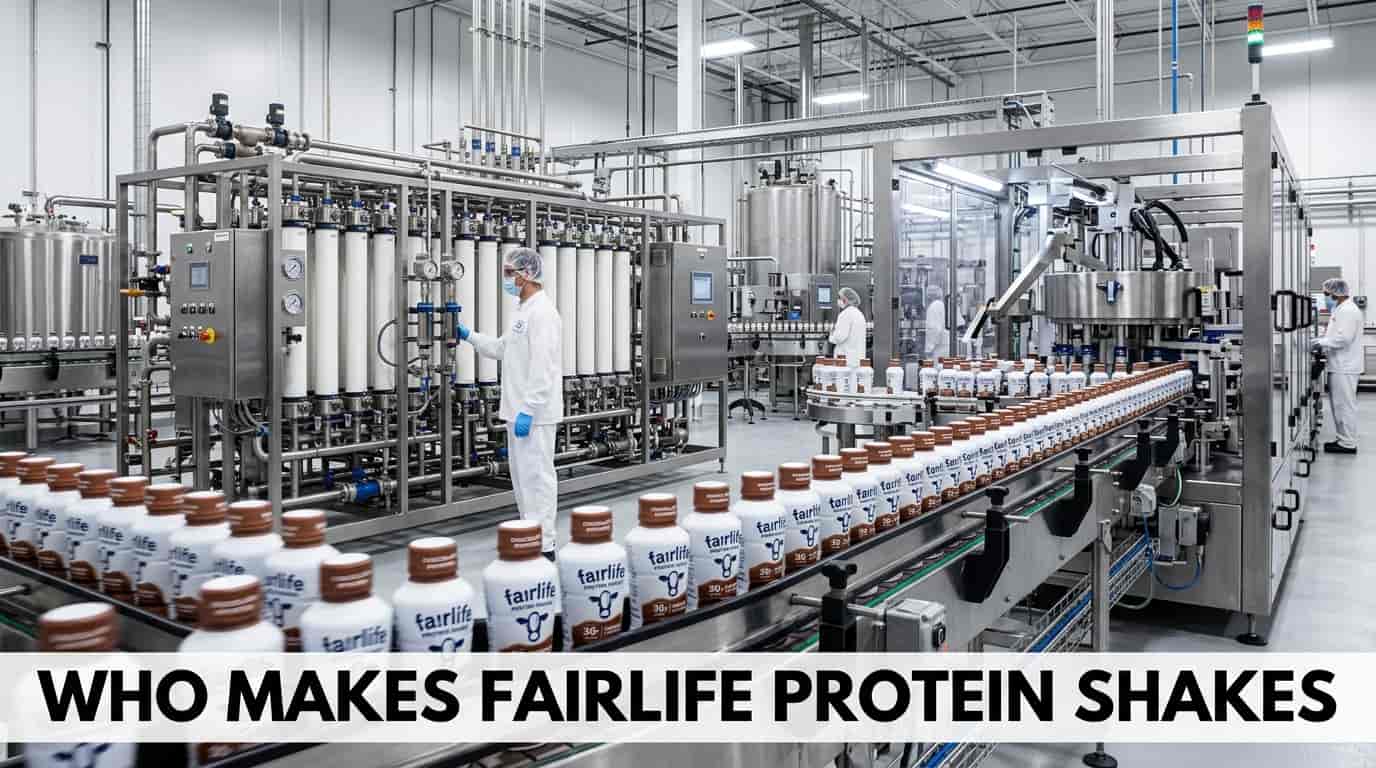
Fairlife protein shakes, sold as Fairlife Core Power and Fairlife Nutrition Plan, have become a fixture in gym bags and grocery coolers nationwide, built on the same ultra filtration dairy technology that made the base Fairlife milk brand successful.
Like the rest of the Fairlife lineup, the protein shake line is owned and produced under the Coca Cola umbrella, giving the product national distribution muscle that most competing protein drink brands cannot match.
This guide covers who actually makes Fairlife protein shakes, how they differ from the standard milk product, where they are produced, and how the brand ongoing animal welfare controversy factors into the buying decision.
Table of Contents
Who Really Makes Fairlife Protein Shakes

Fairlife protein shakes are produced by Fairlife LLC, the Coca Cola majority owned dairy company, using the same cold filtration process applied to its standard milk products but formulated specifically for higher protein content and shelf stability.
Coca Cola acquired full ownership of Fairlife in 2020 and has since used its bottling and distribution network to push the protein shake line into convenience stores, gyms and big box retailers well beyond where the base milk product is typically found, an acquisition detailed on the Fairlife Wikipedia page.
Core Power Versus Nutrition Plan Product Lines
Core Power is the higher protein, higher calorie shake aimed at post workout recovery, typically delivering between 26 and 42 grams of protein per bottle depending on the size selected.
Nutrition Plan is positioned as a more balanced meal replacement shake with a fuller vitamin and mineral profile, giving Fairlife two distinct product lines that target different customer needs within the same protein shake category.
How Fairlife Protein Shakes Are Made
The shakes start with the same ultra filtration process used for Fairlife milk, which concentrates protein and removes excess sugar, before additional whey protein isolate and flavoring are blended in to hit the higher protein targets marketed on the label.
Production happens at Fairlife dedicated processing facilities, including the company Coopersville, Michigan plant, with additional capacity added through Coca Cola broader bottling network as demand for ready to drink protein products has grown industry wide.
Fairlife Animal Welfare Controversy And What It Means For Shake Buyers
The same 2019 supplier animal cruelty scandal that affected Fairlife milk applies directly to the protein shake line, since both products are sourced from the same dairy supply chain and fall under the 2022 roughly 21 million dollar class action settlement.
Buyers specifically choosing Fairlife protein shakes for fitness or recovery purposes should know that litigation tied to supplier practices has continued into 2025 and 2026, with new lawsuits naming additional Fairlife suppliers, a detail we cover in full in our guide to who makes Fairlife milk.
Is Fairlife Protein Shakes Really Good Or Really Worth It
On protein content alone, Fairlife shakes are genuinely competitive with dedicated sports nutrition brands, often delivering more protein per dollar than traditional whey protein shakes sold at specialty supplement retailers.
Reviewers consistently praise the taste and texture, describing Core Power in particular as creamier and less chalky than many rival protein shakes, which has helped it become a favorite among gym goers who dislike the gritty texture common in powder based competitors.
Feedback on Better Business Bureau and fitness forums in 2026 remains largely positive on taste and effectiveness, though a recurring criticism is the price point compared to mixing your own protein powder, along with occasional complaints about inconsistent availability of certain flavors at retail stores.
As with the base Fairlife milk product, the animal welfare controversy remains a genuine sticking point for a portion of shoppers, and anyone with strong feelings about supplier ethics may want to weigh that history before committing to the brand protein line specifically.
Fairlife Protein Shakes Warranty And Customer Support
As a perishable beverage, Fairlife protein shakes do not carry a traditional warranty, but quality or safety concerns can be reported directly through the official Fairlife website or Coca Cola consumer relations line.
Retailers selling Fairlife products, including major grocery chains, also generally accept returns of defective or spoiled bottles under their own standard store return policies.
How Fairlife Protein Shakes Compare To Other Brands
Shoppers comparing protein drink options can also read our guide to who makes Muscle Milk, one of Fairlife most direct national competitors in the ready to drink protein shake category.
Unlike Muscle Milk, which is a soy protein isolate and milk protein concentrate blend, Fairlife shakes rely specifically on its filtered milk protein base, a distinction that matters to shoppers with dietary preferences around protein source.
Frequently Asked Questions About Fairlife Protein Shakes
Who makes Fairlife protein shakes
Fairlife protein shakes are made by Fairlife LLC, majority owned by the Coca Cola Company, using the same ultra filtration dairy process applied across the broader Fairlife product lineup.
What is the difference between Core Power and Nutrition Plan
Core Power is a higher protein recovery shake aimed at athletes, while Nutrition Plan is a more balanced meal replacement shake with a broader vitamin and mineral profile.
Are Fairlife protein shakes affected by the animal cruelty scandal
Yes, since the shakes share the same dairy supplier network as Fairlife milk, they fall under the same 2019 scandal and 2022 class action settlement affecting the broader Fairlife brand.
How much protein is in a Fairlife shake
Core Power shakes typically contain between 26 and 42 grams of protein per bottle depending on size, while Nutrition Plan shakes offer a more moderate protein amount alongside additional vitamins and minerals.
Independent testing referenced by sports nutrition publications has generally confirmed that Fairlife protein labeling claims hold up under scrutiny, which matters to athletes who track macronutrients closely and rely on accurate labeling to plan training nutrition around their daily protein targets and overall dietary goals.

I am Jack Neel, a mechanical engineer, researcher, and writer. I created this website to share my knowledge about different brands and products with you. I research the manufacturers behind the brands and provide you with the information you need to make smart buying decisions.