
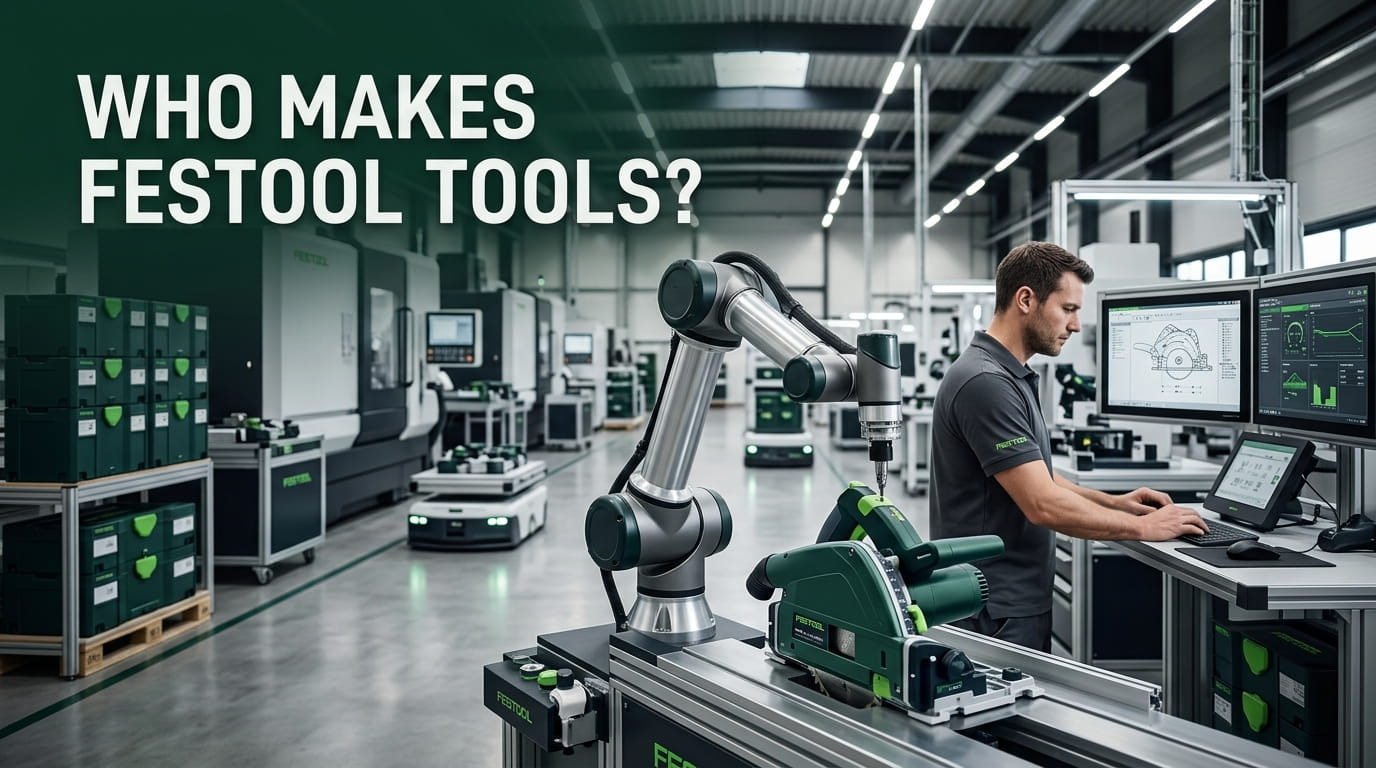
Festool tools are made by Festool GmbH, a German power tool manufacturer that operates as part of the family owned TTS Tooltechnic Systems group.
The brand is known among professional woodworkers and contractors for its precision engineered sanders, track saws, and dust extraction systems.
TTS Tooltechnic Systems is a third generation family business controlled by descendants of co founder Gottlieb Stoll, and it remains privately held rather than publicly traded.
Knowing who actually builds a premium tool brand like Festool helps buyers understand why the tools carry a higher price tag and what quality standards stand behind them.
This article covers Festool ownership, where the tools are manufactured, how the brand compares to other premium tool makers, and answers to common Festool questions.
So let’s get started.
Table of Contents
Who Makes Festool Tools And Who Owns The Brand?
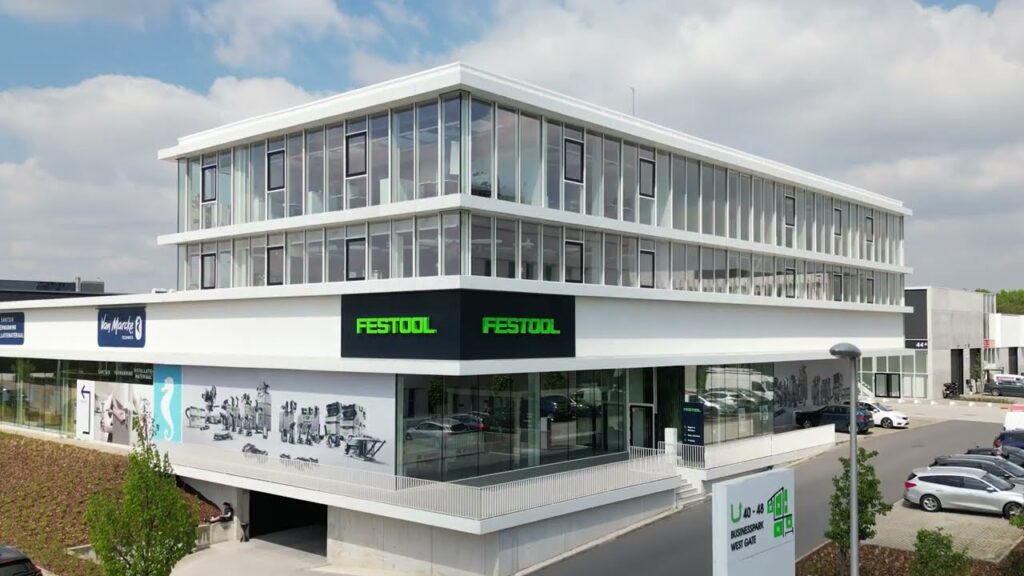
Festool is a brand of professional power tools headquartered in Wendlingen am Neckar, Germany.
The company is owned by TTS Tooltechnic Systems, a holding company controlled by the descendants of Festool co founder Gottlieb Stoll.
Unlike many major tool brands that trade on public stock exchanges, Festool has stayed privately held by the Stoll family since the power tool division split away from the broader Festo industrial group in 2000.
Where Are Festool Tools Manufactured?
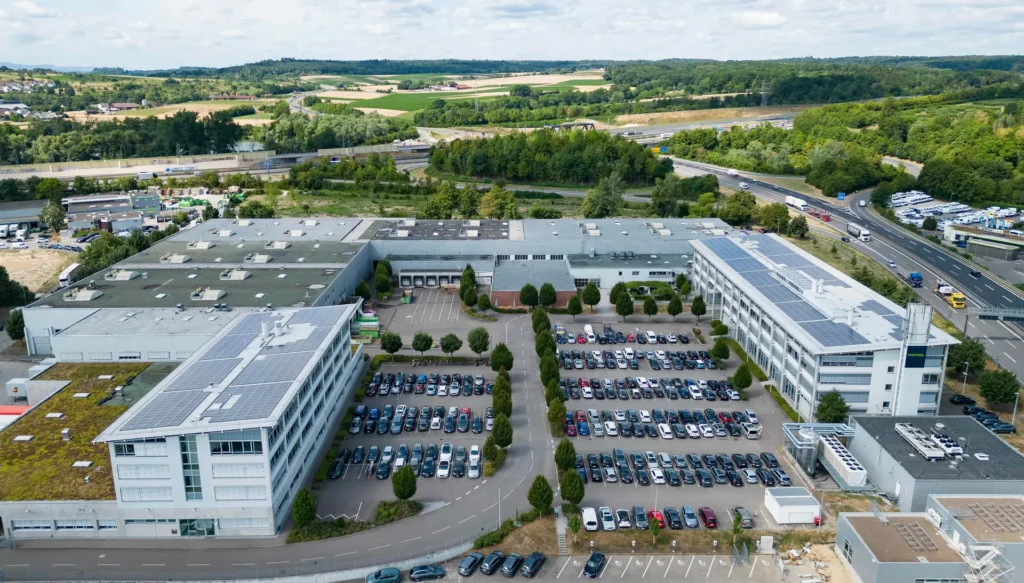
Festool manufactures the large majority of its tools in Germany, at production sites in Wendlingen, Neidlingen, and Illertissen.
The company also operates a plant in Ceska Lipa in the northern Czech Republic, and it maintains subsidiaries in 25 countries with a global presence spanning 68 countries in total.
This concentrated manufacturing footprint is part of why Festool tools carry a reputation for consistent build quality compared to brands that outsource production more widely.
What Makes Festool Tools Different From Other Brands?
Festool built its reputation on a systems based approach, where sanders, saws, and routers are designed to connect directly to matching dust extractors.
Its Systainer storage cases and guide rail saw systems have become an industry standard that other brands often try to imitate.
The company also introduced the DOMINO jointing system in 2006, a joinery tool that remains unique to the Festool lineup.
A Brief History Of Festool And The Stoll Family
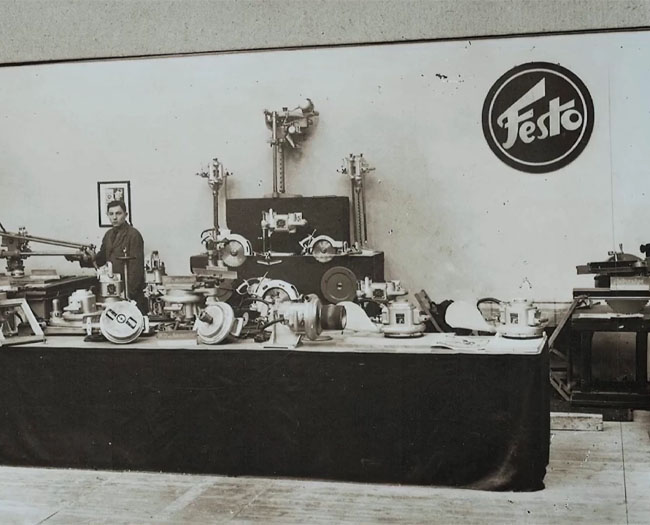
Festool traces its roots back to 1925, when Albert Fezer and Gottlieb Stoll founded a small workshop called Fezer and Stoll in Esslingen, Germany.
The company later operated under the Festo name for decades before the power tool division was formally spun off in 2000 as Festool GmbH, with TTS Tooltechnic Systems established as its parent holding company.
In 2017, TTS acquired the American table saw safety brand SawStop, adding it to a portfolio that also includes Tanos and Shaper.
Festool vs Bosch: Which Premium Tool Brand Is Better?
Bosch is a far larger, publicly diversified conglomerate that makes everything from car parts to home appliances, while Festool remains a smaller, family run specialist focused purely on professional woodworking tools.
Festool tools tend to carry a higher price tag than Bosch, but many contractors say the dust extraction integration and Systainer storage justify the cost for daily jobsite use.
Bosch also owns other specialist brands under its umbrella, similar to how TTS owns SawStop and Tanos alongside Festool, a strategy that continued in 2023 when TTS acquired Shaper Tools.
If you are comparing premium and mid range tool brands, our guides to who makes Makita tools and who makes Husky tools break down two other popular options side by side.
Frequently Asked Questions About Festool Tools
Is Festool made in Germany?
Yes, most Festool tools are made in Germany at the company’s Wendlingen, Neidlingen, and Illertissen facilities.
Who owns Festool tools?
Festool is owned by TTS Tooltechnic Systems, a family holding company controlled by descendants of co founder Gottlieb Stoll.
Is Festool better than Makita?
Festool tends to win on dust extraction and jobsite ergonomics, while Makita offers a wider cordless tool ecosystem at lower price points.
Why are Festool tools so expensive?
Festool tools are priced at a premium because of their precision German engineering, integrated dust extraction systems, and smaller scale production compared to mass market brands.

I am Jack Neel, a mechanical engineer, researcher, and writer. I created this website to share my knowledge about different brands and products with you. I research the manufacturers behind the brands and provide you with the information you need to make smart buying decisions.