
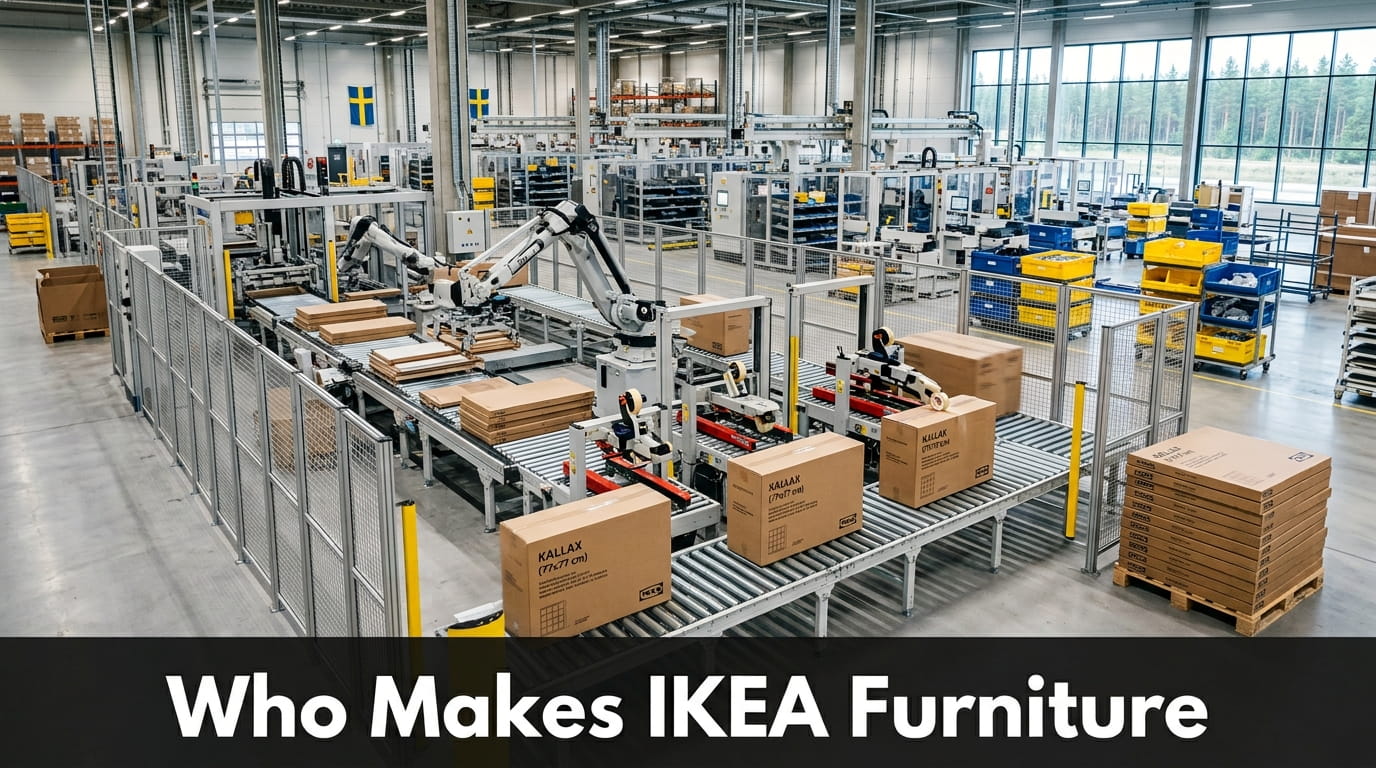
IKEA furniture is made by roughly 1,000 independent suppliers spread across more than 50 countries, since IKEA does not own most of the factories it works with.
The brand is known worldwide for flat pack, ready to assemble furniture designed in Sweden and sold through massive warehouse style stores.
Inter IKEA Group, ultimately controlled by the Inter IKEA Foundation, owns the IKEA brand, concept, and intellectual property, while a separate company called Ingka Group operates most of the physical stores as the largest franchisee.
Knowing who makes IKEA furniture helps buyers understand why a single product might combine parts sourced from several different countries.
This article covers IKEA ownership, where the furniture is manufactured, why the company sources the way it does, and answers to common IKEA questions.
So let’s get started.
Table of Contents
Who Makes IKEA Furniture And Who Owns The Brand?

IKEA was founded in 1943 by 17 year old Ingvar Kamprad in Almhult, Sweden, initially as a mail order sales business.
Inter IKEA Systems B.V. now owns the brand, design, and product range, while Ingka Group operates the majority of IKEA stores under franchise and pays royalties back to Inter IKEA.
IKEA of Sweden AB, based in Almhult, oversees the actual product assortment and sourcing strategy for the entire IKEA range.
Where Is IKEA Furniture Manufactured?
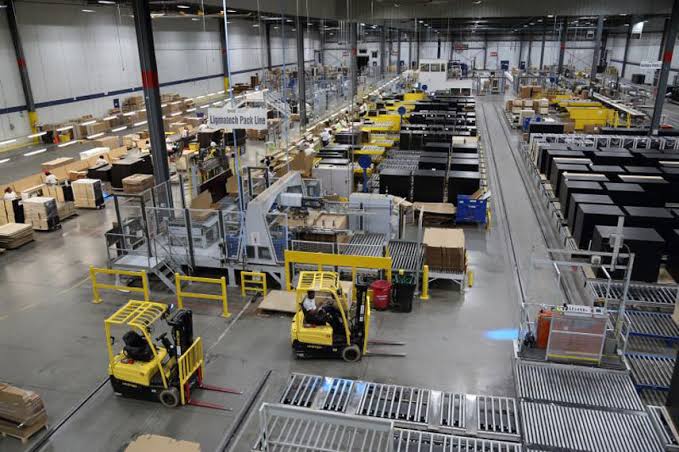
IKEA does not manufacture most of its own furniture, instead sourcing from roughly 1,000 independent suppliers across more than 50 countries.
China supplies an estimated 22 percent of all IKEA products, making it the single largest manufacturing country, followed closely by Poland.
IKEA closed its only US manufacturing plant, located in Danville, Virginia, in 2019, citing high raw material costs, and shifted that production to lower cost countries in Europe.
Does IKEA Manufacture Any Of Its Own Furniture?
IKEA Industry AB, formerly known as Swedwood International AB, produces roughly 10 to 12 percent of the total IKEA product range in house.
This division focuses mainly on wooden furniture and has always been based in Sweden.
The remaining 88 to 90 percent of products come from IKEA’s large network of independent third party suppliers.
Why Does IKEA Use So Many Different Suppliers?
IKEA starts with design specifications and a target price, then solicits solutions from manufacturers that can meet both requirements.
The company also tries to manufacture close to raw material sources, so solid wood furniture is often produced in regions with large forests while textiles come from established Asian textile hubs.
All IKEA suppliers must comply with the company’s IWAY standards, which set requirements for working conditions and environmental practices.
IKEA vs Wayfair: Which Furniture Retailer Is Better?
Wayfair operates as an online marketplace connecting customers to many different furniture brands, while IKEA designs and sells its own branded product range exclusively.
IKEA’s flat pack, self assembly model keeps shipping costs and prices lower compared to many pre assembled furniture options sold through Wayfair.
Shoppers focused on a consistent design aesthetic often prefer IKEA, while those wanting more brand variety lean toward Wayfair.
For more comparisons, see our guide to who makes Craftsman tools for another widely recognized home brand.
Frequently Asked Questions About IKEA Furniture
Who makes IKEA furniture?
IKEA furniture is made by roughly 1,000 independent suppliers across more than 50 countries, plus IKEA’s own IKEA Industry AB division.
Is any IKEA furniture made in the USA?
No, IKEA closed its only US factory in Danville, Virginia in 2019 and does not currently manufacture furniture domestically.
Where is most IKEA furniture made?
China is IKEA’s single largest manufacturing country, supplying roughly 22 percent of the total product range, followed by Poland.
Who owns IKEA?
Inter IKEA Group, ultimately controlled by the Inter IKEA Foundation, owns the IKEA brand and concept.

I am Jack Neel, a mechanical engineer, researcher, and writer. I created this website to share my knowledge about different brands and products with you. I research the manufacturers behind the brands and provide you with the information you need to make smart buying decisions.