
Lucid cars are made by Lucid Motors, Inc., an American electric vehicle company headquartered in Newark, California, just south of San Francisco. Full model details are on the Lucid Motors official website.
Lucid is known for producing some of the most technologically advanced electric vehicles in the world, with its Air sedan holding the record for the longest EPA-certified range of any production EV.
Lucid Motors is publicly traded on the NASDAQ exchange under the ticker LCID, with Saudi Arabia’s Public Investment Fund (PIF) as its largest shareholder, holding approximately 60% of the company.
Knowing who makes Lucid cars helps buyers understand the company’s ownership structure, its California roots, and what makes it different from Tesla and other EV brands.
This article covers Lucid’s founding story, manufacturing location, current lineup, Saudi ownership, and what is next for the brand.
So let’s get started.
Table of Contents
Who Owns Lucid Motors?
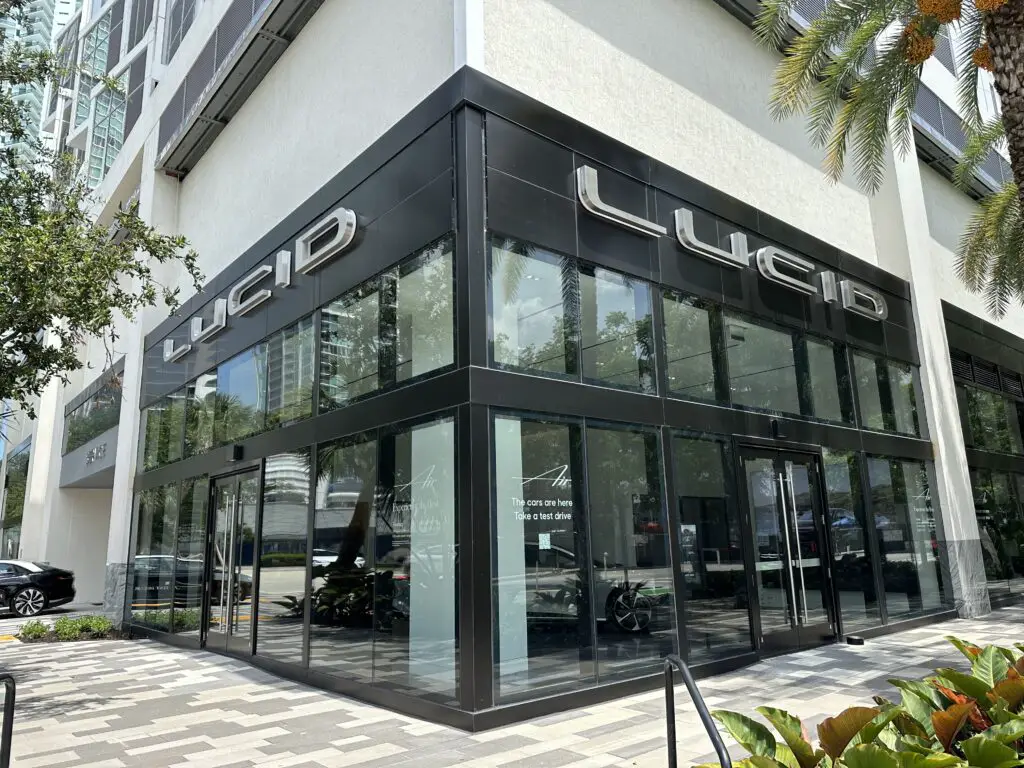
Lucid Motors is publicly traded, with no single majority owner controlling the company outright.
Saudi Arabia’s Public Investment Fund (PIF) is the largest shareholder, holding approximately 60% of Lucid’s shares. The PIF is the sovereign wealth fund of the Kingdom of Saudi Arabia and has invested billions in Lucid as part of its strategy to diversify Saudi Arabia’s economy beyond oil.
The PIF’s investment has been essential to Lucid’s survival and growth, providing the capital needed to build its factory, develop its vehicles, and sustain operations through years of pre-revenue product development.
When Was Lucid Founded?
Lucid Motors was founded in 2007 in Menlo Park, California, under the original name Atieva, with an initial focus on developing electric vehicle battery technology rather than building consumer cars.
The company pivoted to consumer EVs around 2016, rebranding as Lucid Motors. Peter Rawlinson, who had previously served as chief vehicle engineer for the Tesla Model S, became CEO and drove the brand’s launch. He stepped down as CEO in 2024 and was succeeded by Silvio Napoli.
Lucid went public in July 2021 through a merger with a Special Purpose Acquisition Company (SPAC), raising approximately $4.4 billion and beginning deliveries of the Lucid Air sedan later that year.
Where Are Lucid Cars Made?
All Lucid vehicles are assembled at the Advanced Manufacturing Plant (AMP-1) in Casa Grande, Arizona, located about 65 miles south of Phoenix.
The Casa Grande facility opened in 2021 and is currently the only Lucid manufacturing plant in the world. It produces both the Air sedan and the Gravity SUV.
Lucid has also announced plans to build a manufacturing facility in Saudi Arabia in partnership with the PIF, which would produce vehicles for Middle Eastern and global markets.
What Models Does Lucid Currently Offer?
Lucid’s current lineup consists of two models. The Lucid Air is a full-size luxury electric sedan that competes with the Mercedes EQS and Tesla Model S.
The Air Pure trim starts around $69,900 and the Grand Touring Performance version exceeds 1,200 horsepower. The Air Grand Touring holds an EPA-certified range of 516 miles, the highest of any production EV.
The Lucid Gravity is a three-row electric SUV launched in 2024, competing against the Tesla Model X and Mercedes EQS SUV. A more affordable model is in development targeting a significantly lower price point than the current lineup.
Lucid vs Tesla vs Mercedes EQS: Who Makes Each?
All three compete in the luxury electric vehicle space but come from entirely different companies. Lucid Motors is an American startup majority owned by Saudi Arabia’s sovereign wealth fund. Tesla is an American company publicly traded with Elon Musk as its largest individual shareholder. Mercedes-Benz EQS is made by Mercedes-Benz Group AG, a publicly traded German company.
Lucid differentiates itself through technology, specifically its electric drivetrain efficiency which enables the longest range per kilowatt-hour of any production EV. Tesla leads in sales volume. Mercedes-Benz brings 130 years of luxury heritage.
Of the three, only Lucid and Tesla manufacture their vehicles primarily in the United States. Mercedes assembles most EQS models in Sindelfingen, Germany.
What Is Next for Lucid?
Lucid is working on a more affordable electric vehicle that would sit below the Air in price, targeting the $50,000 to $70,000 segment to expand beyond its current ultra-premium positioning.
The Saudi Arabia manufacturing facility is expected to begin vehicle assembly in the coming years, serving demand across the Middle East and beyond without shipping from Arizona.
Lucid’s powertrain technology has attracted licensing interest from other automakers, including Aston Martin, which has licensed Lucid’s drivetrain technology for its own upcoming electric vehicles.
Frequently Asked Questions About Who Makes Lucid Cars
Is Lucid owned by Saudi Arabia?
Saudi Arabia’s Public Investment Fund (PIF) is the largest shareholder in Lucid Motors, holding approximately 60% of the company’s shares. However, Lucid is a publicly traded American company. Saudi Arabia does not fully own or control Lucid, it is a majority investor.
Where are Lucid cars made?
Lucid vehicles are assembled at the company’s Advanced Manufacturing Plant in Casa Grande, Arizona. This is currently the only Lucid factory in the world. All Air sedans and Gravity SUVs are built there.
What is the range of the Lucid Air?
The Lucid Air Grand Touring holds an EPA-certified range of 516 miles on a single charge, making it the longest-range production electric vehicle ever tested by the EPA. Other Air trims offer ranges between 410 and 516 miles depending on configuration.
Is Lucid Motors profitable?
As of 2025 and 2026, Lucid Motors has not yet reached profitability. The company continues to report net losses as it scales production and invests in new model development. The Saudi Arabia PIF investment provides the financial runway for Lucid to continue growing toward profitability.

I am Jack Neel, a mechanical engineer, researcher, and writer. I created this website to share my knowledge about different brands and products with you. I research the manufacturers behind the brands and provide you with the information you need to make smart buying decisions.