
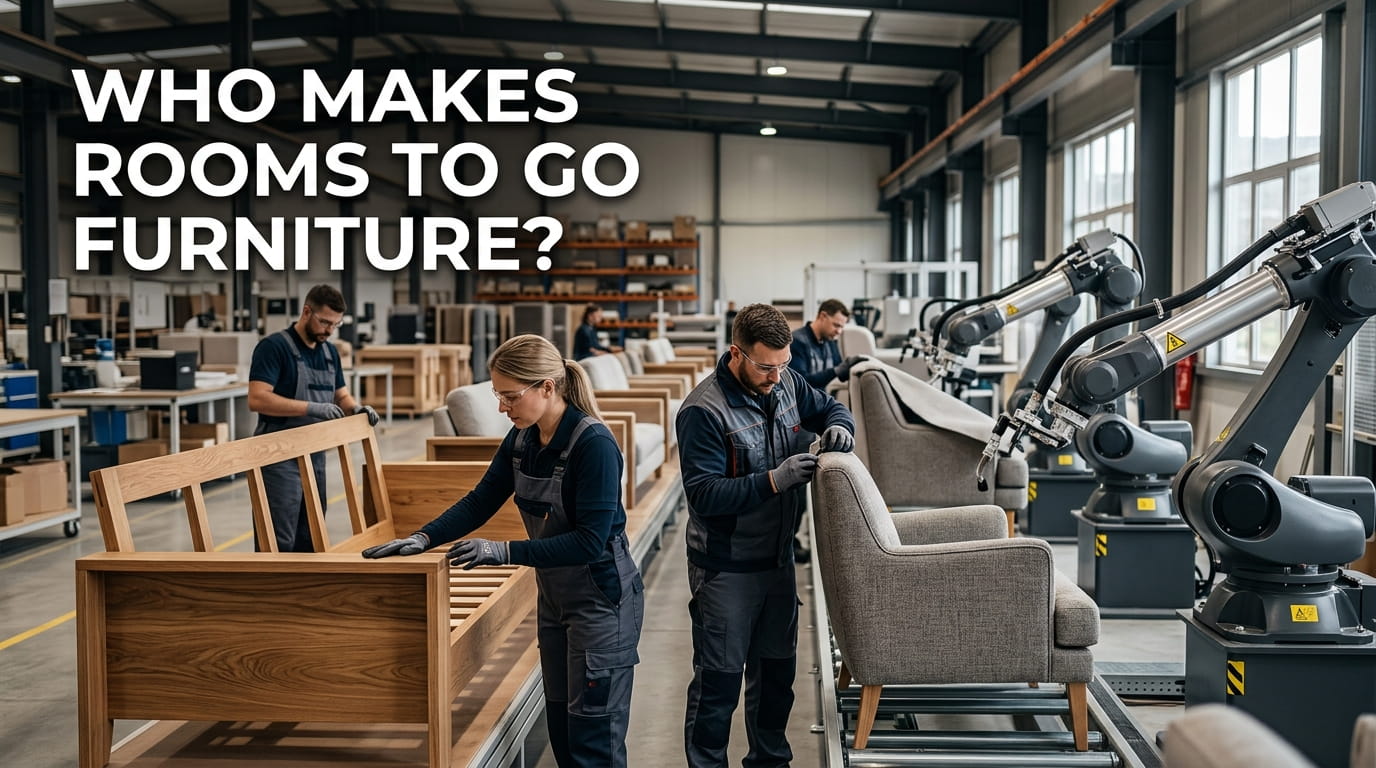
Rooms To Go furniture is primarily sourced from a diverse network of third-party manufacturers. For other furniture brand comparisons, also read about Ashley Furniture, Bob’s Furniture, and Broyhill furniture. across the globe, rather than being produced in company-owned factories.
Rooms To Go is a well-known furniture retailer established in 1991, celebrated for its unique approach of selling complete room packages rather than individual pieces.
The company is a privately held entity, owned and operated by the Seaman family, with its headquarters situated in Seffner, Florida.
But with such a vast inventory and multiple styles, where exactly does all that furniture come from before it arrives in their showrooms and your home?
This detailed guide will examine the intricate supply chain of Rooms To Go. It will explore their manufacturing partners, geographical sourcing, quality considerations, and overall business model.
So let’s get started.
Table of Contents
Does Rooms To Go Manufacture Its Own Furniture?

No, Rooms To Go does not manufacture its own furniture in company-owned facilities. Like many large furniture retailers, their business model focuses on retail and distribution.
They specialize in designing, curating, and marketing furniture collections. A wide array of external manufacturers then produce these items.
Rooms To Go acts as a crucial intermediary, bridging the gap between numerous global factories and their customers.
The company focuses on identifying market trends, designing appealing collections, and contracting manufacturers to produce items to their specifications.
This approach allows the company to offer a broad range of styles and price points. It avoids the immense capital investment and operational complexities of owning and operating its own factories.
Their expertise lies in logistics, sales, and creating a convenient shopping experience for customers seeking complete room solutions.
Where Does Rooms To Go Furniture Come From?
Rooms To Go furniture originates from an extensive global supply chain, spanning multiple continents and countries.
Like many major furniture retailers today, they utilize international manufacturing capabilities to achieve cost efficiencies and access diverse production expertise.
A significant portion of their products comes from Asian countries, including China, Vietnam, and Malaysia.
These regions are well-established hubs for furniture production. They are known for producing high volumes at competitive prices.
Rooms To Go also sources furniture from Central American countries like Mexico. This offers logistical advantages due to their proximity to the United States.
While most of their inventory is imported, certain specialized items or components may come from North American manufacturers. This usually represents a smaller portion of their overall product line.
The specific country of origin for any furniture piece is usually on the product tag or packaging, offering transparency to the customer.
Who Are Some Common Suppliers for Rooms To Go?
Rooms To Go maintains proprietary relationships with its manufacturing partners. This means the exact names of the factories or companies producing their furniture are not publicly disclosed.
However, they partner with many independent furniture manufacturers.
These suppliers are typically large production facilities. They specialize in manufacturing furniture for various retailers worldwide.
Rooms To Go chooses them based on their ability to meet design specifications, quality standards, volume requirements, and pricing objectives.
The factories they work with often have advanced machinery, skilled labor, and efficient production processes for mass production.
Collaborating with numerous suppliers allows Rooms To Go to diversify its product offerings. It also helps mitigate risks from relying on a single source.
This multi-supplier strategy is common among major furniture retailers aiming to offer a wide selection across different styles and materials.
How Does Rooms To Go Ensure Quality Control?
Rooms To Go outsources manufacturing but implements quality control measures. This ensures its products meet certain standards.
Like other major retailers, they likely have internal teams for product development and quality assurance.
These teams set specific design and material specifications that manufacturers must follow during production.
Quality inspections often occur at various stages of the manufacturing process. These are done either by their own staff or by third-party inspection agencies.
These checks help identify and address potential defects before products ship to warehouses and showrooms.
Despite these efforts, quality consistency can sometimes vary across different product lines and manufacturers. This is common for globally sourced retail furniture.
Customer feedback and warranty claims also serve as important indicators. Rooms To Go uses them to monitor and address recurring quality issues with its suppliers.
Is Rooms To Go Furniture Good Quality?
Rooms To Go furniture quality typically falls into the mid-range to entry-level market segment.
The company’s business model focuses on value and convenience, especially through its room packages. It does not cater to the luxury furniture market.
For its price point, many consumers find the quality adequate and functional for everyday use.
Materials commonly include engineered wood, veneers, various fabrics, and sometimes solid wood for specific components or collections.
Like any mass-produced furniture, durability varies depending on the specific item, its materials, and how you use and maintain it.
Customers seeking long-term heirloom pieces may find Rooms To Go furniture does not meet those expectations.
However, for individuals and families seeking stylish and affordable furniture to furnish an entire room, the quality often balances cost and functionality well.
Always inspect furniture in person, if possible. Read customer reviews for specific items when making a purchasing decision.
Does Rooms To Go Use American Manufacturers?
While most Rooms To Go furniture comes from international sources, primarily Asian countries, they do utilize some North American manufacturers for certain product lines or components.
Their American manufacturing partnerships are typically limited compared to their global supply chain.
Sourcing from American manufacturers can be a strategic choice. Reasons include specific design aesthetics, quicker lead times, or meeting consumer demand for domestically produced goods.
However, the cost structure of U.S. manufacturing generally places these items at a slightly different price point than imported selections.
Rooms To Go primarily focuses on competitive pricing and a broad selection. This often leads them toward the efficiencies of global production hubs.
If purchasing American-made furniture is a priority, customers should check individual product tags or ask sales associates for specific item origins.
Who Owns Rooms To Go?
Rooms To Go is a privately held company; its shares are not traded on public stock exchanges.
Jeffrey Seaman founded the company in 1991. He continues as the owner and CEO.
It remains a family-owned and operated business. This reflects a long-standing tradition in the furniture retail industry, where many large regional chains are privately controlled.
This ownership structure allows the company to make decisions without the pressure of quarterly earnings reports or public shareholder demands.
Jeffrey Seaman previously co-founded Seaman Furniture with his father. He brought valuable industry experience to the creation of Rooms To Go.
Being privately owned provides Rooms To Go with flexibility. It can implement long-term strategies and adapt to market changes without immediate external financial pressures.
The company has grown significantly under this leadership, becoming one of the largest furniture retailers in the United States.
What is Rooms To Go’s Business Model?
Rooms To Go uses a distinct business model centered on convenience and value. This differentiates it from traditional furniture retailers.
Their signature approach involves selling complete “room packages.” Customers can purchase an entire living room, dining room, or bedroom set with coordinated furniture pieces.
This model simplifies the furniture buying process. It eliminates the need for customers to painstakingly select individual items and worry about design coordination.
By selling packages, Rooms To Go often achieves higher sales volumes per transaction. This also optimizes their inventory management.
They maintain large distribution centers and employ efficient logistics. This offers quick delivery times, a significant convenience factor for many customers.
The company focuses on a broad market segment. It offers a range of styles from contemporary to traditional, all while aiming for competitive pricing.
Their advertising often highlights how easy it is to furnish a home and the affordability of their cohesive room designs.
Where Can You Buy Rooms To Go Furniture?
Rooms To Go furniture is primarily available through its dedicated sales channels, both online and in physical stores.
The most common way to purchase their products is by visiting one of their many showrooms. These are located across various states, predominantly in the Southeastern U.S. and Texas.
These physical locations allow customers to see and experience the furniture in person. Displays often show complete room settings to showcase the package concept.
Beyond brick-and-mortar stores, Rooms To Go also operates a robust e-commerce platform via its official website, RoomsToGo.com.
The website offers their full range of products, allowing customers to browse, customize, and purchase furniture for delivery to their homes.
Currently, Rooms To Go does not typically sell its branded furniture through other third-party retailers or marketplaces, such as Amazon or Wayfair.
This exclusive distribution strategy helps maintain brand consistency and control over the customer experience from sale to delivery.
Customers interested in Rooms To Go products should visit their official website or a nearby store location.
What Kind of Warranty Does Rooms To Go Offer?
Rooms To Go provides a standard manufacturer’s warranty on its furniture. This typically covers defects in materials and workmanship for a limited period, often one year from the purchase date.
Specifics of this warranty can vary slightly. Factors include the particular manufacturer of each item and the type of product.
Customers should review the detailed warranty information provided with their purchase. It outlines what is covered and for how long.
Beyond the standard warranty, Rooms To Go offers extended protection plans, often through third-party providers like Guardsman, for an additional cost.
These extended plans usually provide longer coverage. They may include protection against accidental damage like stains, tears, or structural damage that the standard manufacturer’s warranty does not cover.
Opting for an extended protection plan is a personal decision. However, it can offer peace of mind for those concerned about potential wear and tear or unforeseen accidents.
Customers should always clarify the terms and conditions of both standard and extended warranties before finalizing their purchase.
What Brands Are Similar to Rooms To Go?
Several furniture retailers operate with business models, target demographics, and product offerings comparable to Rooms To Go.
These competitors often provide a wide selection of furniture at accessible price points. They cater to consumers looking to furnish their homes efficiently and affordably.
Ashley HomeStore is a prominent example. It is known for its extensive network of stores, a broad range of styles often at competitive prices, and its complete room solutions.
Another comparable retailer is Bob’s Discount Furniture. Like Rooms To Go, it emphasizes value, immediate availability, and a no-frills shopping experience.
Raymour & Flanigan is another significant player, particularly in the Northeastern U.S. It offers a diverse inventory and similar service propositions.
These retailers, like Rooms To Go, typically source their furniture from various global manufacturers. They focus on the retail and distribution aspects of the business.
They all aim to make furniture shopping convenient and budget-friendly for the average customer. They often offer financing options and delivery services.

I am Jack Neel, a mechanical engineer, researcher, and writer. I created this website to share my knowledge about different brands and products with you. I research the manufacturers behind the brands and provide you with the information you need to make smart buying decisions.