
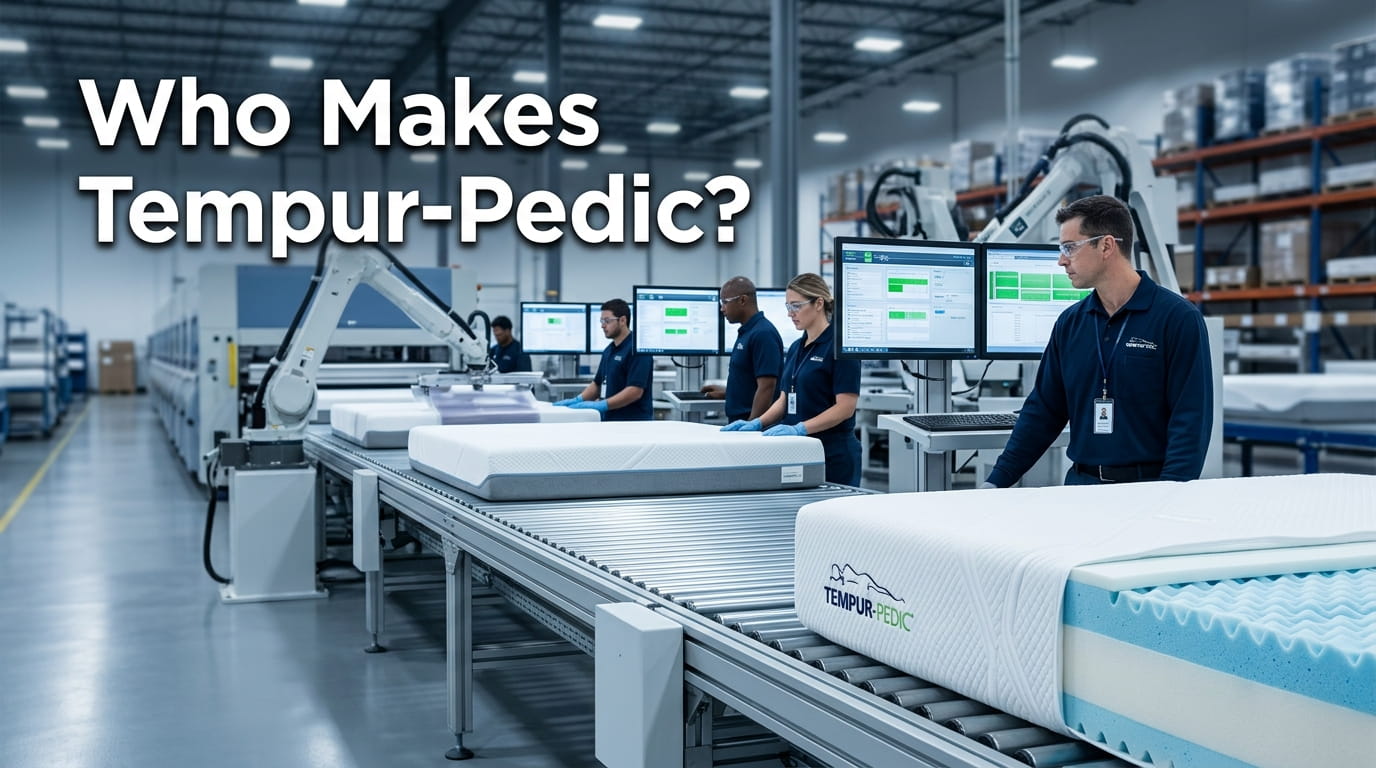
Tempur-Pedic mattresses are made by Tempur-Pedic International, Inc., a subsidiary of Somnigroup International Inc., the company formerly known as Tempur Sealy International.
Quick Answer: Tempur-Pedic is owned by Somnigroup International Inc. (NYSE: SGI), which rebranded from Tempur Sealy International in 2025 following its acquisition of Mattress Firm. Tempur-Pedic mattresses are manufactured in the United States at plants in Duffield, Virginia and Albuquerque, New Mexico. The parent company is headquartered in Lexington, Kentucky, and reported revenue of approximately $4.93 billion.
Tempur-Pedic was founded in 1992 after Swedish firm Fagerdala World Foams introduced the first viscoelastic foam mattress to the US market. Tempur-Pedic International merged with Sealy Corporation in 2013 to form Tempur Sealy International, which then rebranded to Somnigroup International in 2025. Scott Thompson serves as Chairman, President and CEO of Somnigroup International. Cliff Buster serves as CEO of Tempur Sealy North America specifically.
Table of Contents
Who Makes Tempur-Pedic and Where Are They Manufactured?
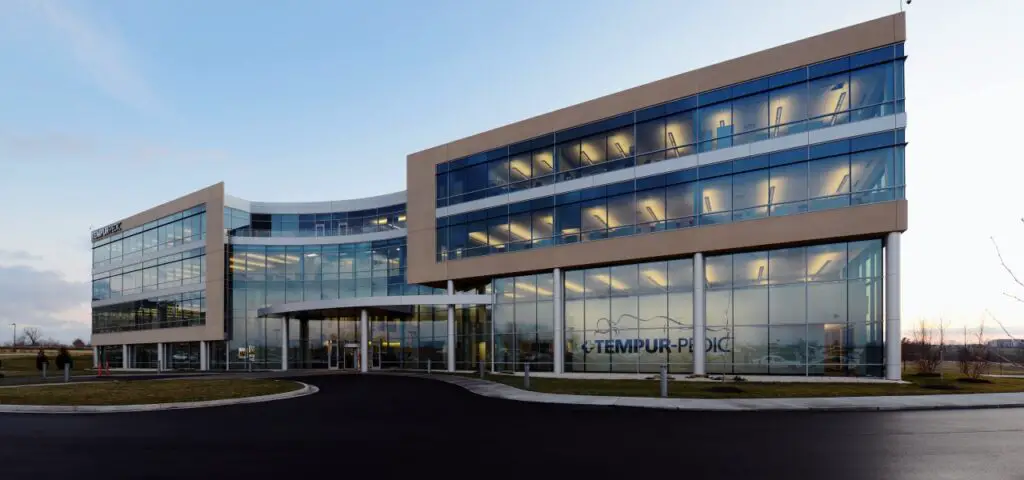
Tempur-Pedic International, Inc. designs and manufactures all Tempur-Pedic mattresses and pillows. The company controls its own manufacturing operations in the United States, which is a key differentiator in a market where many competitors outsource production.
Tempur-Pedic’s US manufacturing facilities are located in Duffield, Virginia and Albuquerque, New Mexico. These plants produce the proprietary TEMPUR material, the viscoelastic foam at the core of every Tempur-Pedic mattress, through a carefully controlled pouring and curing process.
Tempur-Pedic also maintains manufacturing operations in Denmark, where the brand’s European production has historically been based. The Danish facility played a central role in the early global expansion of the brand before the US plants were established.
What Is the TEMPUR Material and How Is It Different From Regular Memory Foam?
TEMPUR material is the proprietary viscoelastic foam at the center of every Tempur-Pedic product. It traces its origins to NASA-developed foam created in the 1970s to absorb G-force pressure during spacecraft launches. Fagerdala World Foams, a Swedish technical foam company, acquired the rights to adapt this material for consumer sleep products in the 1980s.
What distinguishes TEMPUR material from generic memory foam is that it responds to both pressure and body temperature simultaneously. It conforms slowly and precisely to the shape of the sleeper, distributing weight evenly to relieve pressure points at the shoulders, hips, and lower back.
The exact chemical formulation and manufacturing process of TEMPUR material are closely guarded trade secrets. Tempur-Pedic holds that its foam is not replicable by competitors using standard memory foam chemistry, which is the core basis of the brand’s premium pricing.
Who Owns Tempur-Pedic Now? The Somnigroup Rebrand Explained
In February 2025, Tempur Sealy International announced it would change its name to Somnigroup International Inc. in connection with the closing of its acquisition of Mattress Firm, the largest US mattress specialty retailer. The company began trading on the NYSE under the new ticker symbol SGI from April 2025.
Somnigroup International now operates as the world’s largest bedding company, with brands including Tempur-Pedic, Sealy, Stearns and Foster, and Mattress Firm under one corporate umbrella. The Tempur-Pedic brand itself continues to operate with its own identity, website, and product lineup unchanged by the corporate rebrand.
The company employs approximately 12,000 people globally across manufacturing, retail, and corporate operations. Its combined annual revenue was approximately $4.93 billion as of April 2026.
Tempur-Pedic vs Sleep Number vs Purple vs Saatva: How Do They Compare?
Tempur-Pedic competes at the premium end of the mattress market alongside Sleep Number, Purple, and Saatva. Each has a distinct construction philosophy.
Sleep Number uses adjustable air chambers rather than foam, allowing each side of the bed to be independently customized. It is the strongest alternative for couples with different firmness preferences. Tempur-Pedic offers no adjustability but focuses on superior pressure relief and motion isolation through its proprietary foam.
Purple uses a polymer grid system that provides both pressure relief and significantly better airflow than dense foam. It is the strongest competitor for hot sleepers who want pressure relief without the heat retention sometimes associated with memory foam.
Helix and Nectar compete at lower price points as online-first hybrid brands. For buyers who want TEMPUR-quality pressure relief without exploring alternatives, you can browse Tempur-Pedic pillows and mattress toppers on Amazon to experience the TEMPUR material before committing to a full mattress.
Is Tempur-Pedic Worth the Price?
Tempur-Pedic mattresses start around $1,700 for entry-level models and exceed $5,000 for premium cooling collections with adjustable bases. For the price, buyers get US-manufactured construction, genuinely proprietary foam technology, a 10-year limited warranty, and a 90-night sleep trial.
Consumer feedback consistently highlights long-term durability, exceptional motion isolation, and pressure relief as the strongest attributes. The most common criticisms are heat retention on older models, the initial adjustment period to the dense foam feel, and off-gassing odor in the first days after unboxing.
Newer models including the TEMPUR-Breeze collection address heat retention with phase-change materials and ventilated foam layers. For buyers with chronic back or joint pain who have exhausted other mattress options, Tempur-Pedic’s clinical reputation for pressure relief makes it a defensible investment despite the premium cost.
Frequently Asked Questions
Is Tempur-Pedic made in the USA?
Yes. Tempur-Pedic mattresses are manufactured in the United States at facilities in Duffield, Virginia and Albuquerque, New Mexico. The company also has manufacturing operations in Denmark for its European market. All US-sold mattresses are produced domestically.
Who owns Tempur-Pedic in 2026?
Tempur-Pedic is owned by Somnigroup International Inc. (NYSE: SGI), which rebranded from Tempur Sealy International in 2025 following the acquisition of Mattress Firm. Scott Thompson is Chairman, President and CEO of Somnigroup International. The company is headquartered in Lexington, Kentucky.
How long does a Tempur-Pedic mattress last?
Tempur-Pedic mattresses are designed to last 10 years or more, which is reflected in their 10-year limited warranty. Many long-term owners report their mattresses maintaining comfort and support well beyond the warranty period. The dense TEMPUR foam does not develop the body impressions that coil or softer foam mattresses often show after a few years.
What is the difference between Tempur-Pedic and Sealy?
Both Tempur-Pedic and Sealy are owned by Somnigroup International but serve very different market segments. Tempur-Pedic is a premium brand using proprietary viscoelastic foam with US manufacturing in Virginia and New Mexico. Sealy is a higher-volume brand offering innerspring, hybrid, and foam mattresses at a broader range of price points. They are manufactured separately and use different materials and construction methods.

I am Jack Neel, a mechanical engineer, researcher, and writer. I created this website to share my knowledge about different brands and products with you. I research the manufacturers behind the brands and provide you with the information you need to make smart buying decisions.