
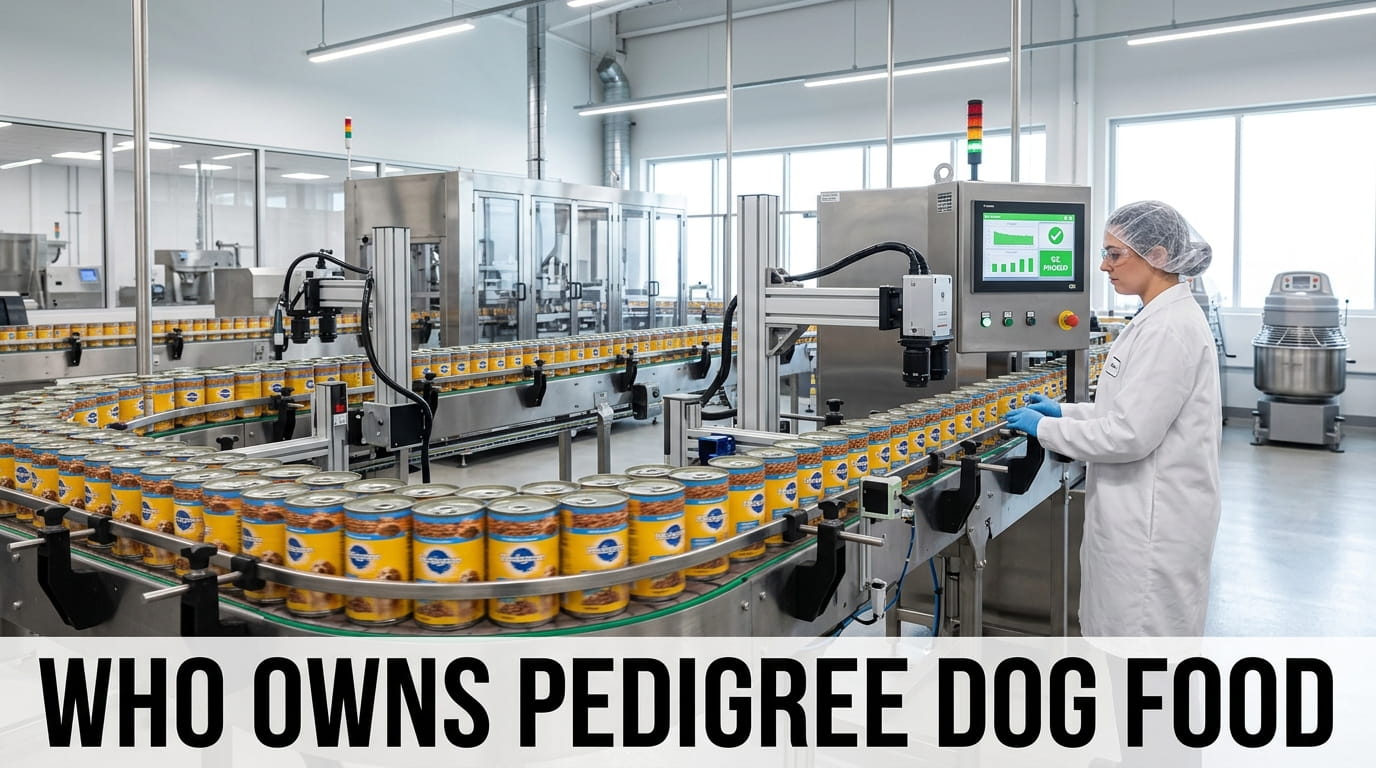
Pedigree dog food is owned by Mars Incorporated, the privately held American company also known for M&M’s, Snickers, and Royal Canin.
Most Pedigree products sold in the United States are made domestically, since Mars manufactures roughly 94 percent of its US sold products within the country.
Mars has continued investing heavily in US manufacturing in recent years, including a newly announced 2 billion dollar commitment to expand domestic pet food production through the end of 2026.
This article covers who owns Pedigree, where its dog food is actually manufactured, Mars’s recent US manufacturing investment, and the brand’s founding history.
So let’s get started.
Table of Contents
Who Owns Pedigree?

Pedigree is owned by Mars Petcare, a division of privately held Mars Incorporated. Current products are shown on Pedigree’s official website.
Mars Petcare also owns Royal Canin, Whiskas, Sheba, and several other major pet food and veterinary brands, making it one of the largest pet care companies in the world. Pedigree Petfoods, the subsidiary that operates the brand, is headquartered in McLean, Virginia.
Mars remains a family owned company rather than a publicly traded corporation, and reported roughly 55 billion dollars in overall company revenue, with pet food representing about 18 percent of fiscal 2026 sales.
Where Is Pedigree Dog Food Made?
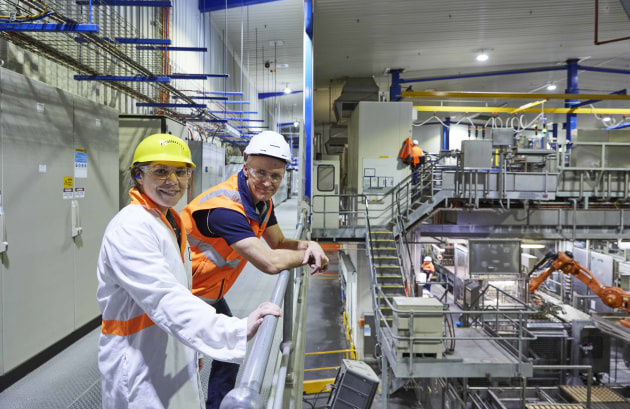
Most Pedigree dog food sold in the United States is manufactured domestically. Mars reports that 94 percent of its US sold products are made within the country across its network of 38 US factories.
Pedigree products sold outside the United States are often produced regionally instead, including at Mars factories in Melton Mowbray and Birstall, England for the European market, and through partnerships in markets like India for Asian distribution.
Because manufacturing is spread across many facilities worldwide, the most reliable way to confirm exactly where a specific bag or can was produced is to check the product label directly.
Mars’s 2 Billion Dollar US Manufacturing Investment
Mars announced plans to invest an estimated 2 billion dollars in expanding its US manufacturing operations by the end of 2026, building on more than 6 billion dollars the company has already invested domestically in recent years.
The investment supports Mars Petcare brands including Pedigree and Royal Canin, and ties into a broader corporate marketing campaign highlighting the company’s century long manufacturing presence in the United States across 38 factories, veterinary clinics, and regional offices.
Mars has specifically highlighted its Royal Canin dry pet food facility in Lewisburg, Ohio, described as the company’s largest global facility for that brand, as part of its case for continued US investment.
When Was Pedigree Founded?
Pedigree traces its roots to 1934, when Mars Limited acquired Chappel Brothers in Manchester, England, a company that canned dog food under the Chappie brand. More on the brand’s history is documented on Wikipedia.
Mars introduced additional dog food brands including Pal and Lassie during the 1950s and acquired Kal Kan Foods of Los Angeles in 1968, expanding its US pet food presence. In 1988, Kal Kan renamed its dog food line Pedigree, the same name Mars had already used to sell dog food internationally.
Pedigree has since grown into one of the best selling dog food brands in the world, distributed across dozens of countries under the same core Mars ownership structure established nearly a century ago.
Is Pedigree Good Dog Food?
Pedigree is one of the most widely purchased dog food brands in the world, and many owners on forums and retailer reviews report their dogs doing well on it, citing shiny coats, steady energy, and no digestive issues over years of feeding.
Ingredient focused review sites are more critical. Dog Food Reviews and Dogs Naturally both score Pedigree’s dry food line as high risk under their evaluation criteria, pointing to relatively high carbohydrate content, generic meat and bone meal rather than a single named protein source, and added synthetic vitamins that can indicate a more heavily processed formula.
Some recipes also contain artificial dyes and the preservative BHA, which draw criticism from ingredient conscious reviewers.
Pedigree’s core appeal remains affordability and wide availability rather than a premium ingredient profile, and the brand states its recipes are formulated with input from the WALTHAM Petcare Science Institute to meet complete and balanced nutrition standards.
Owners weighing cost against ingredient quality may want to compare specific recipes, since Pedigree’s wet food lines generally score better than its dry kibble on independent ingredient reviews. As with any diet change, a vet is the best resource for a specific dog’s nutritional needs.
Frequently Asked Questions About Who Makes Pedigree
Is Pedigree made in the USA?
Most Pedigree dog food sold in the United States is made domestically, consistent with Mars’s reported 94 percent US manufacturing rate for products sold in the country.
Is Mars a publicly traded company?
No, Mars Incorporated remains a privately held, family owned company, unlike many of its major consumer goods competitors.
What other brands does Mars Petcare own?
Alongside Pedigree, Mars Petcare owns Royal Canin, Whiskas, Sheba, and Banfield Pet Hospital, among other pet food and veterinary care brands.
How much is Mars investing in US manufacturing?
Mars plans to invest an estimated 2 billion dollars in US manufacturing expansion by the end of 2026, adding to more than 6 billion dollars already invested domestically in recent years.

I am Jack Neel, a mechanical engineer, researcher, and writer. I created this website to share my knowledge about different brands and products with you. I research the manufacturers behind the brands and provide you with the information you need to make smart buying decisions.