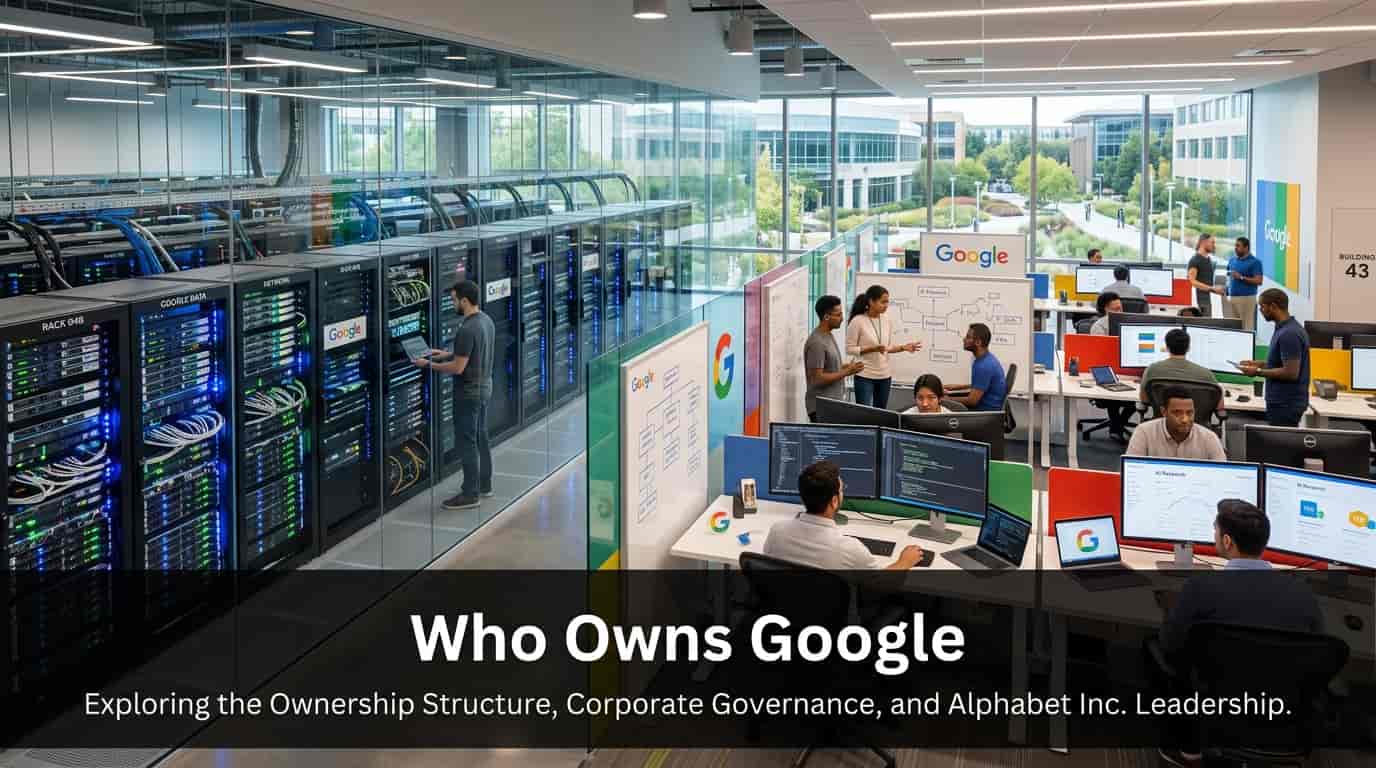
Google is owned by Alphabet Inc, a publicly traded holding company, but cofounders Larry Page and Sergey Brin still control more than half of all voting power through special Class B shares.
Google built its reputation as the dominant internet search engine in the world, later expanding into email, maps, cloud computing, mobile software, and dozens of other products used daily by billions of people.
Larry Page and Sergey Brin founded Google in 1998 while they were graduate students at Stanford University, growing it from a research project into one of the most valuable companies on the planet.
So if Google trades publicly like any other stock, how do two founders still control the company more than two decades later.
This guide will explore Alphabet ownership structure, how the dual class share system keeps founder control intact, Google major shareholders, and how it compares to sibling companies like YouTube and Waymo.
So let us get started.
Table of Contents
Who Owns Google Right Now
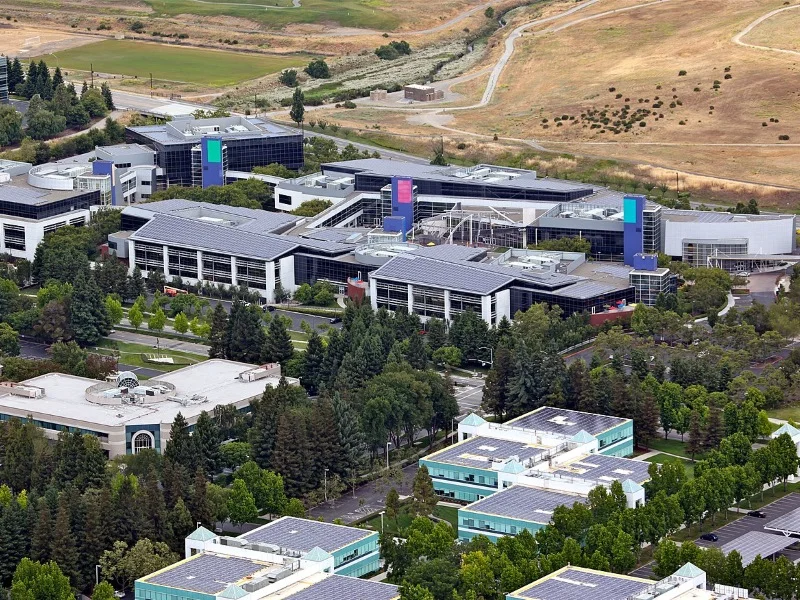
Alphabet Inc owns Google outright, having restructured in 2015 to separate Google core products from other, longer term projects. Company information is available on the official Alphabet investor site.
Alphabet trades publicly on Nasdaq under the tickers GOOGL and GOOG, meaning ownership is spread across institutional investors, individual shareholders, and company insiders.
Roughly 64.5 percent of Alphabet shares are held by institutional investors like Vanguard and BlackRock, while company insiders, including the founders, hold a smaller but far more powerful voting stake.
How Larry Page And Sergey Brin Keep Control Of Google
Larry Page and Sergey Brin together control more than 50 percent of Alphabet total voting power through Class B shares, which carry ten votes each compared to a single vote for regular Class A shares.
Page personally owns roughly 3.5 percent of Alphabet economic value, while Brin owns close to 3.2 percent, yet their combined voting power still lets them outvote nearly all other shareholders on major decisions.
This dual class structure is a common tool among founder led technology companies specifically designed to prevent outside investors from forcing a change in company direction.
The Founding Story Behind Google
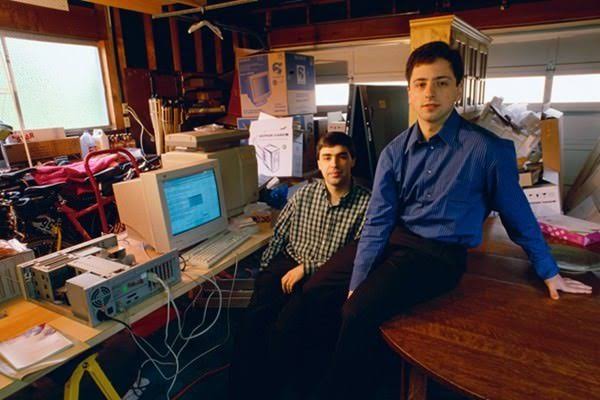
Page and Brin met at Stanford University and built an early search algorithm called BackRub before renaming the project Google in 1998.
The company incorporated in September 1998 and grew rapidly through the early 2000s, eventually going public in 2004 in one of the most closely watched technology IPOs of its era.
Google original mission to organize the world information still shapes its product strategy today, even as the company has expanded far beyond search into nearly every corner of consumer technology.
Why Google Reorganized Into Alphabet
Google restructured into Alphabet in October 2015, separating its core internet products like Search, Gmail, and Android from more experimental ventures like Waymo and life sciences research.
That reorganization let investors evaluate Google profitable core business separately from riskier, longer term bets that might not turn a profit for years, according to Wikipedia.
Sundar Pichai took over as chief executive of Google itself in 2015 and later became chief executive of Alphabet as a whole in 2019, when Page and Brin stepped back from day to day management.
Alphabet Major Institutional Shareholders
Beyond the founders, Vanguard Group and BlackRock rank among Alphabet largest institutional shareholders, a pattern typical of most major American technology companies.
State Street Investment Management also holds a significant Alphabet position, reflecting the same broad, passive index fund ownership seen across large cap technology stocks generally.
Because institutional shareholders mostly hold Class A shares with only one vote each, their large economic ownership does not translate into proportional control over company decisions.
Google Sibling Companies Under Alphabet
Alphabet owns several major products and companies beyond Google search itself, including YouTube, the video platform it purchased in 2006. Our guide to who owns YouTube covers that acquisition in more detail.
Alphabet also owns Waymo, its self driving car division, which has raised outside investment while Alphabet keeps majority control. Our guide to who owns Waymo explains how that ownership structure works.
Google Core Products And Revenue Sources
Search advertising remains Google largest revenue driver by far, followed by YouTube advertising, Google Cloud, and Android related licensing and services.
Google Cloud has grown into a major competitor against Amazon Web Services and Microsoft Azure, becoming an increasingly important growth segment for Alphabet overall business.
This diversified revenue base is part of why Alphabet remains one of the most consistently profitable companies in the world despite regulatory pressure in multiple countries.
Is Google Really Good Or Really Worth It
Google consistently ranks as one of the most widely used and trusted technology platforms in the world, with search, Gmail, and Android all holding dominant market share in their categories.
Common criticism of Google centers on privacy concerns tied to its advertising business model, along with ongoing antitrust scrutiny from regulators, according to Motley Fool reporting on the company shareholder base.
Employees and industry analysts frequently point to Google strong engineering culture and consistent profitability as reasons the company remains a top choice for talent and investors alike.
For everyday users, Google free products remain some of the most useful and widely adopted tools available, even as questions about data privacy continue drawing regulatory attention.
For investors, Alphabet founder controlled voting structure means outside shareholders have limited influence over major strategic decisions, a tradeoff worth understanding before buying the stock.
Sundar Pichai has led Alphabet through significant investment in artificial intelligence, positioning Gemini as its flagship AI product line to compete against OpenAI ChatGPT and Anthropic Claude.
Frequently Asked Questions About Google
Do Larry Page And Sergey Brin Still Run Google?
No. Sundar Pichai serves as chief executive of both Google and Alphabet, though Page and Brin retain majority voting control through their Class B shares.
Is Google The Same Company As Alphabet?
Alphabet is the parent holding company, and Google is its largest subsidiary, housing the core search, advertising, and Android businesses.
When Did Google Go Public?
Google went public in August 2004.
Does Alphabet Own YouTube And Waymo?
Yes. Alphabet owns YouTube, purchased in 2006, and Waymo, its self driving car division spun out of Google in 2016.

I am Jack Neel, a mechanical engineer, researcher, and writer. I created this website to share my knowledge about different brands and products with you. I research the manufacturers behind the brands and provide you with the information you need to make smart buying decisions.