
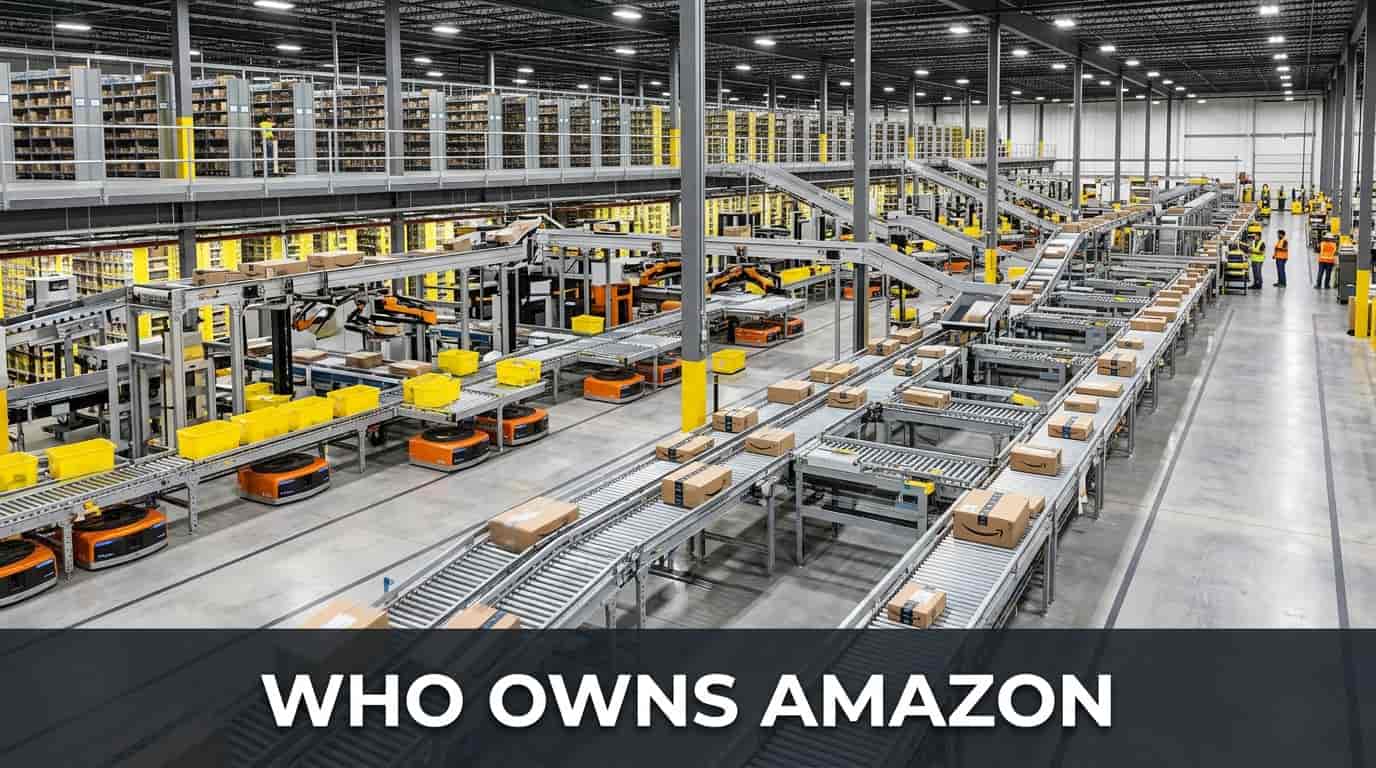
Amazon is a publicly traded company, and founder Jeff Bezos remains its largest individual shareholder with roughly 8.8 percent of the company, even though he stepped down as chief executive back in 2021.
Amazon built its reputation as the largest online retailer in the world, later expanding into cloud computing, streaming, smart home devices, and grocery through its Whole Foods acquisition.
Jeff Bezos founded Amazon in 1994 as an online bookstore operating out of his garage, growing it into one of the most valuable companies on the planet.
So if Bezos no longer runs the company day to day, how much control does he actually still hold.
This guide will explore Amazon major shareholders, Jeff Bezos remaining stake, current chief executive Andy Jassy leadership, and how the company core businesses fit together.
So let us get started.
Table of Contents
Who Owns Amazon Right Now
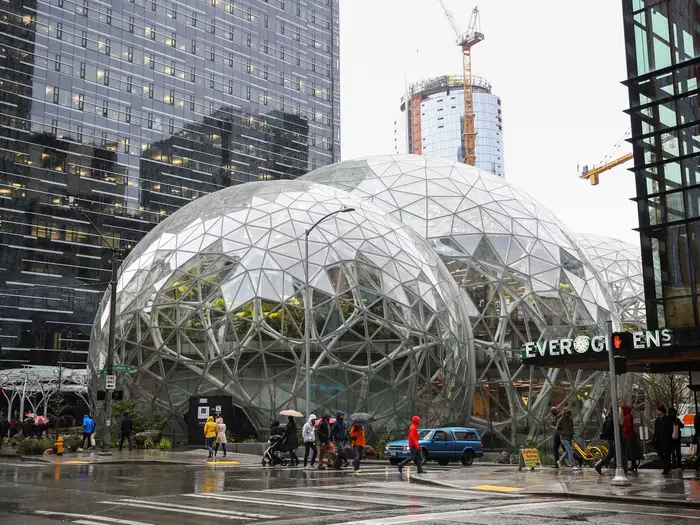
Amazon trades publicly on Nasdaq under the ticker AMZN, meaning ownership is spread across institutional investors, individual shareholders, and company insiders. Investor information is available on the official Amazon investor relations site.
Institutional shareholders hold roughly 64 percent of Amazon outstanding shares, with company insiders holding about 8.27 percent and retail investors holding the remaining 27.76 percent.
Jeff Bezos remains the largest individual shareholder by far, owning approximately 950 million shares, or about 8.8 percent of the company, according to Amazon most recent proxy statement.
Jeff Bezos Founding Story And Remaining Stake
Bezos founded Amazon in July 1994, initially selling books online before rapidly expanding into nearly every retail category imaginable.
Bezos served as chief executive for 27 years before handing the role to Andy Jassy in 2021, though he remains executive chairman and Amazon single largest individual shareholder.
MacKenzie Scott, Bezos former wife, received roughly 4 percent of Amazon shares as part of their 2019 divorce settlement, making her the company largest individual shareholder besides Bezos himself, according to Wikipedia.
Amazon Major Institutional Shareholders
BlackRock and Vanguard Capital Management each hold roughly 6.8 percent of Amazon outstanding shares, ranking among its largest institutional investors.
State Street holds approximately 3.6 percent, rounding out the group of major passive index fund managers that hold significant stakes in nearly every large American public company.
This broad institutional ownership base is typical of major technology companies, spreading influence across many large investors rather than concentrating it in a single outside firm.
Andy Jassy Leadership Since Taking Over From Bezos
Andy Jassy became Amazon chief executive in July 2021, having previously built and led Amazon Web Services into the dominant cloud computing platform it is today.
Jassy has focused heavily on cost discipline and efficiency since taking over, including significant layoffs aimed at streamlining Amazon sprawling operations.
Under Jassy, Amazon has also continued investing aggressively in artificial intelligence, both through its own models and infrastructure investments in AI companies like Anthropic.
Amazon Core Businesses Beyond Online Retail
Amazon Web Services remains the company most profitable division by far, powering a massive share of cloud infrastructure used across the internet.
Amazon also owns Whole Foods Market, acquired in 2017, along with Prime Video, Twitch, and a growing advertising business that increasingly rivals Google and Meta in digital ad revenue.
That diversification beyond retail has helped Amazon maintain strong profitability even as its original ecommerce business faces increasing competition from other online retailers. Our guide to who issues the Amazon credit card covers another part of Amazon retail ecosystem.
Amazon Investment In Anthropic And AI
Amazon has invested roughly 8 billion dollars in Anthropic, the company behind Claude, with additional commitments potentially bringing that total much higher. Our guide to who owns Claude AI explains how that investment fits into Anthropic broader ownership structure.
That AI investment reflects Amazon broader strategy of embedding artificial intelligence tools across its retail, cloud, and voice assistant products, including Alexa.
Amazon Web Services also serves as a primary cloud infrastructure partner for numerous AI companies, giving Amazon a financial stake in the success of the broader AI industry beyond its own products.
Is Amazon Really Good Or Really Worth It
Amazon consistently ranks as one of the most trusted and widely used online retailers, with Prime membership driving strong customer loyalty through fast shipping and bundled streaming perks.
Common criticism of Amazon centers on warehouse worker conditions, its impact on smaller retailers, and ongoing antitrust scrutiny, according to shareholder analysis of its dominant market position across multiple industries.
Investors frequently point to Amazon Web Services profitability as the financial engine that funds the company continued expansion into new markets and technologies.
For everyday shoppers, Amazon remains one of the most convenient online retail options available, even as questions about labor practices continue drawing public attention.
For investors, Amazon diversified revenue base across retail, cloud computing, and advertising makes it one of the more resilient large technology stocks on the market.
Amazon Prime membership, launched in 2005, now includes fast shipping, streaming video and music, and a wide range of additional perks bundled into a single annual or monthly subscription fee.
That membership program remains one of Amazon strongest tools for keeping customers loyal to its platform instead of shopping around at competing online retailers.
Amazon also continues expanding its physical retail footprint through Amazon Fresh grocery stores and Whole Foods, blending its online dominance with a growing brick and mortar presence across the country.
That combination of scale, logistics, and cloud computing profit gives Amazon a level of diversification that few other retailers anywhere in the world can currently match.
Few retailers anywhere else in the world can match that combination of scale and cloud profit today.
Analysts often cite this breadth as the core reason Amazon has weathered economic downturns better than most pure retail competitors over the years.
Frequently Asked Questions About Amazon
Does Jeff Bezos Still Run Amazon?
No. Andy Jassy has served as chief executive since 2021, though Bezos remains executive chairman and the company largest individual shareholder.
How Much Of Amazon Does Jeff Bezos Own?
Bezos owns approximately 950 million shares, or roughly 8.8 percent of Amazon outstanding stock.
Who Founded Amazon?
Jeff Bezos founded Amazon in July 1994 as an online bookstore.
Does Amazon Own Whole Foods?
Yes. Amazon acquired Whole Foods Market in 2017.

I am Jack Neel, a mechanical engineer, researcher, and writer. I created this website to share my knowledge about different brands and products with you. I research the manufacturers behind the brands and provide you with the information you need to make smart buying decisions.