
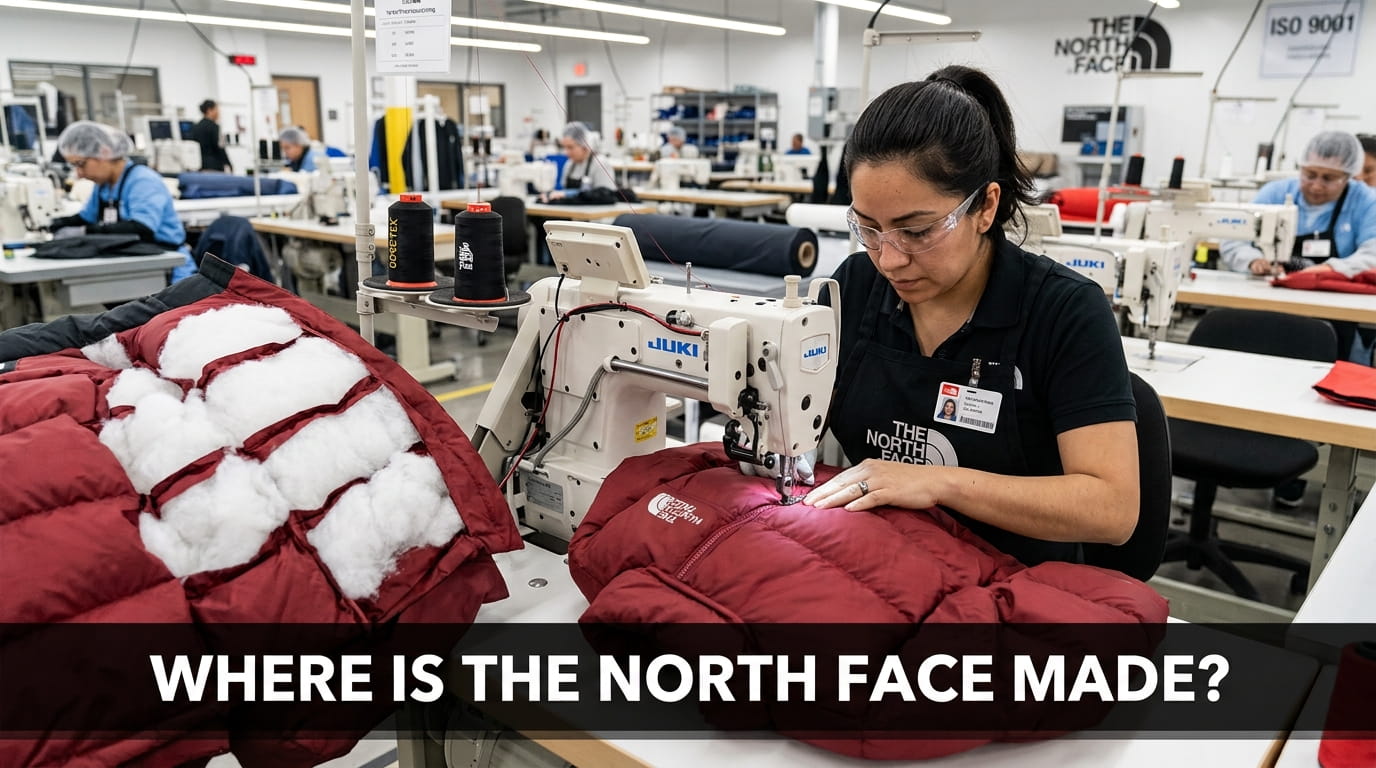
If you own a puffer jacket or a backpack with that Half Dome logo, you have probably wondered where it actually came from.
The North Face feels like an American brand through and through.
It was born in a small shop near Yosemite, and it still sells the idea of American wilderness better than almost anyone.
But the tag inside your jacket probably does not say Made in USA.
Most of what The North Face sells today is stitched together on the other side of the world, in factories the company does not own.
That is not unusual for a global apparel brand, but it is worth understanding clearly.
So let’s get started.
Table of Contents
Where Is The North Face Made?
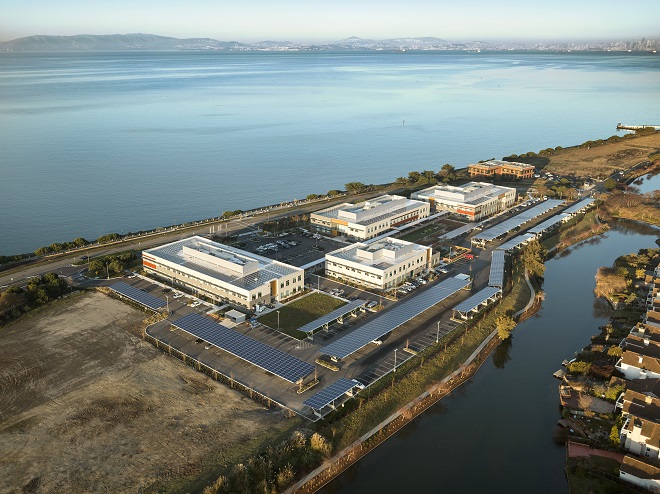
The North Face is an American company, but the vast majority of its products are manufactured overseas by contracted factories, mainly in China and Vietnam, with additional production in Bangladesh, India, Cambodia, El Salvador, Guatemala, Jordan, and Mexico. You can see the brand’s full catalog at thenorthface.com.
The company designs its gear in the United States, largely out of its headquarters in Denver, Colorado.
Actual sewing, cutting, and assembly happens through a network of third party contract manufacturers spread across Asia and Central America.
This is standard practice across almost the entire outdoor apparel industry.
Very few major brands still own their own factories.
The North Face is no exception, even though its branding leans heavily on rugged, homegrown imagery.
Who Owns The North Face?
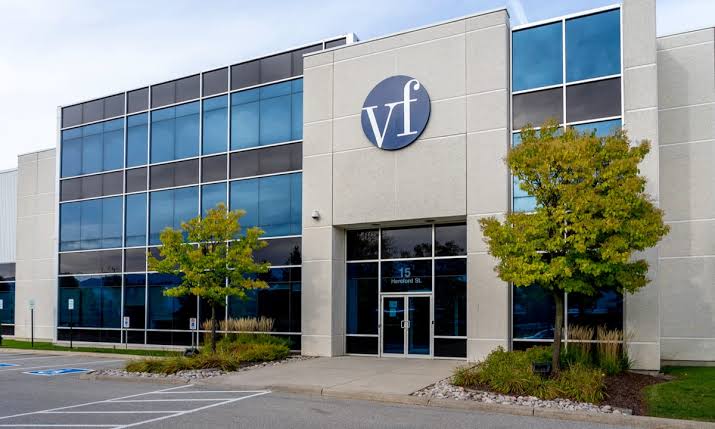
The North Face has been a wholly owned subsidiary of VF Corporation since 2000.
VF Corporation is one of the largest apparel companies in the world.
It also owns brands like Vans, Timberland, and Dickies.
VF bought The North Face for about 25.4 million dollars after the brand ran into serious financial trouble at the end of the 1990s.
That deal, worth roughly 25 million dollars at the time, turned a struggling outdoor label into one of VF’s biggest revenue drivers.
Decades later, The North Face has become one of VF’s most valuable brands by far.
Where Did The North Face Come From?
The North Face began in 1966, when Douglas Tompkins and his wife Susie Tompkins Buell opened a small retail store in San Francisco.
They sold climbing and camping gear to a niche crowd of outdoor enthusiasts.
Tompkins even designed some of the first dome tents, using bendable rods instead of a center pole for better wind resistance.
Just a year later, Tompkins sold his stake in the company to Kenneth Hap Klopp for 50,000 dollars.
Tompkins went on to cofound the fashion label Esprit with his wife.
The North Face kept growing through the following decades, eventually moving from a niche mountaineering brand into mainstream fashion and streetwear by the 2000s.
How The North Face Manufactures Its Gear Today
The North Face does not run its own factories for the bulk of its product line.
Instead, it works with contract manufacturers, similar to how Nike or Patagonia operate.
VF Corporation, the parent company, has relationships with dozens of manufacturing facilities across Asia and Central America.
Jackets and technical shells tend to come out of China and Vietnam.
Other categories, like backpacks and casual apparel, may be produced in Bangladesh, India, or Cambodia depending on the season and the specific product line.
This spread of factories lets VF shift production between countries as costs, tariffs, and capacity change.
Does The North Face Have a Made in USA Line?
Yes, and it is a genuinely notable exception to the offshore manufacturing story.
The North Face runs a Made in USA collection, and one of its best known efforts is called the Backyard Project.
That initiative set out to build an all cotton hoodie sourced, cut, and sewn within about 150 miles of the company’s former Bay Area headquarters.
Cotton was grown in California and Arizona, spun into yarn in South Carolina, then shipped back to Los Angeles for cutting and sewing.
Production later shifted to Los Angeles based partners with deep experience in domestic apparel manufacturing.
Even so, this domestic collection represents a small slice of what The North Face actually sells each year.
The North Face vs Patagonia: Who Makes Each?
Patagonia is the most natural comparison, since both brands sell technical outdoor gear with a strong environmental and adventure identity.
Patagonia also manufactures the overwhelming majority of its products overseas, using contract factories in countries like Vietnam, China, and Sri Lanka.
The key difference is not really where the clothes are made, since both brands rely on similar regions.
The difference is ownership and messaging.
Patagonia remains privately held and puts significant public effort into factory audits and supply chain transparency reports.
The North Face is owned by a large public conglomerate in VF Corporation, and its Made in USA line is a smaller side project rather than a core brand pillar the way sustainability is for Patagonia.
What Is Next for The North Face?
The North Face has continued to be one of VF Corporation’s strongest performers heading into 2026.
For the full fiscal year, The North Face brand generated around 4 billion dollars in revenue, up about 5 percent in constant currency, according to VF’s own earnings disclosures.
VF Corporation has also been managing tariff exposure carefully, warning investors of a potential gross margin hit in the tens of millions of dollars if certain Section 301 tariffs on Chinese goods return.
In response, the company has said it is rebalancing its sourcing footprint and reducing exposure to higher tariff trade routes.
That likely means continued diversification away from any single country, rather than a dramatic shift back toward domestic manufacturing.
Expect The North Face to keep leaning on Vietnam, Bangladesh, and other lower tariff regions as its core production base through 2026 and beyond.
For more brand supply chain breakdowns like this one, see our guides on Hydro Flask and Vans Shoes.
Frequently Asked Questions About Where The North Face Is Made
Is The North Face made in China?
Some North Face products are made in China, but the company also manufactures heavily in Vietnam, Bangladesh, and several other countries.
China is not the sole source, and its share of production has been shrinking across much of the apparel industry as brands diversify.
The exact country for any single item depends on the product category and the season it was produced.
Does The North Face own its own factories?
No, The North Face does not own most of the factories that make its products.
Like most major apparel brands, it contracts with independent manufacturers around the world.
The company’s parent, VF Corporation, does report working with dozens of facilities across multiple countries.
Is The North Face really Made in USA?
Only a small portion of its lineup qualifies.
The Backyard Project and related Made in USA styles are genuinely produced domestically, using cotton grown and spun in the United States before being sewn in Los Angeles.
But this represents a niche collection, not the company’s overall manufacturing approach, so most jackets, backpacks, and everyday gear are still made overseas.
Why does The North Face manufacture overseas instead of in the United States?
Cost is the biggest factor, along with access to specialized textile mills and experienced garment workers in countries like China, Vietnam, and Bangladesh.
This is the same reason nearly every major outdoor and fashion brand manufactures internationally.
Building enough domestic capacity to replace that entire network would be extremely expensive and slow, which is part of why the Made in USA line has stayed small.

I am Jack Neel, a mechanical engineer, researcher, and writer. I created this website to share my knowledge about different brands and products with you. I research the manufacturers behind the brands and provide you with the information you need to make smart buying decisions.