
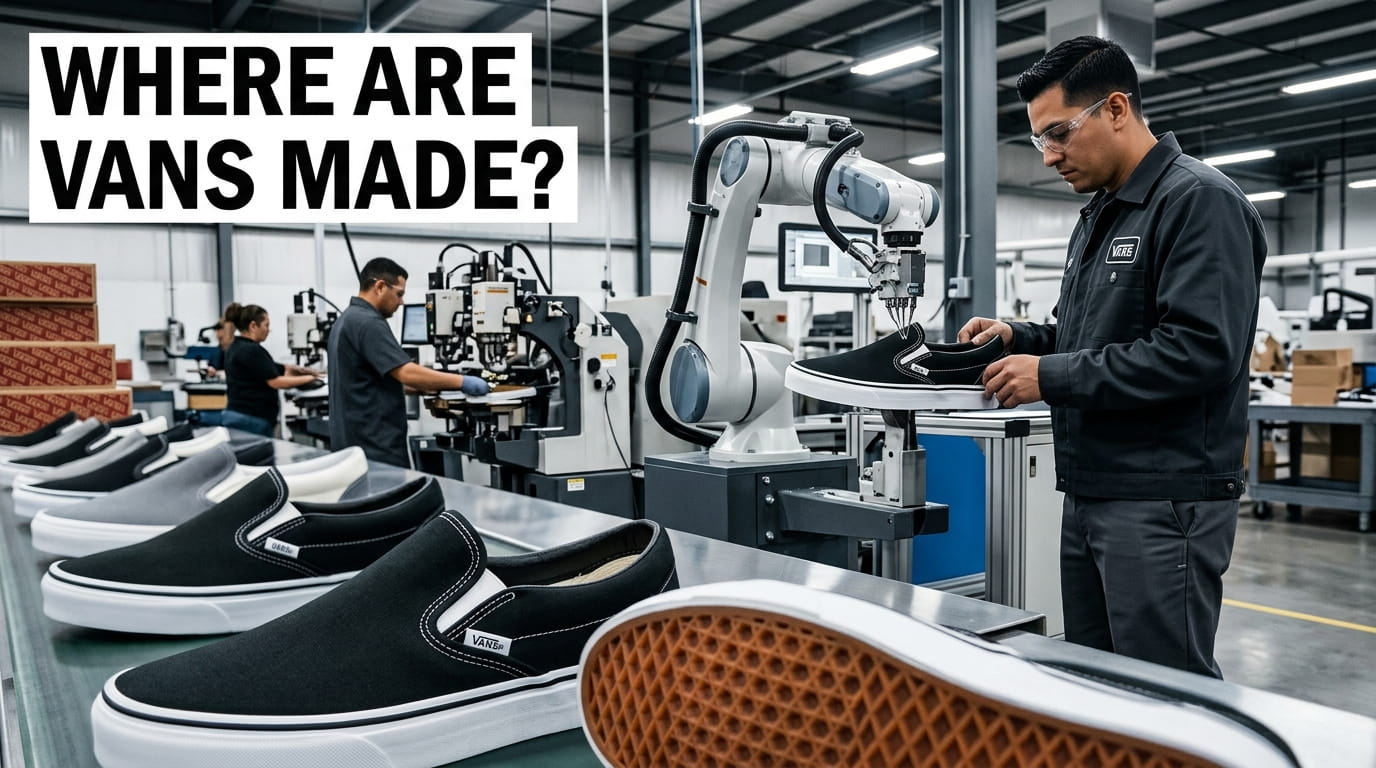
Vans shoes are made primarily in China and Vietnam, with additional production in Cambodia and Indonesia, through a network of independent contract manufacturers that handle all physical production on behalf of the brand.
Vans is one of the world’s most recognized footwear brands, built on the skateboarding and youth culture identity it established in Southern California in 1966, and known for its iconic vulcanized rubber sole, checkerboard pattern, and collaborations spanning music, art, and streetwear.
Vans is owned by VF Corporation (NYSE: VFC), a publicly traded American apparel and footwear holding company headquartered in Denver, Colorado, that also owns The North Face, Timberland, Dickies, Altra, Kipling, and Napapijri among other brands.
Knowing where Vans shoes are made helps buyers understand why the brand moved production overseas, what that means for quality, and whether any part of the manufacturing still has American roots.
This article covers Vans’ current manufacturing countries, the history of production in California, the vulcanizing process that defines how Vans are built, and how Vans compares to Converse on country of manufacture.
So let’s get started.
Table of Contents
Where Are Vans Shoes Made?
Vans manufactures all of its shoes through independent third-party contract factories overseas. China is the single largest production country, handling the majority of Vans output including the core classics such as the Old Skool, Authentic, and Sk8-Hi.
Vietnam is the second-largest manufacturing hub, contributing a substantial share of overall production. Cambodia and Indonesia round out the primary sourcing network, with each country playing a role in the brand’s supply chain diversification strategy.
Vans does not own any of these factories. Like most global footwear brands, it uses an asset-light approach, contracting with established manufacturing partners who build to Vans’ specifications.
The brand’s parent company, VF Corporation, provides centralized supply chain oversight across its portfolio, applying shared quality and compliance standards to factories serving multiple VF brands simultaneously.
According to VF Corporation’s Wikipedia entry, the company employs approximately 30,000 people globally and reported revenue of $10.45 billion in 2024.
No Vans shoes are currently made in the United States for public sale. In 2017, Vans released a limited run of 700 pairs made in America exclusively for professional skateboarders, designed to replicate early Anaheim-era production, but this was a one-time tribute and not a commercial production line available to consumers.
Were Vans Originally Made in the USA?

Yes. Vans was founded by brothers Paul and Jim Van Doren on March 16, 1966, when they opened the Van Doren Rubber Company at 704 East Broadway in Anaheim, California.
In its early years, Vans made shoes each morning and sold them directly from the factory that same afternoon, an unusually integrated model that let early customers even order custom color combinations on the spot.
For the next 30 years, Vans continued manufacturing in California, expanding to multiple facilities as demand grew through skateboarding culture, BMX, and eventually mainstream fashion adoption.
In the late 1990s, production moved to China and Vietnam to keep pace with rapidly rising global demand and to manage costs as the brand expanded internationally beyond what domestic manufacturing could support at scale.
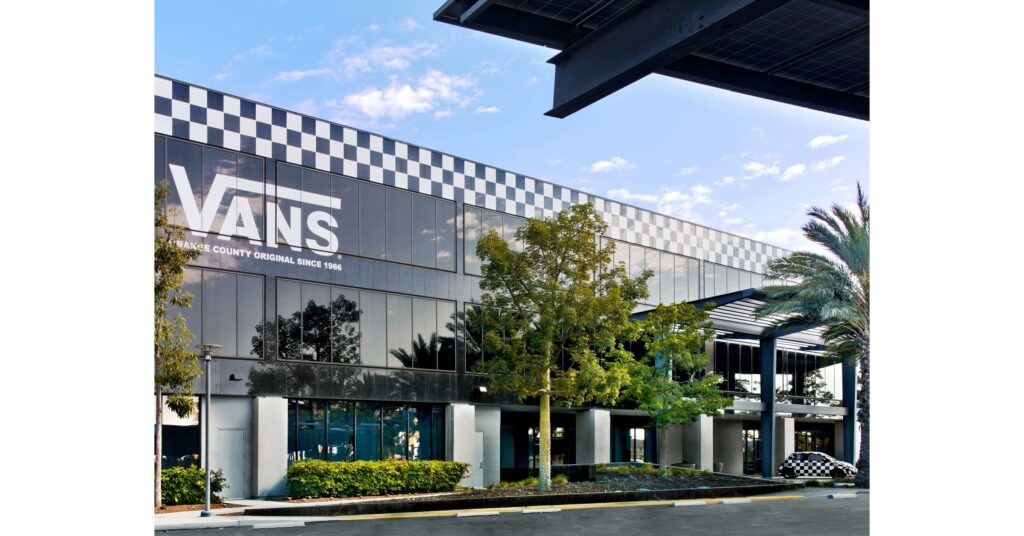
The last American Vans factory closed in the late 1990s. The company’s headquarters remained in Southern California, initially in Santa Ana and now in Costa Mesa, but all shoe manufacturing has been overseas for over 25 years.
VF Corporation acquired Vans in 2004, further integrating it into a global supply chain infrastructure that makes domestic U.S. production economically impractical at the brand’s current volume of 70 to 85 million pairs per year.
How Are Vans Shoes Made?
The defining element of how Vans are made is vulcanization, a heat-based process in which rubber is bonded to the canvas or suede upper using high temperatures rather than adhesive alone.
The vulcanizing process gives Vans their signature flexible, grippy sole that skateboarders prize for board feel, and it is the reason the brand’s classic styles have remained functionally unchanged for decades.
Each pair of Vans passes through up to 450 pairs of hands across the five-stage production process: rubber room (sole creation), lasting (shaping the upper), vulcanizing, quality inspection, and finishing.
The rubber outsoles are formed from cured rubber sheets before being attached to the canvas or suede uppers, with the vulcanizing oven completing the permanent bond that defines the shoe’s durability.
Key materials come from multiple suppliers across Asia. TSRC of Taiwan supplies the synthetic rubber used in heel pads and outsoles. Cosmo Textile Co. in Guangdong, China supplies fabrics and canvas.
Henkel Adhesive Technologies in Vietnam supplies the adhesives used in bonding. This international materials network is standard for footwear brands operating at Vans’ scale and reflects the highly globalized nature of modern shoe manufacturing.
Vans vs. Converse: Where Are They Each Made?
Vans and Converse are the two most comparable canvas sneaker brands in the global market, both with deep roots in American youth and subculture identity and both now manufacturing entirely overseas.
Converse is owned by Nike, Inc. and produces its shoes primarily in Vietnam and China, matching Vans’ production geography almost exactly despite the two brands belonging to different corporate parents.
Both brands also share a California origin story: Converse was founded in 1908 in Malden, Massachusetts, while Vans began in Anaheim, California in 1966.
Both moved production to Asia by the late 1990s or early 2000s as manufacturing economics made domestic footwear production at scale unviable. Neither brand produces shoes in the United States for mainstream commercial sale today.
The most meaningful difference between Vans and Converse on manufacturing is the vulcanizing process that defines Vans’ construction, versus Converse’s more standard cemented-sole construction for most of its Chuck Taylor line. For buyers interested in other footwear brand manufacturing origins, see Where Are Brooks Shoes Made and Who Makes Hoka Shoes.
Frequently Asked Questions About Vans Shoes
Are Vans shoes made in China?
Yes. China is the largest manufacturing country for Vans shoes and handles the majority of the brand’s total production output. Vietnam, Cambodia, and Indonesia also contribute significantly to the overall supply chain.
Who owns Vans shoes?
Vans is owned by VF Corporation (NYSE: VFC), an American apparel and footwear holding company headquartered in Denver, Colorado. VF Corporation acquired Vans in 2004. VF Corporation also owns The North Face, Timberland, Dickies, and several other major brands.
Were Vans ever made in the USA?
Yes. Vans was founded in Anaheim, California in 1966 and manufactured shoes domestically for approximately 30 years. Production moved to China and Vietnam in the late 1990s. A limited run of 700 American-made pairs was produced in 2017 exclusively for professional skateboarders, but no Vans are currently made in the U.S. for public sale.
How can I tell where my Vans were made?
The country of origin is printed on the label inside the tongue or heel lining of the shoe. U.S. footwear labeling regulations require the country of manufacture to be disclosed on the product. Checking this label is the most reliable way to determine whether a specific pair was made in China, Vietnam, Cambodia, or Indonesia.

I am Jack Neel, a mechanical engineer, researcher, and writer. I created this website to share my knowledge about different brands and products with you. I research the manufacturers behind the brands and provide you with the information you need to make smart buying decisions.