
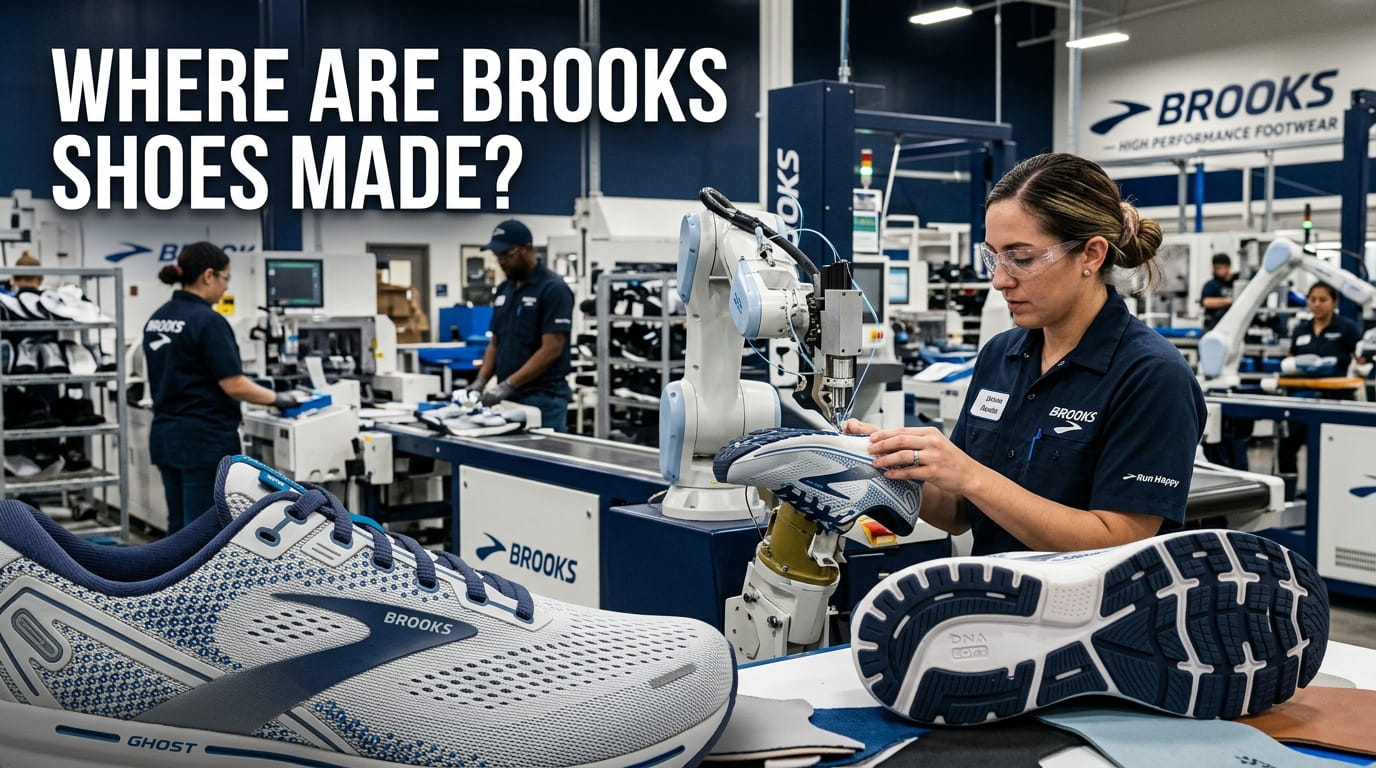
Brooks shoes are made by Brooks Running Company, an American brand headquartered in Seattle, Washington, that manufactures its running footwear through contracted factories predominantly in Vietnam.
Brooks is known as one of the most trusted names in running footwear, with a focus exclusively on running shoes and running apparel, and a loyal following among recreational and competitive runners who value comfort and injury prevention over style.
Brooks Running is wholly owned by Berkshire Hathaway, Warren Buffett’s American conglomerate, which acquired the brand through its 2006 purchase of Russell Corporation, giving one of the world’s most famous investors an indirect stake in the premium running shoe market.
Knowing who makes Brooks shoes helps buyers understand the corporate ownership and manufacturing model behind a brand that consistently scores at or near the top in running shoe performance tests.
This article covers Brooks’ ownership, founding story, where its shoes are made, its current lineup, and how Brooks compares to Hoka and New Balance.
So let’s get started.
Table of Contents
Who Owns Brooks Running?

Brooks Running Company is owned by Berkshire Hathaway, Inc., the American conglomerate controlled by Warren Buffett and headquartered in Omaha, Nebraska.
Berkshire Hathaway acquired Brooks as part of its $1.2 billion purchase of Russell Corporation in 2006. Russell was a sporting goods and apparel company that had owned Brooks since 2004 after acquiring it from a succession of previous owners.
Jim Weber has served as Brooks’ CEO since 2001 and is widely credited with transforming the brand into a focused performance running company, abandoning the casual and cross-training footwear lines that had diluted the brand, and concentrating entirely on running.
When Was Brooks Founded?
Brooks was founded in 1914 in Philadelphia, Pennsylvania, by Morris Goldenberg, initially producing bathing shoes, ballet slippers, and other specialty footwear rather than running shoes.
The company moved through various owners over the decades, producing track shoes in the 1970s and becoming known in the running community before a period of financial struggle in the 1980s and 1990s.
The modern Brooks focused entirely on running began taking shape under Jim Weber’s leadership in the early 2000s, when the brand committed to a “Run Happy” positioning that connected performance technology with the joy of running and built the brand’s current identity.
Where Are Brooks Shoes Made?
Brooks manufactures its footwear through contracted factories, primarily in Vietnam. Vietnam accounts for the majority of Brooks shoe production, with the country’s established athletic footwear manufacturing base providing the quality and capacity the brand requires.
Some Brooks models are manufactured in China and other Asian countries depending on the specific construction requirements and production allocations. The country of origin for each model is printed on the label inside the shoe.
Brooks does not own its manufacturing facilities. Like most major athletic footwear brands, it operates through long-term partnerships with contracted factory partners who specialize in high-performance athletic footwear construction. The full lineup is at Brooks Running’s official website.
What Shoes Does Brooks Currently Make?
Brooks focuses exclusively on running shoes and running-specific apparel and accessories. Its core shoe families serve different running needs.
The Ghost is Brooks’ most popular everyday trainer, known for its reliable cushioning and versatility. The Glycerin is the premium cushioned option. The Adrenaline GTS is the brand’s flagship stability shoe for overpronators. The Hyperion series targets speed and performance training.
Brooks’ GuideRails technology, which places holistic support structures on the sides of the midsole, is the brand’s signature stability innovation and is featured across its most popular models.
Brooks vs Hoka vs New Balance: Who Makes Each?
All three are major running shoe brands but from very different corporate structures. Brooks is owned by Berkshire Hathaway. Hoka is owned by Deckers Brands, a publicly traded US company. New Balance is privately owned by the Davis family and is notable for manufacturing some shoes in the United States.
Brooks and Hoka are the two fastest-growing premium running brands of the past decade. Brooks built its growth on the running specialty retail channel and a highly loyal customer base. Hoka broke through by disrupting the market with maximum cushioning, attracting both ultra-runners and everyday walkers.
New Balance differentiates with its US and UK manufacturing story, producing approximately 4 million pairs annually at American factories. Both Brooks and Hoka manufacture all their shoes in Asia through contract factories.
Frequently Asked Questions About Where Brooks Shoes Are Made
Are Brooks shoes made in the USA?
No. Brooks shoes are manufactured primarily in Vietnam through contracted factories. Brooks is headquartered in Seattle, Washington, but does not operate footwear manufacturing facilities in the United States.
Does Warren Buffett own Brooks Running?
Yes, indirectly. Brooks Running is a wholly owned subsidiary of Berkshire Hathaway, the conglomerate led by Warren Buffett. Berkshire acquired Brooks as part of its purchase of Russell Corporation in 2006. Buffett has spoken positively about Brooks in Berkshire Hathaway shareholder communications.
Is Brooks a good running shoe?
Brooks consistently earns strong reviews from running specialty retailers, runners, and publications including Runner’s World. The Ghost is one of the most recommended everyday training shoes in the industry. The brand is especially well regarded for stability footwear and for the comfort it provides runners who prioritize injury prevention over maximum lightweight performance.
Why does Brooks only make running shoes?
Brooks made a strategic decision in the early 2000s under CEO Jim Weber to abandon non-running categories and focus entirely on running. The brand had previously sold casual shoes, cross trainers, and other footwear that diluted its identity. The refocus on running exclusively allowed Brooks to invest all its resources in running technology and build an intensely loyal specialty retail following.

I am Jack Neel, a mechanical engineer, researcher, and writer. I created this website to share my knowledge about different brands and products with you. I research the manufacturers behind the brands and provide you with the information you need to make smart buying decisions.