
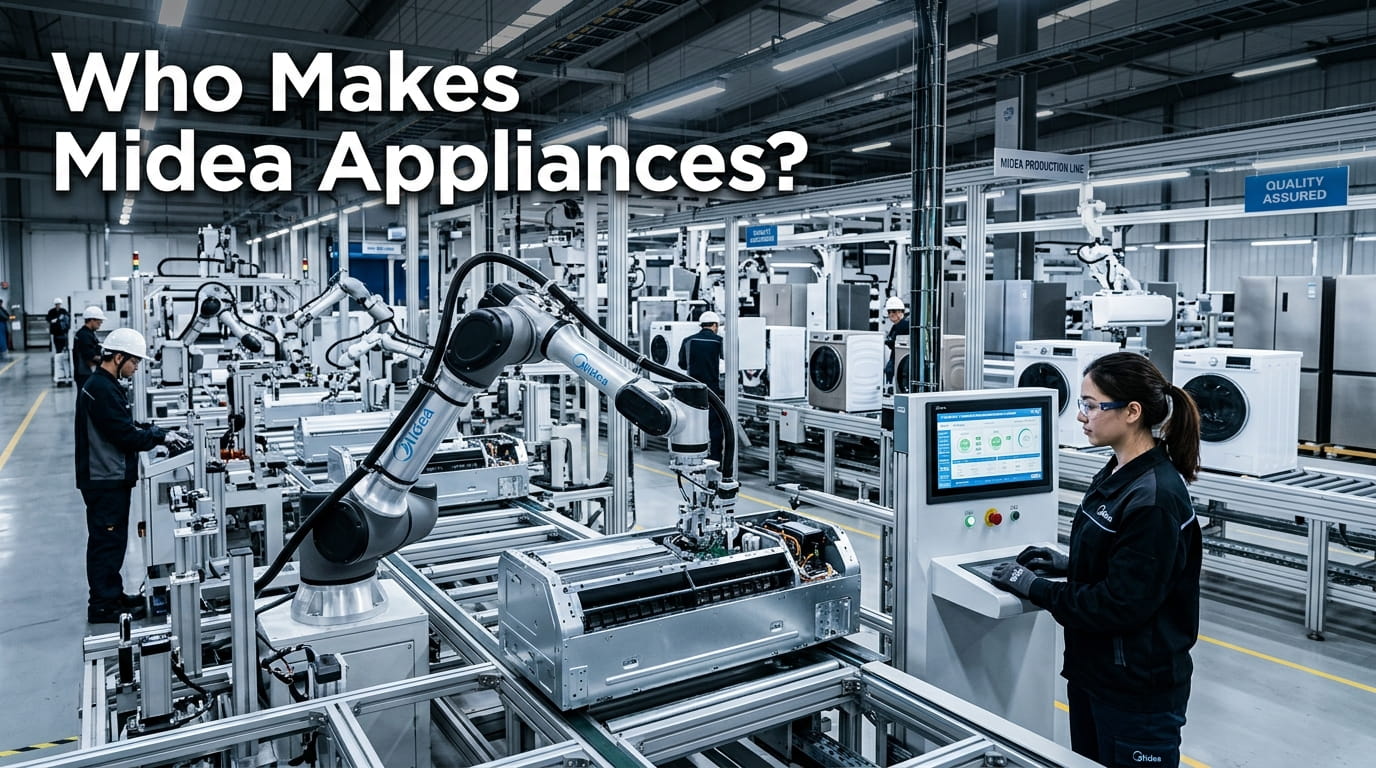
Midea appliances are primarily made by Midea Group Co., Ltd., a Chinese multinational corporation headquartered in Foshan, Guangdong Province, China. US products are available at Midea’s official US website.
Midea is known for producing a wide range of home appliances including air conditioners, refrigerators, washing machines, microwaves, and robotic vacuum cleaners at highly competitive price points.
Midea Group is a publicly traded company listed on the Shenzhen Stock Exchange and is one of the largest home appliance manufacturers in the world by annual revenue, surpassing $50 billion in sales.
Knowing who makes Midea appliances helps buyers understand the corporate scale, quality standards, and global reach behind what can appear to be an unfamiliar brand name on store shelves.
This article covers Midea’s ownership, founding story, where its products are made, which brands it owns, and how it compares to Whirlpool and LG in the appliance market.
So let’s get started.
Table of Contents
Who Owns Midea?
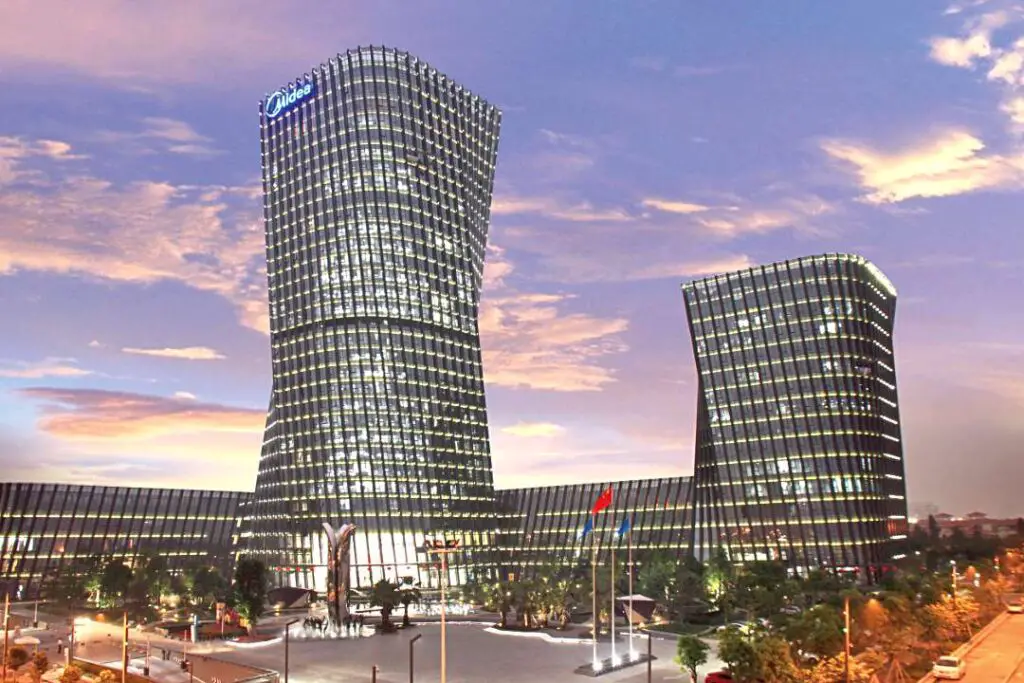
Midea Group is a publicly traded Chinese corporation, with its largest individual shareholder being founder He Xiangjian and his family, who hold a significant ownership stake.
The company is not a state-owned enterprise. It operates as an independent, market-driven business listed on the Shenzhen Stock Exchange under ticker 000333.
Midea has also made international acquisitions that expanded its reach. Midea acquired KUKA Robotics, a German industrial robot manufacturer, in 2017, adding automation and robotics to its industrial portfolio alongside home appliances.
When Was Midea Founded?
The company started as a bottle cap manufacturer before shifting to electric fans in the 1970s and then expanding rapidly into air conditioners and other appliances in the 1980s and 1990s.
Midea went public on the Shenzhen Stock Exchange in 1993, accelerating its growth with capital for new product lines and international expansion.
Where Are Midea Appliances Made?
The majority of Midea products are manufactured in China across multiple large-scale factories in Guangdong, Anhui, Hubei, and other provinces.
Midea also operates manufacturing facilities in Brazil, Egypt, India, Vietnam, and several other countries to serve regional markets without the cost and logistics of shipping from China.
All Midea products are subject to the company’s global quality control standards regardless of where they are assembled, with the same core engineering and design applied across all production locations.
What Brands Does Midea Own?
Midea sells products under its own Midea brand but also owns or licenses several other well known names in different markets.
Midea owns the Little Swan brand, a leading Chinese washing machine label. It also holds a license to manufacture and sell home appliances under the Toshiba brand name in most global markets outside Japan.
In 2016 Midea acquired the Toshiba Home Appliances business, giving it access to Toshiba’s brand, technology, and distribution channels for a 40-year licensed period. This means Toshiba-branded refrigerators and washing machines sold outside Japan are Midea products.
Midea vs Whirlpool vs LG: Who Makes Each Brand?
All three are among the largest home appliance companies in the world, each from a different country. Midea is Chinese. Whirlpool is American, headquartered in Benton Harbor, Michigan. LG is South Korean, headquartered in Seoul.
Midea surpassed Whirlpool in annual revenue around 2020 and has since grown into one of the two largest appliance companies globally alongside LG.
Whirlpool owns brands including Maytag, KitchenAid, Amana, and JennAir. LG sells under the LG brand globally and owns no major separate appliance labels. Midea owns Midea, Little Swan, Toshiba (licensed), and KUKA Robotics.
Is Midea a Good Brand?
Midea is widely regarded as a reliable mid-range appliance brand with strong value for its price point.
The brand has won multiple design and quality awards in European and Asian markets. Its air conditioner line in particular is considered one of the best in its segment for energy efficiency and quiet operation.
US consumers may encounter Midea appliances at major retailers including The Home Depot and Best Buy, often sold as a budget-conscious alternative to Whirlpool or LG at a meaningfully lower price.
What Is Next for Midea?
Midea is aggressively expanding its smart home and connected appliance ecosystem, integrating its products with major platforms including Amazon Alexa and Google Home.
The company is growing its North American presence through retail partnerships and is working to increase brand awareness in markets where Midea is less recognized than LG or Whirlpool.
Midea’s KUKA Robotics division is also expanding, serving the automotive and manufacturing industries as automation demand grows globally.
Frequently Asked Questions About Who Makes Midea Appliances
Is Midea a Chinese company?
Yes. Midea Group is a Chinese corporation, founded in 1968 in Foshan, Guangdong Province. It is listed on the Shenzhen Stock Exchange and is not a state-owned enterprise.
Does Midea make Toshiba appliances?
Yes. Midea acquired the Toshiba Home Appliances business in 2016 and holds a 40-year license to manufacture and sell products under the Toshiba brand outside of Japan. Toshiba-branded refrigerators, washing machines, and microwaves sold internationally are Midea products.
Are Midea appliances reliable?
Midea appliances are generally considered reliable for their price range, with strong reviews particularly for air conditioners, portable ACs, and dehumidifiers. The brand holds certifications in energy efficiency and has won design awards in multiple markets. As with any appliance, individual product quality can vary by model.
Where is Midea headquartered?
Midea Group is headquartered in Foshan, Guangdong Province, China, where the company was founded in 1968. Its corporate campus is in Beijiao Town, Shunde District, Foshan.

I am Jack Neel, a mechanical engineer, researcher, and writer. I created this website to share my knowledge about different brands and products with you. I research the manufacturers behind the brands and provide you with the information you need to make smart buying decisions.