
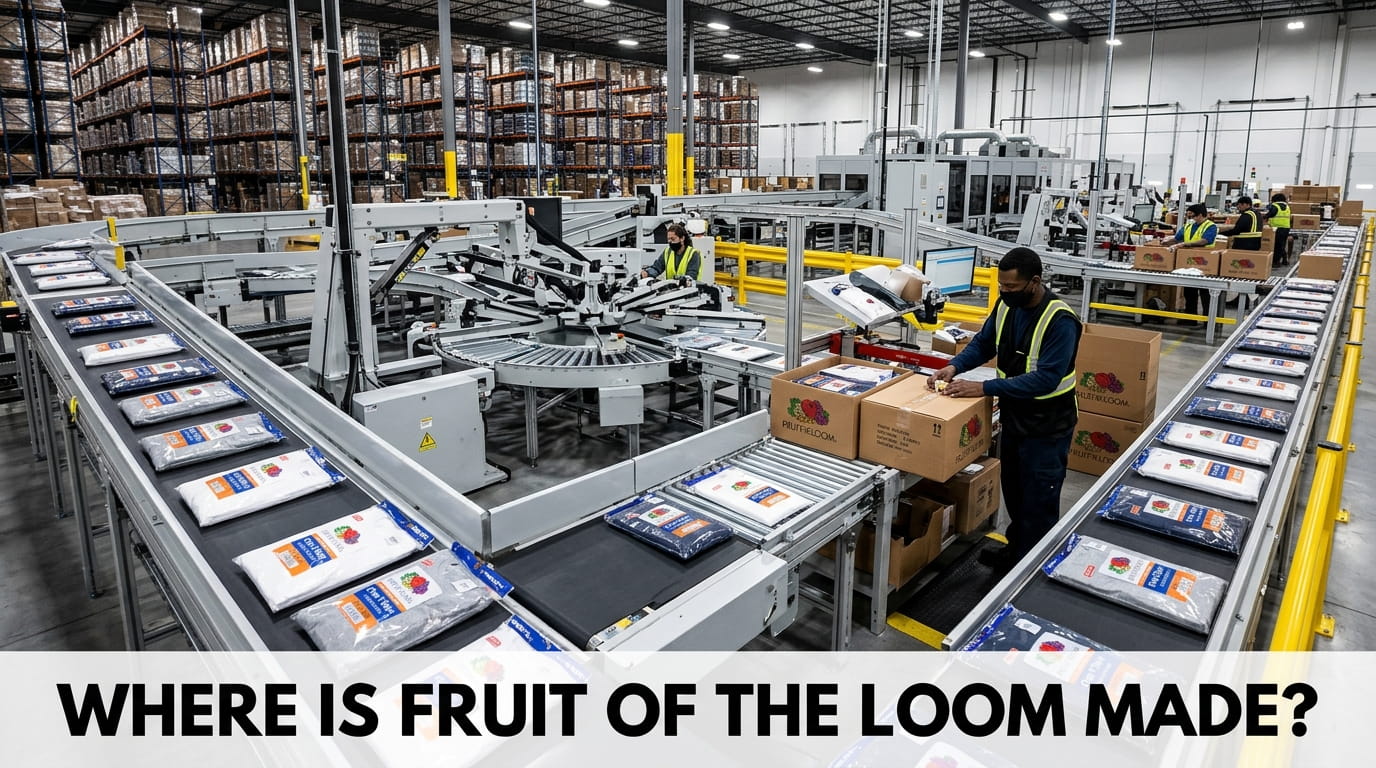
Almost everyone has owned a Fruit of the Loom shirt or a pack of its underwear at some point.
The name itself sounds almost old fashioned, like it belongs to a small American mill town.
That is not entirely wrong, since the brand does trace back to the 1800s.
But the company you are buying from today looks very different from the one that started over 170 years ago.
Its factories, its owner, and even its retail strategy have all shifted dramatically, especially in the last couple of years.
Understanding where your shirt actually comes from means understanding that whole journey.
So let’s get started.
Table of Contents
Where Is Fruit of the Loom Made?
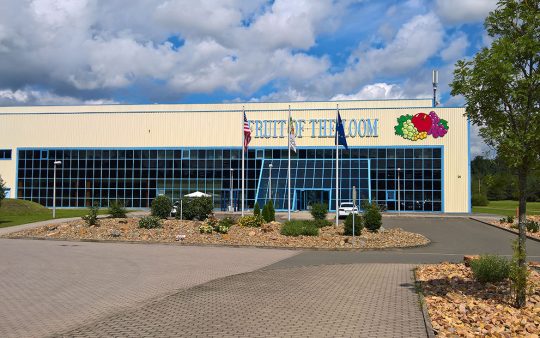
Fruit of the Loom manufactures most of its apparel in Honduras today, after moving the bulk of its production out of the United States over the past two decades. You can see its current product lines at fruit.com.
The company once ran significant textile operations in Kentucky, including a well known plant in Jamestown that closed back in 2014 when production shifted to Honduras to cut costs.
Since then, Honduras has become the center of Fruit of the Loom’s manufacturing network, alongside operations in other Central American and Caribbean countries.
More recently, the company has been closing several of its Honduras factories as well, including some long running unionized plants, while keeping non union facilities running.
That has made Fruit of the Loom’s manufacturing footprint smaller and more concentrated than it once was.
Who Owns Fruit of the Loom?

Fruit of the Loom has been a wholly owned subsidiary of Berkshire Hathaway since 2002.
Warren Buffett’s company bought Fruit of the Loom out of bankruptcy for around 835 million dollars in cash, with the deal closing in April 2002.
Before that, Fruit of the Loom had gone through serious financial turmoil, including a 1999 bankruptcy filing after reporting a loss of more than 576 million dollars.
Its former chairman had also structured parts of the company through a Cayman Islands entity to reduce taxes, which contributed to the mess that eventually pushed the company into bankruptcy court.
Berkshire Hathaway has owned the brand ever since, running it as one of many wholly owned subsidiaries in its portfolio.
Where Did Fruit of the Loom Come From?
Fruit of the Loom traces back to 1851, when brothers Robert and Benjamin Knight founded a textile operation in Rhode Island.
The Fruit of the Loom brand name itself was introduced a few years later, in 1856.
For most of the twentieth century, the company built its identity around American made basics, particularly underwear and plain tee shirts sold at accessible prices.
That domestic manufacturing base slowly eroded through the late 1900s and early 2000s, as the company, like most of the apparel industry, moved production toward lower cost countries.
By the time Berkshire Hathaway bought it in 2002, Fruit of the Loom was already well into that transition toward offshore manufacturing.
How Fruit of the Loom Manufactures Its Products Today
Fruit of the Loom operates a network of company run and contracted facilities, concentrated heavily in Honduras.
At one point the company ran six facilities in Honduras alone, though it has since been closing several of them, including the Jerzees Nuevo Dia and Confecciones Dos Caminos plants.
Labor advocates and industry reporters have raised concerns that the closures disproportionately affected unionized factories, while the one non union plant in the country was not targeted for closure.
The company has described its Honduras operations as central to its global manufacturing strategy for decades, dating back to its widely reported shift away from Kentucky in 2014.
Fruit of the Loom also owns other apparel brands, including Jerzees and Russell Athletic, which share overlapping manufacturing networks in Central America.
Does Fruit of the Loom Make Anything in the USA?
Fruit of the Loom does not manufacture meaningful volumes of apparel in the United States anymore.
Its last major domestic textile plant, in Jamestown, Kentucky, closed back in 2014, ending more than a century of Kentucky based production.
Today the company is headquartered in Bowling Green, Kentucky, but that is a corporate office rather than a manufacturing site.
Unlike The North Face or Wolverine, Fruit of the Loom has not built a marketed Made in USA product line to fill that gap.
Fruit of the Loom vs Gildan: Who Makes Each?
Gildan is the closest direct competitor to Fruit of the Loom in the blank apparel and promotional tee shirt market.
Both companies rely heavily on Honduras for production, though their trajectories have recently diverged.
Fruit of the Loom has been shrinking its Honduras footprint through factory closures, while Gildan has been expanding, particularly through new investment in Bangladesh.
The two companies also collided directly at the leadership level in 2024, when Gildan briefly hired former Fruit of the Loom executive Vince Tyra as its CEO, before shareholder pressure forced his ouster within months.
Gildan has since pulled further ahead in scale after completing its acquisition of HanesBrands in December 2025, making it a considerably larger competitor than Fruit of the Loom in the basic apparel space.
What Is Next for Fruit of the Loom?
Fruit of the Loom announced it will phase out its namesake branded styles from the North American wholesale channel entirely by early 2026.
That shift is meant to let the company concentrate its wholesale business on its Jerzees brand, offering what it describes as a good, better, best lineup for decorators and promotional buyers.
Fruit of the Loom has said it remains committed to its retail, ecommerce, and international presence, including wholesale channels in Europe, even as the North American wholesale exit proceeds.
The company’s Russell Athletic and Jerzees brands will continue to be sold in the promotional products space in North America.
Given the recent factory closures in Honduras and the broader wholesale restructuring, 2026 looks like a year of consolidation for Fruit of the Loom rather than expansion.
For more brand supply chain breakdowns like this one, see our guides on Levi’s and Wrangler Jeans.
Frequently Asked Questions About Where Fruit of the Loom Is Made
Is Fruit of the Loom still made in Kentucky?
No, Fruit of the Loom stopped manufacturing in Kentucky back in 2014, when it closed its last major textile plant in Jamestown.
The company is still headquartered in Bowling Green, Kentucky, but that location is corporate offices rather than a factory.
Production had already shifted to Honduras well before that closure was finalized.
Does Fruit of the Loom own its factories in Honduras?
Fruit of the Loom has operated a mix of company associated and contracted facilities in Honduras over the years.
Several of these plants, including Jerzees Nuevo Dia and Confecciones Dos Caminos, have been closed in recent years as part of a broader restructuring.
Labor groups have noted that the closures affected unionized plants more than the company’s non union facility in the country.
Is Fruit of the Loom leaving stores in 2026?
Not entirely, but its namesake branded products are being phased out of the North American wholesale channel by early 2026.
The company says it will keep selling Fruit of the Loom branded goods through retail, ecommerce, and international wholesale channels, particularly in Europe.
Meanwhile, its Jerzees and Russell Athletic brands will remain available to promotional products customers in North America.
Who really owns Fruit of the Loom today?
Fruit of the Loom has been a wholly owned subsidiary of Berkshire Hathaway since 2002, when Warren Buffett’s company bought it out of bankruptcy for roughly 835 million dollars.
It operates as one of many consumer brands under the larger Berkshire Hathaway umbrella.
The company is headquartered in Bowling Green, Kentucky, even though its manufacturing has long since moved overseas.

I am Jack Neel, a mechanical engineer, researcher, and writer. I created this website to share my knowledge about different brands and products with you. I research the manufacturers behind the brands and provide you with the information you need to make smart buying decisions.