
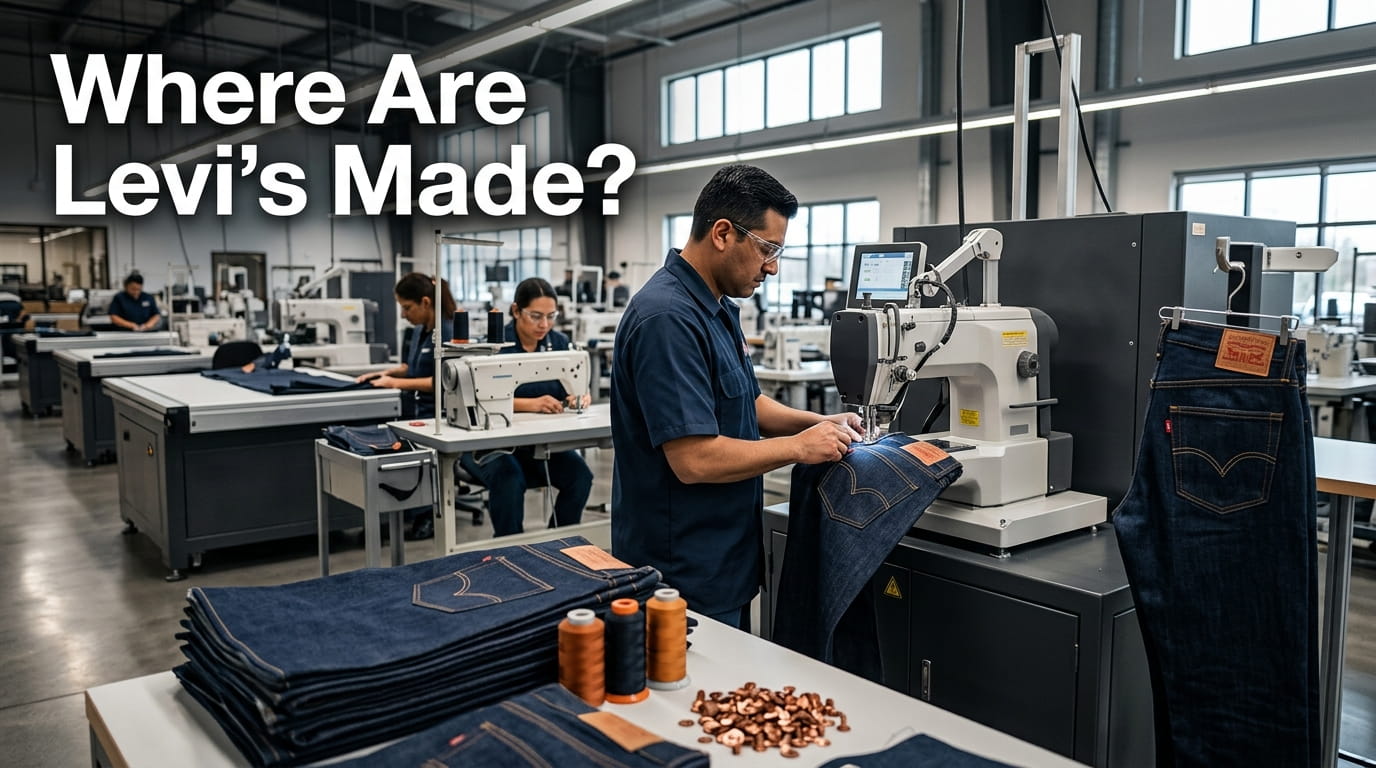
Levi’s jeans are made by Levi Strauss & Co., an American publicly traded company headquartered in San Francisco, California, with manufacturing carried out through contracted factories primarily in Bangladesh, Vietnam, Pakistan, Cambodia, and other Asian countries.
Levi’s is known as the inventor of blue jeans, with a 170-year heritage that includes the iconic 501 jean, the trucker jacket, and a brand presence so embedded in American culture that its name is synonymous with denim in dozens of languages worldwide.
Levi Strauss & Co. is a publicly traded company listed on the New York Stock Exchange under ticker LEVI, with the Haas family, descendants of Levi Strauss’s nephews, retaining majority voting control through a dual-class share structure.
Knowing where Levi’s are made helps buyers understand that despite the American heritage, almost all Levi’s jeans are manufactured overseas, and what standards govern the factories that produce them.
This article covers Levi’s founding, ownership, where its products are manufactured, its current product range, and how Levi’s compares to Wrangler and Lee.
So let’s get started.
Table of Contents
Who Owns Levi’s?
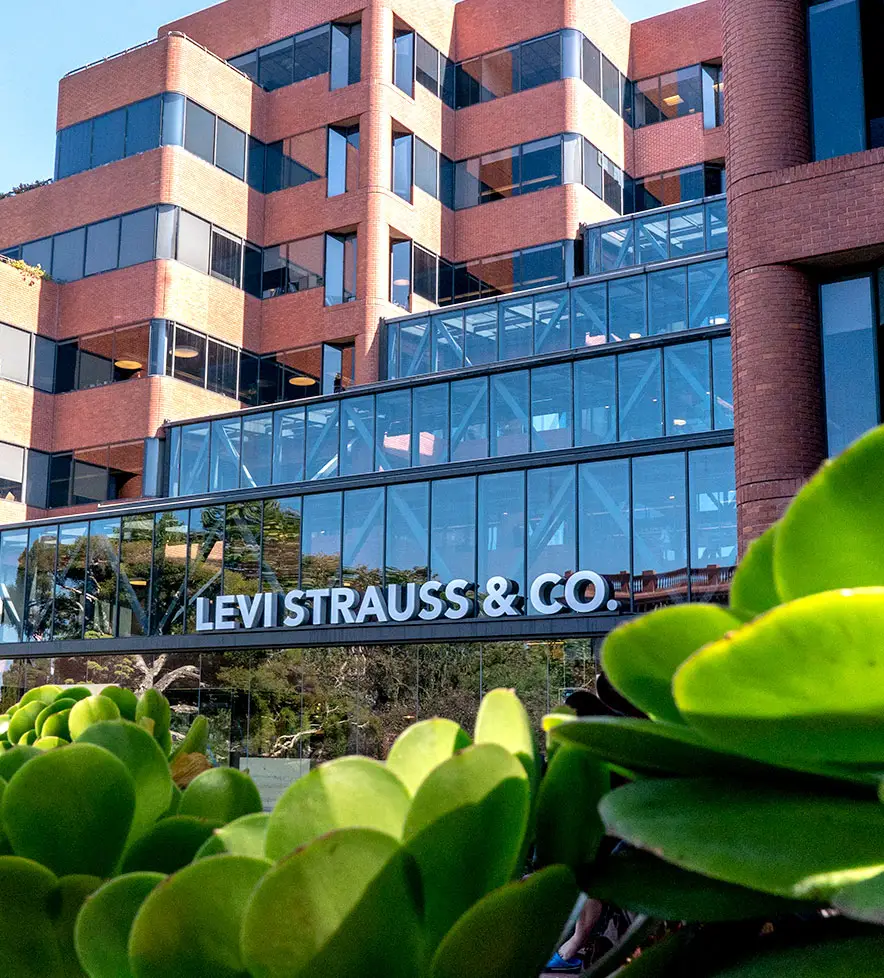
Levi Strauss & Co. is a publicly traded company that went public on the NYSE in 2019 in its second IPO (the company had been publicly traded previously and taken private in 1985). Despite being publicly traded, the Haas family retains majority voting control through a dual-class share structure.
The Haas family are descendants of Levi Strauss’s nephews, who inherited and ran the company after Strauss’s death in 1902. The family’s retention of voting control across generations has given the company a long-term ownership stability unusual for a consumer brand of its size.
Levi Strauss & Co. also owns the Dockers casual pants brand and the Beyond Yoga activewear brand, acquired in 2021, expanding its portfolio beyond denim.
When Was Levi’s Founded?
Levi Strauss & Co. was founded in 1853 by Levi Strauss, a Bavarian-born Jewish immigrant who arrived in San Francisco to supply dry goods to Gold Rush miners. Strauss was a dry goods merchant, not initially a jeans manufacturer.
In 1873, Strauss partnered with Nevada tailor Jacob Davis to patent the process of using copper rivets to reinforce the stress points of work pants, creating what became known as blue jeans. Patent number 139,121 was granted on May 20, 1873, a date celebrated by Levi Strauss & Co. as the birthday of blue jeans.
The 501 style, now one of the most recognized clothing items in history, took its numerical name from the lot number assigned in Levi’s catalog system. It has been in continuous production since the 1890s, making it one of the longest-running manufactured products in American commercial history.
Where Are Levi’s Made?
Levi’s jeans are manufactured through a global network of contracted factories, primarily in Bangladesh, Vietnam, Pakistan, Cambodia, and Sri Lanka. Levi Strauss & Co. does not own its manufacturing facilities and contracts production to independent apparel manufacturers.
Levi’s maintains a Supplier Code of Conduct that governs labor standards, health and safety, environmental practices, and business ethics across its supply chain. The company publishes an annual sustainability report and discloses its major manufacturing partners and their locations.
Levi’s does not manufacture jeans in the United States at any significant scale. The company closed its last US manufacturing facilities in 2003. Some limited-edition or special collaboration products may be made in the US, but the core 501, 511, 512, and other standard styles are made in Asia. The full range is at Levi’s official US website.
What Does Levi’s Make?
Levi’s core products are denim jeans across multiple fits and cuts. The 501 Original is the brand’s flagship straight fit. The 511 is the slim fit. The 512 is a slim taper. The 505 is a regular straight. The 550 is a relaxed fit. The 517 and 527 are bootcut styles.
Beyond jeans, Levi’s sells the Trucker Jacket (its signature denim jacket), T-shirts, shorts, chinos, and apparel through its own stores and department store partners globally. The Levi’s Premium line offers higher-priced versions of classic styles with enhanced construction and materials.
Levi’s has periodically collaborated with major luxury and streetwear brands for limited-edition collections that extend the 501’s cultural cachet into new consumer demographics.
Levi’s vs Wrangler vs Lee: Who Makes Each?
All three are American heritage denim brands with very different current ownership. Levi Strauss & Co. is a publicly traded American company controlled by the Haas family. Wrangler is a brand of Kontoor Brands, Inc., an American company spun off from VF Corporation in 2019. Lee is also a Kontoor Brands brand, making Wrangler and Lee corporate siblings under the same parent.
Levi’s targets a broader lifestyle audience and premium positioning. Wrangler is associated with western, rodeo, and country culture. Lee is positioned at the mainstream mid-market with a focus on fit and comfort. All three manufacture primarily in Asia through contracted factories.
Levi’s is the highest-revenue of the three by a significant margin, generating approximately $6 billion annually compared to Kontoor Brands’ combined revenue of approximately $2.5 billion for both Wrangler and Lee.
Frequently Asked Questions About Where Levi’s Are Made
Are Levi’s jeans still made in the USA?
No, not at any significant scale. Levi Strauss & Co. closed its last US manufacturing facilities in 2003. Levi’s jeans are now made primarily in Bangladesh, Vietnam, Pakistan, and other Asian countries through contracted factories. Some very limited special editions may be made domestically but standard production is entirely overseas.
When were Levi’s jeans invented?
Levi’s jeans were invented in 1873, when Levi Strauss and Jacob Davis received US Patent 139,121 for using copper rivets to reinforce the stress points of work pants. May 20, 1873 is recognized as the birthday of blue jeans, making Levi’s the original creator of the product category.
Who owns Levi Strauss?
Levi Strauss & Co. is publicly traded on the NYSE under ticker LEVI. The Haas family, descendants of Levi Strauss’s nephews, retains majority voting control through a dual-class share structure. The family has maintained voting control since the company was founded in the 1850s.
What is the most popular Levi’s jean?
The Levi’s 501 Original is the brand’s most iconic and historically significant model, in continuous production since the 1890s. It remains one of the best-selling jeans globally. The 511 Slim is the brand’s most popular modern cut in terms of current sales volume, as straight and slim fits have dominated denim trends since the 2010s.

I am Jack Neel, a mechanical engineer, researcher, and writer. I created this website to share my knowledge about different brands and products with you. I research the manufacturers behind the brands and provide you with the information you need to make smart buying decisions.