

Scion was made by Toyota Motor Corporation, the Japanese automaker headquartered in Toyota City, Japan, before the brand was discontinued in August 2016 after 13 years in the North American market.
Scion was known for its affordable entry-level vehicles, fixed no-haggle pricing, and heavy customization culture, targeting younger buyers in their 20s who Toyota felt were not being served by its mainstream lineup in the early 2000s.
Scion was a wholly owned brand of Toyota Motor Corporation, operating exclusively in the United States, Canada, and Puerto Rico. When Toyota discontinued Scion in 2016, surviving models were rebadged as Toyota vehicles or discontinued entirely.
Knowing who made Scion and why it was discontinued helps buyers understand the brand’s place in automotive history and what became of the vehicles and models that carried the Scion name.
This article covers Scion’s ownership, history, why Toyota shut it down, what models it sold, and what happened to each model after the brand’s closure.
So let’s get started.
Table of Contents
Who Made Scion?
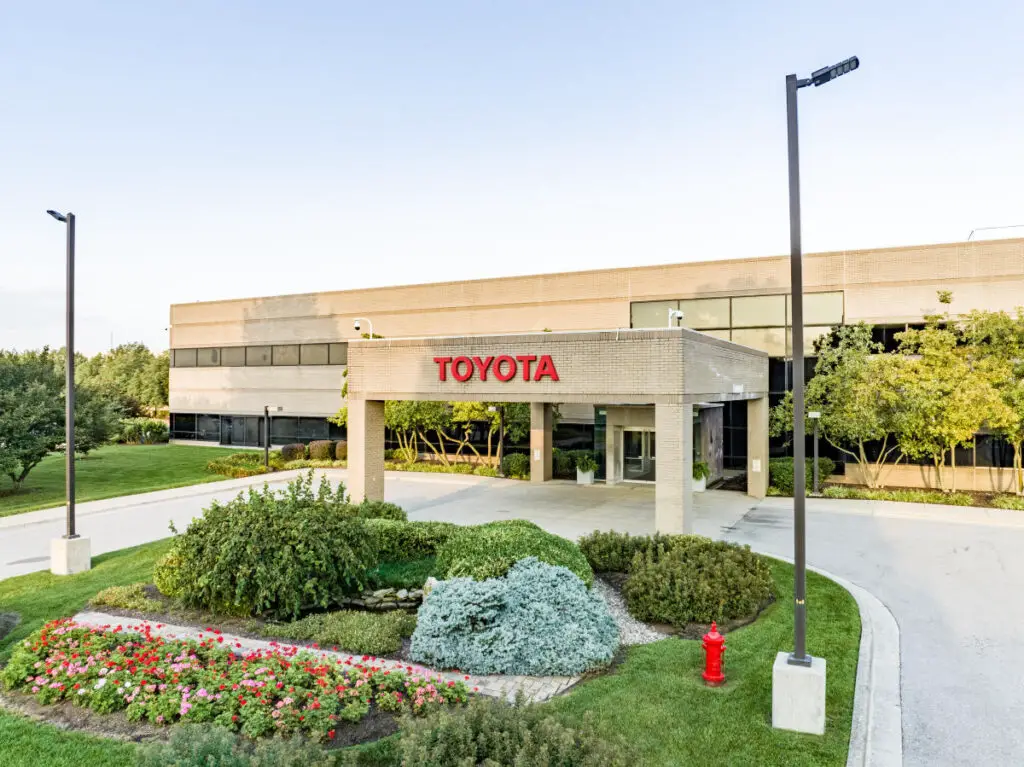
Scion was wholly owned and operated by Toyota Motor Corporation. It was never a separate company, independent brand, or publicly traded entity. Toyota created Scion as an in-house youth brand and wound it down as an internal corporate decision.
All Scion vehicles were manufactured at the same Toyota plants as their mechanically related Toyota counterparts. The Scion tC, for example, was built at the Takaoka plant in Japan. The Scion xD was built in Japan as well.
Toyota funded, designed, marketed, and distributed all Scion products through a dedicated Scion division within Toyota Motor Sales, U.S.A., with Scion vehicles sold through Toyota dealerships that maintained a separate Scion showroom area.
When Was Scion Founded?
Scion was launched in 2003 as a 2004 model year brand, initially sold only in California before expanding nationwide in the United States in 2004.
Toyota created Scion after research showed that younger buyers in the US were not purchasing Toyota vehicles, viewing the brand as their parents’ car. The solution was a separate youth-oriented brand with a different buying experience, different styling, and a fixed no-haggle price policy designed to appeal to buyers suspicious of dealership negotiations.
At launch, Scion offered just two models: the xA subcompact hatchback and the bB-based xB, a boxy van-like car that became an instant style icon in the early 2000s tuner culture.
Why Did Toyota Discontinue Scion?
Toyota announced the discontinuation of Scion on February 3, 2016, effective August 2016. The stated reason was that Scion had achieved its goal of bringing younger buyers to Toyota, but the brand had not grown the way Toyota had hoped.
Scion’s average buyer age had increased over the years rather than staying young, suggesting the brand was aging with its original customers rather than consistently recruiting new younger buyers. Sales had also declined significantly from the brand’s peak in 2006.
Toyota concluded that maintaining a separate brand infrastructure, marketing organization, and dealer area was no longer cost-effective given the sales volume Scion was generating. Folding surviving models into the Toyota lineup was seen as the most efficient solution.
What Happened to Scion Models After the Brand Closed?
Three Scion models were rebadged as Toyota vehicles and continued in production. The Scion iA sedan became the Toyota Yaris iA for 2017. The Scion iM hatchback became the Toyota Corolla iM. The Scion FR-S sports car, one of the most beloved Scion models, became the Toyota 86 (later evolved into the current GR86).
Other Scion models including the xB, xD, tC, and the FR-S-based Scion iQ were discontinued entirely without a Toyota-badged replacement. These vehicles are no longer produced in any form.
The Toyota GR86, the spiritual successor to the Scion FR-S and the BRZ it was developed with Subaru, remains in production today and is sold at Toyota’s official GR86 page, carrying forward the affordable rear-wheel-drive sports car legacy the Scion FR-S established.
Scion vs Saturn vs Pontiac: Three Discontinued Brands Compared
All three were sub-brands of major automakers discontinued in the 2008 to 2016 period. Scion was Toyota’s youth brand. Saturn was General Motors’ attempt to create a no-haggle customer-friendly brand, discontinued in 2010 during GM’s bankruptcy. Pontiac was GM’s performance and sporty brand, also discontinued in 2010.
All three were shut down because they were expensive to maintain as separate brand infrastructures without sufficient volume to justify the cost. The underlying problem for each was capturing and retaining a sufficiently large customer base.
Of the three, Scion’s legacy is arguably the most positive in terms of the products it left behind. The GR86, descended from the FR-S, is still in production and critically acclaimed. Saturn and Pontiac left no direct successors.
Frequently Asked Questions About Who Made Scion
Is Scion still being made?
No. Scion was discontinued as a brand in August 2016. Toyota shut down the brand and either rebadged surviving models as Toyota vehicles or discontinued them. No Scion-branded vehicles have been produced since 2016.
What happened to the Scion FR-S?
The Scion FR-S became the Toyota 86 for the 2017 model year. The second generation was relaunched as the Toyota GR86 in 2022 with a larger 2.4-liter naturally aspirated engine. It remains in production and is sold at Toyota dealers today.
Was Scion available outside the USA?
Scion was available in the United States, Canada, and Puerto Rico. It was not sold in other markets. Some Scion models were sold in other countries under their Toyota or Daihatsu names (the xB was based on the Toyota bB, for instance), but the Scion brand itself was exclusively a North American market brand.
Why was the Scion xB so popular?
The original Scion xB was popular because its boxy, van-like shape was distinctive at a time when most small cars were rounded and similar-looking. It offered an unusually spacious interior for its exterior footprint, appealed strongly to the tuner and customization culture of the early 2000s, and was priced affordably at around $14,000. The first-generation xB became a cult car that defined the early Scion brand identity.

I am Jack Neel, a mechanical engineer, researcher, and writer. I created this website to share my knowledge about different brands and products with you. I research the manufacturers behind the brands and provide you with the information you need to make smart buying decisions.