
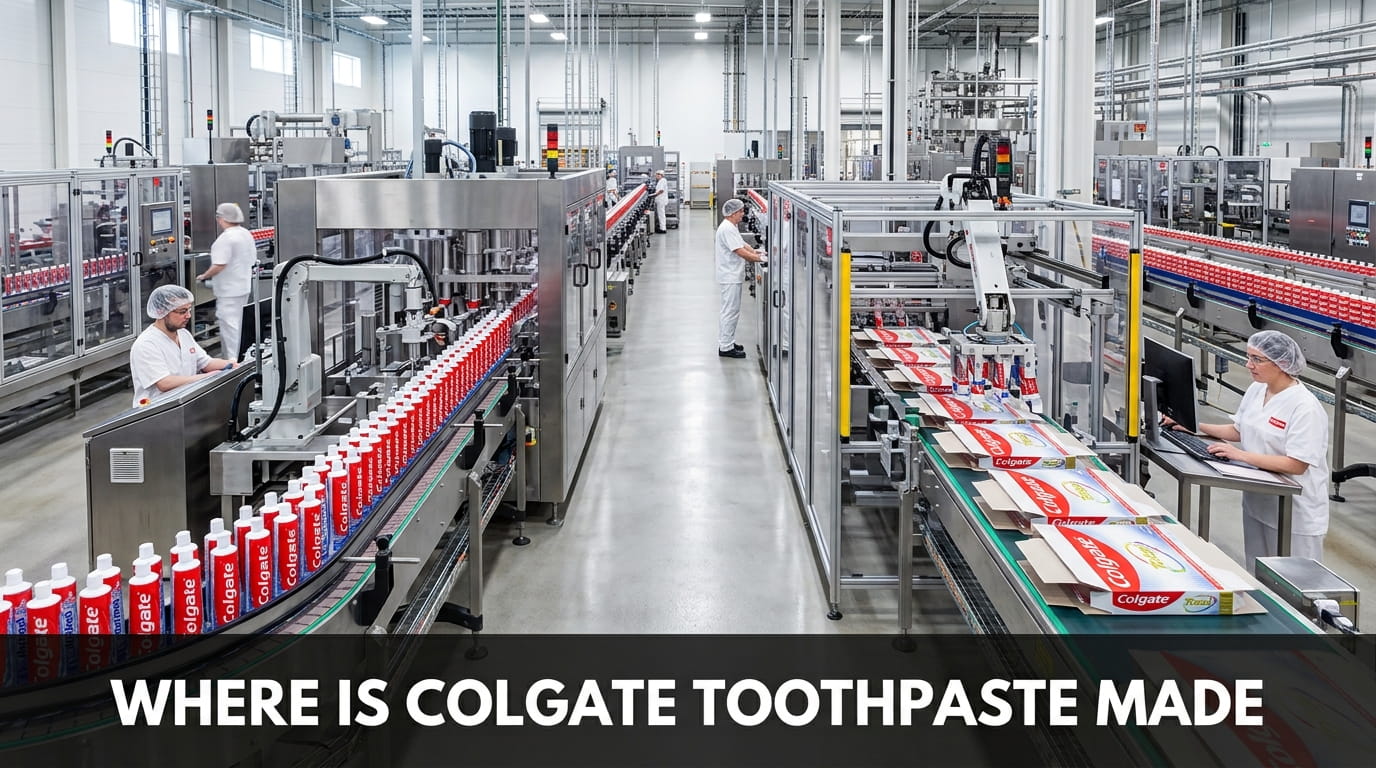
Colgate is one of those brands that feels like it has always just existed.
It sits in nearly every bathroom cabinet in America, and probably in your grandparents’ cabinet too.
But the company behind that familiar red tube is a lot bigger, and a lot older, than most people realize.
It also makes toothpaste in more countries than almost any other brand on the shelf.
So the question of where your specific tube came from is more complicated than it looks.
Some of it is genuinely American made, and some of it definitely is not.
So let’s get started.
Table of Contents
Where Is Colgate Toothpaste Made?
Most Colgate toothpaste sold in the United States is manufactured domestically, primarily at Colgate facilities in Morristown, Tennessee and Greenwood, South Carolina.
The Morristown plant is the company’s flagship toothpaste production site, spanning about 1.5 million square feet and producing lines like Colgate Total, Colgate MaxFresh, and Optic White.
That said, Colgate Palmolive is a genuinely global manufacturer, and it also produces toothpaste in facilities outside the United States for other markets.
The exact origin of any single tube depends on the product line, the retailer, and sometimes the region where it is sold.
Checking the label on the box is really the only reliable way to know for a specific tube, since Colgate does not manufacture every product in every country.
Who Owns Colgate?
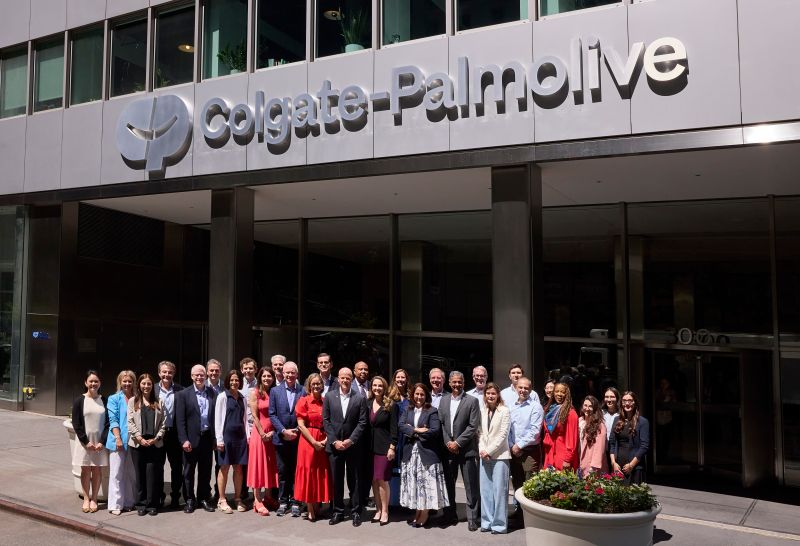
Colgate is owned by Colgate Palmolive Company, a publicly traded American corporation listed on the New York Stock Exchange under the ticker CL.
There is no single owner or founding family still running the business.
Colgate Palmolive is a multinational consumer goods company, and toothpaste is only one part of its business, alongside personal care, home care, and pet nutrition through its Hill’s Pet Nutrition division.
The company is headquartered in New York City and operates manufacturing and research facilities across dozens of countries.
Where Did Colgate Come From?
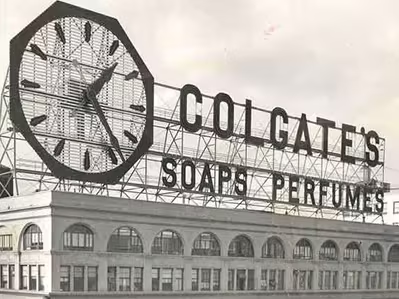
Colgate traces its roots back to 1806, when a 23 year old named William Colgate started a starch, soap, and candle business on Dutch Street in New York City.
The business went through a few early partnerships, briefly becoming Smith and Colgate, before William bought out his partner and brought in his brother Bowles Colgate.
In 1820, the company expanded manufacturing to a factory in Jersey City, New Jersey, producing soap and starch.
After William Colgate’s death, the company was reorganized under his son Samuel Colgate in 1857.
The Palmolive half of the name came later, from a separate soap company founded in Milwaukee in 1864 by B.J. Johnson, which eventually became the Palmolive Company.
Colgate merged with Palmolive Peet in 1928, creating the combined company that exists today, a history the company traces itself on its own history page.
How Global Is Colgate’s Manufacturing?
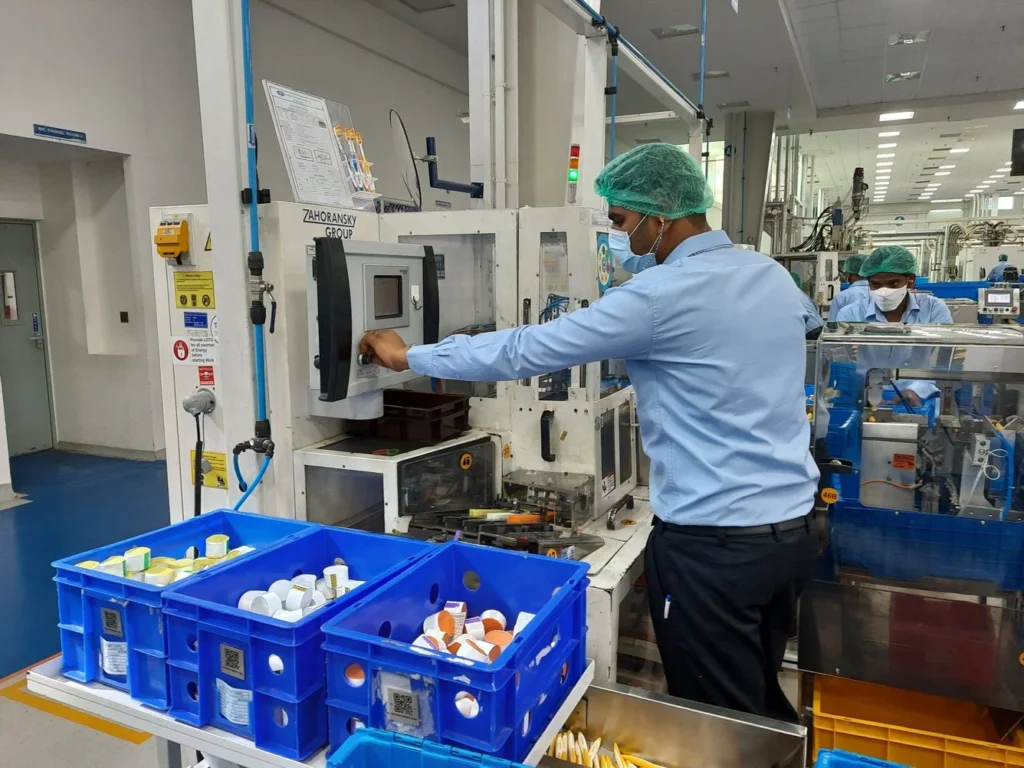
Colgate Palmolive operates manufacturing facilities on nearly every continent, since it sells toothpaste and personal care products in more than 200 countries and territories.
That global footprint means a tube of Colgate bought in Europe, Latin America, or Asia was very likely made regionally rather than shipped from Tennessee.
Within the United States specifically, Colgate has also invested heavily in domestic manufacturing, spending around 2 billion dollars on its U.S. supply chain since 2020.
That includes not just toothpaste plants but facilities like the Hill’s Pet Nutrition plant in Tonganoxie, Kansas, which opened in 2023.
So while Colgate is far from a purely American manufacturer, its U.S. toothpaste supply for U.S. shelves does lean heavily on domestic plants like Morristown.
Does Colgate Claim to Be Made in the USA?
Colgate does not market itself broadly as a Made in USA brand, and given its global manufacturing footprint, a blanket claim like that would not really be accurate.
Instead, individual Colgate products sold in the United States typically carry country of origin information on the packaging itself.
Many tubes sold domestically are labeled as made in the USA because they genuinely come from the Tennessee or South Carolina plants.
Others sold in the same stores may be imported, depending on supply chain logistics at the time.
The safest approach for a shopper who cares about this is to check the specific tube in hand rather than assuming based on the brand name alone.
Colgate vs Crest: Who Makes Each?
Crest is Colgate’s biggest direct rival in the American toothpaste aisle, and the two brands often sit shelf to shelf.
Crest is made by Procter and Gamble, and according to P&G itself, Crest products are made in North America, with a main plant in Greensboro, North Carolina and some production in Guanajuato, Mexico.
Colgate’s comparable domestic production runs through Tennessee and South Carolina instead.
Both companies are large multinational manufacturers, so both also produce versions of their toothpaste overseas for markets outside North America.
For an American shopper, the practical difference is more about specific plant locations within North America than about one company being domestic and the other foreign.
What Is Next for Colgate?
Tariffs are the dominant story for Colgate right now, just like most large consumer goods companies.
Colgate Palmolive has said it expects to absorb about 200 million dollars in increased costs tied to tariffs enacted in 2025, spread across the second through fourth quarters and affecting raw materials and finished goods moving between China and the United States, according to Supply Chain Dive.
The company has also faced legal scrutiny recently, including a lawsuit filed in December 2025 tied to manufacturing practices at a Tom’s of Maine facility, a smaller natural care brand Colgate owns.
Separately, Colgate continues to face a growing number of talcum powder lawsuits, with 454 individual cases pending as of the end of 2025, up from 308 the year before.
None of this points to a major factory relocation so far, but it does suggest 2026 will bring higher prices and continued legal costs for the company.
For more brand supply chain breakdowns like this one, see our guides on Gillette Razors and Toilet Paper.
Frequently Asked Questions About Where Colgate Is Made
Is Colgate toothpaste made in China?
Colgate Palmolive does operate manufacturing facilities in many countries as part of its global operations, and China is one of the many markets it manufactures for.
However, most Colgate toothpaste sold specifically in the United States comes from domestic plants in Tennessee and South Carolina rather than from China.
Tariff related cost pressure the company has reported does suggest it still relies on some China linked raw materials or finished goods, even if the finished toothpaste tubes for American shelves are largely produced domestically.
Does Colgate have a factory in the United States?
Yes, Colgate operates a large flagship toothpaste manufacturing plant in Morristown, Tennessee, along with a facility in Greenwood, South Carolina that produces other personal care products.
The Morristown plant is described as the company’s primary domestic production hub for toothpaste lines like Colgate Total and Optic White.
Colgate has also continued investing in U.S. manufacturing more broadly, including newer facilities tied to its pet nutrition business.
Is Colgate an American company?
Colgate Palmolive is headquartered in New York City and is incorporated and publicly traded in the United States, so in that sense it is an American company.
At the same time, it is a genuinely multinational business, generating a large share of its revenue and operating manufacturing facilities outside the United States.
That mix of American headquarters and global operations is fairly typical for a company of Colgate’s size and age.
Why is Colgate toothpaste getting more expensive?
Colgate has pointed to tariffs as a major driver of rising costs heading into 2026, estimating roughly 200 million dollars in additional expenses tied to tariffs on materials and goods moving between China and the United States.
The company has also indicated that recent tariff increases are outweighing any refunds or offsets it received earlier in the year.
Those cost pressures are likely to show up as gradual price increases on store shelves rather than a single dramatic jump.

I am Jack Neel, a mechanical engineer, researcher, and writer. I created this website to share my knowledge about different brands and products with you. I research the manufacturers behind the brands and provide you with the information you need to make smart buying decisions.