
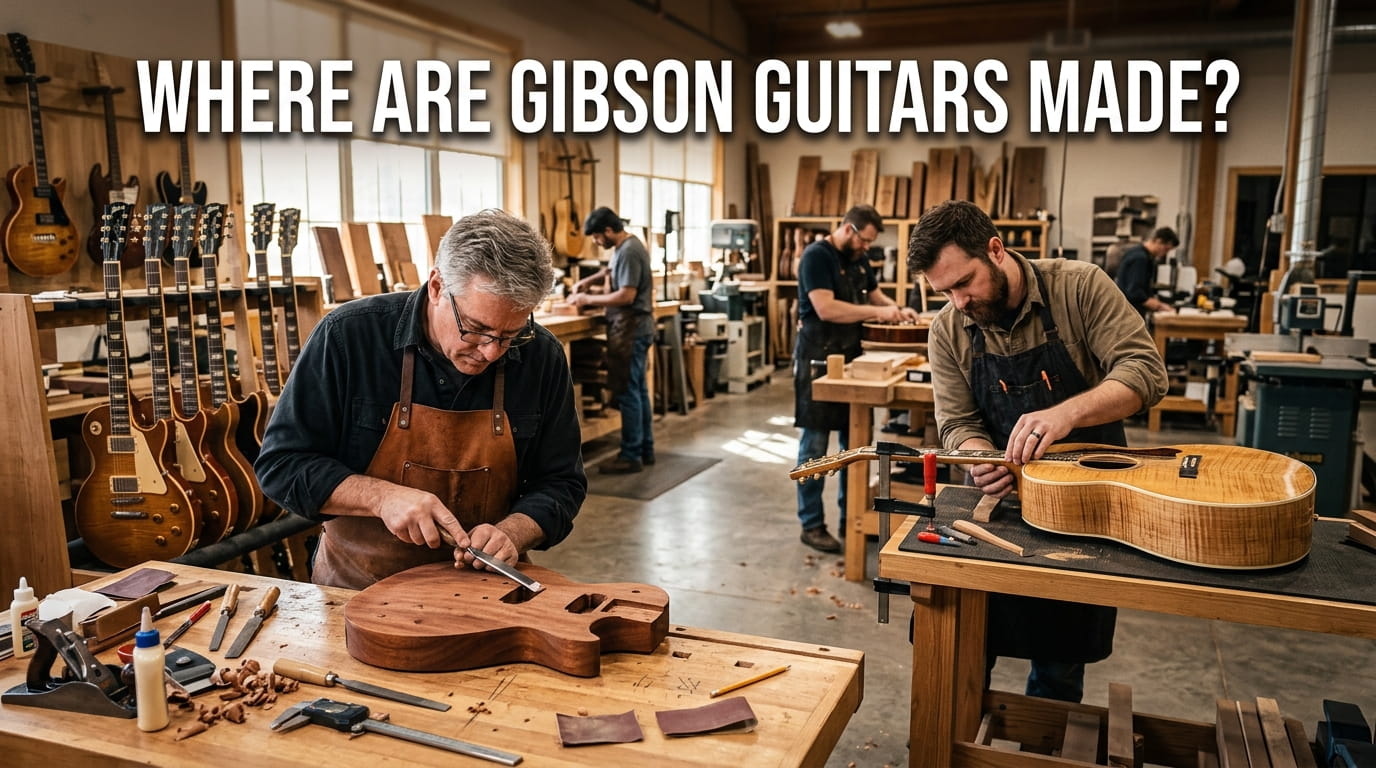
Gibson guitars are made in the United States, with electric guitars produced at the Gibson USA factory in Nashville, Tennessee, and acoustic guitars built at the Gibson Acoustic facility in Bozeman, Montana.
Gibson is known for producing some of the most iconic electric guitars ever made, including the Les Paul, the SG, the ES-335, and the Flying V, instruments that have been played by some of the most celebrated musicians in rock, blues, and jazz history.
Gibson Brands, Inc. is a privately held American company headquartered in Nashville, Tennessee, currently owned by KKR, the global investment firm that took over when Gibson emerged from Chapter 11 bankruptcy protection in November 2018 under new CEO James Curleigh.
Knowing where Gibson guitars are made matters to buyers because Gibson’s American manufacturing heritage is central to the brand’s identity and to the premium price commanded by guitars bearing the Nashville or Bozeman origin.
This article covers where each Gibson product line is built, the history of Gibson’s factory moves from Kalamazoo to Nashville, who owns Gibson today, and how Gibson compares to Fender on American manufacturing.
So let’s get started.
Table of Contents
Who Makes Gibson Guitars?

Gibson Brands, Inc. makes all Gibson guitars. The company was founded in 1902 by Orville Gibson in Kalamazoo, Michigan, where he built mandolins and archtop guitars by hand.
Gibson grew through the 20th century into one of the world’s largest and most influential guitar manufacturers, responsible for instruments that defined the sound of American popular music from jazz in the 1920s through rock and roll in the 1950s and beyond.
Today Gibson is owned by KKR, the private equity and investment firm, following the company’s restructuring and emergence from bankruptcy in 2018.
The Nashville headquarters serves as the heart of both Gibson’s manufacturing and its global brand operations.
Where Are Gibson Electric Guitars Made?
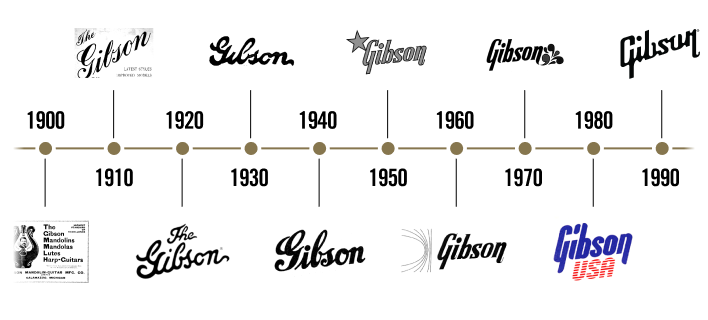
All Gibson electric guitars are made at the Gibson USA plant in Nashville, Tennessee, where the company has been manufacturing since 1975.
The Nashville facility produces the full electric guitar lineup including the Les Paul, SG, ES-335, Flying V, Explorer, and all Gibson Custom Shop models.
The Memphis, Tennessee factory, which Gibson operated from 2000 to 2019 and which specialized in semi-hollow body guitars like the ES-335, is now closed.
All semi-hollow production moved to Nashville after the Memphis closure. The Nashville plant now handles the complete electric guitar output for both the standard Gibson USA lineup and the premium Gibson Custom Shop series.
Gibson has been manufacturing instruments in Nashville since 1975 when production moved from the original Kalamazoo, Michigan factory.
The Kalamazoo plant closed in 1984, and several former employees founded Heritage Guitars at that same address, continuing to make guitars there to this day.
Where Are Gibson Acoustic Guitars Made?
Gibson acoustic guitars are made at the Gibson Acoustic facility in Bozeman, Montana, where production has been based since 1989.
The Bozeman plant produces the full acoustic lineup including the J-45, J-200, J-185, Hummingbird, Dove, and all Gibson acoustic Custom Shop models.
Bozeman was chosen for acoustic production partly for its dry, stable mountain climate, which is advantageous for working with tonewoods that are sensitive to humidity changes during the building process.
The facility has been expanded multiple times since opening and employs skilled luthiers who hand-fit and finish each instrument.
Are All Gibson Guitars Made in the USA?
All guitars sold under the Gibson brand name are made in the United States, either in Nashville or Bozeman. Gibson does not produce Gibson-branded guitars in any other country.
The important distinction is between Gibson-branded guitars and Epiphone-branded guitars. Epiphone is a separate brand also owned by Gibson Brands, Inc., and Epiphone guitars are made in China and Indonesia.
Buyers who see “Epiphone Les Paul” are getting a Chinese or Indonesian-made instrument, not an American-made Gibson. The Gibson name on the headstock is the guarantee of American manufacture.
Gibson vs. Fender: Where Is Each Brand Made?
Gibson and Fender are the two most recognized American guitar brands in the world and both maintain American manufacturing as central to their premium product identity.
Gibson makes its guitars in Nashville, Tennessee and Bozeman, Montana. Fender makes its American-series guitars in Corona, California, where it has operated since 1985.
Both brands also own separate entry-level sub-brands made overseas. Gibson owns Epiphone, made in Asia.
Fender owns Squier, also made in Asia. The American-made versions of both brands command a significant price premium over their Asian-made equivalents, reflecting the higher labor costs, hand-fitting processes, and tighter quality tolerances maintained at the American plants.
For other American instrument brands, see Who Makes Snap-On Tools and Where Are John Deere Tractors Made.
Frequently Asked Questions About Where Gibson Guitars Are Made
Are Gibson guitars made in the USA?
Yes. All Gibson-branded guitars are made in the United States, with electric guitars produced in Nashville, Tennessee and acoustic guitars produced in Bozeman, Montana. Gibson does not manufacture Gibson-branded instruments outside the United States.
Is Epiphone the same as Gibson?
Epiphone is a separate brand owned by Gibson Brands, Inc. Epiphone guitars are made in China and Indonesia and are sold at lower price points than Gibson-branded instruments. An Epiphone Les Paul and a Gibson Les Paul share the same model name but are entirely different instruments made in different countries to different specifications and quality standards.
Who owns Gibson guitars now?
Gibson Brands, Inc. is owned by KKR, the American investment firm, which became the controlling shareholder when Gibson emerged from Chapter 11 bankruptcy in November 2018. James Curleigh became CEO at that time and has led the company’s turnaround and reestablishment as a healthy brand with renewed focus on its core guitar business.

I am Jack Neel, a mechanical engineer, researcher, and writer. I created this website to share my knowledge about different brands and products with you. I research the manufacturers behind the brands and provide you with the information you need to make smart buying decisions.