
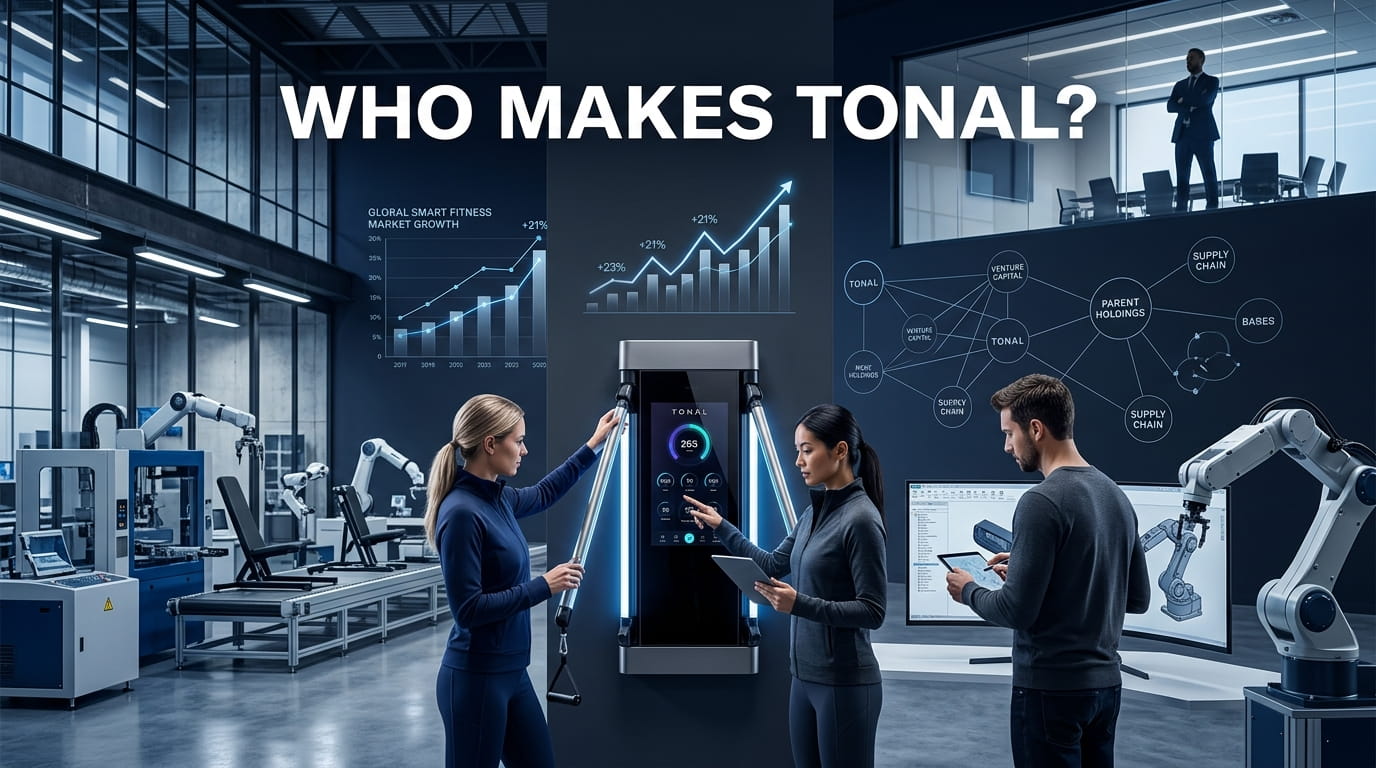
Tonal is made by Tonal Systems, Inc., an American fitness technology company that designs its smart home gym system in San Francisco, California, and manufactures the hardware through contract manufacturers in China.
Tonal is known for its wall-mounted smart gym design that replaces an entire weight room with a single 24-inch touchscreen unit using electromagnetic resistance to provide up to 250 pounds of adaptive digital weight, with AI-powered coaching and real-time form feedback.
Tonal Systems, Inc. is headquartered at 69 Converse Street in San Francisco, California, was founded in 2015 by Aly Orady, and has raised over $400 million in venture funding from investors including L Catterton, Cobalt Capital, Sapphire Sport, and athletes including LeBron James and Serena Williams.
Understanding who makes Tonal and where it is manufactured helps buyers evaluate the brand’s technology credentials, compare it to competitors like Peloton and Mirror, and understand whether the hardware investment is backed by a stable company.
This article covers who founded Tonal, where the hardware is manufactured, how the electromagnetic weight system works, who invested in the company, and how Tonal compares to Peloton and Mirror as a smart home fitness investment.
So let’s get started.
Table of Contents
Who Makes Tonal and Who Owns It?
Tonal Systems, Inc. is the maker and owner of the Tonal home gym. Aly Orady, a Silicon Valley software engineer, founded the company in 2015 after struggling to maintain his own fitness routine.
Orady designed the electromagnetic resistance system that makes the Tonal possible, securing over 80 patents across hardware, software, and AI coaching technology since the company’s founding.
Tonal has raised over $400 million in venture funding across multiple rounds. Notable investors include Cobalt Capital, L Catterton, Sapphire Sport, and celebrity investors including LeBron James, Serena Williams, and Maria Sharapova.
The company has remained private and has not pursued a public listing as of 2025. CEO Darren MacDonald currently leads the company, overseeing a team of approximately 400 employees across six continents.
Where Is Tonal Made?
Tonal is designed and engineered in San Francisco, California, but the physical hardware is manufactured by contract manufacturers in China.
Tonal does not own its own factory and follows the same asset-light manufacturing model used by Apple, Peloton, and most other consumer technology hardware brands.
Tonal does not publicly disclose which specific Chinese contract manufacturers build its units.
The company’s focus is on the software, AI coaching algorithms, and electromagnetic resistance technology, with the hardware production outsourced to Chinese electronics manufacturing specialists with experience in complex electromechanical consumer products.
How Does Tonal’s Electromagnetic Weight System Work?
Tonal uses electromagnetic resistance rather than physical weight plates, cables, or friction systems to create resistance.
The system uses electric motors controlled by software to generate precise, adjustable resistance that can change mid-set and adapt in real time based on the user’s performance.
The Tonal 2, launched as the updated flagship model, provides up to 250 pounds of resistance through two adjustable arms on either side of the 24-inch touchscreen.
A built-in camera in the Tonal 2 analyzes user form in real time and provides coaching cues. The system also includes an Aero HIIT cardio mode that uses resistance changes to create interval training effects, expanding Tonal’s functionality beyond pure strength training.
How Many Members Does Tonal Have?
Tonal has helped more than 175,000 members lift over 235 billion pounds since its founding in 2015, according to figures the company shared in 2025.
The brand reports that 90 percent of Tonal members remain active after their first year, a retention rate that compares favorably to traditional gym membership and competing connected fitness devices.
Tonal expanded its retail distribution in October 2025 through a partnership with Johnson Fitness and Wellness, which added Tonal to all its U.S. retail stores nationwide, giving the brand its first major specialty fitness retail showroom presence across the country.
Tonal vs. Peloton vs. Mirror: Which Smart Home Gym Is Best?
Tonal, Peloton, and Mirror are three of the best-known connected fitness brands in the American market, but they target different workout preferences.
Tonal focuses exclusively on strength training with digital weights, AI coaching, and resistance-based workouts.
Peloton focuses on cardio, offering bikes, treadmills, and rowing machines alongside strength content.
Mirror, acquired by Lululemon in 2020 and rebranded as lululemon Studio, offers a camera-equipped mirror format for both strength and cardio classes.
For buyers whose primary fitness goal is strength training, Tonal has no direct equivalent.
Its electromagnetic weight system, form correction camera, and progressive overload tracking are specifically built for resistance training in ways that Peloton’s strength content on a bike or Mirror’s body-weight classes cannot replicate.
Tonal’s hardware list price is approximately $3,495 plus a monthly membership, making it the most expensive of the three but also the most purpose-built strength training solution available for home use. For other home fitness brands, see Where Is Polaris Made and Who Makes Super Tech Oil.
Frequently Asked Questions About Who Makes Tonal
Is Tonal made in the USA?
No. Tonal is designed in San Francisco, California, but its hardware is manufactured by contract manufacturers in China. The company’s engineering, software, and AI systems are developed in the United States, but the physical unit you install on your wall is produced overseas, as is standard for consumer electronics hardware brands.
How much does Tonal cost?
The Tonal 2 hardware is priced at approximately $3,495. There is also an ongoing monthly membership fee for access to the coaching content, AI features, and live and on-demand classes. The membership is required to access the full functionality of the machine; without it, the machine’s content features are significantly limited.
Who invested in Tonal?
Tonal has raised over $400 million from investors including L Catterton, Cobalt Capital, and Sapphire Sport. Celebrity athletes who invested include LeBron James, Serena Williams, Maria Sharapova, and Derek Jeter. The company has remained private as of 2025 with no announced plans for a public listing.

I am Jack Neel, a mechanical engineer, researcher, and writer. I created this website to share my knowledge about different brands and products with you. I research the manufacturers behind the brands and provide you with the information you need to make smart buying decisions.