
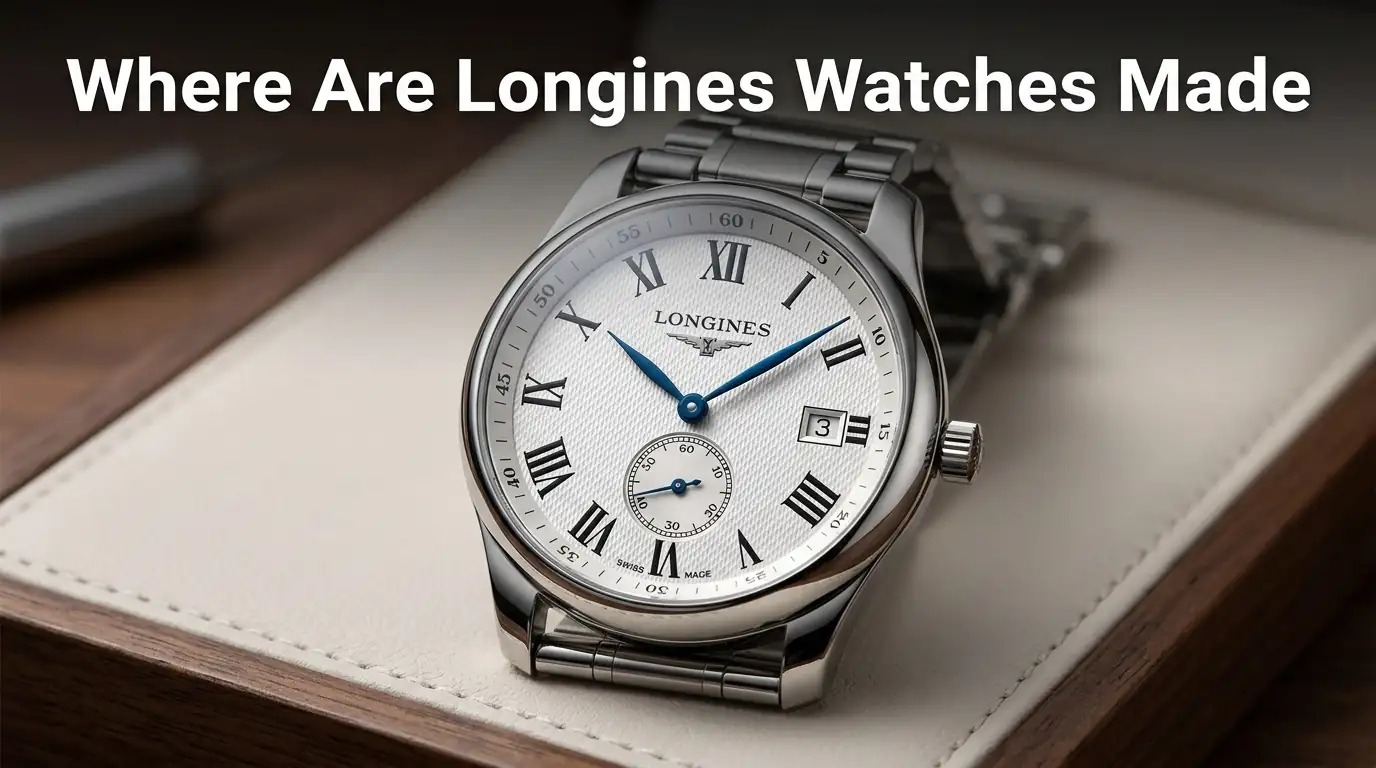
Longines watches are made in Switzerland by The Swatch Group at the brand’s historic manufacture in Saint Imier, the same town where the company was founded in the nineteenth century.
Longines holds one of the oldest continuously registered trademarks in the world, its winged hourglass logo, first registered in 1889 and still used essentially unchanged today.
The brand built much of its early reputation through aviation and sports timing, including a close relationship with pioneering aviator Charles Lindbergh and decades of Olympic and equestrian timekeeping work.
Understanding who makes Longines means understanding its role inside The Swatch Group’s pricing structure, its deep aviation heritage, and its ongoing manufacturing base in Saint Imier.
This guide covers Longines’ ownership, founding history, manufacturing locations, movement sourcing, current collections, pricing, and how it compares with Seiko and Citizen.
Table of Contents
Who Owns Longines?

Longines is owned by The Swatch Group Ltd, the Swiss watchmaking conglomerate listed on the SIX Swiss Exchange and controlled by the Hayek family.
Chairwoman Nayla Hayek and chief executive officer Nick Hayek oversee the group’s full brand portfolio, which places Longines in a mid tier position above Tissot and Hamilton but below Omega.
Longines became part of the group’s predecessor structure through the broader consolidation of Swiss watch companies during the twentieth century that eventually formed the modern Swatch Group.
When Was Longines Founded?
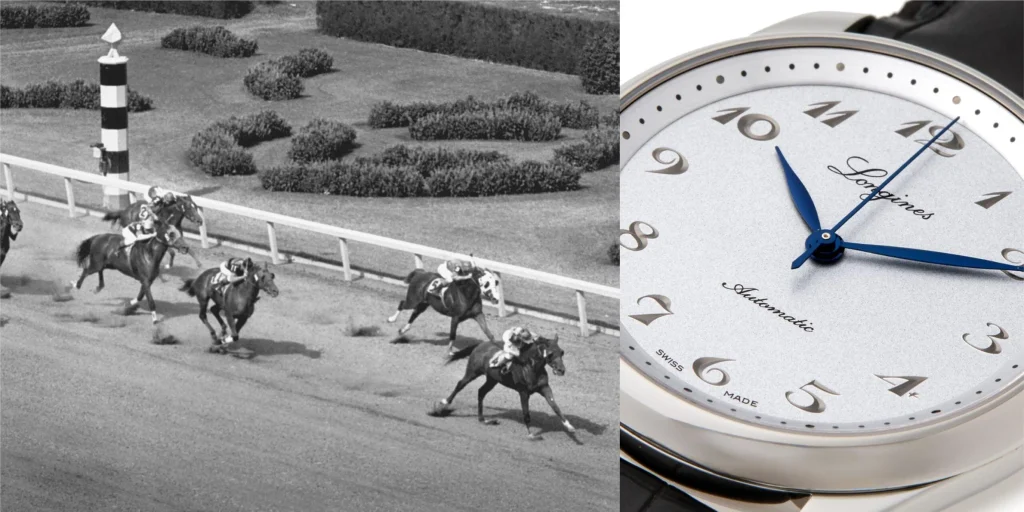
Longines traces its roots to 1832, when Auguste Agassiz began working with watchmakers in Saint Imier, Switzerland, though the company took its modern form in 1867.
In that year, Agassiz’s nephew Ernest Francillon built a dedicated factory in a meadow area known locally as les longines, giving the company its permanent name.
Longines quickly became known for precision timekeeping, and it played a central role in early sports and aviation timing throughout the late nineteenth and early twentieth centuries.
Where Are Longines Watches Made?
Longines manufactures and assembles its watches at its facility in Saint Imier, Switzerland, the same location where the brand’s dedicated factory was originally built in 1867.
Most Longines movements are based on calibers supplied by ETA SA, The Swatch Group’s shared movement manufacturer, then adapted and badged under Longines’ own L series naming convention.
Because design, movement adaptation and final assembly all take place inside Switzerland, every current Longines watch qualifies for the Swiss Made label. Additional information is available on Longines’ official website.
Longines and the Lindbergh Connection
In 1931, Longines worked directly with aviator Charles Lindbergh to design the Hour Angle Watch, a navigation tool that helped pilots calculate longitude using celestial observation before modern satellite navigation existed.
That collaboration cemented Longines’ reputation in the aviation community, and the brand continued supplying instruments and watches to pilots and explorers for decades afterward.
Modern Longines collections such as the Spirit line continue to reference this aviation heritage, drawing design cues directly from pilot instruments used throughout the early twentieth century.
What Watches Does Longines Currently Make?
The Master Collection represents Longines’ classic dress watch line, offering automatic movements with moon phase and dual time options at accessible mid range prices.
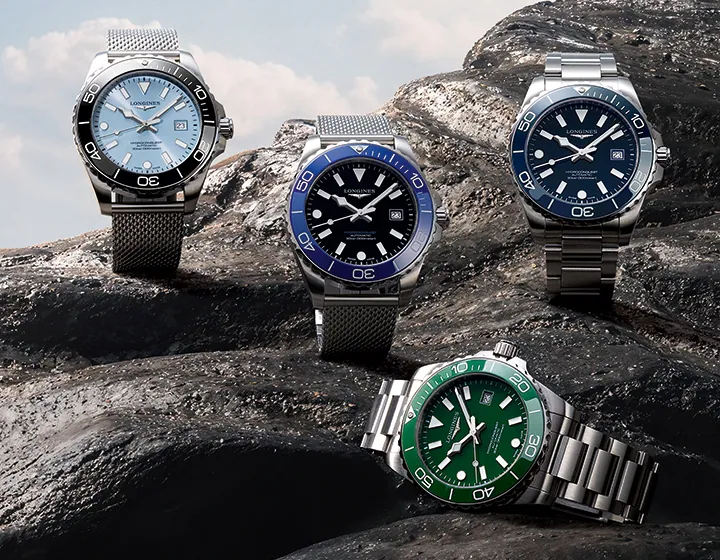
The Spirit collection targets adventure and aviation themed buyers with rugged case designs, while the HydroConquest line covers Longines’ dive watch offerings.
The Heritage collection reissues historic Longines designs, including the popular Legend Diver, allowing the brand to sell modernized versions of watches originally produced decades earlier.
How Much Do Longines Watches Cost?
Most Longines automatic watches retail between 900 and 2,500 dollars, positioning the brand slightly above Tissot and Hamilton within The Swatch Group’s pricing structure.
Complicated models, including chronographs and dual time pieces in the Master Collection, can extend toward 3,500 to 4,000 dollars depending on case materials.
This pricing places Longines as a natural step up for buyers who started with Tissot or Hamilton and want a slightly more refined Swiss watch before moving on to Omega.
Longines vs Seiko vs Citizen: How Do They Compare?
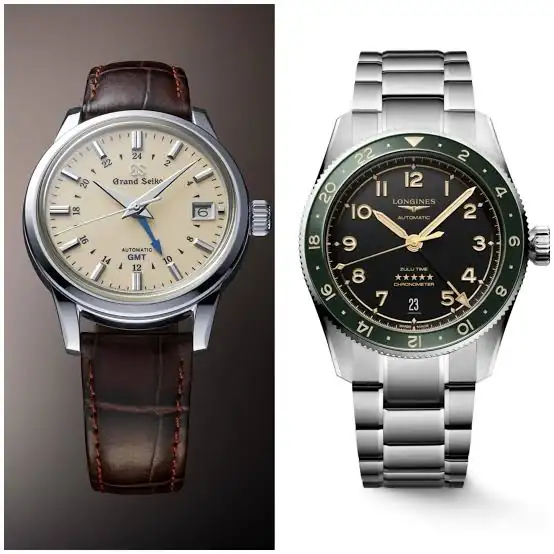
Longines competes with premium Japanese offerings from Seiko and Citizen, though the three brands come from very different manufacturing traditions and price philosophies.
Seiko, covered in our guide to where Seiko watches are made, produces everything domestically in Japan across a huge price range, from inexpensive quartz to the luxury Grand Seiko line.
Citizen, detailed in our article on where Citizen watches are made, focuses heavily on solar powered Eco Drive technology rather than the traditional mechanical movements Longines relies on almost exclusively.
Is Longines Worth Buying?
Longines is generally considered strong value for buyers who want a slightly more prestigious Swiss watch than Tissot or Hamilton without paying Omega level prices.
On the positive side, Longines offers genuine aviation and sports heritage, attractive classic design, dependable ETA based movements, and consistent Swiss Made manufacturing.
On the downside, Longines movements are largely shared architecture rather than fully in house designs, and the brand’s resale value trails significantly behind Omega and Rolex.
Overall, Longines remains a respected mid tier Swiss watch brand with genuine historical credibility, particularly for buyers drawn to its aviation and equestrian sports connections. Wikipedia’s overview of Longines’ history covers additional milestones.
Longines’ Long History in Sports Timekeeping
Longines served as the official timekeeper for several early Olympic Games and remains closely tied to international equestrian sports today, supplying precision timing equipment for major show jumping and dressage competitions.
The company also developed some of the first practical stopwatches used in professional skiing and track and field events, work that helped establish standardized timing methods still used in modern competitive sports.
This sports timing heritage runs parallel to the brand’s watchmaking business and continues to shape marketing partnerships today, with Longines remaining a visible sponsor at major equestrian and tennis events worldwide. Further background is available from Wikipedia’s overview of The Swatch Group.
Longines’ Heritage Reissue Strategy
Longines maintains one of the largest historical archives in the Swiss watch industry, cataloging thousands of original designs dating back well over a century, which it regularly mines for modern heritage reissues.
The Legend Diver, originally released in the 1960s and reintroduced in an updated form in 2007, remains one of the brand’s most popular models, prized by collectors for closely matching the proportions and design details of the original.
This archive driven approach allows Longines to release watches with genuine historical accuracy, rather than simply borrowing generic vintage styling cues the way some competitors do, which has helped the brand build strong credibility among collectors who value authenticity.
Longines’ Position in The Swatch Group’s Brand Ladder
Within The Swatch Group’s deliberate brand hierarchy, Longines sits just below Omega, giving buyers a meaningful step between the group’s mid tier brands and its flagship luxury sport and dress watch line.
This positioning lets Longines offer noticeably better finishing, more refined case work and slightly more complicated movement options than Tissot or Hamilton, while still remaining well short of Omega’s fully in house manufacture status.
For many buyers, Longines represents the point at which a Swiss watch purchase starts to feel like a genuine luxury item rather than simply an affordable entry point into mechanical watchmaking.
Longines also invests significant resources into anti counterfeiting technology, including a certification system that lets owners verify the authenticity and original specifications of vintage pieces directly through the company’s archive.
That level of documentation, combined with the brand’s deep historical catalog, makes Longines a frequent starting point for new collectors interested in vintage Swiss watches without the extreme prices associated with brands like Omega or Rolex.
Taken together, the aviation heritage, sports timing legacy and archive backed reissues give Longines a depth of history that punches above its price point compared with many other mid tier Swiss competitors.
For buyers weighing several Swatch Group brands against each other, Longines is often the recommended step once a Tissot or Hamilton starts to feel too basic but an Omega remains outside budget.
That middle position, combined with genuine historical depth, is why Longines continues to hold a loyal following among watch enthusiasts who prioritize heritage and value over outright brand prestige.
That balance of accessible pricing, real Swiss manufacturing and genuine historical depth is unlikely to change, since it remains central to how The Swatch Group positions Longines within its broader brand family.
For readers researching Swiss watches more broadly, Longines remains one of the clearest examples of a brand that turned genuine historical archives into an ongoing commercial advantage.
Frequently Asked Questions About Where Longines Watches Are Made
Is Longines really made in Switzerland?
Yes. Longines manufactures and assembles its watches at its facility in Saint Imier, Switzerland, and every current model qualifies for the Swiss Made designation.
Who owns Longines watches?
Longines is owned by The Swatch Group Ltd, a publicly traded Swiss company controlled by the Hayek family, positioned above Tissot and Hamilton in the group’s pricing structure.
Does Longines make its own movements?
Most Longines movements are based on calibers supplied by ETA SA, The Swatch Group’s shared movement manufacturer, then adapted and finished under Longines’ own designation.
What is Longines’ oldest trademark?
Longines’ winged hourglass logo, registered in 1889, is considered one of the oldest continuously registered trademarks still in active use anywhere in the world.

I am Jack Neel, a mechanical engineer, researcher, and writer. I created this website to share my knowledge about different brands and products with you. I research the manufacturers behind the brands and provide you with the information you need to make smart buying decisions.