
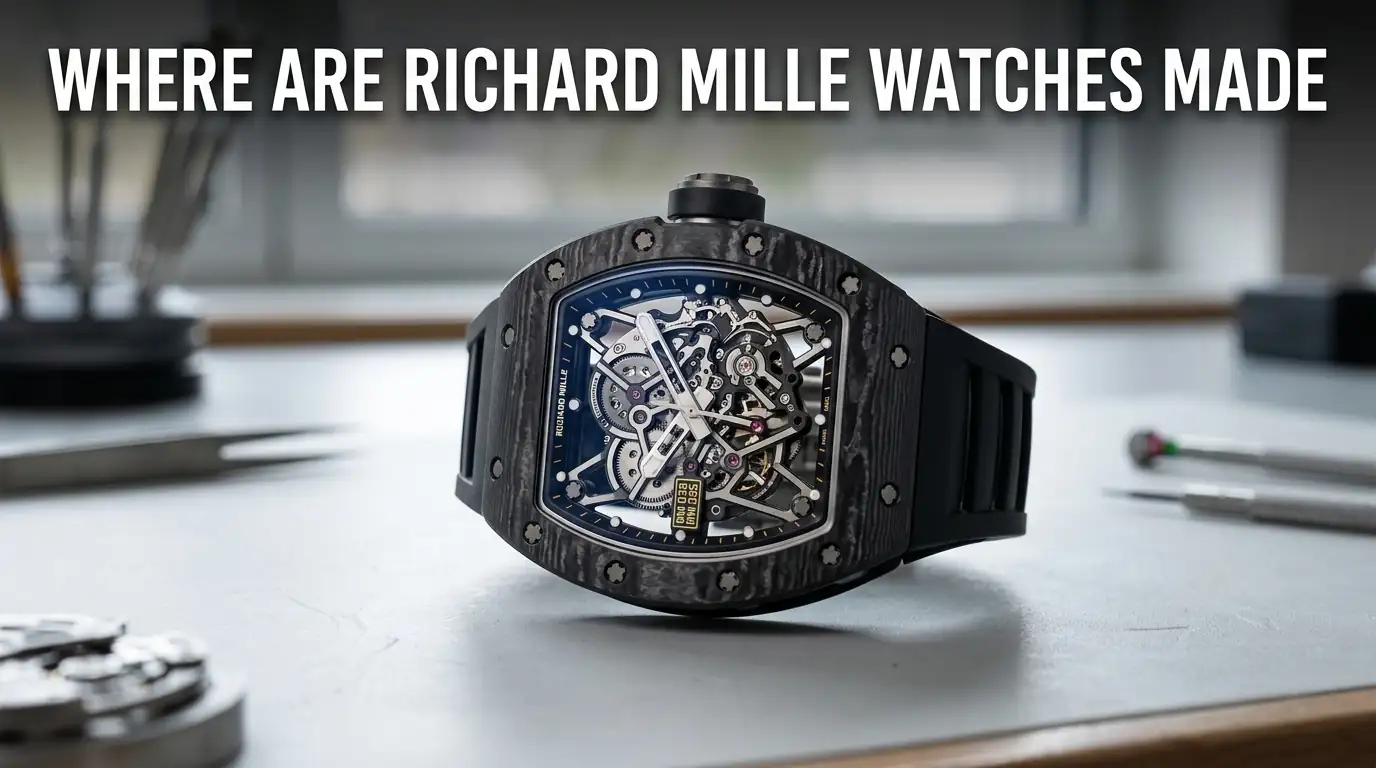
Richard Mille watches are made in Switzerland at the brand’s own ateliers near Les Breuleux, in the Jura mountains, an area long associated with specialized high precision watchmaking.
Richard Mille remains an independent, privately owned company, founded in 2001 by watch designer Richard Mille together with Swiss watchmaking veteran Dominique Guenat.
The brand is known for producing some of the most technically extreme and expensive watches in the world, built from materials borrowed from aerospace and motorsport engineering rather than traditional watchmaking.
Despite its young age compared with brands like Patek Philippe or Audemars Piguet, Richard Mille has become one of the most recognized names in ultra luxury watchmaking within just two decades.
This guide covers Richard Mille’s ownership, founding story, manufacturing locations, materials technology, current lineup, pricing, and how it compares with Rolex and Audemars Piguet.
Table of Contents
Who Owns Richard Mille?

Richard Mille remains a privately held, independent company, founded and still substantially controlled by Richard Mille himself alongside his family and original business partner Dominique Guenat.
Unlike most large luxury watch brands, Richard Mille has never been acquired by Richemont, LVMH or The Swatch Group, which the company frequently highlights as central to its identity and creative freedom.
This independence allows Richard Mille to set its own extremely limited production targets and pricing strategy without pressure from a parent conglomerate focused on volume growth.
When Was Richard Mille Founded?

Richard Mille launched its first collection in 2001, making it one of the youngest brands in the ultra luxury watch segment compared with rivals founded in the eighteen or nineteen hundreds.
Founder Richard Mille had previously worked in the jewelry and watch industry for years before starting his own company, partnering with Dominique Guenat, who brought deep manufacturing relationships across the Swiss watch industry.
From its earliest releases, the brand positioned itself around extreme engineering and unconventional materials rather than competing directly with the classical design language of older Swiss manufactures.
Where Are Richard Mille Watches Made?
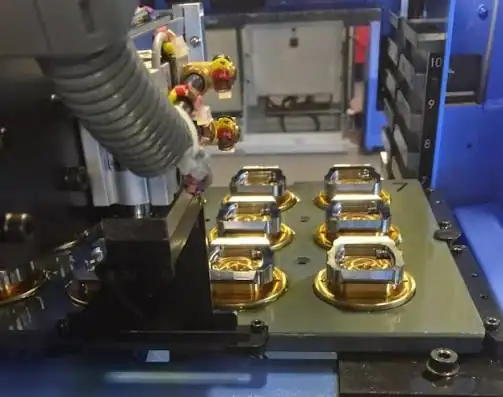
Richard Mille watches are manufactured in Switzerland, with the company’s own facilities based near Les Breuleux, supported by a network of specialized component suppliers across the Jura and Vallee de Joux regions.
In its early years, Richard Mille relied heavily on outside specialist workshops, including Renaud et Papi, a movement development company partly owned by Audemars Piguet, to help engineer its most complicated tourbillon movements.
Over time, Richard Mille has built increasing in house capability, though it still works closely with a small circle of trusted external specialists for certain highly technical components. Additional information is on Richard Mille’s official manufacture page.
What Makes Richard Mille’s Materials Different?
Richard Mille is best known for using materials such as titanium, carbon composite, sapphire crystal and proprietary carbon nanofiber in its watch cases, materials more commonly associated with aerospace engineering than traditional watchmaking.
Some Richard Mille cases are machined entirely from a solid block of sapphire crystal, a process that can take weeks per case due to the material’s extreme hardness, resulting in a fully transparent watch.
These material choices allow Richard Mille watches to survive shock levels that would destroy most conventional mechanical watches, famously demonstrated by tennis player Rafael Nadal wearing a Richard Mille tourbillon during professional matches.
How Many Richard Mille Watches Are Made Each Year?
Richard Mille produces only a few thousand watches annually, an extremely small number compared with Rolex’s roughly one million units per year.
This deliberate scarcity, combined with extremely high production costs for exotic materials, is a major reason Richard Mille watches carry some of the highest prices in the entire industry.
The brand has stated publicly that it has no interest in significantly increasing production volume, preferring to protect exclusivity over maximizing unit sales.
What Watches Does Richard Mille Currently Make?
The RM series covers dozens of individual references, ranging from relatively simple three hand watches to extreme tourbillon models built for specific athlete partners.
Sports focused models developed with athletes such as Rafael Nadal are engineered specifically to survive intense physical activity, while other references target collectors seeking maximum complication and material innovation rather than athletic durability.
Richard Mille also produces a smaller number of watches aimed at women collectors, often featuring gem setting alongside the same high tech case materials used across the men’s collection.
How Much Do Richard Mille Watches Cost?
Entry level Richard Mille watches generally start around 100,000 to 150,000 dollars, already positioning the brand above most other luxury watchmakers before considering its most expensive pieces.
Complicated tourbillon models built from exotic materials such as sapphire crystal or advanced carbon composites can exceed 1,000,000 dollars, with some limited editions selling for several million dollars.
This pricing places Richard Mille firmly at the top of the ultra luxury watch market, competing directly with the most expensive references from Patek Philippe and Audemars Piguet.
Richard Mille vs Rolex vs Audemars Piguet: How Do They Compare?
Richard Mille, Rolex and Audemars Piguet occupy different corners of the luxury watch market despite occasionally overlapping in collector interest, and Rolex’s much larger production scale is explained in our guide to where Rolex watches are made.
Where Rolex emphasizes reliability and steady value retention across a large catalog, Richard Mille focuses on extreme engineering, exotic materials and deliberate scarcity at a far higher price point.
Seiko, covered in our article on where Seiko watches are made, sits at the opposite end of the market, illustrating just how wide the price spectrum of the global watch industry actually is.
Is Richard Mille Worth Buying?
For collectors focused on cutting edge materials science and extreme engineering, Richard Mille is often considered unmatched, though its prices place it well outside the reach of most watch buyers.
On the positive side, Richard Mille offers genuine innovation in materials and movement construction, strong athlete and celebrity association, and extremely limited production that supports long term exclusivity.
On the downside, official retail access is nearly impossible without an established purchase history, and the brand’s futuristic design language does not appeal to collectors who prefer classical watchmaking aesthetics.
Overall, Richard Mille remains one of the most talked about names in modern watchmaking, largely because it approaches the craft more like a motorsport engineering project than a traditional atelier. Wikipedia’s overview of Richard Mille’s history covers additional milestones.
Richard Mille’s Partnership Model With Athletes
Rather than relying solely on traditional celebrity endorsements, Richard Mille frequently develops watches in direct collaboration with the athletes who wear them, incorporating feedback about shock resistance and comfort during actual competition.
Rafael Nadal’s long running partnership with the brand is the most famous example, with several tourbillon models specifically engineered and tested to survive the repeated impacts of professional tennis.
This approach extends to partnerships across Formula One racing and football, positioning Richard Mille less as a passive sponsor and more as a technical collaborator with the athletes who represent the brand publicly. Further background is available from this collector’s guide to Richard Mille.
How Richard Mille Watches Perform on the Resale Market
Many Richard Mille references trade above their original retail price on the secondary market, largely due to the combination of extremely limited production and consistently strong demand from wealthy collectors worldwide.
Certain sports themed and celebrity associated models, particularly those tied to Rafael Nadal, have historically commanded some of the largest premiums relative to retail price seen anywhere in the watch industry.
This resale strength, unusual for such a young brand, has helped Richard Mille build credibility among serious collectors who might otherwise be skeptical of a company founded only in 2001 rather than a century earlier.
Richard Mille’s Approach to Research and Development
Richard Mille invests heavily in research partnerships with materials science laboratories and engineering firms outside the traditional watch industry, treating its watches almost like small scale engineering prototypes rather than conventional timepieces.
This approach has produced several patented case construction techniques and proprietary alloy formulations that the company applies across its collection to reduce weight while maintaining structural strength.
That research driven culture is a large part of why Richard Mille markets itself less as a traditional watchmaker and more as a manufacturer of wearable high performance machines.
That framing has resonated strongly with a newer generation of collectors who came to watch collecting through motorsport and technology interests rather than traditional horology.
Frequently Asked Questions About Where Richard Mille Watches Are Made
Is Richard Mille an independent company?
Yes. Richard Mille remains privately owned and independent, controlled by founder Richard Mille and his family rather than a large luxury conglomerate.
Where exactly are Richard Mille watches manufactured?
Richard Mille watches are manufactured in Switzerland, primarily near Les Breuleux, using a combination of the brand’s own facilities and a network of specialized Swiss component suppliers.
Why are Richard Mille watches so expensive?
Prices reflect exotic materials such as sapphire crystal and carbon nanofiber, extremely limited annual production of only a few thousand watches, and extensive engineering testing for shock resistance.
Does Rafael Nadal really wear his Richard Mille during matches?
Yes. Rafael Nadal has worn specially engineered Richard Mille tourbillon watches during professional tennis matches for years, with the brand designing certain models specifically to survive that level of physical stress.

I am Jack Neel, a mechanical engineer, researcher, and writer. I created this website to share my knowledge about different brands and products with you. I research the manufacturers behind the brands and provide you with the information you need to make smart buying decisions.