
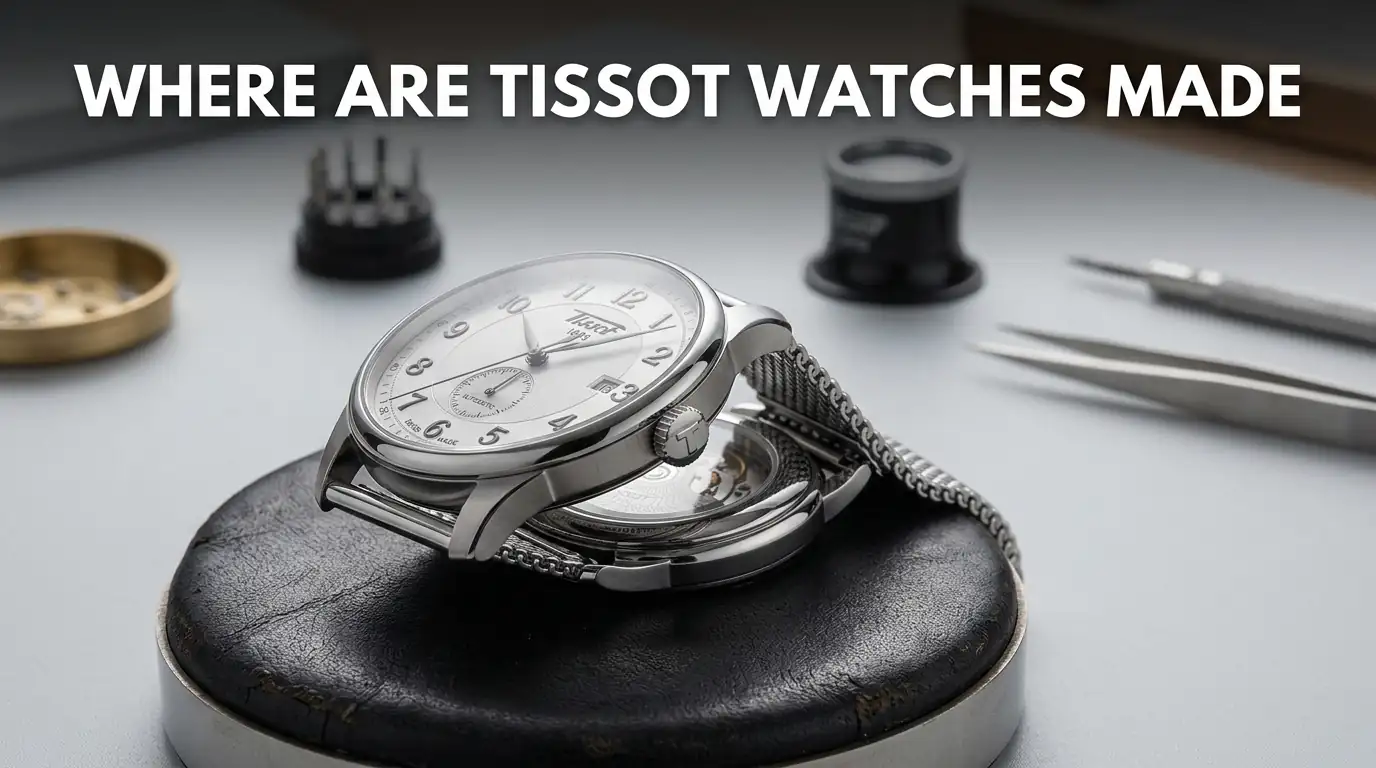
Tissot watches are made in Switzerland by The Swatch Group at the brand’s manufacture in Le Locle, one of the historic centers of Swiss watchmaking in the Jura mountains.
Tissot has operated continuously since 1853, making it one of the oldest Swiss watch brands still in production, and it has been part of the modern Swatch Group since the group’s formation.
The brand is known for combining genuine Swiss manufacturing with unusually experimental materials and technology, including early touchscreen watches, stone dials and even models made partly from wood.
Understanding who makes Tissot means understanding its role inside The Swatch Group, its long history in Le Locle, and its reputation for innovation at an accessible price point.
This guide covers Tissot’s ownership, founding history, manufacturing locations, movement technology, current collections, pricing, and how it compares with Seiko and Bulova.
Table of Contents
Who Owns Tissot?

Tissot is owned by The Swatch Group Ltd, the Swiss watchmaking conglomerate listed on the SIX Swiss Exchange and controlled by the Hayek family.
Chairwoman Nayla Hayek and chief executive officer Nick Hayek oversee the group’s full portfolio, which includes Tissot alongside Omega, Longines, Hamilton and Swatch itself.
Tissot’s connection to the group dates back further than most sister brands, since Tissot merged with Omega in 1930 to form SSIH, the company that eventually evolved into the modern Swatch Group decades later.
When Was Tissot Founded?
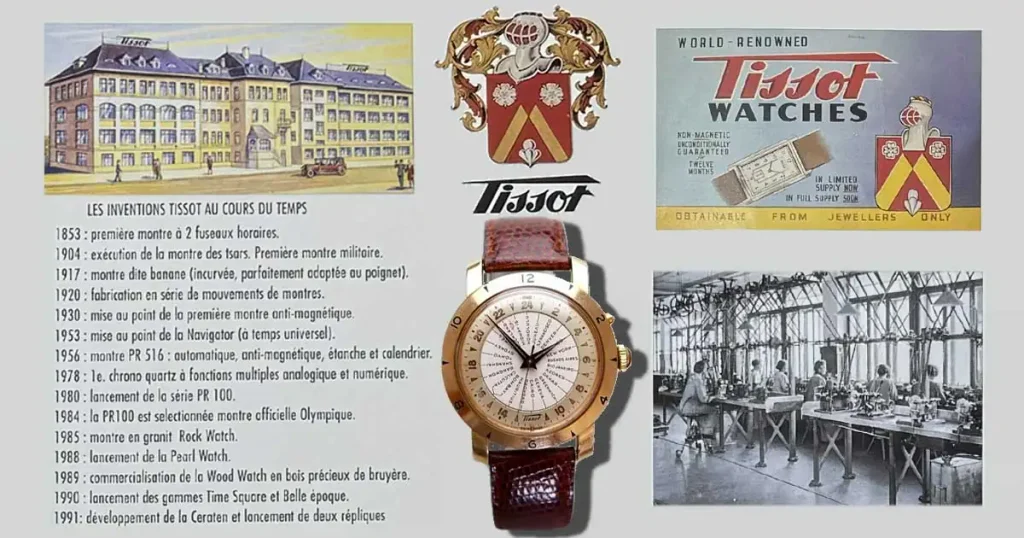
Tissot was founded in 1853 in Le Locle, Switzerland, by Charles Felicien Tissot and his son Charles Emile Tissot.
The company was an early exporter of Swiss watches to international markets, notably Russia, where it built strong sales relationships throughout the nineteenth century.
Tissot’s willingness to experiment with unusual materials and mechanisms became a defining trait early on, a philosophy the brand continues to market today under the slogan innovators by tradition.
Where Are Tissot Watches Made?
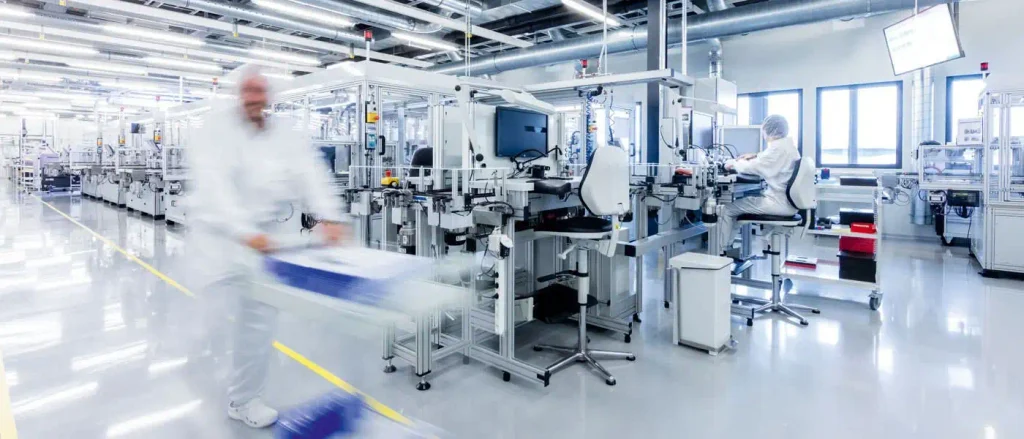
Tissot manufactures and assembles its watches at its facility in Le Locle, Switzerland, using Swiss made movements primarily supplied through ETA SA, The Swatch Group’s shared movement manufacturer.
Many current Tissot automatic models use the Powermatic 80 movement, the same extended power reserve caliber found in sister brands such as Hamilton and Mido, offering roughly 80 hours of power reserve on a single wind.
Because design, movement sourcing and final assembly all happen within Switzerland, every current Tissot watch qualifies for the Swiss Made label. Additional information is available on Tissot’s official website.
Tissot’s History of Unusual Materials
In 1985, Tissot released the Rock Watch, with a case and dial carved entirely from natural stone such as granite or marble, an unusual experiment for a mainstream watch brand at the time.
In 1999, Tissot launched the T Touch, one of the first analog watches with a touchscreen sapphire crystal capable of displaying compass, altimeter and weather data, years before touchscreen technology became common in consumer electronics.
The brand has also produced watches using mother of pearl, wood and even lava stone dials, reinforcing its identity as a brand willing to take creative risks that larger sister brands like Omega generally avoid.
What Watches Does Tissot Currently Make?
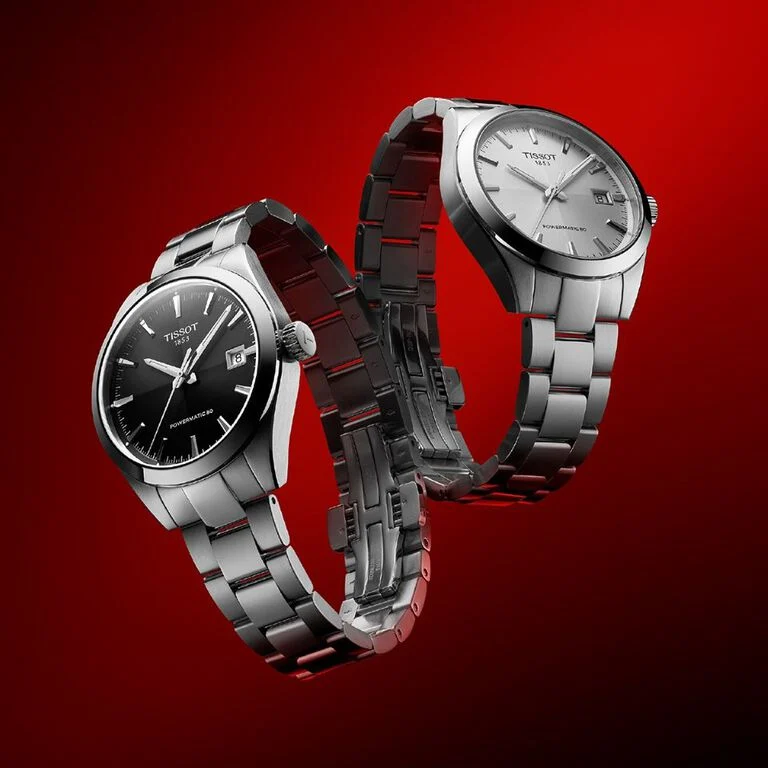
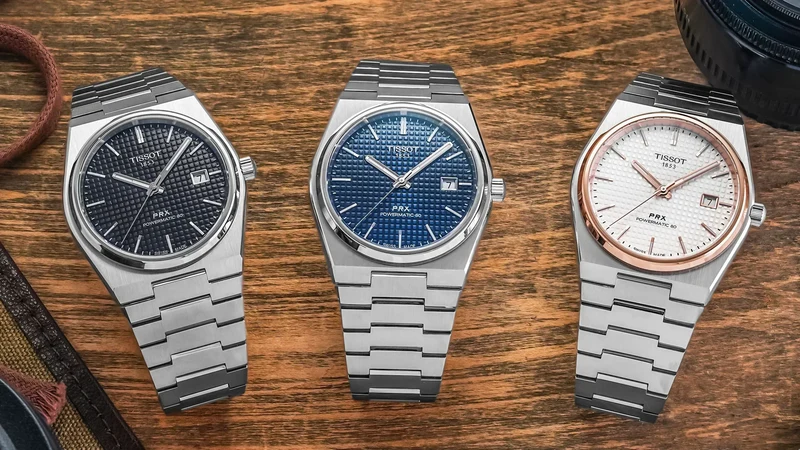
The Tissot PRX, originally released in 1978 and revived in 2020, became one of the most successful watch relaunches of the past decade thanks to its integrated bracelet design at an accessible price.
The Seastar collection covers Tissot’s dive and sport watches, while the Le Locle and Gentleman lines offer more classic, dress oriented designs with automatic movements.
Tissot also maintains long running partnerships as official timekeeper for organizations including the NBA and MotoGP, which it uses to release branded limited edition models.
How Much Do Tissot Watches Cost?
Most Tissot watches, including the popular PRX line, retail between 350 and 900 dollars, positioning the brand above Swatch and Casio but below Hamilton and Longines.
Automatic models with the Powermatic 80 movement typically cost between 500 and 1,200 dollars, while special material and limited edition pieces can run somewhat higher.
This pricing makes Tissot one of the most commonly recommended entry points into genuine Swiss made mechanical watches for buyers stepping up from quartz or fashion watches.
Tissot vs Seiko vs Bulova: How Do They Compare?
Tissot, Seiko and Bulova all compete for buyers seeking accessible watches with real manufacturing heritage rather than pure fashion branding.
Seiko, covered in our guide to where Seiko watches are made, manufactures everything domestically in Japan across a huge range of price points, from inexpensive quartz to the luxury Grand Seiko line.
Bulova, detailed in our article on where Bulova watches are made, is owned by Japan’s Citizen Watch and blends Japanese and Swiss sourced movements depending on the collection. Tissot remains the only one of the three built entirely around genuine Swiss Made manufacturing at this price tier.
Is Tissot Worth Buying?
Tissot is widely regarded as excellent value for buyers who want a legitimate Swiss made automatic watch without paying prices typical of Omega or Longines.
On the positive side, Tissot offers the long lasting Powermatic 80 movement, a genuinely creative design history, strong sports partnerships, and prices that stay accessible across most of its catalog.
On the downside, Tissot sits in a crowded price bracket alongside Hamilton and Longines, and some of its more experimental material based watches have limited long term resale demand compared with its core sport and dress lines.
Overall, Tissot remains one of the strongest entry points into genuine Swiss watchmaking, backed by more than a century and a half of continuous production in Le Locle. Wikipedia’s overview of Tissot’s history covers additional milestones.
How the Tissot PRX Became a Modern Bestseller
When Tissot relaunched the PRX in 2020, it revived a nearly forgotten 1978 design featuring an integrated steel bracelet and thin case, a style that had recently become fashionable again through renewed interest in vintage sports watches.
The relaunched PRX offered that design with a modern automatic movement at a price several times lower than comparable integrated bracelet watches from brands like Audemars Piguet or Patek Philippe, and it quickly sold out at retailers worldwide.
The PRX’s success demonstrated that strong design combined with genuine Swiss manufacturing could still generate significant demand even in a market increasingly dominated by smartwatches, and it remains one of Tissot’s top selling collections today. More background is available from Tissot’s brand profile on the Swatch Group website.
Tissot’s Role as an Official Sports Timekeeper
Tissot has served as the official timekeeper and watch partner for a wide range of sporting organizations, including the National Basketball Association, MotoGP, and various international cycling and fencing federations.
These partnerships give Tissot direct access to real world testing conditions for its chronograph and timing technology, while also providing marketing visibility that a brand at its price point would otherwise struggle to achieve.
Limited edition watches tied to these partnerships, often featuring team colors or event branding, have become a reliable seller for Tissot among sports fans who might not otherwise consider a Swiss watch purchase.
Tissot’s Position Inside The Swatch Group Pricing Ladder
The Swatch Group deliberately positions its brands along a pricing ladder, with Swatch at the most affordable tier, Tissot and Hamilton in the middle, Longines slightly above them, and Omega and Breguet at the top.
This structure allows a single customer to move up through Swatch Group brands over time as their budget grows, from an entry level Swatch to a Tissot PRX and eventually toward an Omega Seamaster.
Tissot’s placement in the middle of that ladder is deliberate, giving the group a strong presence in the highly competitive 500 to 1,000 dollar segment where many first time mechanical watch buyers begin shopping.
For buyers trying to decide between sister brands, Tissot generally offers the widest variety of styles and materials at its price point, while Hamilton leans more heavily on American military heritage and Longines emphasizes classic aviation and equestrian design themes.
That variety is a large part of why Tissot continues to introduce experimental designs, since the brand has more freedom within the group to test unconventional materials and concepts before ideas potentially migrate upward to more conservative sister brands.
That freedom to experiment, backed by the shared manufacturing resources of a large parent group, is a key reason Tissot has managed to stay relevant across generations of buyers since 1853.
It also explains why Tissot remains one of the more frequently recommended brands for anyone buying their first serious watch, since it delivers genuine Swiss engineering without the price commitment of the group’s more prestigious names.
Frequently Asked Questions About Where Tissot Watches Are Made
Is Tissot really Swiss made?
Yes. Tissot manufactures and assembles its watches in Le Locle, Switzerland, and uses Swiss made movements, meaning every current model qualifies for the Swiss Made designation.
Who owns Tissot watches?
Tissot is owned by The Swatch Group Ltd, a publicly traded Swiss company controlled by the Hayek family, alongside sister brands including Omega, Longines and Hamilton.
What movement does the Tissot PRX use?
Automatic PRX models typically use the Powermatic 80 movement, a Swatch Group caliber offering approximately 80 hours of power reserve, while some PRX versions also come with quartz movements.
What is the Tissot T Touch?
The T Touch is an analog watch with a touchscreen sapphire crystal that can display functions such as compass heading, altitude and weather trends, first introduced by Tissot in 1999.

I am Jack Neel, a mechanical engineer, researcher, and writer. I created this website to share my knowledge about different brands and products with you. I research the manufacturers behind the brands and provide you with the information you need to make smart buying decisions.