
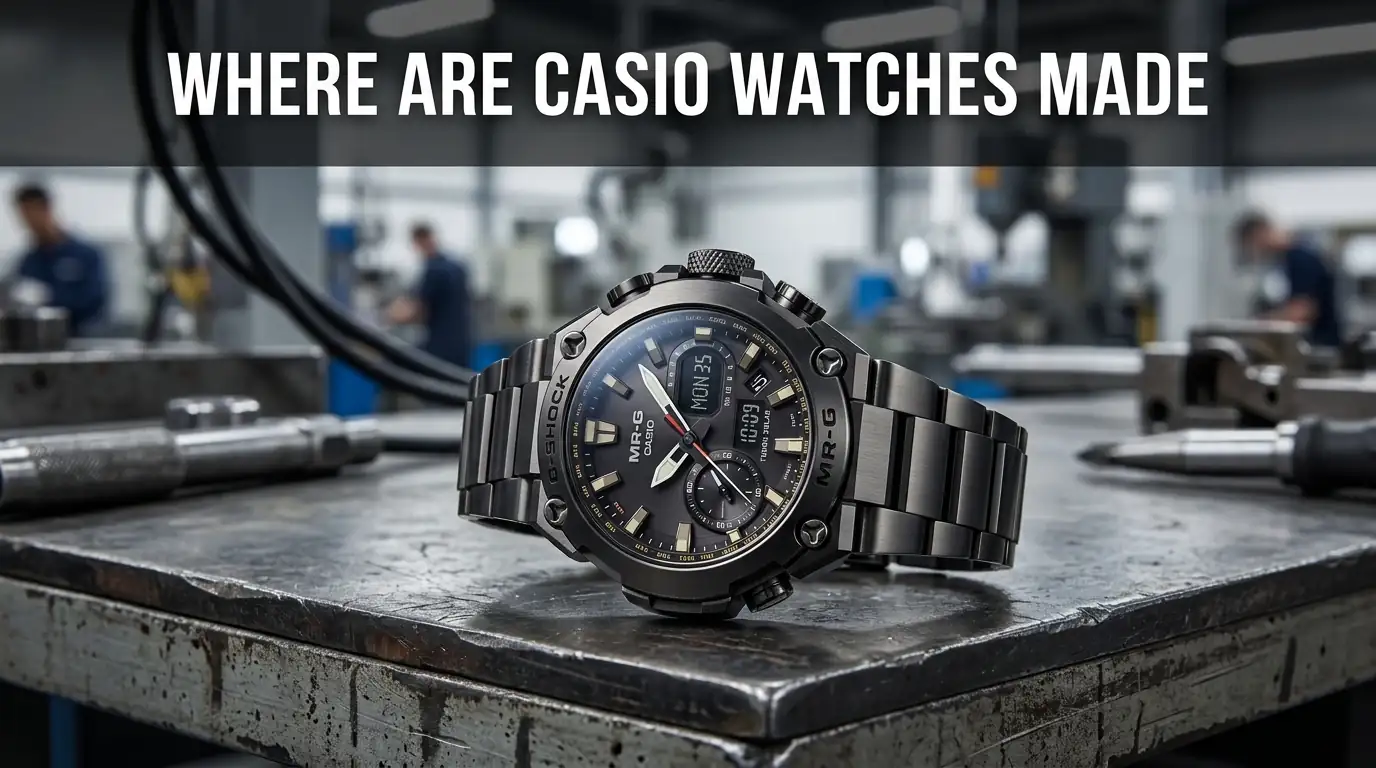
Casio watches are made in Japan, China and Thailand by Casio Computer Co, Ltd, a publicly traded Japanese electronics company headquartered in Tokyo.
Casio’s premium analog watches, including the Oceanus and higher end Edifice lines, are built at the company’s dedicated Yamagata Casio factory in Japan, often called the brand’s mother factory.
Mass market digital and G Shock watches are typically assembled at Casio owned or contracted factories in China and Thailand, where the company can produce extremely high volumes at low cost while maintaining consistent quality control.
Casio began as a calculator and electronics company before becoming one of the most influential digital watchmakers in the world, a shift that started with the Casiotron in 1974 and accelerated dramatically with G Shock in 1983.
This guide covers who owns Casio, its founding history, where its watches are actually manufactured, its current lineup, pricing, and how it compares with G Shock and Citizen.
Table of Contents
Who Owns Casio?
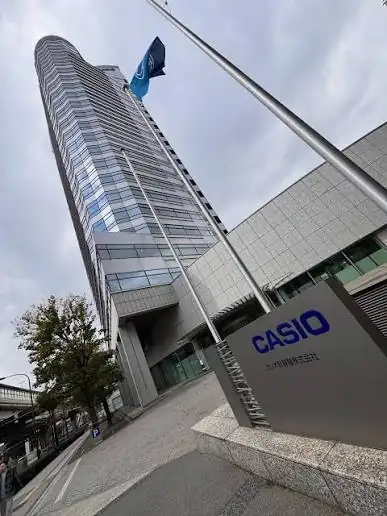
Casio is owned by Casio Computer Co, Ltd, a publicly traded Japanese company listed on the Tokyo Stock Exchange, founded and still connected to the Kashio family that started the business.
Kazuhiro Kashio, a member of the founding family, has served in senior leadership roles at the company, continuing a connection between the Kashio family and Casio’s operations that stretches back to the company’s founding.
Unlike Swiss watch brands that often belong to large luxury conglomerates, Casio operates as its own independent public company, with watches representing just one division alongside calculators, electronic musical instruments and other consumer electronics.
When Was Casio Founded?
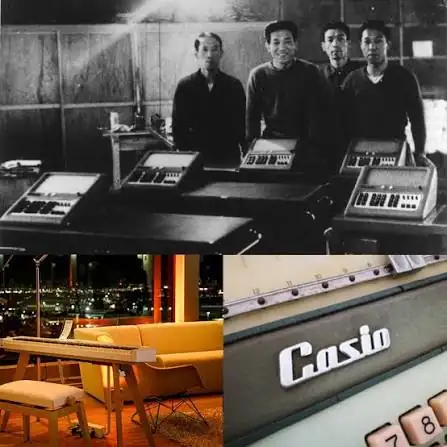
Casio traces its origins to 1946, when Tadao Kashio founded a small workshop in Tokyo, initially producing precision parts before moving into calculators.
The company was formally incorporated as Casio Computer Co, Ltd in 1957 after launching Japan’s first entirely electric compact calculator, a breakthrough that established Casio’s reputation for accessible consumer electronics.
Casio entered the watch market in 1974 with the Casiotron, the first watch to feature an automatic calendar function that correctly accounted for different month lengths without manual adjustment.
Where Are Casio Watches Made?
Casio’s watch production is split across several countries depending on the product line and price point, rather than being concentrated in a single factory.
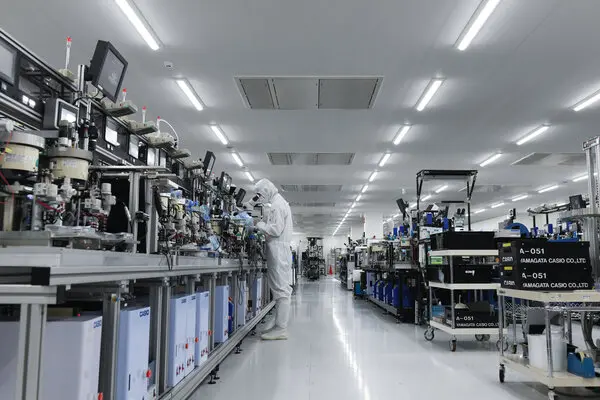
High end analog watches, including many Oceanus and premium Edifice models, are manufactured at Yamagata Casio in Yamagata Prefecture, Japan, a facility the company treats as its flagship precision manufacturing site.
More affordable digital watches and most G Shock models are produced at Casio operated or contracted factories in China and Thailand, allowing the company to meet global demand at scale while keeping prices accessible. Full production details are available on Casio’s official website.
The Yamagata Casio Mother Factory
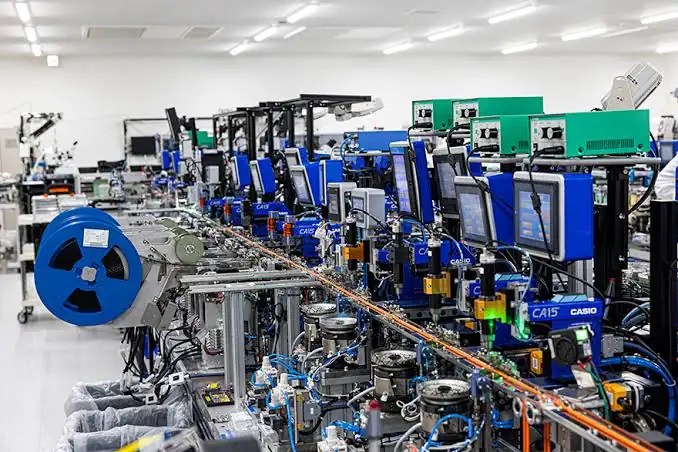
Yamagata Casio specializes in high precision analog watchmaking, including intricate case machining, dial finishing and assembly for the company’s most premium timepieces.
The facility is known within the industry for combining traditional Japanese precision manufacturing techniques with advanced robotics and automated quality inspection systems.
Watches assembled there typically carry a Made in Japan designation, distinguishing them from Casio’s higher volume digital watches produced elsewhere in Asia.
What Watches Does Casio Currently Make?
G Shock remains Casio’s most recognized watch line, built around extreme shock resistance, water resistance and long battery life, and it has grown into a sub brand with its own dedicated fan base worldwide.
The Edifice collection targets buyers who want a sport styled analog watch with chronograph functions at a mid range price, while Oceanus offers Casio’s most premium radio controlled and solar powered technology.
Casio also continues producing simple, extremely affordable digital watches similar in spirit to its original Casiotron, which remain popular for their reliability and low price.
How Much Do Casio Watches Cost?
Basic digital Casio watches often retail for as little as 15 to 40 dollars, making them some of the most affordable reliable timepieces available anywhere in the world.
Standard G Shock and Edifice models typically range from 60 to 300 dollars, while premium Oceanus and limited edition G Shock collaborations can reach 500 to 1,500 dollars.
This wide pricing range allows Casio to compete simultaneously in the disposable watch market and in a more serious enthusiast segment built around G Shock collectability.
Casio vs G Shock vs Citizen: How Do They Compare?
G Shock is a line within Casio rather than a separate company, though its popularity has made many buyers treat it almost like an independent brand, as explored in our dedicated guide to where G Shock watches are made.
Citizen, covered in our article on where Citizen watches are made, focuses more heavily on solar powered Eco Drive analog watches rather than digital and shock resistant designs.
Where Casio built its identity around toughness, affordability and digital innovation, Citizen has built its reputation more around environmentally friendly light powered movements across a broader range of formal and casual designs.
Is Casio Worth Buying?
Casio is widely regarded as one of the best value watch brands in the world, particularly for buyers who prioritize durability and function over traditional prestige.
On the positive side, Casio offers extremely reliable quartz accuracy, industry leading shock and water resistance through G Shock, long battery life, and prices accessible to nearly any budget.
On the downside, most Casio watches lack the mechanical craftsmanship and resale value associated with Swiss and higher end Japanese brands, and premium finishing is generally reserved for its more expensive lines.
Overall, Casio remains an excellent choice for buyers who want dependable, affordable timekeeping, and G Shock in particular has earned genuine respect even among collectors who otherwise focus on mechanical watches. Wikipedia’s overview of Casio’s corporate history covers additional milestones.
How G Shock Changed Casio’s Reputation
Engineer Kikuo Ibe developed the original G Shock in 1983 after setting out to build a watch that could survive being dropped without breaking, reportedly testing dozens of failed prototypes before succeeding.
The watch was built around what Casio internally called a triple ten concept, targeting ten meters of drop resistance, ten bar water resistance and roughly ten years of battery life in a single design.
G Shock’s success transformed Casio from a maker of inexpensive calculators and simple digital watches into a brand respected for genuine engineering innovation, a reputation that now extends across its entire watch division. More background is available from this factory tour report on Casio’s manufacturing.
How Casio Manages Global Quality Control
Because Casio spreads production across multiple countries, the company relies on centralized design specifications and standardized testing protocols developed in Japan, which every factory must follow regardless of location.
Every G Shock model, wherever it is assembled, must pass the same internal shock, water resistance and temperature testing before it can be sold under the G Shock name, a policy Casio has maintained since the line launched.
This standardized approach allows Casio to keep manufacturing costs low in high volume factories overseas while still protecting the reputation for toughness that built the G Shock brand in the first place.
Casio’s Broader Electronics Business
Watches represent only one part of Casio’s overall business, which also includes calculators, electronic musical keyboards, projectors and label printing systems sold under various sub brands.
This diversification gives Casio financial stability that many single category watch companies lack, allowing it to continue funding research into new materials and shock resistant technology even during periods when watch sales slow.
That broader engineering culture, shared across electronics and watchmaking divisions, is part of why Casio continues to introduce genuinely new technology, such as carbon core guard structures and Bluetooth connected G Shock models, rather than simply repackaging older designs.
For buyers comparing Casio against dedicated watch only companies, this engineering depth is often an underappreciated advantage, since Casio can apply lessons from unrelated product categories directly back into its watch designs.
That cross pollination between divisions is one reason Casio watches, despite their low price in many cases, are frequently praised for durability that outperforms far more expensive competitors in real world drop and impact testing.
That reputation continues to attract new fans well outside Casio’s original calculator watch customer base, including collectors who now seek out vintage digital models alongside their modern G Shock releases.
This growing crossover between casual buyers and dedicated collectors keeps Casio relevant across generations, even as smartwatches and other digital devices reshape competition in the broader watch market.
Frequently Asked Questions About Where Casio Watches Are Made
Is Casio a Japanese company?
Yes. Casio Computer Co, Ltd is a Japanese company headquartered in Tokyo, though its watches are manufactured across Japan, China and Thailand depending on the product line.
Who owns Casio watches?
Casio is a publicly traded Japanese company still connected to its founding Kashio family, and it operates independently rather than being owned by a larger conglomerate.
Are all G Shock watches made in Japan?
No. Most G Shock watches are manufactured at Casio factories in China and Thailand, while some premium analog Casio lines are produced at the Yamagata Casio facility in Japan.
What was Casio’s first watch?
The Casiotron, released in 1974, was Casio’s first watch and the first in the world to feature an automatic calendar that correctly adjusted for different month lengths.

I am Jack Neel, a mechanical engineer, researcher, and writer. I created this website to share my knowledge about different brands and products with you. I research the manufacturers behind the brands and provide you with the information you need to make smart buying decisions.