
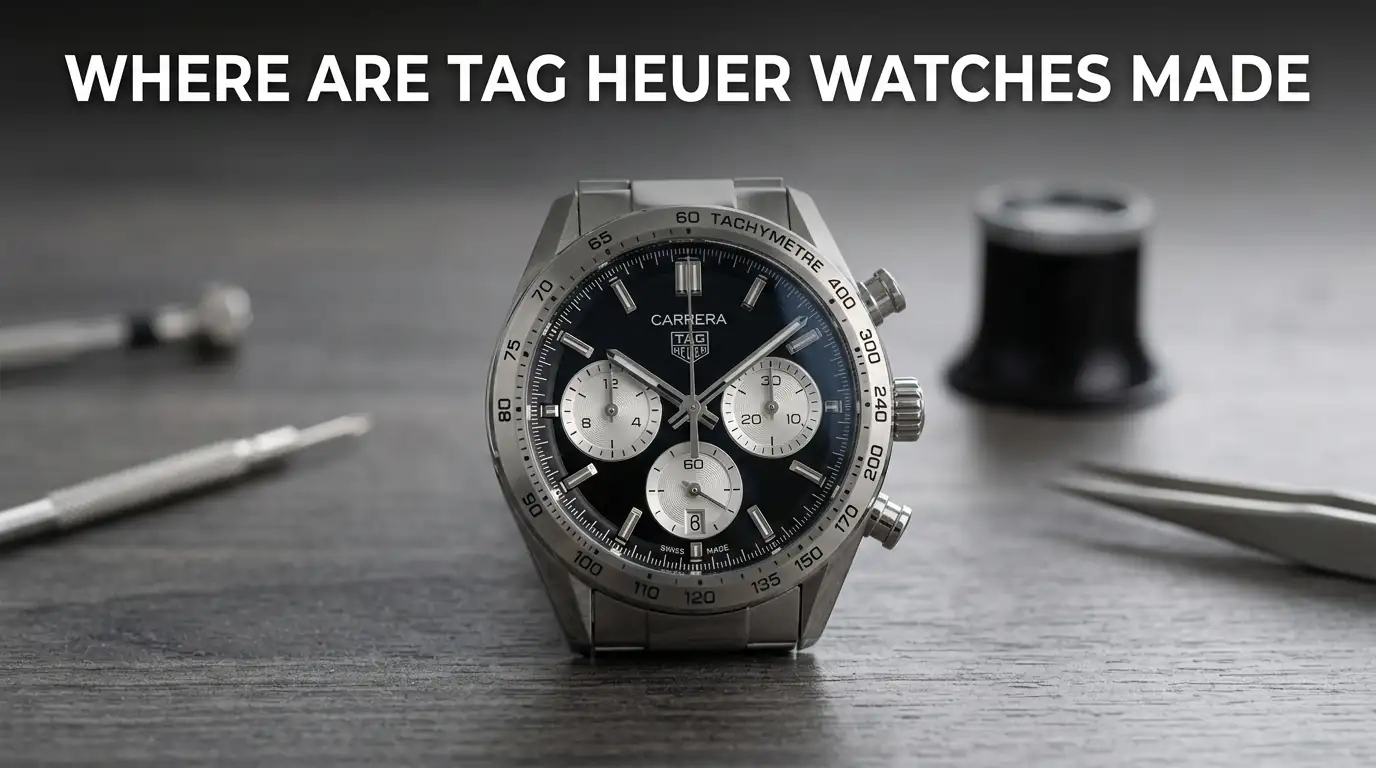
TAG Heuer watches are made in Switzerland by LVMH at the brand’s manufacture in La Chaux de Fonds, supported by additional Swiss facilities that handle case production and movement assembly.
TAG Heuer built its reputation on motorsport timing, serving for decades as an official partner and timekeeper of Formula 1 racing, alongside deep ties to endurance racing and rally sports.
The brand’s name reflects two distinct eras, combining founder Edouard Heuer’s original nineteenth century company with TAG, a technology and luxury holding group that acquired a controlling stake in 1985.
Understanding who makes TAG Heuer means understanding its place inside LVMH, its motorsport driven engineering history, and its Swiss manufacturing base in La Chaux de Fonds.
This guide covers TAG Heuer’s ownership, founding history, manufacturing locations, movement technology, current collections, pricing, and how it compares with Rolex and Seiko.
Table of Contents
Who Owns TAG Heuer?

TAG Heuer is owned by LVMH Moet Hennessy Louis Vuitton, the French luxury conglomerate that acquired the brand in 1999 as part of its expansion into watches and jewelry.
Antoine Pin has served as chief executive officer of TAG Heuer since July 2024, part of a broader leadership reshuffle across LVMH’s watch division that also brought new leadership to sister brand Hublot.
Beyond TAG Heuer, LVMH’s watch and jewelry division also owns Hublot, Zenith and Bulgari, giving the group a significant presence across multiple price tiers of the Swiss watch market.
When Was TAG Heuer Founded?
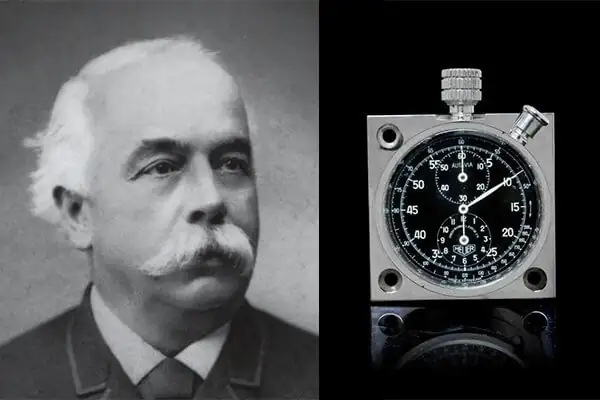
The company was founded in 1860 in Saint Imier, Switzerland, by Edouard Heuer, initially operating under the name Uhrenfabrik Heuer.
In 1887, Heuer patented the oscillating pinion, a small mechanical component that remains a standard part of mechanical chronograph movements used across the industry today, including in many competitors’ watches.
The company adopted the TAG Heuer name in 1985 after Techniques d’Avant Garde, a Saudi led technology and luxury investment group, acquired a controlling stake in the historic Heuer company.
Where Are TAG Heuer Watches Made?
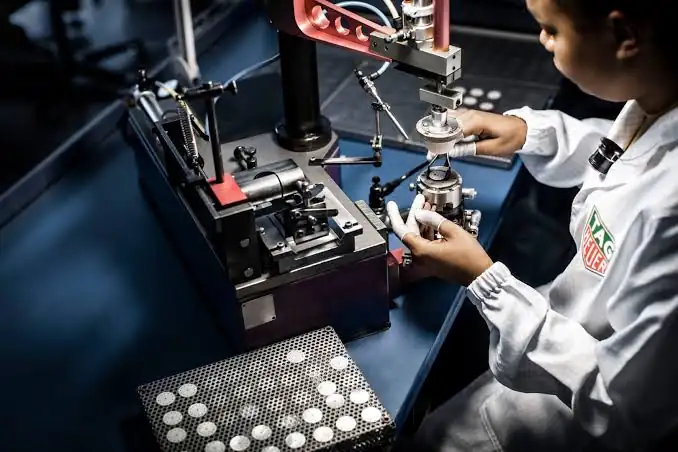
TAG Heuer manufactures its watches primarily at its headquarters and manufacture in La Chaux de Fonds, Switzerland, where the company develops movements and performs final assembly and testing.
Additional Swiss facilities support case production and component manufacturing, and TAG Heuer has expanded its in house movement capability significantly since introducing the Heuer 02 automatic chronograph caliber in 2016.
LVMH has also invested in Swiss movement specialist La Joux Perret to strengthen in house production capacity across its watch brands, including TAG Heuer. Additional information is on TAG Heuer’s official website.
TAG Heuer’s Motorsport Legacy
TAG Heuer served as an official timekeeper and sponsor of Formula 1 racing for many years, a relationship that shaped much of the brand’s design and marketing identity around speed and precision.
In 1969, Heuer collaborated with Breitling, Buren and Dubois Depraz on the Chronomatic project, racing against Zenith and Seiko to release one of the first automatic chronograph movements in watch history.
Actor Steve McQueen wore a Heuer Monaco, a distinctive square cased chronograph, in the 1971 film Le Mans, cementing the model’s status as one of the most recognizable motorsport watches ever produced.
What Watches Does TAG Heuer Currently Make?
The Carrera collection, introduced in 1963 and inspired by the dangerous Carrera Panamericana road race, remains TAG Heuer’s flagship chronograph line.
The Monaco continues McQueen’s square cased legacy, while the Aquaracer covers the brand’s dive watch offerings with modern water resistance and rotating bezel designs.
TAG Heuer also produces the Connected smartwatch line, giving the brand a presence in the digital watch category alongside its traditional mechanical collections.
How Much Do TAG Heuer Watches Cost?
Entry level TAG Heuer models, including some Aquaracer quartz references, typically start between 1,500 and 2,500 dollars.
Automatic Carrera and Monaco chronographs with the in house Heuer 02 movement generally range from 4,000 to 7,000 dollars, while limited editions can extend somewhat higher.
This pricing places TAG Heuer as one of the more accessible entry points into genuine Swiss chronograph manufacturing compared with Omega, Breitling or Rolex.
TAG Heuer vs Rolex vs Seiko: How Do They Compare?
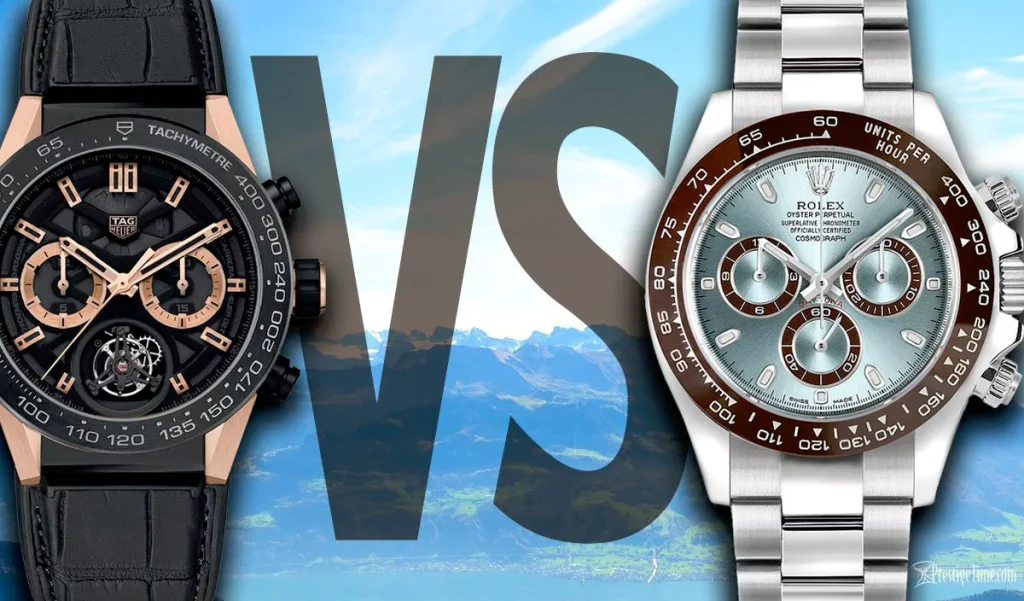
TAG Heuer and Rolex both draw heavily on motorsport and precision heritage, though Rolex sits at a noticeably higher price point and holds stronger resale value, as covered in our guide to where Rolex watches are made.
TAG Heuer generally offers a more accessible entry point into Swiss chronograph ownership, making it a common alternative for buyers priced out of Rolex’s Daytona chronograph.
Seiko, detailed in our article on where Seiko watches are made, also produces respected chronograph movements at a fraction of TAG Heuer’s price, though without the same motorsport branding.
Is TAG Heuer Worth Buying?
TAG Heuer is generally considered solid value for buyers who want genuine Swiss chronograph engineering and motorsport heritage without paying Rolex or Omega level prices.
On the positive side, TAG Heuer offers the in house Heuer 02 movement, deep Formula 1 and endurance racing history, and iconic designs such as the Monaco and Carrera.
On the downside, TAG Heuer’s resale value trails significantly behind Rolex and Omega, and the brand has occasionally been criticized for aggressive discounting at authorized retailers, which can undermine long term value retention.
Overall, TAG Heuer remains a strong choice for buyers drawn to motorsport history who want a genuine Swiss chronograph at a comparatively accessible price. Wikipedia’s overview of TAG Heuer’s history covers additional milestones.
TAG Heuer’s Role Inside LVMH’s Watch Division
Within LVMH’s broader watch and jewelry division, TAG Heuer serves as the group’s primary entry into accessible luxury sport watches, positioned below Hublot and Bulgari but above the group’s fashion oriented watch brands.
LVMH has periodically reshuffled leadership across its watch brands to sharpen this positioning, including the 2024 appointment of Antoine Pin, who previously ran Bulgari’s watchmaking division before moving to TAG Heuer.
This internal movement of executives between LVMH watch brands is common within the group and reflects a broader strategy of sharing manufacturing resources, retail infrastructure and leadership talent across its Swiss watchmaking portfolio. Further background is available from LVMH’s official profile of TAG Heuer.
TAG Heuer’s Return to Formula 1 Partnership
After stepping back from its long running Formula 1 timekeeping role for several years, TAG Heuer returned as an official partner of Formula 1 in recent seasons, reinforcing the motorsport identity that has defined the brand since the 1960s.
The renewed partnership includes special edition Carrera and Monaco models tied to specific races and teams, continuing a marketing strategy the brand has used successfully for decades.
This return to motorsport visibility aligns closely with TAG Heuer’s core brand identity, reinforcing the connection between its watches and the racing world that inspired many of its most famous designs.
How the Oscillating Pinion Still Shapes Modern Chronographs
Edouard Heuer’s 1887 oscillating pinion patent solved a fundamental mechanical challenge in chronograph design, allowing the seconds hand to engage and disengage smoothly without the jarring jump seen in earlier chronograph attempts.
That component became so effective that it remains standard in mechanical chronograph movements used across the watch industry today, including in many watches made by brands that have no direct connection to TAG Heuer.
This lasting technical contribution is a major reason horologists continue to credit Heuer as one of the true pioneers of chronograph engineering, independent of the brand’s later corporate ownership changes.
TAG Heuer’s Approach to In House Movement Development
Before 2016, TAG Heuer relied primarily on movements sourced from outside suppliers, including shared architecture from ETA and Sellita, similar to many mid tier Swiss brands.
The introduction of the Heuer 02 automatic chronograph movement marked a significant shift toward genuine in house manufacturing, developed with support from LVMH’s investment in movement specialist La Joux Perret.
Since then, TAG Heuer has continued expanding its in house capability across the Carrera and Monaco lines, gradually reducing its reliance on outside movement suppliers for its core collections.
That gradual shift toward in house production mirrors a broader trend across the Swiss watch industry, where brands increasingly view movement manufacturing as a key differentiator worth the additional investment.
For collectors, this means a modern TAG Heuer chronograph reflects genuinely different engineering than an equivalent model sold a decade earlier, even though the exterior design may look similar at first glance.
That investment in engineering, paired with the brand’s ongoing motorsport partnerships, suggests LVMH intends to keep TAG Heuer positioned as a serious chronograph specialist rather than a purely fashion driven watch brand.
Frequently Asked Questions About Where TAG Heuer Watches Are Made
Is TAG Heuer Swiss made?
Yes. TAG Heuer manufactures its watches at its facility in La Chaux de Fonds, Switzerland, and every current model qualifies for the Swiss Made designation.
Who owns TAG Heuer watches?
TAG Heuer is owned by LVMH Moet Hennessy Louis Vuitton, the French luxury conglomerate that acquired the brand in 1999.
Does TAG Heuer make its own movements?
Yes, for its higher end models. TAG Heuer produces its own in house Heuer 02 automatic chronograph movement, introduced in 2016, though some entry level watches still use outside sourced movements.
What does TAG stand for in TAG Heuer?
TAG stands for Techniques d’Avant Garde, a Saudi led technology and luxury investment group that acquired a controlling stake in Heuer in 1985, leading to the current brand name.

I am Jack Neel, a mechanical engineer, researcher, and writer. I created this website to share my knowledge about different brands and products with you. I research the manufacturers behind the brands and provide you with the information you need to make smart buying decisions.