
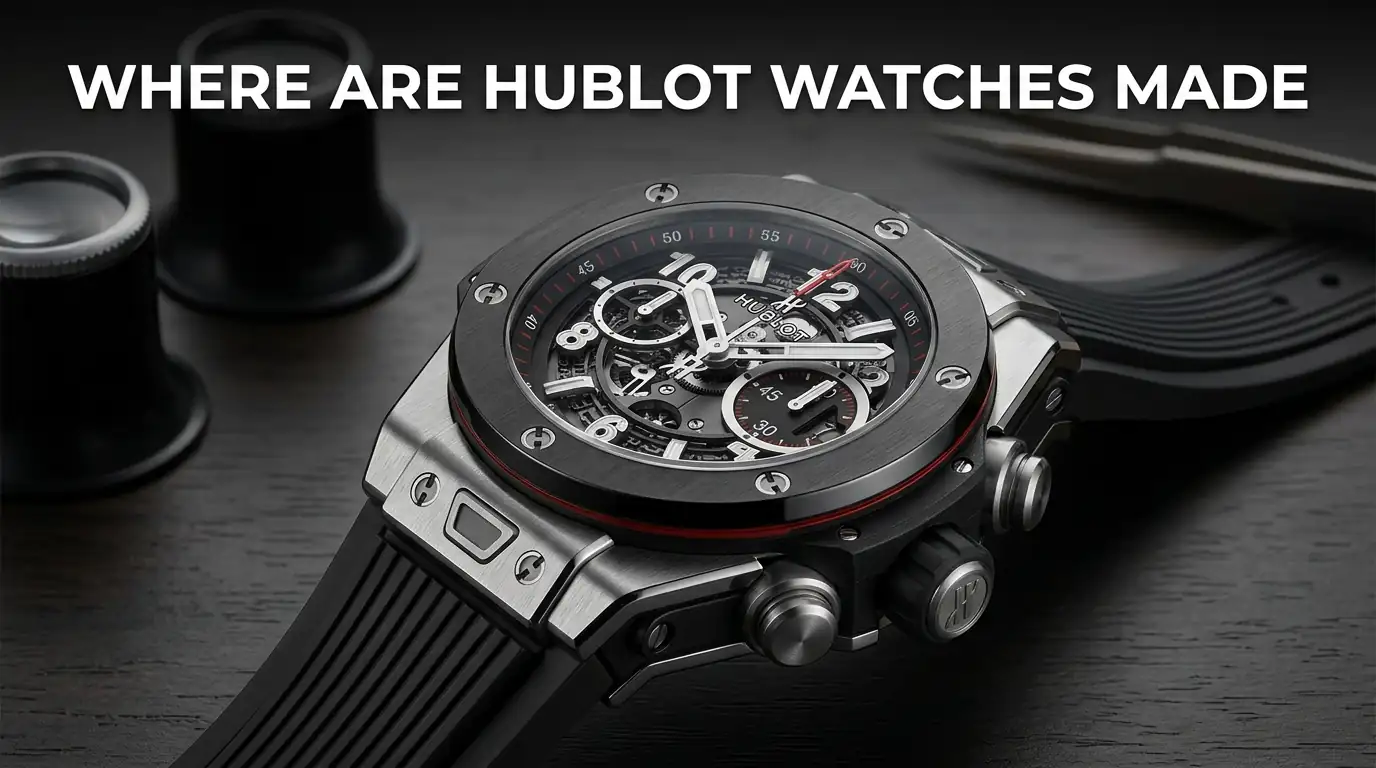
Hublot watches are made in Switzerland by LVMH at the brand’s own manufacture in Nyon, on the shore of Lake Geneva.
Hublot is best known for pioneering what it calls the Art of Fusion, combining traditional precious metals with unconventional materials such as natural rubber, a concept that was considered radical when the brand launched it in 1980.
LVMH acquired Hublot in 2008, and the brand has since become one of the group’s fastest growing watch names, known for bold designs and high profile sports and entertainment partnerships.
Understanding who makes Hublot means understanding its place inside LVMH, its unusual material driven design philosophy, and its manufacture in Nyon.
This guide covers Hublot’s ownership, founding history, manufacturing locations, materials technology, current collections, pricing, and how it compares with Rolex and Seiko.
Table of Contents
Who Owns Hublot?

Hublot is owned by LVMH Moet Hennessy Louis Vuitton, the French luxury conglomerate that acquired the brand in 2008.
Julien Tornare has served as chief executive officer of Hublot since July 2024, moving over from leading sister brand TAG Heuer as part of a broader leadership reshuffle across LVMH’s watch division.
His predecessor, Ricardo Guadalupe, who had led Hublot for many years and helped drive much of its recent growth, transitioned into a new role as honorary president of the brand.
When Was Hublot Founded?
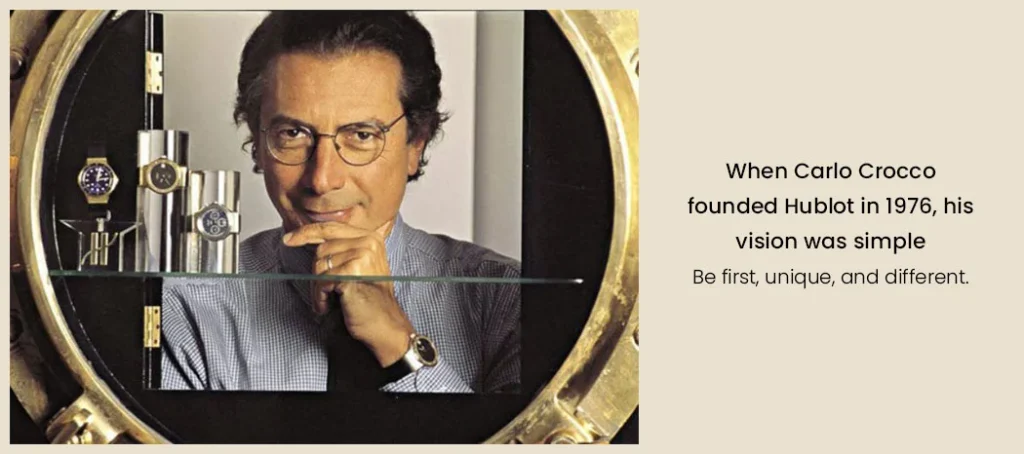
Hublot was founded in 1980 by Italian businessman Carlo Crocco, who introduced the brand’s signature concept of pairing a gold case with a natural rubber strap.
At the time, using rubber on a luxury gold watch was considered unusual and even risky, since rubber was associated with inexpensive sport watches rather than fine watchmaking.
The concept eventually proved highly influential, and Hublot’s willingness to mix unconventional materials with traditional craftsmanship became the foundation of its entire brand identity going forward.
Where Are Hublot Watches Made?
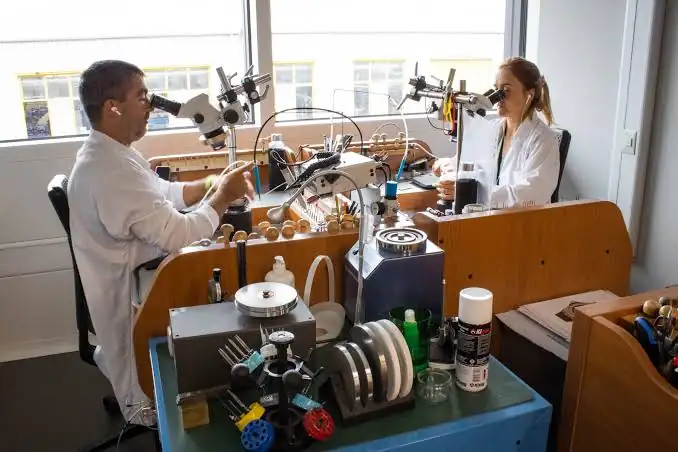
Hublot manufactures its watches at its own facility in Nyon, Switzerland, where the company handles movement assembly, case production and material research and development.
Hublot has invested heavily in proprietary material science, including Magic Gold, a patented eighteen karat gold alloy developed with a Swiss university that resists scratching far better than standard gold.
This focus on in house material innovation, alongside genuine Swiss manufacturing, allows Hublot to introduce case materials that few other brands can replicate. Additional information is available on Hublot’s official website.
How the Big Bang Relaunched Hublot
In 2005, under the leadership of watch industry veteran Jean Claude Biver, Hublot launched the Big Bang, a bold chronograph combining multiple case materials, oversized proportions and exposed screws.
The Big Bang became an immediate commercial success and remains Hublot’s flagship collection today, credited with transforming the brand from a relatively niche name into one of the most recognized luxury watchmakers in the world.
That success directly attracted LVMH’s interest, leading to the group’s acquisition of Hublot just a few years later in 2008.
What Watches Does Hublot Currently Make?
The Big Bang remains Hublot’s core collection, available in dozens of material and complication variations, from simple three hand models to skeletonized tourbillons.
The Classic Fusion line offers a more understated, rounder case design for buyers who want Hublot’s material innovation without the Big Bang’s bold sporty styling.
Hublot also regularly releases limited edition collaborations tied to sports events, artists and other luxury brands, a strategy that has become central to its marketing approach.
How Much Do Hublot Watches Cost?
Entry level Hublot Classic Fusion models typically start between 8,000 and 12,000 dollars.
Big Bang chronographs generally range from 15,000 to 25,000 dollars, while precious metal, gem set and complicated tourbillon models can exceed 50,000 dollars.
This pricing places Hublot in a similar tier to Audemars Piguet’s more accessible references, generally above Omega and TAG Heuer within LVMH’s own watch portfolio.
Hublot vs Rolex vs Seiko: How Do They Compare?
Hublot and Rolex both compete for attention among luxury watch buyers, though Rolex maintains a more conservative design language and stronger resale value, as explained in our guide to where Rolex watches are made.
Hublot leans much further into bold, experimental design and material science than Rolex’s traditionally understated approach.
Seiko, covered in our article on where Seiko watches are made, occupies an entirely different market tier, illustrating how differently brands can approach watchmaking depending on their target price point.
Is Hublot Worth Buying?
Hublot is generally considered a strong choice for buyers who specifically want bold, unconventional design and genuine material innovation rather than a classic dress or sport watch aesthetic.
On the positive side, Hublot offers proprietary materials like Magic Gold, strong sports and entertainment partnerships, and a distinctive design language unlike most other Swiss luxury brands.
On the downside, Hublot’s resale value trails significantly behind Rolex and Patek Philippe, and its bold aesthetic does not appeal to buyers who prefer more traditional or understated watch designs.
Overall, Hublot remains a distinctive choice within luxury watchmaking, particularly for buyers drawn to its material science and high profile brand partnerships. Wikipedia’s overview of Hublot’s history covers additional milestones.
Hublot’s Sports and Entertainment Partnerships
Hublot has served as an official timekeeper and sponsor of major football tournaments, including the FIFA World Cup, alongside long running partnerships with Formula One teams such as Ferrari.
These partnerships align closely with Hublot’s brand identity as a bold, high energy alternative to more traditional Swiss luxury watchmakers, and they generate significant marketing visibility during major global sporting events.
Hublot has also collaborated with artists and other luxury brands on limited edition releases, further reinforcing its positioning as a watchmaker willing to experiment outside traditional horology boundaries. Further background is available from LVMH’s official profile of Hublot.
Hublot’s Investment in Material Science
Beyond Magic Gold, Hublot has developed a wide range of proprietary case materials, including colored ceramics, sapphire crystal cases, and lightweight composite materials originally explored for aerospace and industrial applications.
This dedicated research effort requires significant investment in specialized equipment and chemistry expertise not typically found at traditional watch manufactures, reflecting Hublot’s identity as much as a materials laboratory as a watchmaker.
That investment has allowed Hublot to introduce genuinely new case materials on a more frequent basis than most competitors, reinforcing the innovation focused reputation the brand has built since the Big Bang’s launch in 2005.
Jean Claude Biver’s Role in Hublot’s Turnaround
Before joining Hublot in 2004, Jean Claude Biver had already built a reputation in the Swiss watch industry for reviving struggling brands, having previously led a successful turnaround at Blancpain.
At Hublot, Biver pushed the brand to embrace bolder marketing, higher visibility sports partnerships and the material fusion concept that eventually produced the Big Bang, transforming a relatively obscure brand into a major commercial success within just a few years.
Biver’s success at Hublot directly led to LVMH’s decision to acquire the brand in 2008, and he later went on to oversee LVMH’s broader watch division for several years afterward.
How Hublot Fits Within LVMH’s Watch Portfolio
Within LVMH’s watch and jewelry division, Hublot occupies a premium position alongside Bulgari, generally priced above TAG Heuer and Zenith but overlapping somewhat with entry level Bulgari pieces.
This positioning gives LVMH a strong presence in the higher end luxury watch segment without directly competing against Richemont’s Cartier or Independent brands like Audemars Piguet on their own terms.
Instead, Hublot has built its niche around bold design and material innovation, a strategy that continues to differentiate it clearly from more conservative competitors at a similar price point.
For collectors deciding between LVMH watch brands, Hublot generally appeals to buyers seeking maximum visual boldness, while TAG Heuer targets motorsport heritage and Bulgari leans further into jewelry craftsmanship.
That clear differentiation across LVMH’s watch brands helps the group capture different buyer segments without directly competing against itself in any single niche.
That deliberate positioning has helped Hublot maintain steady growth since its acquisition, and it remains one of the more commercially successful brands within LVMH’s overall watch and jewelry division.
For buyers considering a Hublot purchase, this track record suggests the brand will continue investing in bold design and material research rather than shifting toward a more conservative aesthetic to compete directly with Rolex or Patek Philippe.
That focus on distinctiveness, backed by real Swiss manufacturing in Nyon, is likely to remain Hublot’s core strategy for the foreseeable future under its current leadership.
Readers who want a broader comparison of luxury Swiss ownership structures can also review how sister LVMH brands are organized, since the group applies similar leadership rotation strategies across its watch portfolio.
Frequently Asked Questions About Where Hublot Watches Are Made
Is Hublot Swiss made?
Yes. Hublot manufactures its watches at its facility in Nyon, Switzerland, and every current model qualifies for the Swiss Made designation.
Who owns Hublot watches?
Hublot is owned by LVMH Moet Hennessy Louis Vuitton, the French luxury conglomerate that acquired the brand in 2008.
What is Hublot’s Art of Fusion concept?
The Art of Fusion refers to Hublot’s founding philosophy of combining traditional precious metals with unconventional materials such as natural rubber, first introduced when the brand launched in 1980.
What is Hublot Magic Gold?
Magic Gold is a patented eighteen karat gold alloy developed by Hublot that resists scratching far more effectively than standard gold, created through a partnership with a Swiss research university.

I am Jack Neel, a mechanical engineer, researcher, and writer. I created this website to share my knowledge about different brands and products with you. I research the manufacturers behind the brands and provide you with the information you need to make smart buying decisions.