
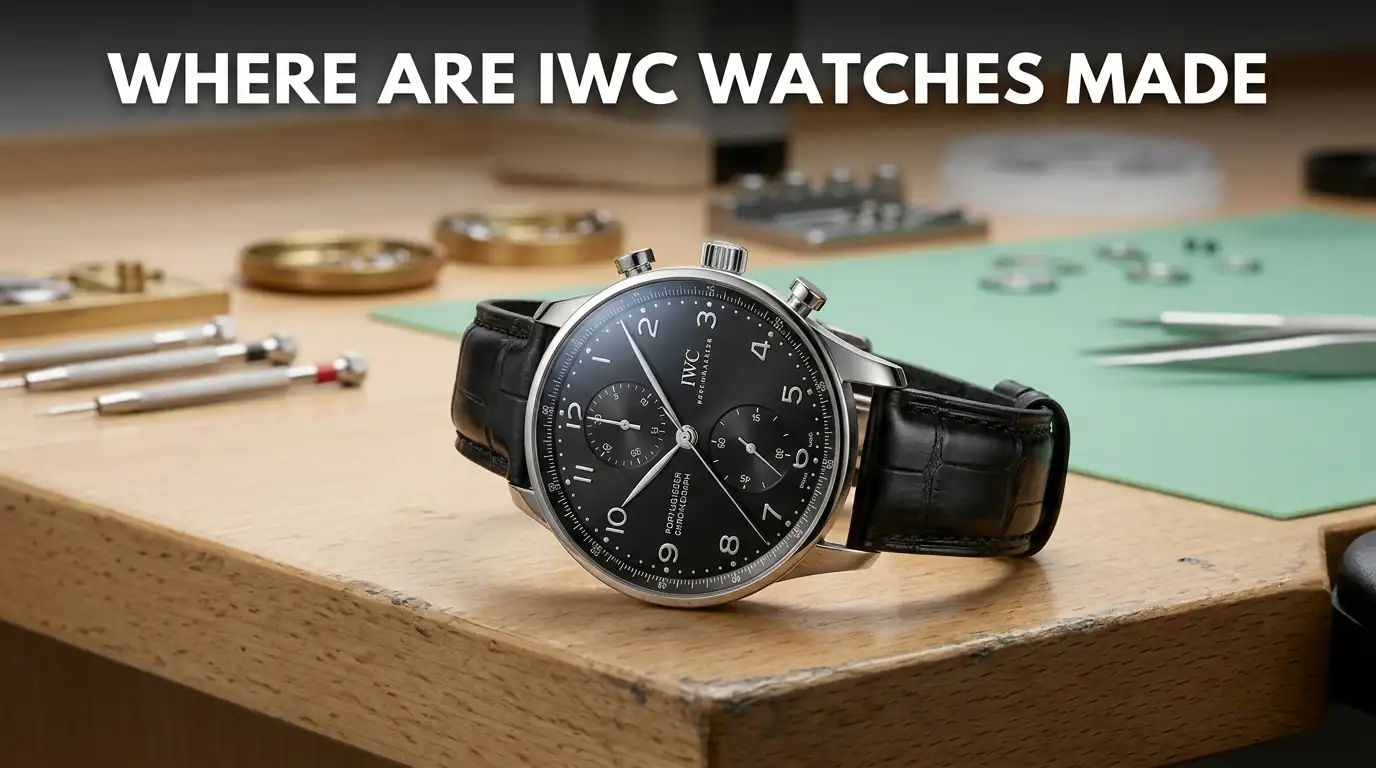
IWC watches are made in Schaffhausen, Switzerland, at the brand’s own manufacture, and the company has been owned by Richemont since 2000.
IWC stands for International Watch Company, a name that reflects its unusual founding story as a Swiss watchmaker started by an American engineer trying to combine American manufacturing methods with Swiss watchmaking craft.
The brand is known for pilot watches, engineering focused design language, and a manufacture that has remained in the same northern Swiss city, Schaffhausen, since it was founded in 1868.
Understanding who makes IWC means understanding its place inside Richemont, its unusual American founding influence, and its ongoing manufacturing base in Schaffhausen.
This guide covers IWC’s ownership, founding history, manufacturing locations, movement technology, current collections, pricing, and how it compares with Rolex and Bulova.
Table of Contents
Who Owns IWC?
IWC Schaffhausen is owned by Compagnie Financiere Richemont SA, the Swiss luxury group that also owns Cartier, Jaeger LeCoultre, Piaget and Vacheron Constantin.
Christoph Grainger-Herr has served as chief executive officer of IWC since 2017, overseeing the brand’s product direction and manufacturing strategy under Richemont ownership.
Richemont’s overall group chief executive is Nicolas Bos, who oversees IWC alongside the group’s broader portfolio of watch and jewelry brands.
When Was IWC Founded?
IWC was founded in 1868 in Schaffhausen, Switzerland, by Florentine Ariosto Jones, an American watchmaker and engineer.
Jones aimed to combine American manufacturing techniques, including interchangeable parts and precision machinery, with the traditional craftsmanship of Swiss watchmaking, an unusual approach for the era.
This blended philosophy gave the company its name, International Watch Company, reflecting its goal of bridging manufacturing traditions from both sides of the Atlantic from the very beginning.
Where Are IWC Watches Made?

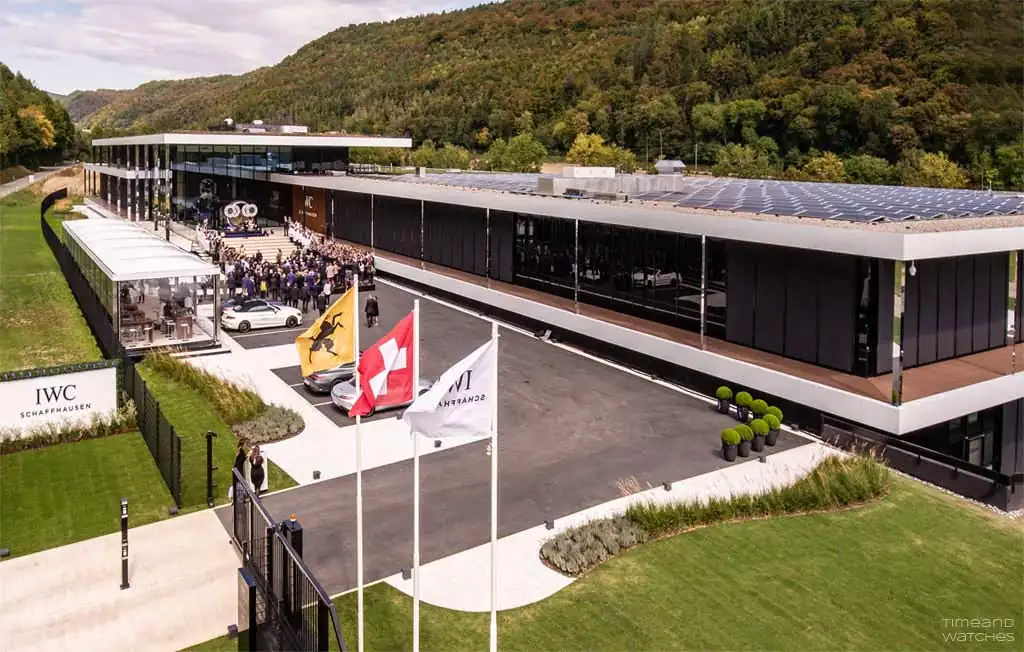
IWC manufactures its watches at its historic headquarters in Schaffhausen, Switzerland, supported by a modern Manufakturzentrum production building that opened in 2018 to expand movement and case production capacity.
IWC produces a significant share of its own movements in house, including automatic calibers in the 52000 series used across several of its major collections.
Because design, movement production and final assembly all take place within Switzerland, every current IWC watch qualifies for the Swiss Made label. Additional detail is available on IWC’s official website.
IWC’s Engineering Focused Design Philosophy
IWC has long positioned itself as an engineering driven watchmaker rather than a purely fashion oriented luxury brand, a philosophy reflected in models such as the Ingenieur, originally designed by Gerald Genta in 1955 to resist magnetic interference.
This engineering identity extends to IWC’s pilot watches, which prioritize legibility, durability and functional complications such as antimagnetic protection over purely decorative case details.
IWC frequently emphasizes this practical, function first approach in its marketing, distinguishing itself from sister Richemont brands like Cartier that lean more heavily on jewelry and fashion heritage.
What Watches Does IWC Currently Make?
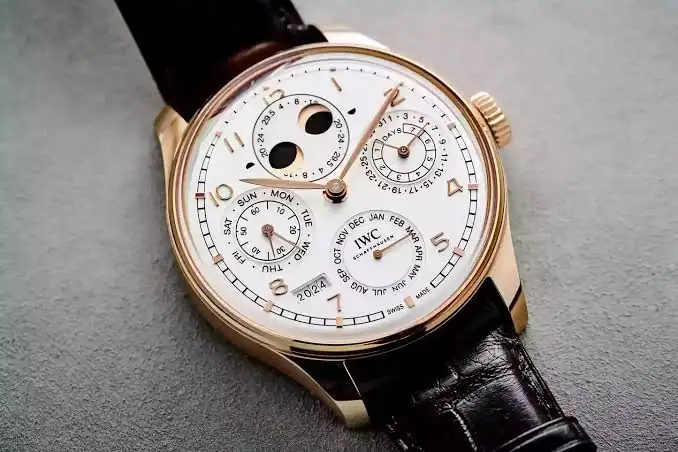
The Portugieser collection, originally created in the 1930s for Portuguese businessmen who wanted marine chronometer level precision in a wristwatch, remains one of IWC’s most prestigious lines.
The Pilot’s Watches collection, including the popular Big Pilot, continues IWC’s long history of aviation focused design, while the Portofino line offers more understated, classic dress watch styling.
IWC also produces the Da Vinci collection for women’s and unisex designs, alongside continued Ingenieur models built around antimagnetic engineering.
How Much Do IWC Watches Cost?
Entry level IWC models, including some Pilot’s Watch references, typically start between 4,000 and 6,000 dollars.
Portugieser chronographs and more complicated pilot watches generally range from 8,000 to 15,000 dollars, while grand complications and precious metal models can exceed 30,000 dollars.
This pricing places IWC alongside Omega and Breitling in the accessible luxury tier, generally below Patek Philippe and Audemars Piguet but above TAG Heuer.
IWC vs Rolex vs Bulova: How Do They Compare?
IWC and Rolex both emphasize engineering precision and durability, though Rolex maintains a private ownership structure very different from IWC’s position inside the publicly traded Richemont group, as covered in our guide to where Rolex watches are made.
IWC generally offers more varied complications and pilot watch heritage compared with Rolex’s tighter, more sport focused catalog.
Bulova, detailed in our article on where Bulova watches are made, sits at a far more accessible price point and is owned by Japan’s Citizen Watch rather than a Swiss luxury conglomerate.
Is IWC Worth Buying?
IWC is generally considered a strong choice for buyers who want genuine Swiss manufacture engineering and pilot watch heritage without paying Patek Philippe or Audemars Piguet level prices.
On the positive side, IWC offers significant in house movement production, a distinct engineering focused design language, and historically respected pilot and Portugieser collections.
On the downside, IWC’s resale value trails behind Rolex and Patek Philippe, and its broad catalog can make it harder for new buyers to identify which references hold long term value.
Overall, IWC remains a respected name among collectors who value functional engineering as much as traditional prestige. Wikipedia’s overview of IWC’s history covers additional milestones.
IWC’s American Founding Influence
Florentine Ariosto Jones previously worked at the Jones Boston company in the United States before relocating to Switzerland specifically to build a watch company that merged American mass production methods with Swiss craftsmanship.
This approach was unusual for its time, since most Swiss watchmakers relied heavily on skilled individual artisans rather than the standardized, interchangeable part manufacturing techniques common in American industry during that period.
That founding philosophy still influences IWC’s modern manufacturing approach, which emphasizes precision engineering processes alongside traditional Swiss finishing techniques. Further background is available from this overview of IWC Schaffhausen’s manufacturing history.
IWC’s Manufakturzentrum and Modern Production
The Manufakturzentrum, opened in Schaffhausen in 2018, significantly expanded IWC’s production capacity for both movements and cases, allowing the brand to bring more manufacturing steps in house rather than relying on outside suppliers.
The facility includes dedicated areas for movement assembly, case machining and quality testing, reflecting IWC’s ongoing investment in vertical integration similar to strategies pursued by sister Richemont brands.
This expanded manufacturing capacity has allowed IWC to grow its in house movement offerings across more of its collection in recent years, reducing reliance on shared Richemont group movement suppliers.
IWC’s Aviation Watch Heritage
IWC’s pilot watch tradition dates back to the 1930s, when the brand began producing cockpit clocks and navigation watches designed to withstand the shocks and magnetic fields common in early aircraft cabins.
During the Second World War, IWC supplied pilot watches to air forces that required extreme legibility and shock resistance under difficult combat conditions, experience that directly shaped the brand’s postwar Pilot’s Watch designs.
That aviation heritage remains central to IWC’s identity today, with the Big Pilot and Mark series continuing to reference design details first developed for military aircrews decades ago.
How Richemont Supports IWC’s Manufacturing Investment
As part of Richemont, IWC benefits from shared access to component suppliers, precious metal sourcing networks and research facilities used across the group’s broader watchmaking portfolio.
This shared infrastructure allows IWC to invest heavily in its own dedicated manufacturing expansion, including the Manufakturzentrum, without carrying the full financial burden that an entirely independent brand of similar size would face alone.
That balance between brand specific investment and group level resource sharing is a common model across Richemont’s watch brands, including Cartier and Jaeger LeCoultre, each of which maintains its own manufacture while drawing on shared group capabilities.
For buyers, this structure translates into steady long term investment in Schaffhausen rather than the kind of instability sometimes seen at smaller independent watchmakers during difficult economic periods.
It also means IWC can continue expanding its in house movement and case production even during industry downturns, since Richemont’s diversified portfolio across jewelry, watches and other luxury categories provides financial stability.
That combination of financial backing and dedicated manufacturing focus is a large part of why IWC has been able to expand its Schaffhausen operations so significantly over the past decade.
For collectors evaluating long term reliability of a brand’s manufacturing base, that kind of group support is a meaningful advantage compared with fully independent competitors of similar size.
It also helps explain why IWC has remained one of the more technically ambitious brands within the Richemont portfolio, consistently introducing new materials and movement architecture rather than relying purely on heritage marketing.
Buyers researching IWC today can generally trust that its Schaffhausen manufacturing base will remain well funded for the foreseeable future, given Richemont’s consistent long term investment pattern across its watch division.
Frequently Asked Questions About Where IWC Watches Are Made
Is IWC Swiss made?
Yes. IWC manufactures its watches at its facility in Schaffhausen, Switzerland, and every current model qualifies for the Swiss Made designation.
Who owns IWC watches?
IWC is owned by Compagnie Financiere Richemont SA, a Swiss luxury goods group that also owns Cartier, Jaeger LeCoultre and Vacheron Constantin.
What does IWC stand for?
IWC stands for International Watch Company, a name chosen by founder Florentine Ariosto Jones to reflect his goal of combining American manufacturing methods with Swiss watchmaking craftsmanship.
Does IWC make its own movements?
Yes. IWC produces a significant portion of its own movements in house, including automatic calibers used across the Portugieser, Pilot’s Watches and Portofino collections.

I am Jack Neel, a mechanical engineer, researcher, and writer. I created this website to share my knowledge about different brands and products with you. I research the manufacturers behind the brands and provide you with the information you need to make smart buying decisions.