
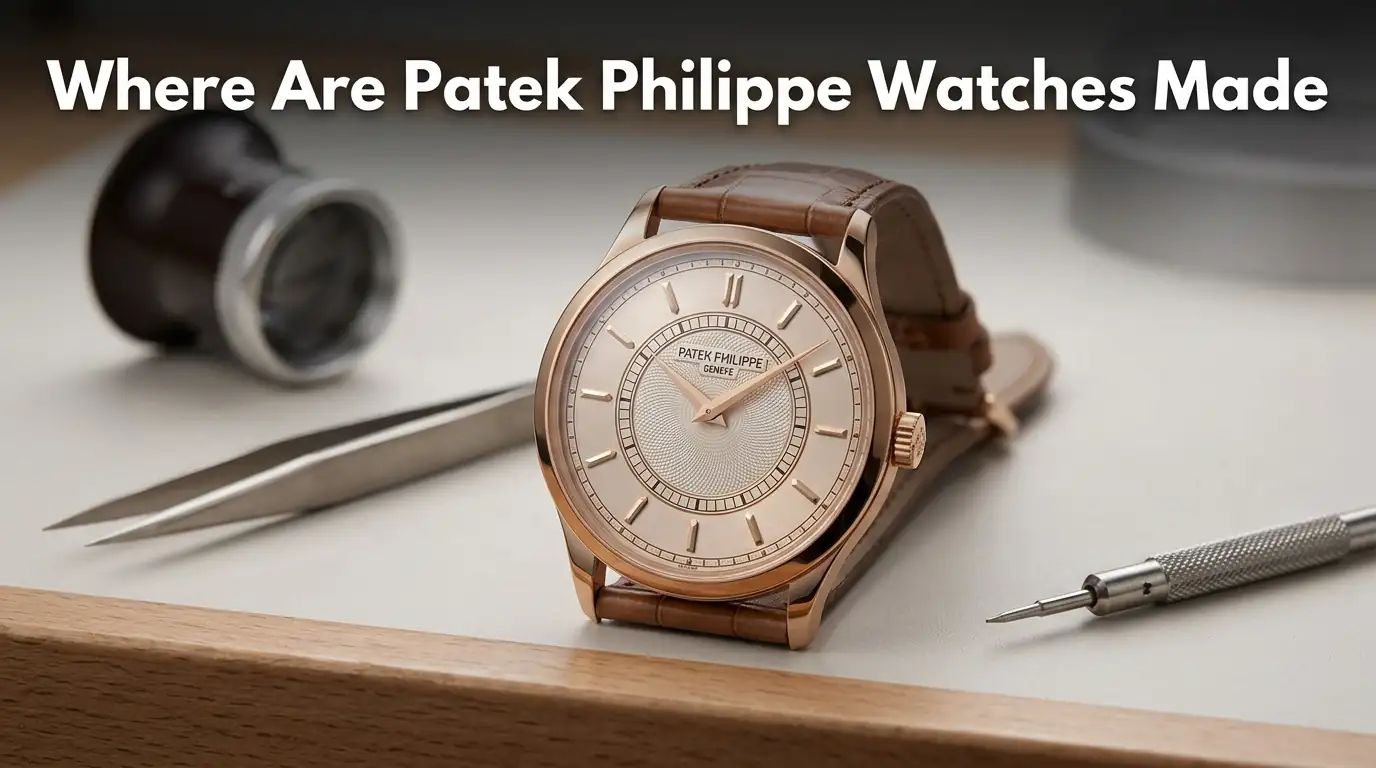
Patek Philippe watches are made in Geneva, Switzerland, entirely at the company’s own manufacture, and the brand remains privately owned by the Stern family, who have controlled it since 1932.
Patek Philippe is widely regarded as the most prestigious watchmaker in the world, known for extreme complications, meticulous hand finishing, and a corporate philosophy built around multi generation family ownership rather than shareholder returns.
Unlike most large luxury watch brands, Patek Philippe has never been part of Richemont, LVMH or The Swatch Group, making it one of the last fully independent historic manufactures in Geneva.
Understanding who makes Patek Philippe means understanding the Stern family’s role, the brand’s Geneva manufacture, and the philosophy of extreme craftsmanship that defines nearly everything it produces.
This guide covers Patek Philippe’s ownership, founding history, manufacturing locations, signature collections, pricing, and how it compares with Rolex and Seiko.
Table of Contents
Who Owns Patek Philippe?
Patek Philippe is privately owned by the Stern family, who purchased the struggling company in 1932 during the Great Depression after originally supplying it with dials through their own family business.
Thierry Stern has served as company president since 2009, representing the fourth generation of Stern family leadership, following his father Philippe Stern, who led the company for decades before him.
This unbroken family ownership is central to Patek Philippe’s identity, and the brand frequently emphasizes multi generational stewardship in its marketing, most famously through its slogan encouraging owners to think of themselves as caretakers for the next generation.
When Was Patek Philippe Founded?
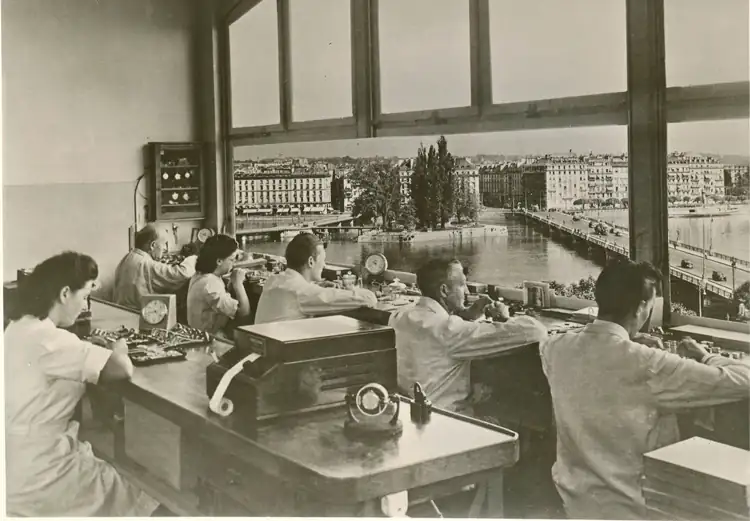
The company was founded in Geneva in 1839 by Antoine Norbert de Patek and Franciszek Czapek, originally operating under the name Patek Czapek and Company.
In 1845, watchmaker Adrien Philippe joined the firm after inventing a keyless winding and hand setting mechanism that eliminated the need for a separate winding key, a major innovation for its time.
The company was officially renamed Patek Philippe and Company in 1851, and it has continued developing complicated movements and precision timekeeping technology ever since.
Where Are Patek Philippe Watches Made?
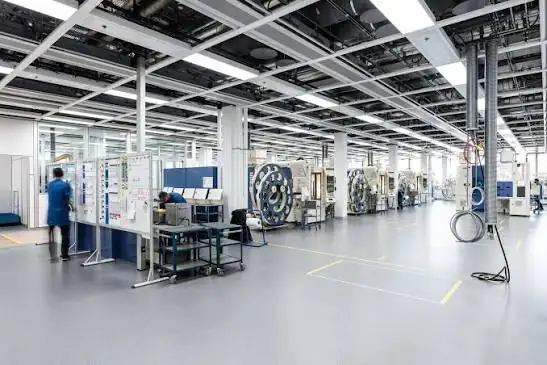
Patek Philippe manufactures its watches at its own facility in Plan les Ouates, a suburb of Geneva, which opened in 1997 and has been expanded multiple times to accommodate increasingly complex production needs.
The company controls nearly every stage of production internally, including movement design, component machining, hand finishing, case making and final assembly, an approach that gives it exceptional control over quality.
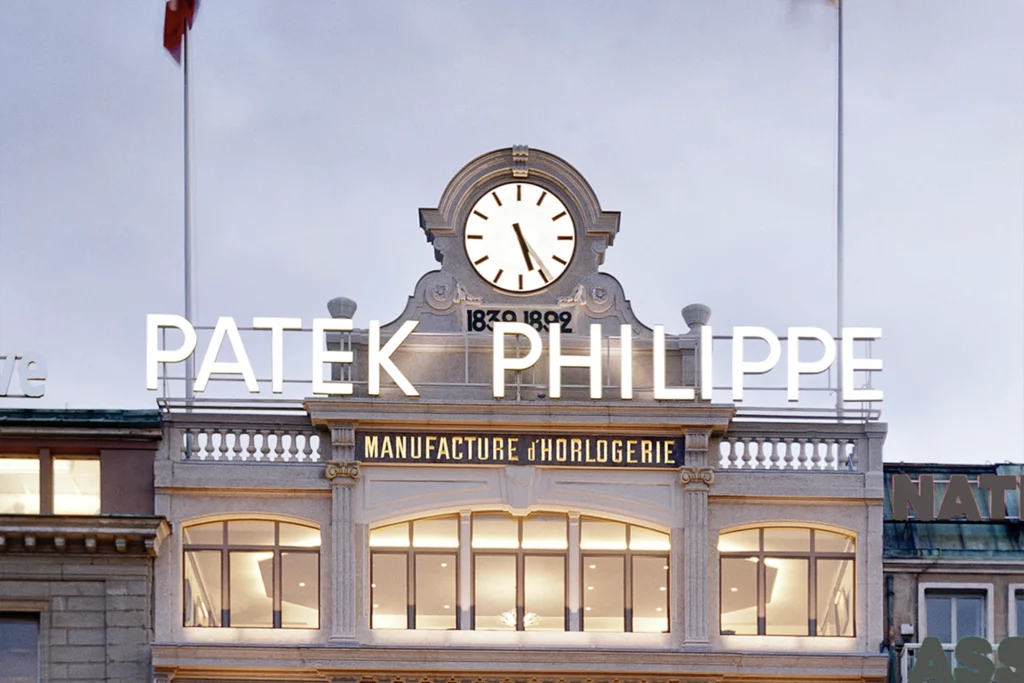
Patek Philippe also maintains its historic headquarters building in central Geneva, which houses the Patek Philippe Museum, one of the most significant collections of historic timepieces open to the public. Additional information is available on Patek Philippe’s official website.
What Is the Patek Philippe Seal?
Since 2009, Patek Philippe has certified its own watches under the Patek Philippe Seal, an internal quality standard the company created after previously relying on the regional Geneva Seal certification.
The Patek Philippe Seal covers not only movement finishing but also functional precision testing across the entire assembled watch, including water resistance and overall performance rather than just individual component quality.
Creating its own certification allowed Patek Philippe to set standards it considered even stricter than the traditional Geneva Seal, reinforcing its reputation as the benchmark for fine watchmaking quality.
What Watches Does Patek Philippe Currently Make?
The Calatrava collection represents Patek Philippe’s classic dress watch tradition, featuring simple, elegant round cases that have barely changed in fundamental design since the 1930s.
The Nautilus, designed by Gerald Genta in 1976 as a luxury steel sports watch, has become one of the most sought after watches in the world, often trading well above retail price due to extremely limited availability.
Patek Philippe also produces grand complications featuring perpetual calendars, minute repeaters and tourbillons, some of which take a single watchmaker more than a year to assemble and finish by hand.
How Much Do Patek Philippe Watches Cost?
Entry level Calatrava models generally start between 25,000 and 35,000 dollars at official retail price, though actual availability at boutiques is often extremely limited.
The steel Nautilus regularly trades on the secondary market for well above 100,000 dollars due to demand far exceeding Patek Philippe’s deliberately limited production numbers.
Grand complications and unique commissioned pieces can sell for several million dollars, with some historic Patek Philippe watches setting auction records among the most expensive timepieces ever sold.
Patek Philippe vs Rolex vs Seiko: How Do They Compare?
Patek Philippe and Rolex are often mentioned together as the two most prestigious names in watchmaking, though Rolex produces far more watches annually and focuses more heavily on sport and tool watches, as covered in our guide to where Rolex watches are made.
Patek Philippe generally sits above Rolex in complication complexity and traditional prestige among serious collectors, while Rolex holds a stronger position in brand recognition among the general public.
Seiko, detailed in our article on where Seiko watches are made, occupies an entirely different market tier, though its Credor and Grand Seiko divisions do attempt some of the finishing techniques associated with Geneva’s finest manufactures.
Is Patek Philippe Worth Buying?
For collectors focused on horological history and craftsmanship, Patek Philippe is widely considered the single most prestigious watchmaker in the world, and ownership carries significant status within collecting circles.
On the positive side, Patek Philippe offers unmatched complication expertise, family owned continuity spanning nearly a century, exceptional resale value on key references, and its own strict internal quality certification.
On the downside, official retail access is nearly impossible for most buyers without an established purchase history, and prices on desirable references have climbed sharply over the past decade.
Overall, Patek Philippe remains the aspirational peak of the watch collecting world, and its scarcity and craftsmanship continue to justify its reputation despite the difficulty of actually acquiring one. Wikipedia’s overview of Patek Philippe’s history covers additional milestones.
Why Patek Philippe Stayed Independent
When the Stern family purchased Patek Philippe in 1932, the company was struggling financially during the Great Depression, and many contemporaries eventually merged into larger groups to survive subsequent industry downturns.
The Stern family instead chose to reinvest profits back into the company for generations rather than seeking outside investment or selling to a conglomerate, a strategy that allowed Patek Philippe to maintain complete creative and manufacturing control.
That patient, multi generational approach is frequently cited by industry analysts as the reason Patek Philippe has been able to prioritize long term craftsmanship over short term sales targets in a way publicly traded competitors often cannot. Further background is available from this analysis of Patek Philippe’s family ownership.
The Calibre 89: Patek Philippe’s Most Complicated Watch
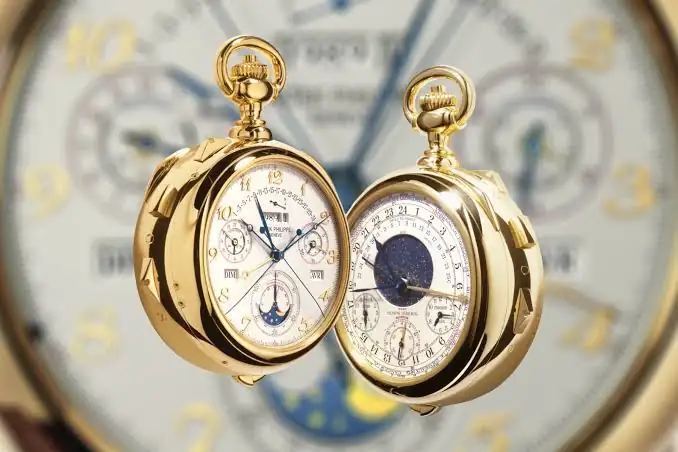
In 1989, Patek Philippe unveiled the Calibre 89, a pocket watch built to celebrate the company’s one hundred fiftieth anniversary featuring 33 individual complications, making it the most complicated portable mechanical watch ever built at the time.
The project reportedly took roughly nine years to design and produce, and only a handful of examples were ever made, with one later selling at auction for tens of millions of dollars.
The Calibre 89 remains a symbol of what Patek Philippe’s manufacture is capable of when engineering constraints are set aside entirely in favor of pushing complication design to its absolute limit.
Patek Philippe’s Museum and Historical Archive
The Patek Philippe Museum in Geneva houses one of the most important collections of antique and rare timepieces in the world, including watches made by the company since its founding as well as earlier pieces from the broader history of watchmaking.
This archive plays a practical role beyond public exhibition, since Patek Philippe uses it to verify the authenticity and original specifications of vintage pieces brought in for restoration or resale by collectors around the world.
That commitment to preserving its own history is part of why serious collectors trust Patek Philippe documentation more than almost any other brand when authenticating older pieces bought outside official channels.
It also reinforces the company’s long standing message that a Patek Philippe watch is meant to be preserved and passed down rather than simply worn and eventually discarded like a disposable luxury item.
For prospective buyers, that philosophy explains much of the brand’s pricing and scarcity, since Patek Philippe intentionally builds fewer watches than the market demands rather than expanding production to meet every order.
Frequently Asked Questions About Where Patek Philippe Watches Are Made
Is Patek Philippe still family owned?
Yes. Patek Philippe has been owned by the Stern family since 1932, and Thierry Stern, the fourth generation family leader, currently serves as company president.
Where exactly does Patek Philippe manufacture its watches?
Patek Philippe manufactures its watches at its own facility in Plan les Ouates, a suburb of Geneva, Switzerland, controlling nearly every stage of production internally.
What is the Patek Philippe Seal?
The Patek Philippe Seal is the company’s own internal quality certification, introduced in 2009, covering both movement finishing and overall functional performance of the finished watch.
Why is the Patek Philippe Nautilus so expensive?
The Nautilus trades well above its official retail price because Patek Philippe deliberately limits production, creating far more demand than available supply for one of the most recognized luxury sport watch designs in the world.

I am Jack Neel, a mechanical engineer, researcher, and writer. I created this website to share my knowledge about different brands and products with you. I research the manufacturers behind the brands and provide you with the information you need to make smart buying decisions.