
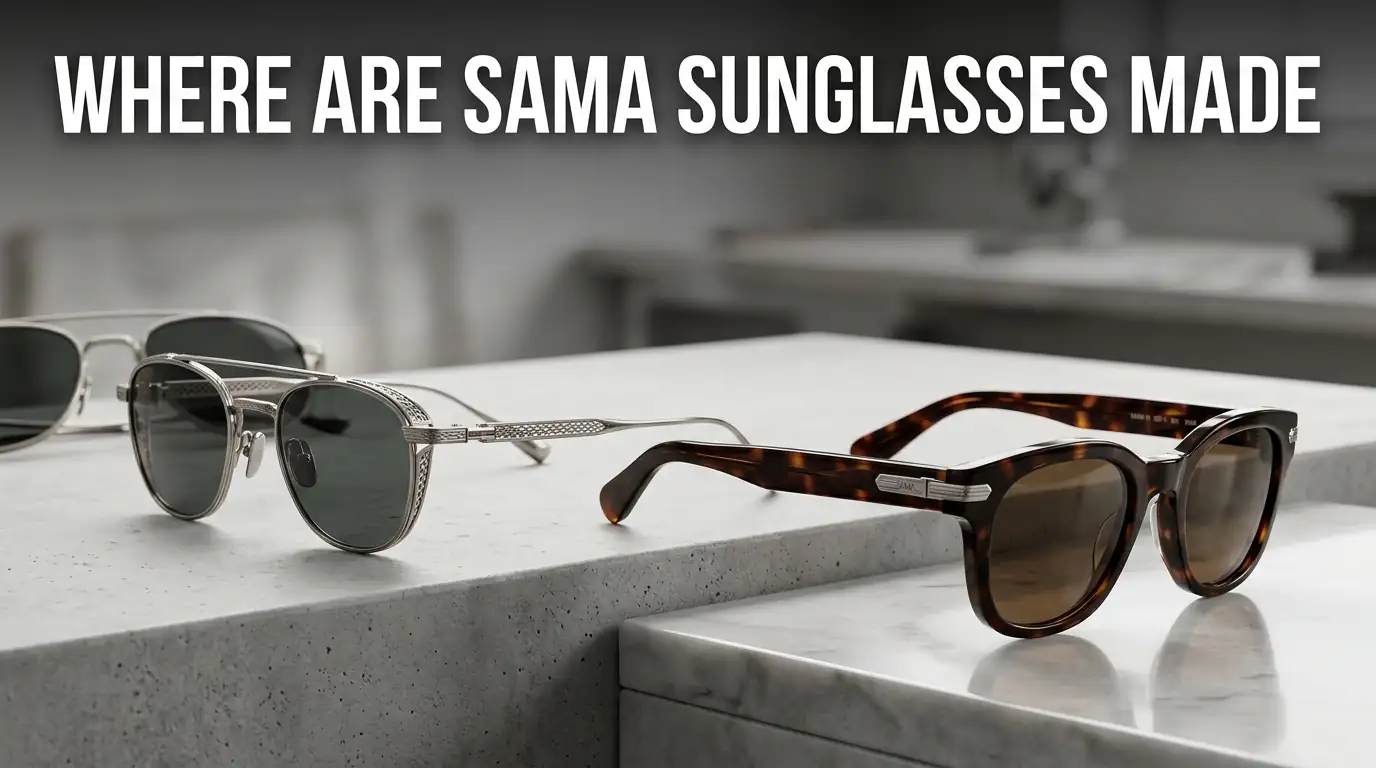
Sama Eyewear sunglasses are manufactured, assembled, and hand finished entirely in Japan, a country long respected for precision titanium work and detailed acetate finishing.
Sama is an independent luxury eyewear house founded by designer Sheila Vance, based in San Francisco, and it is not owned by a large eyewear conglomerate the way many mass market sunglasses brands are.
The brand is known for introducing 100 percent pure titanium to the optical industry, along with the use of Japanese zyl acetate, precious metals, gemstones, and Swarovski crystals in some collections.
Sama sits at the higher end of the eyewear market, closer to fine jewelry pricing on its most elaborate pieces than to standard designer sunglasses.
Because Sama is a smaller independent brand rather than a household name, a natural question is who actually stands behind the label and what makes its production process different from larger competitors.
This guide covers who owns Sama Eyewear, where its sunglasses are actually made, what sets its materials apart, and how the brand compares to larger eyewear companies.
Table of Contents
When Was Sama Eyewear Founded?
Sheila Vance launched Sama Eyewear in the mid 1990s, and the brand has operated under her design leadership for close to thirty years, according to coverage of the designer and her work.
Vance built the brand around craftsmanship rather than rapid seasonal turnover, which is part of why Sama has stayed closely tied to its original Japanese manufacturing partners over the decades.
The company has expanded internationally over time, including growth in Middle Eastern markets, while keeping its core design studio based in the United States and its production centered in Japan.
Who Owns Sama Eyewear?
Sama Eyewear was founded by designer Sheila Vance, who has led the brand for close to three decades and remains its primary designer and public face.
Unlike Dior, Balenciaga, or Oakley, Sama has not been absorbed into a large eyewear group such as EssilorLuxottica, Safilo, or Kering Eyewear, and it continues to operate as an independent designer led company.
That independence gives Sama more control over materials and production decisions than brands that operate under a licensing agreement with a larger manufacturer.
Where Are Sama Sunglasses Made?
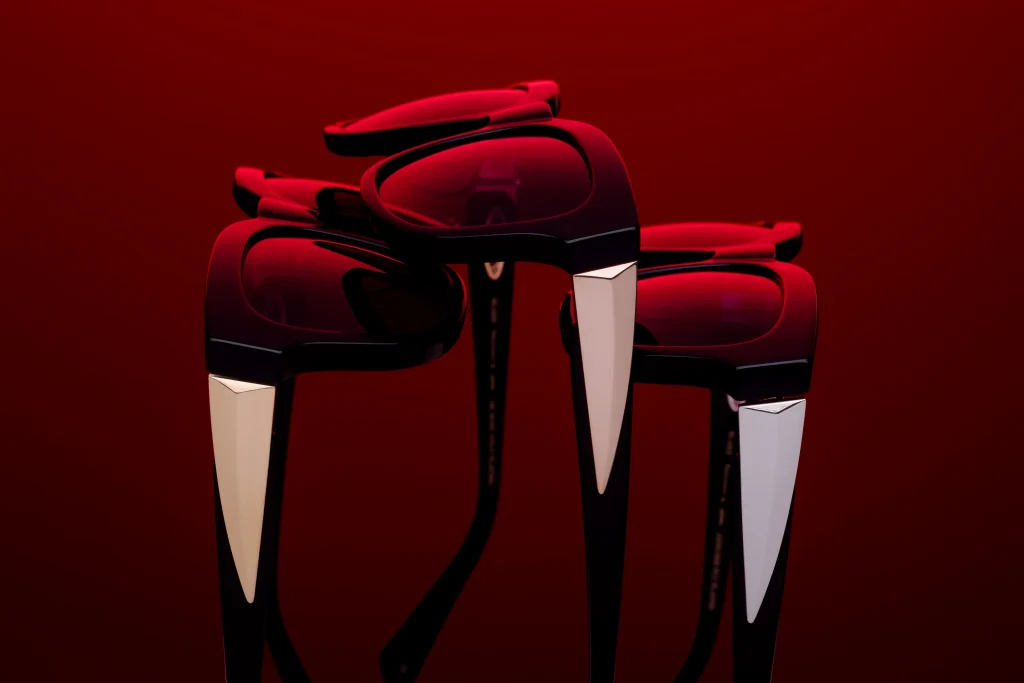
Sama states plainly that it manufactures, assembles, and hand finishes all of its eyewear collections in Japan, a claim the brand repeats consistently across its own marketing.
Japan has a long standing reputation in the eyewear industry for precision manufacturing, particularly for titanium frames and detailed acetate work, centered around regions like Sabae in Fukui prefecture.
Because Sama frames often include hand set gemstones or Swarovski crystals, the hand finishing stage in Japan plays a larger role in the final product than it would for a simpler mass produced frame.
Unlike brands that shift production across multiple countries by collection, Sama has kept its manufacturing consistently based in Japan since introducing pure titanium eyewear to the market.
Popular Sama Eyewear Styles
Sama offers both optical frames and sunglasses across several collections, ranging from classic titanium aviator and round shapes to bolder acetate frames with layered color effects.
Some collections lean into a vintage inspired look reminiscent of mid century eyewear, while others use modern minimal titanium designs aimed at everyday wear.
Limited edition pieces featuring gemstones or Swarovski crystals are typically sold in smaller quantities and often ordered through authorized retailers rather than kept in standard stock.
What Materials Does Sama Use?
Sama was one of the first eyewear companies to bring 100 percent pure titanium into the optical industry, a material valued for being lightweight, strong, and hypoallergenic.
The brand also uses Japanese zyl acetate for its plastic frame components, a premium acetate known for its depth of color and durability compared to lower cost alternatives.
Some Sama collections go further, incorporating precious metals, gemstones, and Swarovski crystals for customers seeking eyewear closer to fine jewelry than standard sunglasses.
Titanium frames also appeal to buyers with metal sensitivities, since pure titanium is widely considered one of the most hypoallergenic frame materials available in eyewear manufacturing.
Sama frequently rotates limited edition colorways and finishes across its acetate lines, which is easier to manage with a smaller scale, hand finished production model than with mass manufacturing.
Are Sama Sunglasses Good Quality?
Sama sunglasses are generally regarded as high quality within the luxury eyewear space, reflecting the hand finishing process and premium materials used in Japan.
Because each pair receives more individual attention than a mass produced frame, Sama pieces are often described by owners as feeling closer to a piece of jewelry than a typical sunglasses purchase.
As with any hand finished luxury product, availability can be more limited than mass market brands, and buyers may need to work with an authorized optical retailer to special order certain styles.
Because Sama frames are produced in smaller batches than mass market brands, quality control tends to happen at an individual piece level rather than through large batch sampling.
Warranty support and adjustments are generally handled through authorized Sama retailers, who can coordinate directly with the brand for anything beyond routine fitting.
Why Are Sama Sunglasses So Expensive?
Pricing reflects the cost of pure titanium, premium acetate, and hand finishing performed by skilled workers in Japan rather than automated mass production.
Collections that include gemstones or Swarovski crystals add jewelry level material costs on top of the base frame construction.
Because Sama remains an independent brand without the scale of a large eyewear conglomerate, it does not benefit from the same economies of scale that lower per unit costs for brands like Oakley or Ray-Ban.
How To Tell If Sama Sunglasses Are Authentic
Genuine Sama pieces include markings for material composition, such as pure titanium designation, along with a model name printed on the inside of the temple.
Because Sama is a smaller brand than mass market labels, counterfeits are less common, but buyers should still confirm they are purchasing through an authorized optical retailer rather than an unfamiliar online marketplace.
If a listing price seems far below what authorized retailers charge for the same style, that price gap is a reliable warning sign regardless of how convincing the photos look.
Sama Versus Mass Market Sunglasses Brands
Sama sits in a different category from mass market or fashion licensed sunglasses brands such as Ray-Ban, which are produced at much higher volume across multiple factories.
Buyers comparing options across price points sometimes look at outdoor performance brands like Costa for a different type of premium positioning built around lens performance rather than jewelry level materials.
Sama competes more directly with other independent luxury eyewear houses that emphasize hand finishing and rare materials over brand recognition alone.
Sama Eyewear Customer Service And Official Website
The official Sama Eyewear website lists current collections, authorized retailers, and company contact information.
Because Sama sells primarily through authorized optical boutiques rather than wide retail distribution, contacting an authorized dealer directly is often the fastest way to get sizing, pricing, or repair questions answered.
Always confirm you are buying from an authorized Sama retailer, since luxury eyewear at this price point is a target for counterfeit listings on unverified marketplaces.
Because Sama continues to operate on a smaller scale than conglomerate owned labels, new customers are often introduced to the brand through a personal recommendation from an optician rather than mass advertising, which reinforces its reputation as a specialist rather than a mainstream label.
Because titanium and gemstone work require specialized skills, Sama production timelines can run longer than mass market brands, which is a tradeoff many customers accept in exchange for the individualized finishing each pair receives.
Frequently Asked Questions About Sama Eyewear
Where are Sama sunglasses made?
Sama sunglasses are manufactured, assembled, and hand finished entirely in Japan.
Who owns Sama Eyewear?
Sama Eyewear is an independent brand founded and led by designer Sheila Vance, and it is not owned by a larger eyewear conglomerate.
What makes Sama Eyewear different from other luxury brands?
Sama was among the first brands to use 100 percent pure titanium in eyewear, and it also works with Japanese zyl acetate, precious metals, and gemstones on select collections.
Are Sama sunglasses handmade?
Yes. Sama states that every collection is hand finished in Japan rather than produced through fully automated mass manufacturing.

I am Jack Neel, a mechanical engineer, researcher, and writer. I created this website to share my knowledge about different brands and products with you. I research the manufacturers behind the brands and provide you with the information you need to make smart buying decisions.