
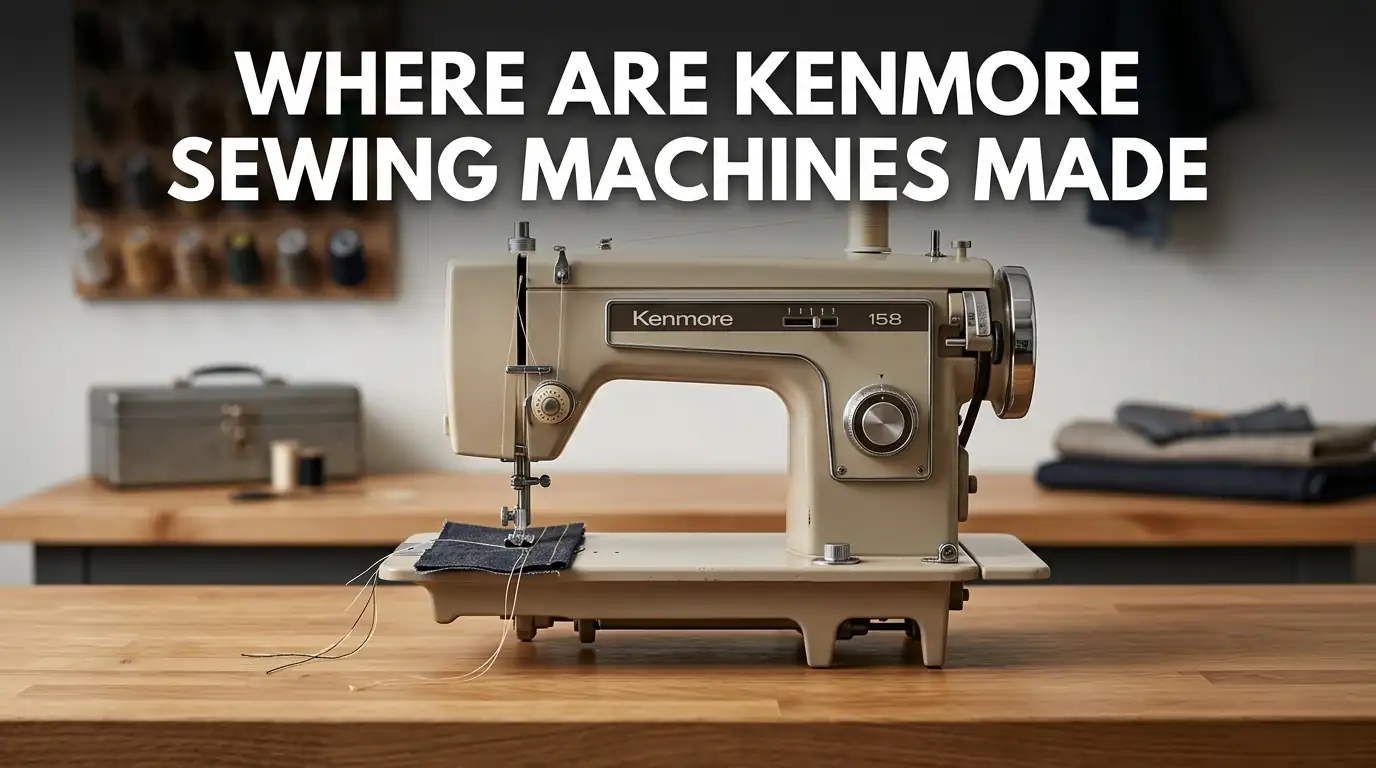
Kenmore sewing machines were made by several different contract manufacturers over the decades, most notably Janome Corporation, a Japanese company that built the majority of later Kenmore models.
Kenmore is known as a Sears house brand rather than a manufacturer itself, with a heritage stretching back to 1927 and a product range that once covered sewing machines alongside major home appliances before Sears stopped selling new machines around 2013.
Kenmore’s brand history is documented on Wikipedia, and the Kenmore name is now owned by Transformco, headquartered in Hoffman Estates, Illinois, following the 2018 Sears bankruptcy.
Knowing where Kenmore sewing machines are made helps buyers understand why identifying the actual manufacturer behind a specific vintage Kenmore model takes more digging than checking a single factory address.
This article covers Kenmore’s history as a Sears brand, its rotating manufacturers over the decades, where Kenmore sewing machines were made, its model range, and how it compares to Janome and Sailrite. So let’s get started.
Table of Contents
Kenmore Is a Brand Name, Not a Factory
Kenmore was never a manufacturer in its own right.
It began as a house brand created by Sears, Roebuck and Co. so the retailer could sell appliances and machines under one recognizable name without owning a single factory.
Sears instead signed contracts with outside manufacturers who built machines to Sears specifications, then stamped them with the Kenmore name before they reached store shelves.
This arrangement is common in retail history, and it means the badge on a Kenmore machine tells you very little about who actually built it or where.
Which Companies Actually Manufactured Kenmore Sewing Machines
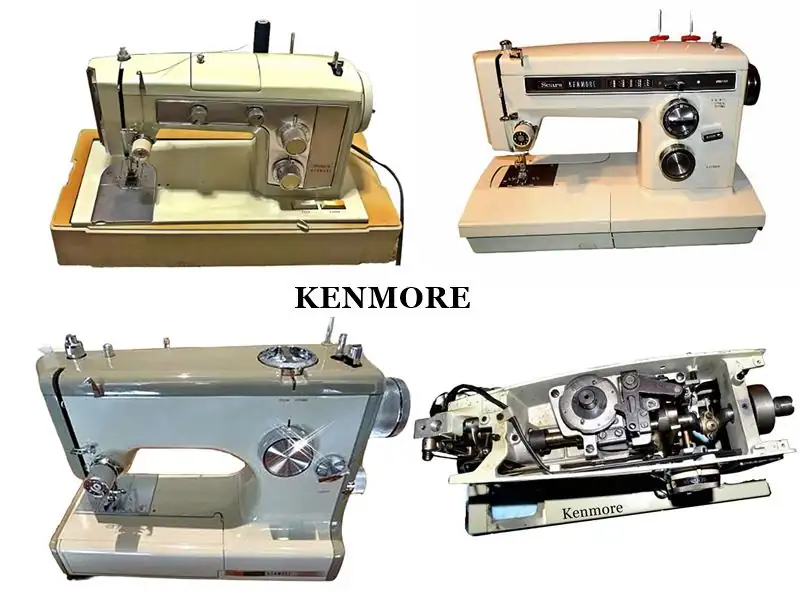
Because Kenmore contracted out production, the true manufacturer changed multiple times across the brand’s history.
From the 1930s through 1958, Sears sourced most of its sewing machines from the White Sewing Machine Company, an American manufacturer based first in Massachusetts and later in Cleveland, Ohio.
Around 1958 Sears shifted much of its sewing machine production overseas to cut costs and add features, working with Japanese manufacturers including Maruzen, whose machines were also sold under the Jaguar name.
German manufacturer Gritzner Kaiser also produced a batch of Kenmore machines during this period, and Necchi of Italy is credited with at least one Kenmore model as well.
By the mid 1960s, Janome had become Kenmore’s primary supplier, and it remained the dominant manufacturer of Kenmore branded machines for decades, right up until Kenmore sewing machines were discontinued around 2013.
Janome also builds machines sold under its own name today, and our full breakdown of where Janome sewing machines are made covers that company’s current factories in more detail.
No single company made every Kenmore machine ever sold, so the honest answer to who manufactured a specific unit depends on its model number and its production year.
| Era | Primary Manufacturer | Country |
|---|---|---|
| 1930s to 1958 | White Sewing Machine Company | United States |
| Late 1950s to early 1960s | Maruzen, Gritzner Kaiser, Necchi | Japan, Germany, Italy |
| Mid 1960s to 2013 | Janome | Japan |
| 2013 to present | Not manufactured, brand discontinued for sewing machines | Not applicable |
Brand Origin vs Manufacturing: A Quick History of Kenmore
The Kenmore name first appeared on a Sears sewing machine sold between 1913 and 1919, according to Wikipedia’s history of the brand.
Sears kept using the Kenmore name across sewing machines, vacuums, and major appliances for the next century, building it into one of the most recognized house brands in American retail.
Sears Holdings filed for Chapter 11 bankruptcy in October 2018, and its remaining assets, including the Kenmore trademark, were acquired by Transformco, an affiliate of ESL Investments, in 2019.
Transformco has continued licensing the Kenmore name for appliances such as refrigerators, ranges, and washers, but sewing machines have not been part of that lineup for more than a decade.
Kenmore’s current product pages, viewable at Kenmore’s official site, list refrigerators, ranges, dishwashers, and vacuums, with no sewing machine category at all, which confirms the brand exited that market.
How Kenmore Sewing Machines Differed by Era and Model Tier
Kenmore used a numbering system where the first digits of a model number often hinted at the manufacturer or product tier, though Sears never published a complete public key to it.
Machines from the White era in the 1940s and 1950s tend to be heavy, all metal, mechanical units built for straight and zigzag stitching with minimal electronics.
The Japanese built machines from the 1960s through the 1990s, especially the 158 and 385 series, added features like built in decorative stitches, free arm sewing, and eventually computerized stitch selection on higher tier models.
Later models made in the 2000s and early 2010s introduced more plastic housings and electronic controls, which cut manufacturing costs but also reduced the long service life older metal Kenmores were known for.
Sears also sold Kenmore machines at different price points, from basic entry machines aimed at beginners to higher tier models with embroidery and serging capability, so build quality within the brand was never uniform.
Is Kenmore a Good Sewing Machine Brand? Pros and Cons
Whether a Kenmore is a good machine depends heavily on which era and model you are talking about, since quality varied by manufacturer and decade.
Older metal bodied Kenmores, particularly models built by Janome in the 1960s through 1980s, have a strong reputation among home sewists and repair technicians for durability and simple mechanical design.
Parts and service manuals for many vintage Kenmore models are still findable, and a well maintained older unit can run reliably for decades with basic care.
Newer plastic bodied models from the 2000s onward generally get more mixed feedback, with some owners reporting shorter lifespans and more sensitive electronic components.
Because Kenmore no longer sells new machines, buyers cannot get factory warranty support or guaranteed genuine replacement parts the way they could with an actively produced brand.
Kenmore vs Other Sewing Machine Brands
Comparing Kenmore to active brands like Singer, Brother, or Janome is not entirely a fair fight, since Kenmore machines have not been manufactured or sold new since around 2013.
Brands that are still in production, including Janome itself, offer current warranties, updated parts availability, and ongoing customer support that a discontinued brand cannot match.
Vintage Kenmore machines can still compete on raw mechanical durability against some modern budget machines from any brand, since older units were often built with metal gears and housings rather than today’s more common plastic components.
Specialty brands built for heavy duty or industrial style sewing sit in a different category altogether. Machines from a maker like Sailrite, for example, are engineered specifically for thick materials such as canvas and upholstery, a job most vintage Kenmore machines were never designed for.
Common Problems With Older Kenmore Sewing Machines
Skipped stitches are one of the most frequent complaints on vintage Kenmore machines, and the cause is usually a dull or slightly bent needle, the wrong needle size, or improper threading rather than a mechanical failure.
The basic fix is to replace the needle with a fresh one matched to the fabric and rethread the machine carefully, checking that the thread seats fully in the tension discs.
Tension problems, where stitches look loose or puckered, often trace back to old lint buildup inside the tension assembly or a bobbin that was wound unevenly.
Cleaning out lint with a small brush and rewinding the bobbin slowly and evenly resolves many tension issues without any parts replacement.
Belt slippage or a machine that runs slowly is common on machines with the original rubber drive belt, since these belts harden and crack after many decades in use.
Replacement belts are inexpensive and widely available for most Kenmore models, and swapping one is a manageable repair for anyone comfortable using basic tools.
If a machine grinds, jams, or will not advance fabric at all, that usually points to a deeper mechanical or timing issue, and at that point a qualified sewing machine repair technician should take a look rather than risking further damage.
Buying Guide: What to Know Before Getting a Vintage or Used Kenmore
Since Kenmore sewing machines are only available secondhand now, buying one means shopping the used and vintage market rather than a retail shelf.
Always ask for or look up the exact model number before buying, since that number is the most reliable way to identify which company actually manufactured a specific machine and what parts it uses.
Test the machine in person or ask the seller for a video of it running through basic stitches, checking for smooth handwheel movement, consistent stitch formation, and a motor that does not overheat quickly.
Inspect the power cord and foot pedal wiring on any machine several decades old, since aging insulation can crack and become a safety hazard even if the mechanical parts still work fine.
Because Kenmore is now owned and licensed by Transformco rather than a dedicated machine manufacturer, do not expect manufacturer support, official recall information, or warranty service for used units. Buyers researching the current company behind the Kenmore name can review its Better Business Bureau business profile for background on the licensing entity.
Budget for a professional cleaning and tune up after purchase, especially on machines that have been sitting unused in storage, since old oil and lint buildup are common even in units that were otherwise cared for.
Frequently Asked Questions About Kenmore Sewing Machines
Who really makes Kenmore sewing machines?
No single company makes Kenmore sewing machines today, since the brand stopped selling new machines around 2013. Historically, several manufacturers built them under contract for Sears, including White Sewing Machine Company, Maruzen, Gritzner Kaiser, Necchi, and most prominently Janome, which supplied the majority of later model machines, including the widely owned 385 series.
Does Janome make Kenmore sewing machines?
Janome was Kenmore’s primary manufacturer from roughly the mid 1960s until Kenmore sewing machines were discontinued around 2013. Many of the most common vintage Kenmore models, especially in the 385 series, came out of Janome factories, though Janome was not the only company that ever produced machines carrying the Kenmore name.
Are Kenmore sewing machines still sold new?
No. Sears stopped selling new Kenmore sewing machines around 2013, and the brand’s current owner, Transformco, does not list sewing machines among its active Kenmore product lines. Anyone wanting a Kenmore sewing machine today has to buy a used or vintage unit rather than a new one from a retailer.
Are vintage Kenmore sewing machines good?
Many vintage Kenmore machines, particularly all metal models built by Janome and White from the 1960s through the 1980s, have a strong reputation for durability and dependable mechanical performance. Quality varies by era though, and later plastic bodied models generally are not rated as highly, so checking the specific model and its condition matters more than the brand name alone.
So, where are Kenmore sewing machines made? There is no single factory or country involved, since Kenmore was a Sears house brand built by contracted manufacturers such as White, Maruzen, Gritzner Kaiser, Necchi, and most often Janome.
The brand stopped selling new sewing machines around 2013, so every Kenmore machine on the market today is a used or vintage unit.
The practical takeaway is simple: judge any Kenmore by its specific model number and condition rather than the name on the front, find out who actually built that model, and budget for a basic service check before you start sewing with it.

I am Jack Neel, a mechanical engineer, researcher, and writer. I created this website to share my knowledge about different brands and products with you. I research the manufacturers behind the brands and provide you with the information you need to make smart buying decisions.