
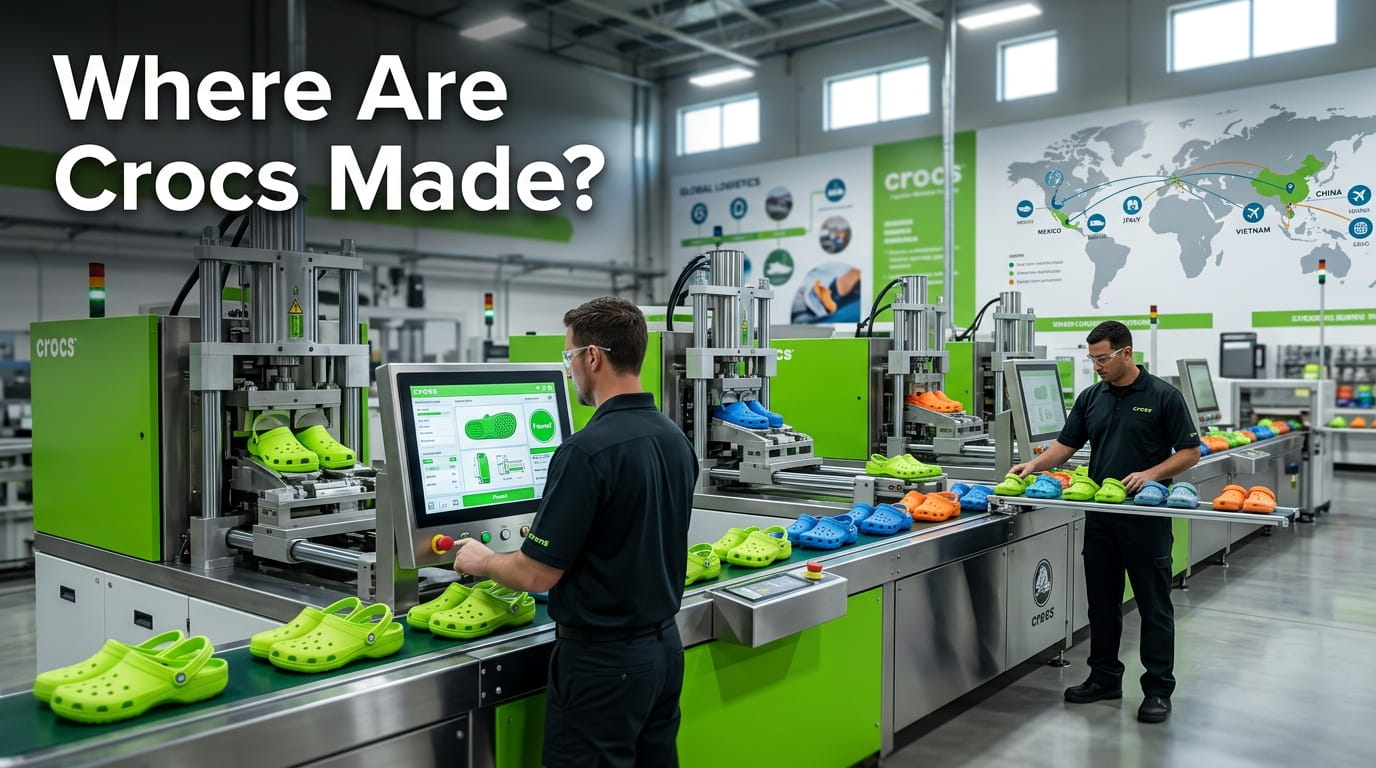
Crocs shoes are made by Crocs, Inc., an American company headquartered in Broomfield, Colorado, with manufacturing carried out through contracted factories primarily in China, Vietnam, and Bosnia and Herzegovina.
Crocs are known for the distinctive foam clog that became one of the most polarizing and ultimately one of the most successful footwear designs in modern history, going from niche boating shoe to global phenomenon worn by everyone from nurses and chefs to celebrities and heads of state.
Crocs, Inc. is a publicly traded American company listed on the NASDAQ exchange under ticker CROX and also owns the Hey Dude casual shoe brand, acquired in 2022 for approximately $2.5 billion.
Knowing who makes Crocs helps buyers understand the company behind the clog, what material makes them unique, and what other brands Crocs, Inc. owns.
This article covers Crocs’ founding, ownership, where the shoes are made, the Croslite material, the Hey Dude acquisition, and how Crocs compares to Birkenstock and UGG.
So let’s get started.
Table of Contents
Who Owns Crocs?
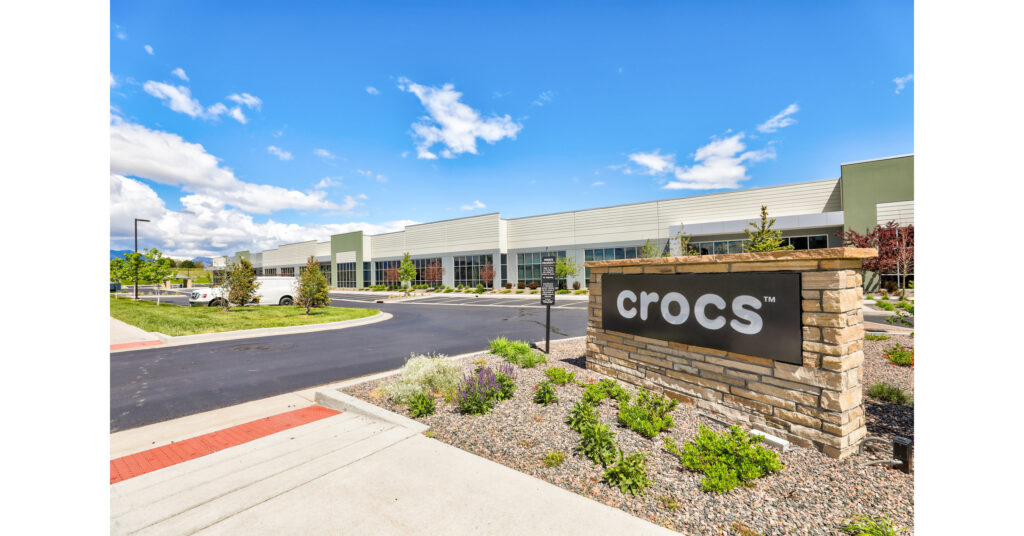
Crocs, Inc. is a publicly traded American company with no single controlling shareholder. Institutional investors hold the majority of shares. The company is headquartered in Broomfield, Colorado, and led by CEO Andrew Rees, who has served in the role since 2017.
Crocs, Inc. operates two brands: Crocs and Hey Dude. Hey Dude, known for lightweight casual slip-on shoes, was acquired in 2022 for $2.5 billion, representing the largest acquisition in Crocs’ history.
The company has no foreign parent company and no corporate conglomerate ownership. It operates as a focused footwear company built around two brands that serve comfort-oriented buyers.
When Was Crocs Founded?
Crocs was founded in 2002 in Boulder, Colorado, by Lyndon Hanson, George Boedecker, and Scott Seamans. The three founders were inspired by a Canadian-made foam clog called the Beach that they encountered on a sailing trip.
The founders acquired the rights to the clog design, rebranded it as Crocs, and launched it at the Fort Lauderdale Boat Show in November 2002. The initial run of 200 pairs sold out immediately, signaling the unexpected demand for the product.
Crocs went public in 2006, the same year it sold its 100 millionth pair of shoes. The brand experienced rapid growth, a near-bankruptcy during the 2008 financial crisis, and a dramatic revival beginning around 2017 as nostalgia and celebrity endorsements sparked renewed interest.
Where Are Crocs Made?
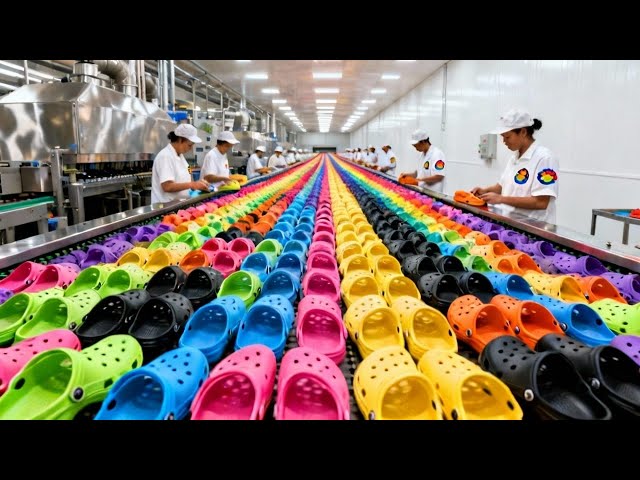
Crocs produces its shoes through a combination of company-operated and contracted manufacturing facilities. The primary production countries are China, Vietnam, and Bosnia and Herzegovina.
Bosnia has been one of Crocs’ longest-running manufacturing locations, with a facility in Tuzla that has operated since the early years of the brand. The Bosnia plant has historically produced a portion of Crocs’ classic clog line.
The country of origin varies by model and production run. The label on the bottom of each Croc indicates where that specific pair was made. The full current lineup is available at Crocs’ official website.
What Is Croslite and Why Does It Matter?
Croslite is the proprietary closed-cell resin foam material used in almost every Crocs product. It is not rubber and it is not plastic, but a specially formulated foam compound that Crocs developed and owns the rights to.
Croslite gives Crocs their distinctive lightweight feel, their ability to conform slightly to the shape of the wearer’s foot over time, their resistance to odors, their non-marking soles, and their easy-clean surface.
The Croslite formulation is also responsible for why knockoff Croc-style clogs feel distinctly different from genuine Crocs. Competing products use different foam compounds that do not replicate the specific properties of Croslite.
Crocs vs Birkenstock vs UGG: Who Makes Each?
All three are global comfort footwear brands built around distinctive, immediately recognizable designs, but they come from very different companies. Crocs, Inc. is an American publicly traded company. Birkenstock is a German brand that listed on the NYSE in October 2023 after being majority acquired by LVMH-backed L Catterton private equity in 2021. UGG is owned by Deckers Brands, an American publicly traded company that also owns Hoka and Teva.
All three went through eras of being considered unfashionable or even ugly before becoming mainstream through a combination of celebrity endorsement, comfort positioning, and cultural rehabilitation.
Crocs has the fastest-growing revenue trajectory of the three, driven by collaborations with high-profile celebrities and designers that have elevated the brand’s cultural status without abandoning its core comfort positioning.
Frequently Asked Questions About Where Crocs Are Made
Are Crocs made in the USA?
No. Crocs are manufactured in China, Vietnam, and Bosnia and Herzegovina through company-operated and contracted facilities. Crocs, Inc. is headquartered in Broomfield, Colorado, but does not manufacture footwear in the United States.
What are Crocs made of?
Crocs are made from Croslite, a proprietary closed-cell resin foam material developed and owned by Crocs, Inc. Croslite is not rubber or traditional plastic. It is lightweight, soft, odor-resistant, and molds slightly to the wearer’s foot. It is the key material that distinguishes genuine Crocs from cheaper foam clog imitations.
Does Crocs own Hey Dude?
Yes. Crocs, Inc. acquired Hey Dude in February 2022 for approximately $2.5 billion. Hey Dude makes lightweight casual shoes known for their flexibility and comfort. It is the second brand under the Crocs, Inc. corporate umbrella.
When were Crocs founded?
Crocs was founded in 2002 in Boulder, Colorado, by Lyndon Hanson, George Boedecker, and Scott Seamans. The first 200 pairs sold out at the Fort Lauderdale Boat Show in November 2002. The company went public in 2006 and has grown into one of the most globally recognized footwear brands in the world.

I am Jack Neel, a mechanical engineer, researcher, and writer. I created this website to share my knowledge about different brands and products with you. I research the manufacturers behind the brands and provide you with the information you need to make smart buying decisions.