
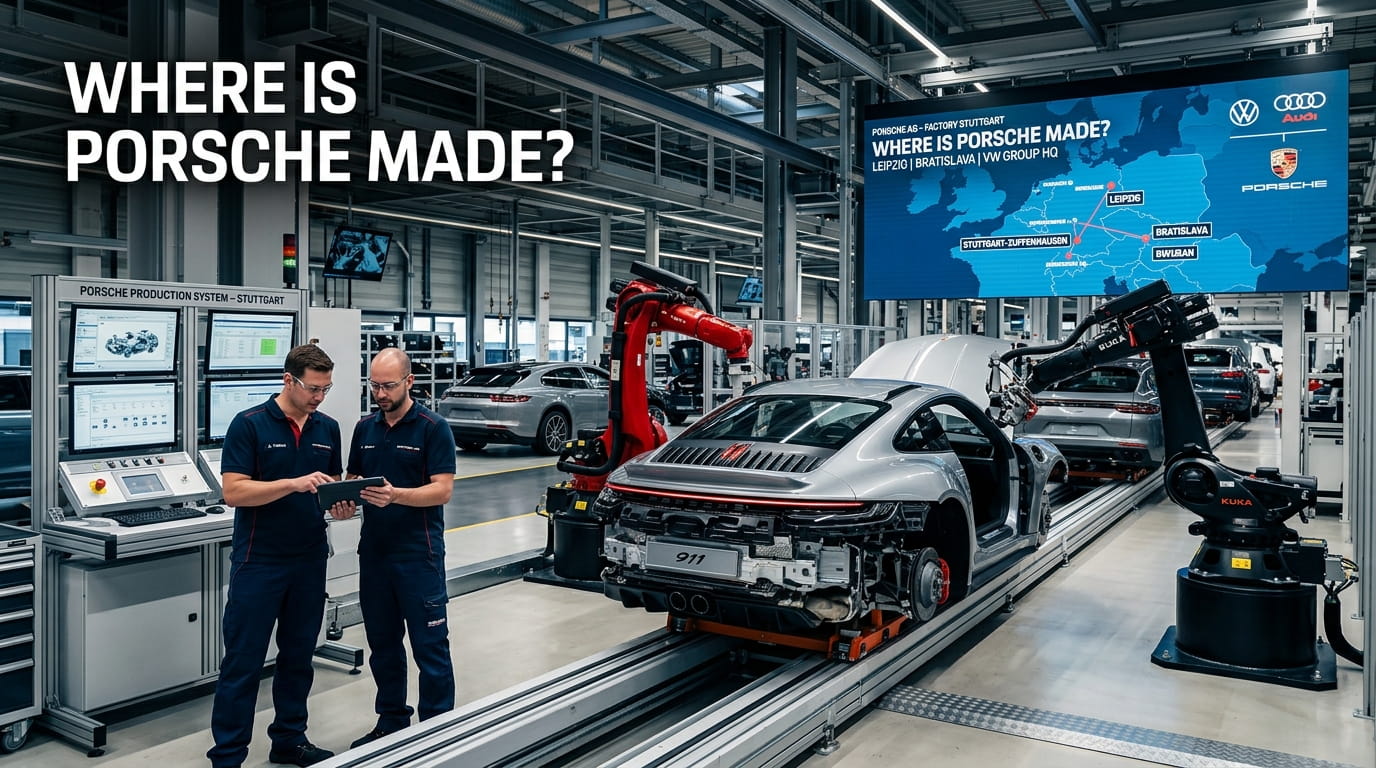
Porsche cars are made by Porsche AG, a German sports car manufacturer headquartered in Stuttgart-Zuffenhausen, Germany, and one of the most profitable automotive brands in the world on a per-vehicle basis.
Porsche is known for the iconic 911 sports car, the engineering philosophy that rear-engine layout perfected over seven decades, and a product range that stretches from the entry Macan SUV to the 918 Spyder hypercar, all while maintaining a focus on driving performance above all else.
Porsche AG is majority owned by Volkswagen Group, which holds approximately 75% of Porsche AG shares. The remaining 25% are publicly traded on the Frankfurt Stock Exchange following Porsche AG’s IPO in September 2022, one of the largest in European history.
Knowing who makes Porsche helps buyers understand its relationship to Volkswagen Group, its Stuttgart manufacturing heritage, and the corporate structure behind one of the most recognized sports car brands in the world.
This article covers Porsche’s ownership, where its cars are made, the current model lineup, and how Porsche compares to Ferrari and BMW M.
So let’s get started.
Table of Contents
Who Owns Porsche?

Porsche AG is majority owned by Volkswagen AG, which holds approximately 75.1% of Porsche AG shares. The publicly traded float of approximately 25% has been listed on the Frankfurt Stock Exchange since September 2022.
The ownership structure is further complicated by Porsche Automobil Holding SE (Porsche SE), the holding company controlled by the Porsche and Piëch families. Porsche SE owns approximately 31.9% of Volkswagen AG’s shares, giving the founding families indirect control over both VW Group and Porsche AG through a layered ownership chain.
Porsche AG was part of Volkswagen Group from 2012, when VW completed its full acquisition of the sports car maker, ending a long corporate control battle between the two companies that had begun in the mid-2000s.
When Was Porsche Founded?
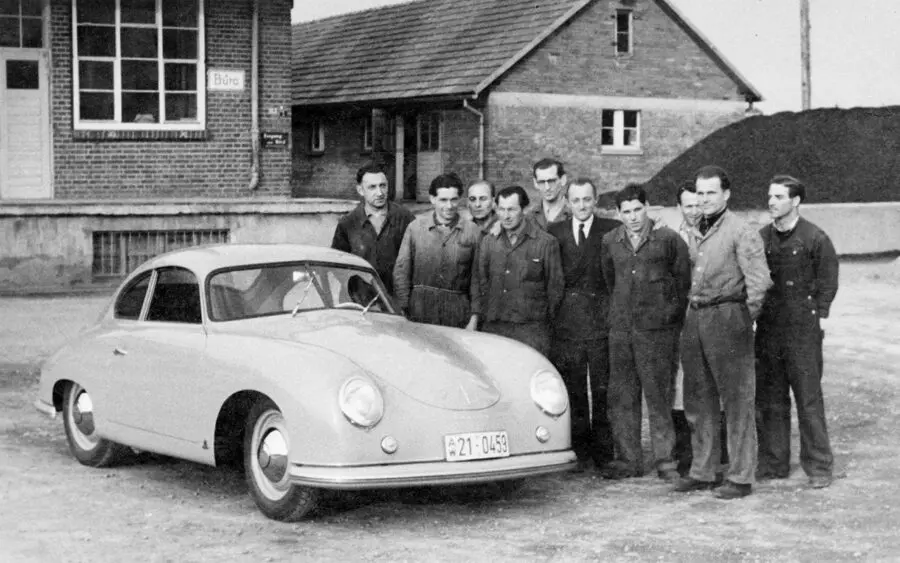
Porsche was founded on April 25, 1931, by Ferdinand Porsche in Stuttgart, Germany, initially as an engineering consultancy rather than a car manufacturer.
Ferdinand Porsche had previously designed the original Volkswagen Beetle for the German government and the Auto Union Grand Prix racing cars before establishing his own firm. His son Ferry Porsche designed the first Porsche-branded car, the Porsche 356, in 1948 using Volkswagen Beetle components.
The Porsche 911, introduced in 1963 as the successor to the 356, has been in continuous production ever since and remains the brand’s most iconic model, evolving through eight generations while maintaining its fundamental rear-engine air-cooled (now water-cooled) configuration.
Where Are Porsche Cars Made?
Porsche’s spiritual home is Stuttgart-Zuffenhausen, where the 911, 718 Boxster, 718 Cayman, and Taycan electric sports car are assembled. The Zuffenhausen plant has been producing Porsches since 1950 and is one of the most significant sites in automotive history.
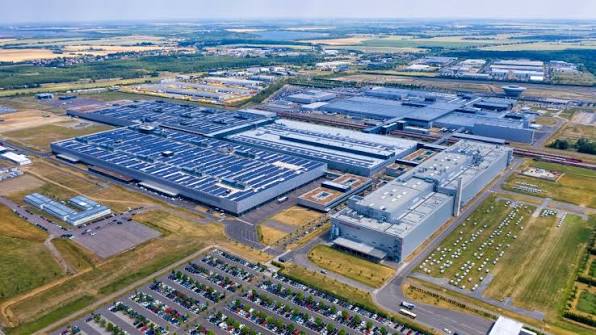
The Leipzig plant, opened in 2002, assembles the Cayenne SUV, Panamera four-door sports car, and the Macan electric SUV. Leipzig also houses Porsche’s customer experience center and off-road driver training facility.
Some Porsche models are assembled at Volkswagen Group partner facilities. The original Macan was assembled in Leipzig, while certain Panamera and Cayenne configurations use production capacity shared with other VW Group models in Slovakia and elsewhere. Full model details are at Porsche USA’s official website.
What Models Does Porsche Currently Offer?
Porsche’s lineup covers sports cars, a grand tourer, and SUVs. The 911 is the iconic rear-engine sports car available in Carrera, Targa, Turbo, and GT variants. The 718 Boxster (roadster) and 718 Cayman (coupe) are the brand’s mid-engine sports car options.
The Taycan is Porsche’s all-electric sports car and four-door sedan, competing directly with the Tesla Model S and BMW i4 in the premium EV segment. The Macan (now electric), Cayenne, and Panamera round out the lineup with SUV and four-door performance car options.
The Porsche 911 GT3, GT3 RS, and GT2 RS represent the pinnacle of the road-legal 911 range, with naturally aspirated engines, racing-derived aerodynamics, and prices that extend well above $200,000.
Porsche vs Ferrari vs BMW M: Who Makes Each?
All three are European sports and performance car brands but with distinct ownership structures and market positions. Porsche is owned by Volkswagen Group. Ferrari is an independent publicly traded Italian company listed on the NYSE and the Milan Stock Exchange. BMW M is a division of BMW AG, the German company controlled by the Quandt family.
Ferrari targets the ultra-luxury and collector sports car market above $250,000 and deliberately limits production to maintain exclusivity. Porsche serves a much broader market from the $60,000 entry Macan to $300,000+ 911 GT variants. BMW M provides performance versions of BMW’s mainstream sedan, SUV, and coupe lineup.
Porsche is consistently the most profitable brand within Volkswagen Group on a per-vehicle basis, generating margins that exceed what most premium or mainstream brands can achieve.
Frequently Asked Questions About Where Porsche Is Made
Is Porsche owned by Volkswagen?
Yes. Volkswagen AG owns approximately 75.1% of Porsche AG shares. Porsche AG has been a Volkswagen Group brand since 2012. The remaining approximately 25% of Porsche AG shares are publicly traded on the Frankfurt Stock Exchange following the 2022 IPO.
Where is the Porsche 911 made?
The Porsche 911 is assembled at the Stuttgart-Zuffenhausen plant in Stuttgart, Germany. It has been produced at this facility since 1963 and the plant remains dedicated to 911 and Taycan production, one of the most historically significant automotive assembly sites in the world.
Is Porsche a German car?
Yes. Porsche AG was founded in Stuttgart in 1931 and remains headquartered and primarily manufactured in Stuttgart and Leipzig, Germany. It is a German company owned by the German Volkswagen Group.
When did Porsche go public?
Porsche AG conducted an IPO on September 29, 2022, listing approximately 25% of its shares on the Frankfurt Stock Exchange in one of the largest IPOs in European history, raising approximately €19.5 billion. Volkswagen Group retained its majority ownership of approximately 75% after the offering.
I am Jack Neel, a mechanical engineer, researcher, and writer. I created this website to share my knowledge about different brands and products with you. I research the manufacturers behind the brands and provide you with the information you need to make smart buying decisions.