
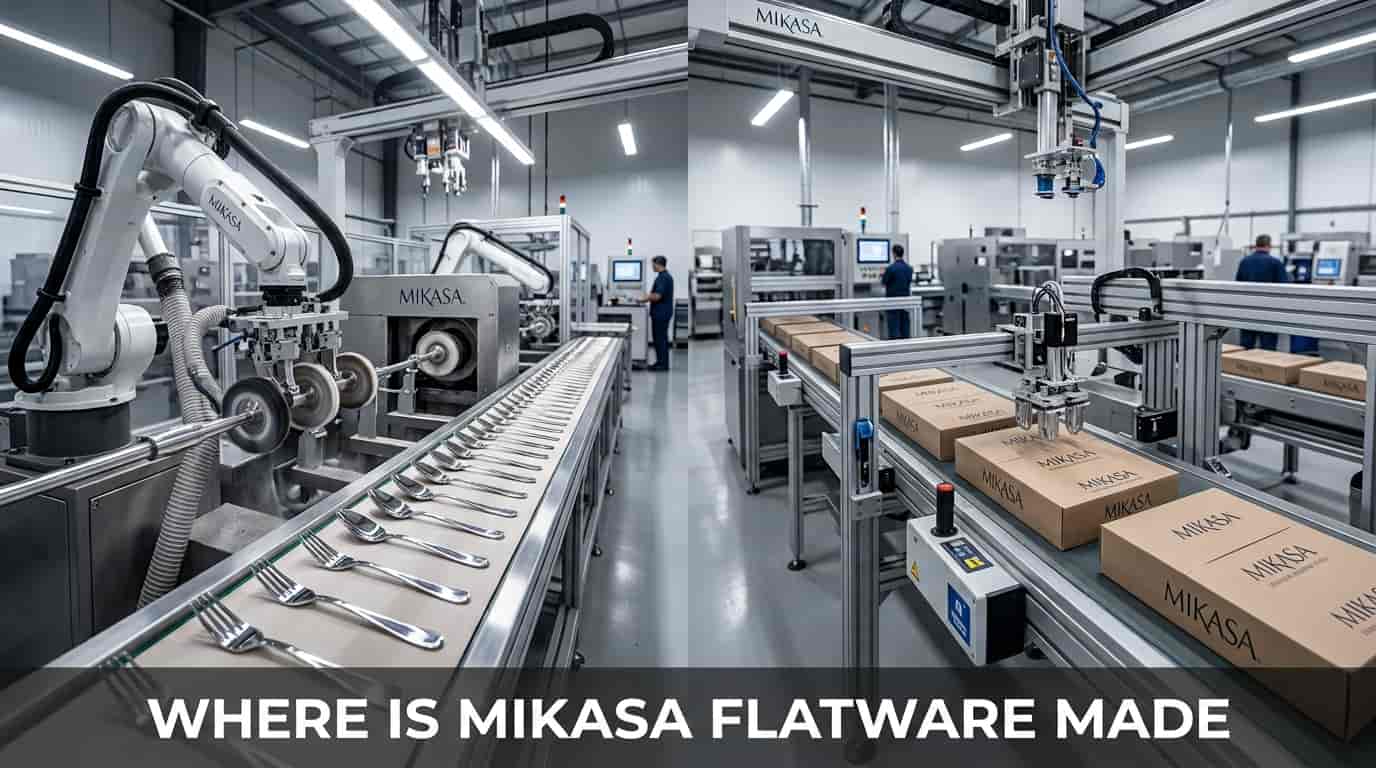
Mikasa flatware is made across a network of contract factories in multiple countries, with Japan and China standing out as the most common countries of origin depending on the specific pattern chosen.
Mikasa is a well known tableware brand covering dinnerware, glassware, and flatware, sold widely through department stores and outlet centers across the entire United States.
The company does not operate its own factories. Instead, Mikasa designs its patterns in house and contracts production out to roughly 175 factories spread across 25 countries, a strategy common among large tableware brands.
But if Mikasa does not manufacture anything itself, how does the company keep quality consistent across so many different factories?
This article will explore where Mikasa flatware is actually made, how the brand’s contract manufacturing model works, how it compares to other flatware brands, and whether the quality holds up.
So let’s get started.
Table of Contents
Who Makes Mikasa Flatware
Mikasa designs its tableware collections in house, with brand details available on the official Mikasa website.
The company itself does not own or operate manufacturing plants, relying instead on a global network of contract factories to produce its flatware, dinnerware, and glassware lines.
This asset light model lets Mikasa offer a wide variety of patterns and price points without the overhead of running its own factories. Readers interested in another major tableware brand with a similar sourcing model can see our guide on where Corelle dinnerware is made.
Where Mikasa Flatware Is Actually Manufactured
Mikasa flatware has historically been produced in Japan, with a number of patterns still carrying a Japan country of origin stamp, according to SafeKitchn.
Many newer Mikasa flatware patterns are manufactured in China, reflecting a broader shift across the tableware industry toward lower cost overseas production.
Because Mikasa contracts with many different factories, the country of origin can vary from one flatware pattern to the next, so checking the specific product listing is the most reliable way to confirm origin, as noted by Encyclopedia.com.
Mikasa vs Oneida Flatware: How They Compare
Oneida is one of Mikasa’s biggest competitors in the mid range flatware market, with a similarly broad sourcing strategy across multiple countries. Readers can see that comparison directly in our guide on where Oneida flatware is made.
Both brands rely on contract manufacturing rather than owning factories outright, though Oneida has a longer standing history as an original American flatware maker before shifting production overseas.
Price points between the two brands are fairly similar, with both offering entry level stainless patterns alongside higher end flatware sets.
What Materials Mikasa Flatware Is Made From
Most Mikasa flatware is made from 18/10 stainless steel, a grade containing 18 percent chromium and 10 percent nickel that strongly resists rust and everyday tarnishing over time.
Some patterns use 18/0 stainless, a slightly lower grade without nickel content, typically found in Mikasa’s more budget friendly flatware lines.
Higher end Mikasa collections sometimes include gold accented or hammered finishes, aimed at buyers looking for a more decorative table setting.
Mikasa Flatware vs Lenox Flatware
Lenox is another major tableware brand competing directly with Mikasa, known historically for fine china alongside its own flatware and dinnerware lines as well.
Lenox flatware sourcing spans multiple countries as well, a pattern explored further in our guide on where Corelle dinnerware is made, another major American tableware brand.
Mikasa tends to lean toward more contemporary, minimalist flatware designs, while Lenox often leans into more traditional and formal patterns.
Is Mikasa Flatware Good Quality
Owner reviews of Mikasa flatware are generally positive, with many buyers praising the weight and finish of the stainless steel pieces relative to the price.
Some reviewers note that specific finishes, particularly matte or brushed patterns, can show water spots more easily than polished stainless options.
Overall, Mikasa is considered a solid mid range flatware brand, offering reasonable durability and design variety without reaching premium pricing.
Frequently Asked Questions About Mikasa Flatware
Where is Mikasa flatware made?
Mikasa flatware is made across a network of contract factories, with Japan and China among the most common countries of origin depending on the pattern.
Does Mikasa own its own factories?
No, Mikasa does not operate its own manufacturing plants. The company designs its collections and contracts production out to factories worldwide.
What metal is Mikasa flatware made from?
Most Mikasa flatware is made from 18/10 or 18/0 stainless steel, depending on the specific pattern and price tier.
Is Mikasa flatware dishwasher safe?
Most Mikasa stainless steel flatware is dishwasher safe, though patterns with gold accents or special finishes may require hand washing to preserve the coating.

I am Jack Neel, a mechanical engineer, researcher, and writer. I created this website to share my knowledge about different brands and products with you. I research the manufacturers behind the brands and provide you with the information you need to make smart buying decisions.