
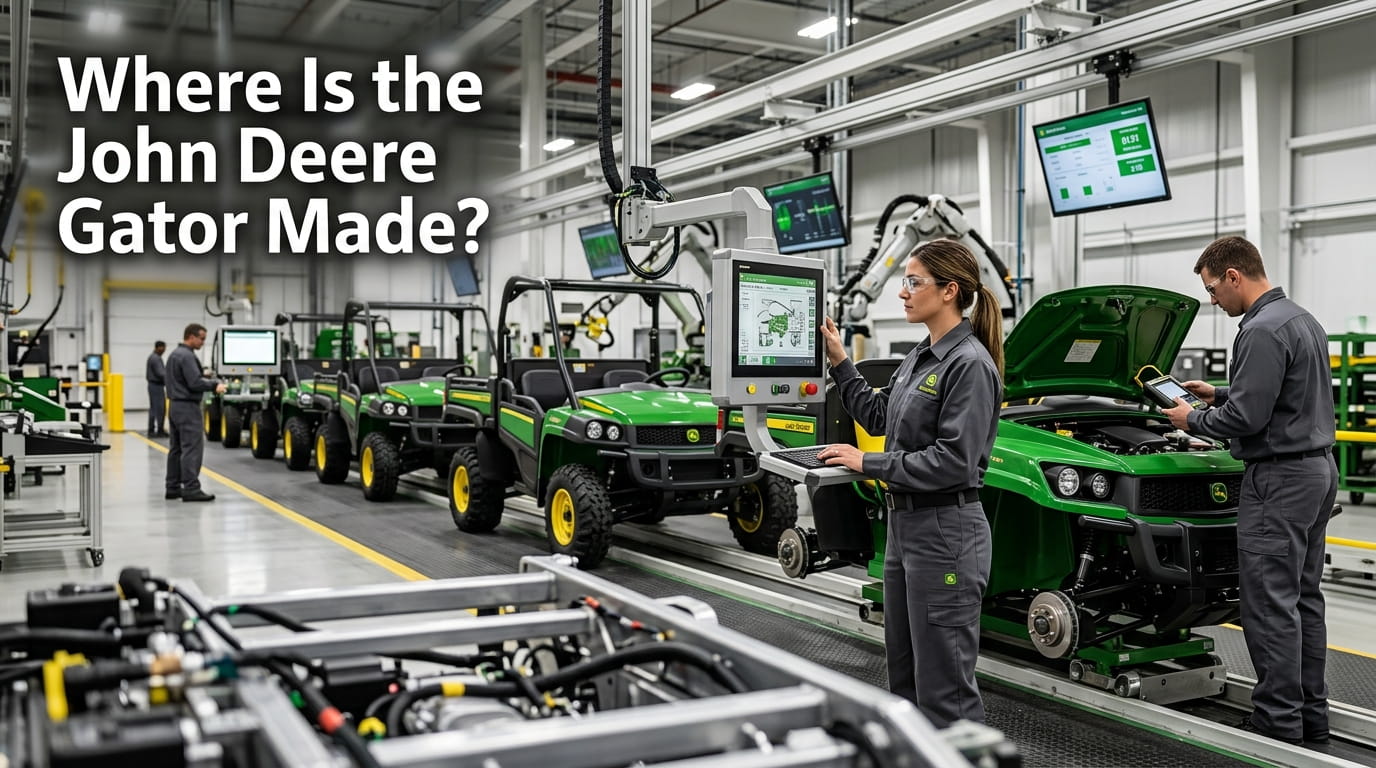
The John Deere Gator is made by Deere and Company at the John Deere Horicon Works factory in Horicon, Wisconsin, a dedicated John Deere manufacturing facility that has produced outdoor power and utility vehicles for decades.
The John Deere Gator is known for its heavy-duty utility vehicle capability, covering everything from the compact Work Series models used on farms and properties to the full-size XUV Crossover series popular with ranchers, hunters, and commercial operators.
Deere and Company is a publicly traded American corporation headquartered in Moline, Illinois, listed on the NYSE under the ticker DE, and is the world’s largest manufacturer of agricultural equipment, with fiscal 2024 revenue exceeding $51 billion.
Knowing where the John Deere Gator is made helps buyers confirm its American manufacturing heritage, understand which specific plant produces their model, and compare it to competitors like the Polaris Ranger on domestic production.
This article covers where each Gator model is built, the history of the Horicon Works facility, what makes the Gator different from other utility vehicles, and how it compares to the Polaris Ranger.
So let’s get started.
Table of Contents
Who Makes the John Deere Gator?

Deere and Company, commonly known as John Deere, is the manufacturer of the Gator utility vehicle lineup.
The brand introduced the Gator in 1992 as a purpose-built work vehicle to replace older, less capable transport solutions on farms and large properties.
The Gator sits within John Deere’s Turf and Utility division, the same division that makes John Deere lawn tractors and zero-turn mowers.
All Gator production for the North American market takes place at the Horicon Works plant in Wisconsin, making it one of the clearest examples of a mainstream utility vehicle assembled entirely on American soil.
Where Is the John Deere Gator Made?
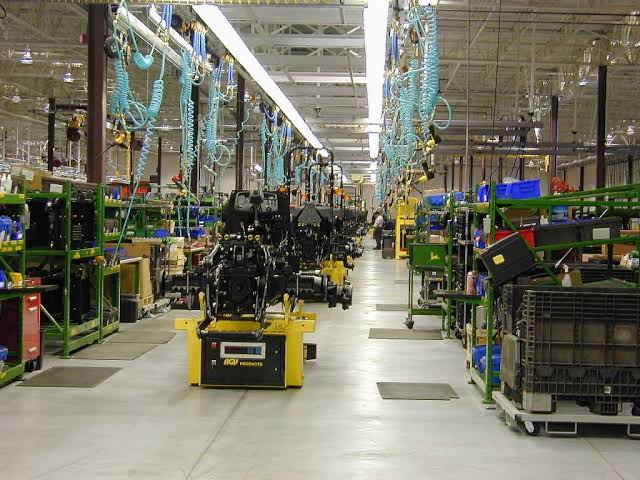
All John Deere Gator utility vehicles for the U.S. market are assembled at the Horicon Works facility in Horicon, Wisconsin.
The Horicon Works is one of John Deere’s most storied American manufacturing plants, producing outdoor power equipment, utility vehicles, and lawn care products since 1947 when Deere and Company acquired the Kilbros plant on the site.
The Horicon facility produces the full Gator lineup including the Work Series, the mid-size XUV Crossover models, and the full-size XUV835 and XUV865 flagship Gators.
It also stamps mower decks that are used at other John Deere factories, making it a key component supplier within the broader John Deere manufacturing network.
Engine components for the Gator vary by model. Gas engines in some Gator models are produced by John Deere’s own engine operations, while diesel engines in commercial and premium Gators are sourced from Yanmar, a Japanese engine manufacturer with which Deere has had a long-standing supply relationship.
What Gator Models Does John Deere Make?
The Gator lineup is divided into three main categories. The Work Series includes the TS, TX, and TH models, which are lightweight, cargo-focused utility vehicles suited to everyday farm and property chores at a relatively accessible price point.
The Mid-Size XUV Crossover Series, including the XUV560 and XUV590, offers more power, higher payload capacity, and more passenger comfort than the Work Series, making it popular with property owners who need both a workhorse and a comfortable ride.
The Full-Size XUV Series, topped by the XUV835 and XUV865 models, is the flagship Gator tier.
These models feature three-cylinder diesel or gasoline engines, automotive-style cabins with optional heat and air conditioning, power steering, and towing capacity sufficient for serious commercial and agricultural use.
Is the John Deere Gator Made in the USA?
Yes. The John Deere Gator is assembled in the United States at the Horicon Works plant in Wisconsin.
This is a genuine American manufacturing story, with the physical assembly of the vehicles taking place at a domestic facility employing American workers.
Some components sourced for the Gator come from international suppliers, which is standard practice for any complex mechanical product.
However, the final assembly, quality testing, and delivery preparation all occur in Horicon, Wisconsin.
John Deere Gator vs. Polaris Ranger: Which Is Better?
The John Deere Gator and the Polaris Ranger are the two most recognized names in the utility vehicle market and compete directly in almost every sub-segment from entry-level work vehicles to premium cabin-equipped side-by-sides.
The Gator is assembled in Horicon, Wisconsin while the Polaris Ranger is assembled in Huntsville, Alabama, giving both brands strong American manufacturing credentials.
The Gator tends to be preferred by buyers who already operate John Deere equipment and value the commonality of parts and dealer network.
The Polaris Ranger typically wins on performance, suspension travel, and off-road capability at equivalent price points, while the Gator wins on cargo bed functionality and perceived durability in farm and municipal fleet applications.
For other utility vehicle manufacturers, see Where Is Polaris Made and Where Are John Deere Tractors Made.
Frequently Asked Questions About Where the John Deere Gator Is Made
Is the John Deere Gator assembled in the USA?
Yes. All John Deere Gator utility vehicles for the North American market are assembled at the Horicon Works plant in Horicon, Wisconsin. The Horicon facility has been part of the John Deere manufacturing network since 1947 and produces the full Gator lineup along with outdoor power equipment.
What engine is in the John Deere Gator?
Engine options vary by model. Entry Work Series Gators use single-cylinder or twin-cylinder gasoline engines. Mid-size XUV Crossovers use three-cylinder gasoline or diesel engines. Full-size XUV835 and XUV865 models use a 54 horsepower diesel or 35 horsepower gasoline three-cylinder engine. Diesel models source their engines from Yanmar, a Japanese manufacturer.
How long has John Deere made the Gator?
John Deere introduced the Gator in 1992, making it over 30 years old as a product line. The original Gator 4×2 was a simple two-wheel drive cargo vehicle. The lineup has expanded significantly over the decades to include four-wheel drive, diesel, electric, and cabin-equipped variants serving everything from homeowners to commercial operators.

I am Jack Neel, a mechanical engineer, researcher, and writer. I created this website to share my knowledge about different brands and products with you. I research the manufacturers behind the brands and provide you with the information you need to make smart buying decisions.