
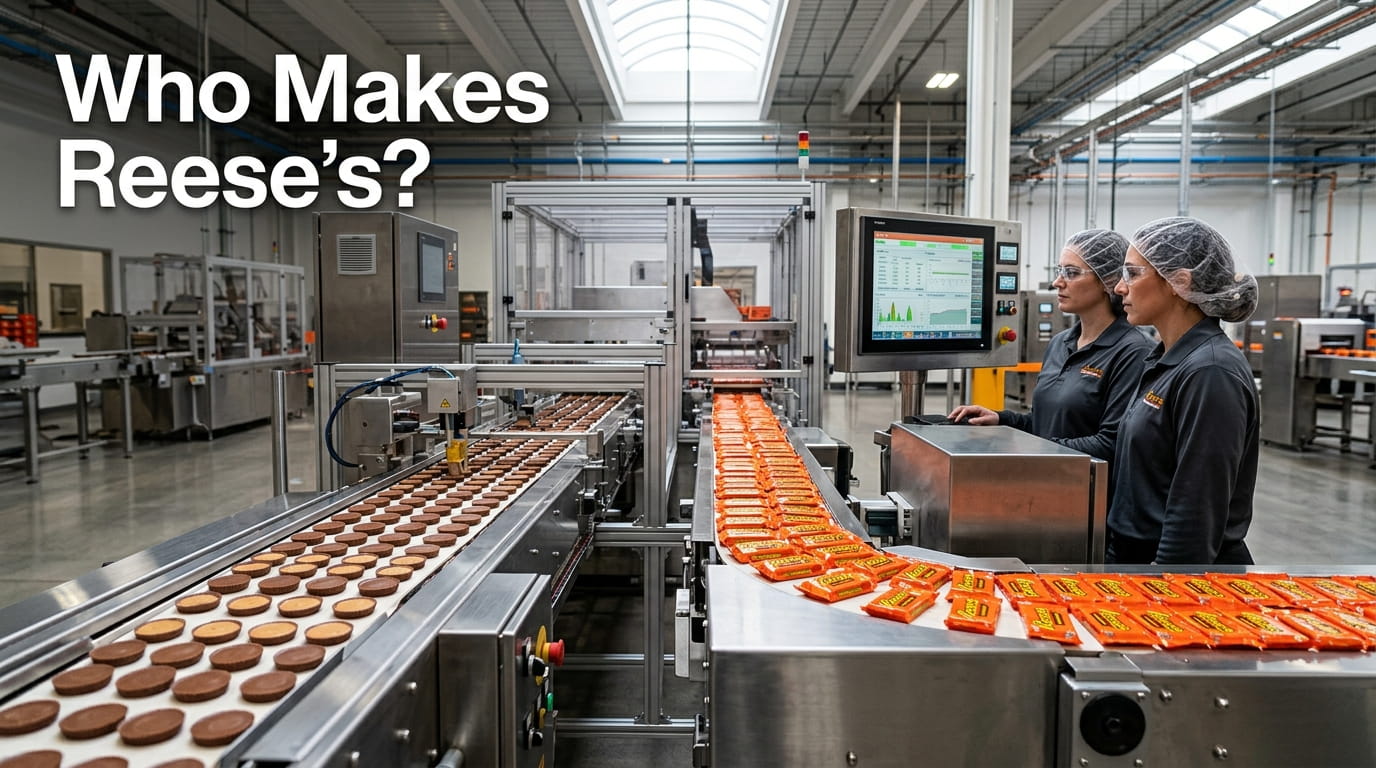
Reese’s Peanut Butter Cups are made by The Hershey Company, the largest chocolate manufacturer in North America, at facilities in Hershey, Pennsylvania and Stuarts Draft, Virginia.
Reese’s is the best-selling candy brand in the United States, consistently outselling all other individual candy brands including M&M’s, Snickers, and Kit Kat in annual retail dollar sales.
The Hershey Company is a publicly traded American company listed on the NYSE under the ticker HSY, headquartered in Hershey, Pennsylvania, where Milton S. Hershey built his chocolate factory and company town beginning in 1894.
Knowing who makes Reese’s and where they are produced helps consumers understand the brand’s American manufacturing heritage and the corporate structure behind one of the world’s most recognized candy names.
This article covers who invented Reese’s, where they are made today, how The Hershey Company acquired the brand, what other products Hershey makes, and how Reese’s compares to other top candy brands.
So let’s get started.
Table of Contents
Who Makes Reese’s Peanut Butter Cups?
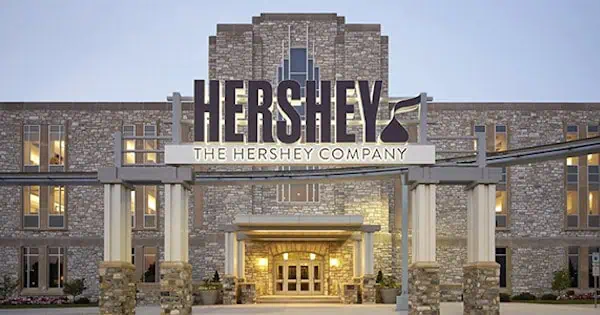
The Hershey Company owns the Reese’s brand and manufactures all Reese’s products. Hershey acquired Reese’s in 1963 when it purchased the H.B. Reese Candy Company from the Reese family for $23.5 million, one of the most valuable candy brand acquisitions of the 20th century.
Today, Reese’s is Hershey’s largest and most profitable brand, generating well over $2 billion in annual retail sales in the United States alone.
The Reese’s product family has expanded far beyond the original peanut butter cup to include Reese’s Pieces, Reese’s Thins, Reese’s Big Cup, Reese’s Sticks, and seasonal holiday shapes.
Where Are Reese’s Peanut Butter Cups Made?
Reese’s Peanut Butter Cups are manufactured in the United States.
The primary production facilities are in Hershey, Pennsylvania, home to Hershey’s main chocolate manufacturing complex, and in Stuarts Draft, Virginia, where a major Hershey production facility also operates.
The Hershey, Pennsylvania plant is one of the largest chocolate manufacturing facilities in the world.
It has been in continuous operation since 1905 and produces millions of Reese’s cups and Hershey products daily.
The facility is the anchor of the company town that Milton Hershey built, which includes Hersheypark theme park and the Hotel Hershey.
Hershey also operates a manufacturing facility in Monterrey, Mexico for the Mexican and Latin American markets, and licenses the production of some Reese’s products in international markets through local manufacturing partners.
All Reese’s sold in U.S. retail stores are made in the United States.
Who Invented Reese’s Peanut Butter Cups?
Harry Burnett Reese, known as H.B. Reese, invented Reese’s Peanut Butter Cups in 1928. Reese had been a dairy farmer and employee of Milton Hershey before starting his own candy business in the basement of his Hershey, Pennsylvania home.
The original Reese’s peanut butter cup used Hershey’s chocolate for the outer shell, giving the two companies a connection from the very beginning.
Reese built a successful company on the strength of the peanut butter cup before his death in 1956.
His six sons sold the company to Hershey seven years later, completing a partnership that had always been the foundation of the product.
Who Owns The Hershey Company?
The Hershey Company is publicly traded on the NYSE under the ticker HSY, but effective voting control is held by the Hershey Trust Company, a charitable trust established by Milton Hershey that owns the majority of Hershey’s supervoting Class B shares.
The Hershey Trust controls the company for the benefit of the Milton Hershey School, a private school for children from lower-income families in Hershey, Pennsylvania.
In August 2025, Kirk Tanner was appointed as President and CEO of The Hershey Company, succeeding Michele Buck who retired after a long tenure.
Tanner joined from Wendy’s, bringing consumer food and beverage leadership experience to Hershey’s ongoing expansion into salty snacks alongside its core chocolate business.
Reese’s vs. M&M’s: Which Is the Biggest Candy Brand?
Reese’s and M&M’s compete for the title of America’s best-selling candy brand year after year. Reese’s Peanut Butter Cups, produced by Hershey, and M&M’s, produced by Mars, Inc., are consistently the top two candy brands by U.S. retail dollar sales.
Reese’s has topped the U.S. candy sales rankings for multiple consecutive years, driven by new product extensions like Reese’s Big Cup with Reese’s Pieces and seasonal holiday shapes that generate significant incremental volume.
M&M’s competes with its broad flavor portfolio and strong brand recognition. Both are made in the United States by privately and publicly held American confectionery companies. For other snack brand origins, see Who Makes Kirkland Products and Who Makes Squirt Soda.
Frequently Asked Questions About Who Makes Reese’s
Are Reese’s made in the USA?
Yes. All Reese’s Peanut Butter Cups sold in the United States are manufactured in the USA at Hershey Company facilities in Hershey, Pennsylvania and Stuarts Draft, Virginia. The Hershey Company is one of the largest American-manufacturing candy companies in the world.
Does Hershey own Reese’s?
Yes. The Hershey Company has owned the Reese’s brand since 1963, when it acquired the H.B. Reese Candy Company from H.B. Reese’s six sons for $23.5 million. Reese’s is now Hershey’s largest and most profitable brand by annual retail sales.
What other candy does Hershey make?
Beyond Reese’s and its own Hershey’s chocolate bars, The Hershey Company owns Kit Kat (under license from Nestle in the U.S.), Jolly Rancher, Almond Joy, Mounds, York Peppermint Pattie, Whoppers, Cadbury (under license in the U.S.), SkinnyPop popcorn, Dot’s Pretzels, and several other snack brands acquired as part of its expansion into the salty snacks category.

I am Jack Neel, a mechanical engineer, researcher, and writer. I created this website to share my knowledge about different brands and products with you. I research the manufacturers behind the brands and provide you with the information you need to make smart buying decisions.