
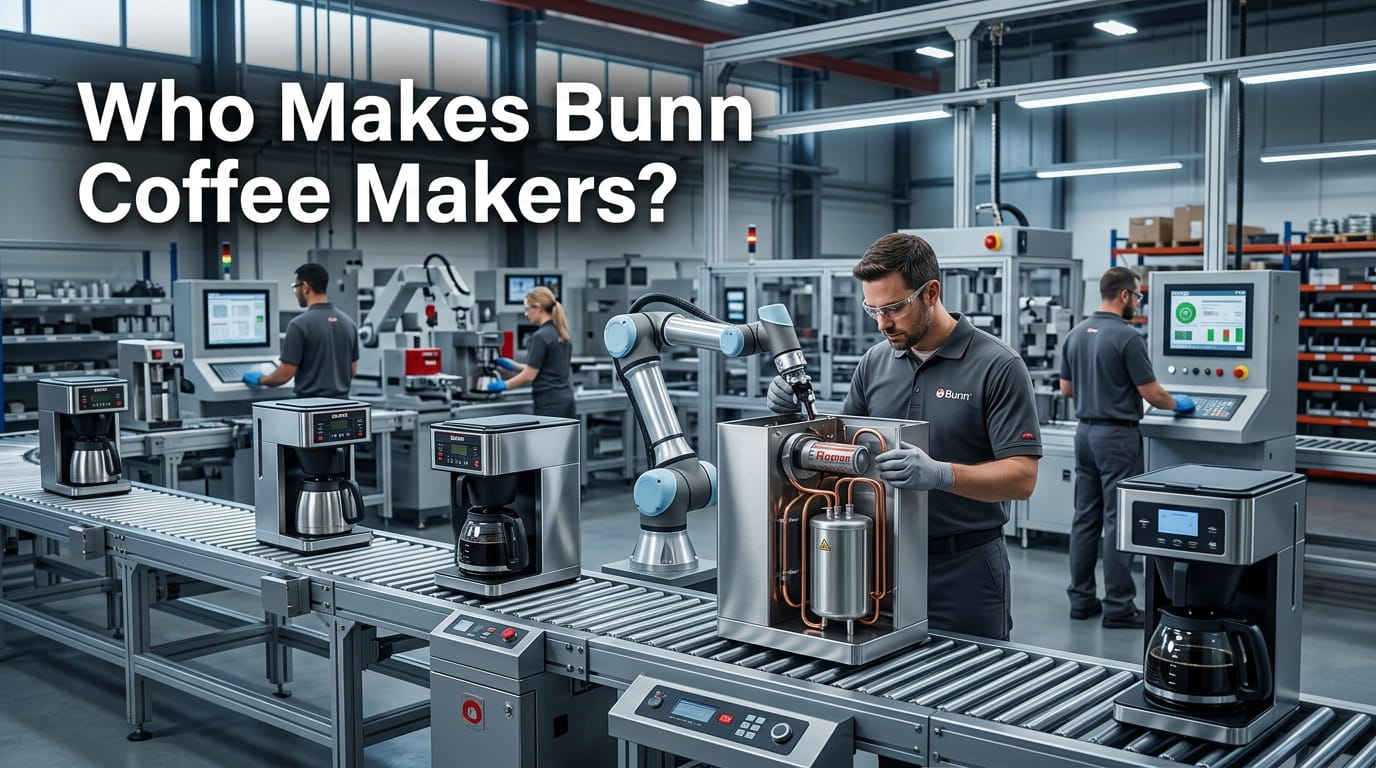
Bunn coffee makers are made by Bunn-O-Matic Corporation, now a subsidiary of Ali Group, with commercial models assembled in Springfield, Illinois and some residential models manufactured overseas.
Bunn is the most recognized brand in commercial drip coffee brewing, found in coffee shops, restaurants, convenience stores, offices, and healthcare facilities across North America, and has been synonymous with fast, high-volume coffee production since it introduced the first pour-over commercial coffee brewer in 1963.
As of March 12, 2026, Bunn is owned by Ali Group, a Milan-based foodservice equipment conglomerate that is the world’s largest group in the foodservice equipment industry, operating approximately 115 brands under its Welbilt portfolio; prior to this Bunn had been a family-owned private company since its founding in 1957.
Knowing who makes Bunn coffee makers helps buyers understand whether the brand’s assembly-in-USA claims are meaningful and whether the 2026 acquisition by a foreign conglomerate changes anything about the products they buy.
This article covers Bunn’s manufacturing process, which products are assembled in the USA, the Ali Group acquisition, and how Bunn compares to Keurig on ownership and production origins.
So let’s get started.
Table of Contents
Who Makes Bunn Coffee Makers?
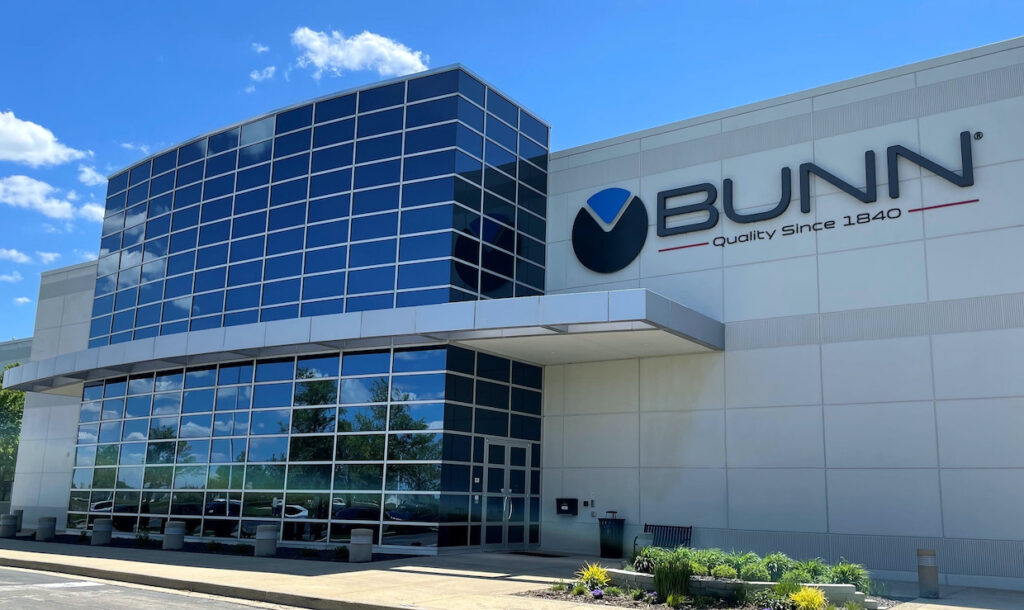
Bunn coffee makers are made by Bunn-O-Matic Corporation, founded by George Bunn in Springfield, Illinois in 1957. Bunn developed the first paper coffee filter for commercial brewing and the first pour-over commercial brewer in 1963. Every Bunn product is designed and tested at the Springfield headquarters, and the majority of commercial equipment models are assembled at U.S. facilities.
Bunn is transparent about its manufacturing: commercial models carry an “Assembled in the USA” designation on their product pages, while residential models that do not carry this label are produced overseas. Components for both product lines are sourced internationally, with Bunn noting it must source some parts globally to remain cost-competitive while maintaining quality standards.
As of March 12, 2026, Bunn was acquired by Ali Group, completing its transition from a five-generation family business to a corporate subsidiary. Ali Group, headquartered in Milan with U.S. operations based near Chicago, operates Bunn within its Welbilt foodservice equipment portfolio alongside brands including Crem, Egro, Rancilio, and Rancilio Specialty.
Where Are Bunn Coffee Makers Made?
Bunn’s commercial coffee brewers, water towers, grinders, and dispensing equipment are assembled in Springfield, Illinois. The Springfield facility has been the company’s manufacturing home since 1957 and remains where Bunn’s core commercial product lineup is produced for the North American foodservice market.
Residential Bunn coffee makers sold at retailers are not all assembled in the U.S. Bunn’s consumer product pages distinguish between U.S.-assembled and non-U.S. models using country of origin disclosures. Buyers who specifically want a U.S.-assembled Bunn brewer should look for the “Designed and Assembled in the USA” notation in the product specifications before purchasing.
Bunn also has offices and distribution facilities in Brazil, Canada, China, Germany, Mexico, the UAE, and the United Kingdom to support its international commercial equipment business. These international locations handle distribution and service rather than primary manufacturing for U.S.-market products.
What Did Bunn Invent?
George Bunn developed the first commercial paper coffee filter in the 1950s, solving a problem that had plagued commercial drip brewing since its introduction. In 1963, Bunn introduced the first pour-over commercial coffee brewer, which used a tank of pre-heated water to dramatically speed up the brewing process compared to existing equipment.
The pour-over system became the standard for commercial foodservice coffee brewing because it could deliver a full pot in under three minutes. This became the template that most commercial drip brewing equipment has followed for over 60 years. Bunn currently holds 42 active patents related to coffee preparation, dispensing equipment, and brewing technology.
What Did the Ali Group Acquisition Change?
Ali Group completed its acquisition of Bunn on March 12, 2026, ending 69 years of family ownership. The terms were not publicly disclosed. Arthur H. Bunn remains CEO under the new ownership structure, and Ali Group has indicated that Bunn will continue operating from Springfield under its existing brand identity within the Welbilt portfolio.
Ali Group is the world’s largest foodservice equipment group by revenue, with approximately 115 brands across commercial cooking, refrigeration, beverage equipment, and warewashing. Adding Bunn gives Ali Group a highly recognized North American commercial coffee equipment brand to complement its existing European-focused coffee brands including Rancilio and Egro.
For current Bunn customers, the acquisition is unlikely to cause immediate product or service changes. Ali Group typically allows acquired companies to operate under their existing management and brand identity for at least the medium term, consistent with how it has handled other acquisitions within the Welbilt portfolio.
Bunn vs. Keurig: Who Makes Each Brand?
Bunn and Keurig serve very different segments of the coffee maker market despite being the two most recognized names in American coffee brewing equipment. Bunn dominates the commercial drip brewing segment, focusing on high-volume, high-speed systems for foodservice environments. Keurig dominates the single-serve pod brewing segment for home and office use.
Keurig is owned by Keurig Dr Pepper (Nasdaq: KDP), the beverage conglomerate headquartered in Burlington, Massachusetts. Keurig manufactures its brewing machines primarily in China through contract manufacturers, while Bunn assembles its commercial equipment in Springfield, Illinois. The domestic assembly distinction is meaningful for commercial buyers who value U.S. manufacturing in their equipment procurement decisions.
For home buyers, the choice between Bunn and Keurig comes down to brewing style preference: Bunn’s home brewers use a heated water tank system for fast drip brewing, while Keurig uses pre-portioned K-Cup pods for single-serve convenience. Both are reliable categories with established consumer bases and strong service networks. For more on coffee maker and appliance origins, see Where Is All-Clad Made and Who Makes Kirkland Coffee.
Frequently Asked Questions About Bunn Coffee Makers
Are Bunn coffee makers made in the USA?
Bunn’s commercial equipment models are assembled in Springfield, Illinois. Residential Bunn coffee makers vary: some carry the “Designed and Assembled in the USA” designation while others are manufactured overseas. Check the product specifications on bunn.com for country of origin before purchasing.
Who owns Bunn coffee makers now?
Bunn is owned by Ali Group, a Milan-based foodservice equipment conglomerate, following an acquisition completed on March 12, 2026. Bunn operates within Ali Group’s Welbilt portfolio. Prior to the acquisition, Bunn had been a family-owned private company since George Bunn founded it in 1957.
What is Bunn famous for inventing?
Bunn invented the first commercial paper coffee filter and the first pour-over commercial coffee brewer, both in the 1950s and 1960s. The pour-over brewer, which uses pre-heated water for fast extraction, became the standard for commercial foodservice drip coffee and remains the basis for Bunn’s commercial product line today.
Is Bunn a good brand for home use?
Yes. Bunn’s home brewers use the same heated water tank system as their commercial equipment, delivering a full carafe in under three minutes and consistently at the correct brewing temperature of 200 degrees Fahrenheit. They are durable, straightforward machines that are particularly popular with high-volume home coffee drinkers who prioritize speed and consistency over pod convenience.

I am Jack Neel, a mechanical engineer, researcher, and writer. I created this website to share my knowledge about different brands and products with you. I research the manufacturers behind the brands and provide you with the information you need to make smart buying decisions.