
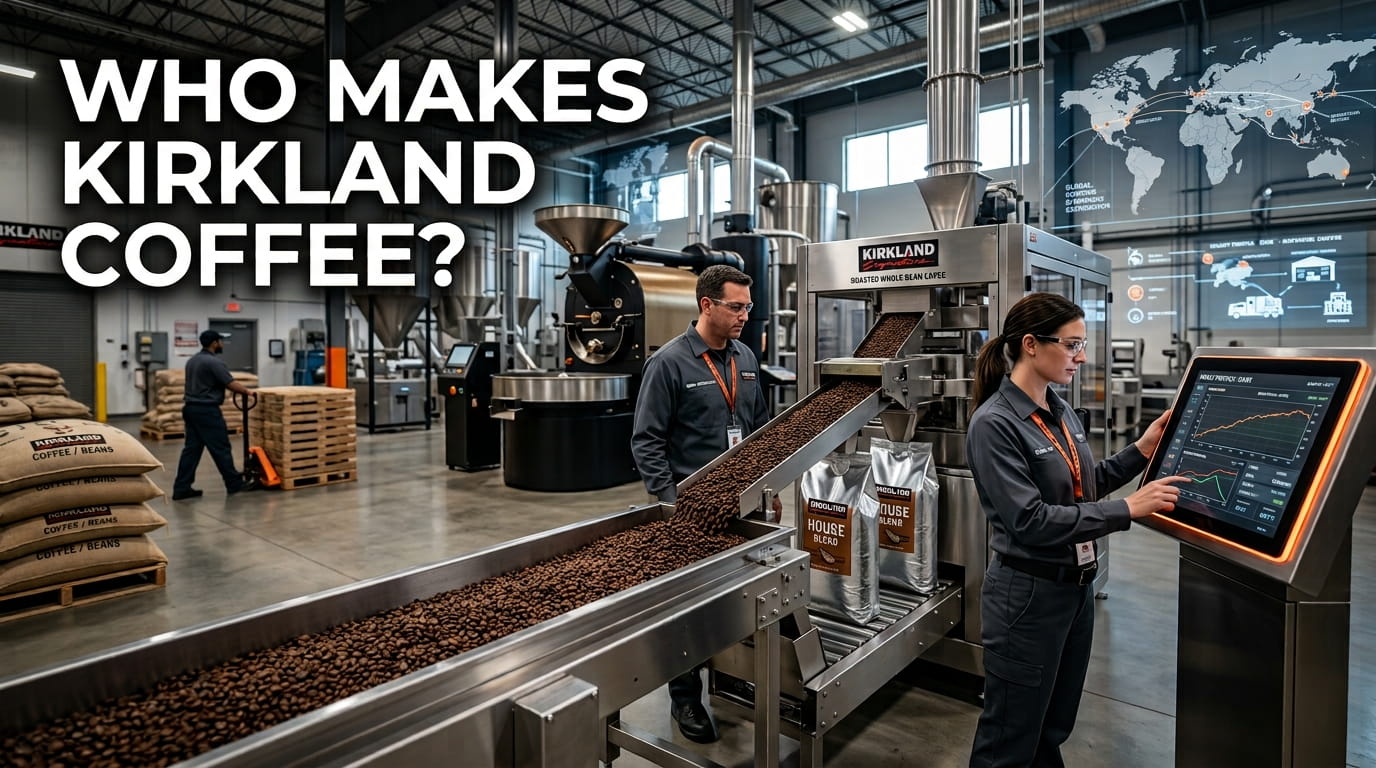
Kirkland Signature coffee is produced by multiple suppliers under contract with Costco, with Starbucks historically roasting several of the most popular whole-bean varieties and Green Mountain Coffee Roasters supplying the Kirkland K-Cup pods.
Kirkland coffee has built a loyal following among Costco shoppers because it delivers flagship-quality roasts at warehouse prices, often 20 to 30 percent below comparable name-brand alternatives sold in the same store.
Kirkland Signature is the private-label brand owned by Costco Wholesale Corporation, a publicly traded company on the Nasdaq exchange under the ticker COST, headquartered in Issaquah, Washington; Kirkland generates an estimated $58 to $60 billion in annual sales for Costco.
Understanding who actually makes Kirkland coffee tells you whether you are getting a premium product at a discount, or simply a generic blend with unfamiliar sourcing.
This article covers the confirmed roasters behind Kirkland’s ground coffee, whole-bean varieties, and K-Cup pods, what changed after 2024, and how Kirkland coffee compares to the branded options sold right next to it at Costco.
So let’s get started.
Table of Contents
Who Makes Kirkland Coffee K-Cups?
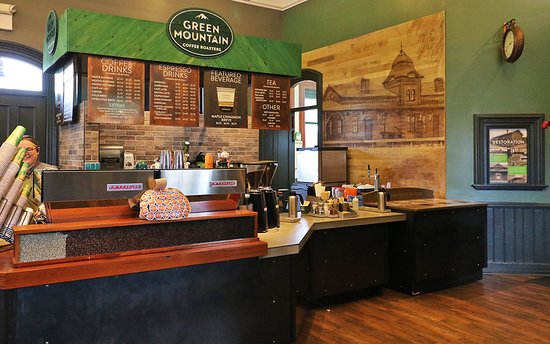
Costco Kirkland Signature K-Cup pods have been manufactured by Green Mountain Coffee Roasters since 2012, under an exclusive partnership that remains in place today. Green Mountain crafted two blends specifically for Costco: Breakfast Blend, a smooth light roast, and Pacific Bold, a robust dark roast, both packed in 100-count boxes.
Green Mountain Coffee Roasters is now part of the Keurig Dr Pepper conglomerate (Nasdaq: KDP), headquartered in Burlington, Massachusetts. According to Keurig Dr Pepper’s Wikipedia entry, the company was formed in 2018 through the merger of Keurig Green Mountain and Dr Pepper Snapple Group and now operates as one of North America’s largest beverage companies. The Keurig logo appears on Kirkland K-Cup packaging to confirm compatibility with Keurig brewers, making the manufacturer’s identity relatively easy to identify compared to other Kirkland products.
Keurig Dr Pepper also owns The Original Donut Shop brand and has licensing partnerships with Starbucks, Twinnings Tea, and other well-known beverage names, giving it deep experience producing private-label coffee at scale for retail partners.
Who Roasted Kirkland Ground and Whole-Bean Coffee?
For years, Costco’s most popular Kirkland Signature ground and whole-bean coffees carried a prominent “Custom Roasted by Starbucks” stamp on the packaging. That applied specifically to the Kirkland Signature House Blend, Espresso Blend, and Decaf House Blend in 2.5-pound bags.
Starbucks removed its branding from Kirkland coffee packaging in late 2023 or early 2024. Costco made no public announcement about the change, and neither company confirmed whether the relationship ended entirely or simply became less visible. As of 2025, those products still appear on Costco shelves without any roaster name on the label.
Other Kirkland coffee varieties have been supplied by different roasters over the years. California-based Rogers Family Co. (also known as San Francisco Bay Coffee) has been identified as a supplier for some Colombian and single-origin Kirkland varieties. Costco appears to source from multiple roasters depending on the variety and season, consistent with how large private-label programs typically operate.
Where Is Kirkland Coffee Made?
The green coffee beans used in Kirkland Signature products are sourced from growing regions around the world, including South America, Central America, Southeast Asia, and East Africa. Kirkland’s Colombian Supremo variety, for example, draws directly on Colombian highland farms.
The actual roasting of Kirkland coffee happens in the United States at facilities operated by whichever roaster Costco contracts with for a given product. Green Mountain’s U.S. roasting operations handle the K-Cups, while other roasters handle ground and whole-bean products at their own domestic facilities.
Costco launched a sustainability certification initiative in partnership with nonprofit Enveritas for some of its Kirkland coffee, which social media speculation briefly confused with a roasting partner. Enveritas is not a roaster and does not produce coffee; it audits supply chains for sustainability compliance.
How Did Kirkland Signature Become a Coffee Brand?
The Kirkland Signature brand launched in 1995 with 30 products, built on the principle of contracting with industry-leading manufacturers to produce premium goods under Costco’s private label at lower prices. Named after Costco’s original Kirkland, Washington headquarters, the brand grew to more than 350 products by 2025 and became one of the highest-revenue private labels in retail history. The history of Green Mountain Coffee Roasters traces back to 1979 in Vermont, long before the Kirkland partnership made it a household name for Costco shoppers.
Coffee was a natural fit for the model because the markup on branded coffee is high, consumers are deeply habituated to specific flavor profiles, and Costco could offer bulk quantities that further deepened the value. The Starbucks partnership, when it was publicly known, gave Kirkland coffee instant credibility because shoppers recognized the roaster behind the label.
Since the Starbucks branding disappeared, some loyal Kirkland coffee buyers have reported noticing a slight change in flavor, though others say the coffee tastes the same, which may suggest a new roaster is producing to the same specification rather than a different recipe altogether.
Kirkland Coffee vs. Starbucks: Is There Still a Difference?
When Starbucks was the confirmed roaster behind Kirkland Signature House Blend, the product was widely regarded as nearly identical to Starbucks-branded coffee at a fraction of the price. The main differences were packaging and the absence of the Starbucks in-store experience; the beans and the roast profile were produced by the same company using Starbucks’s methods.
Today, the comparison is harder to make because the roaster behind the current Kirkland ground and whole-bean lineup is not publicly confirmed. Starbucks still sells its own branded products at Costco, including French Roast and various K-Cup pods, which sit alongside the Kirkland options on the same shelves.
For shoppers who want the clearest value story, the Kirkland K-Cup pods remain the most transparent option: Green Mountain is confirmed as the producer, the Keurig branding appears on the box, and the cost per cup is significantly lower than buying Green Mountain or Starbucks K-Cups separately. For related Costco private-label topics, see Who Makes Kirkland Dog Food and Who Makes Kirkland Motor Oil.
Frequently Asked Questions About Kirkland Coffee
Is Kirkland coffee still made by Starbucks?
As of 2025, Starbucks branding has been removed from Kirkland Signature coffee packaging, and neither company has confirmed whether the roasting relationship continues. The current roaster for Kirkland ground and whole-bean coffee is not publicly identified by Costco.
Who makes Kirkland K-Cup pods?
Kirkland Signature K-Cup pods are made by Green Mountain Coffee Roasters, which is owned by Keurig Dr Pepper. The partnership started in 2012 and produced two blends exclusively for Costco: Breakfast Blend and Pacific Bold.
Is Kirkland coffee good quality?
Kirkland coffee has a strong reputation for quality because Costco requires its private-label suppliers to meet or exceed the standards of comparable name-brand products. When Starbucks was the confirmed roaster, the coffee was widely praised as an excellent value. K-Cup buyers benefit from Green Mountain’s established quality and the lower per-cup price that comes with buying in bulk at Costco.
Where is Kirkland Signature coffee roasted?
Kirkland K-Cups are roasted in the United States by Green Mountain Coffee Roasters. The roasting location for Kirkland ground and whole-bean coffee depends on which supplier Costco is using at a given time, but production is believed to occur domestically.

I am Jack Neel, a mechanical engineer, researcher, and writer. I created this website to share my knowledge about different brands and products with you. I research the manufacturers behind the brands and provide you with the information you need to make smart buying decisions.