
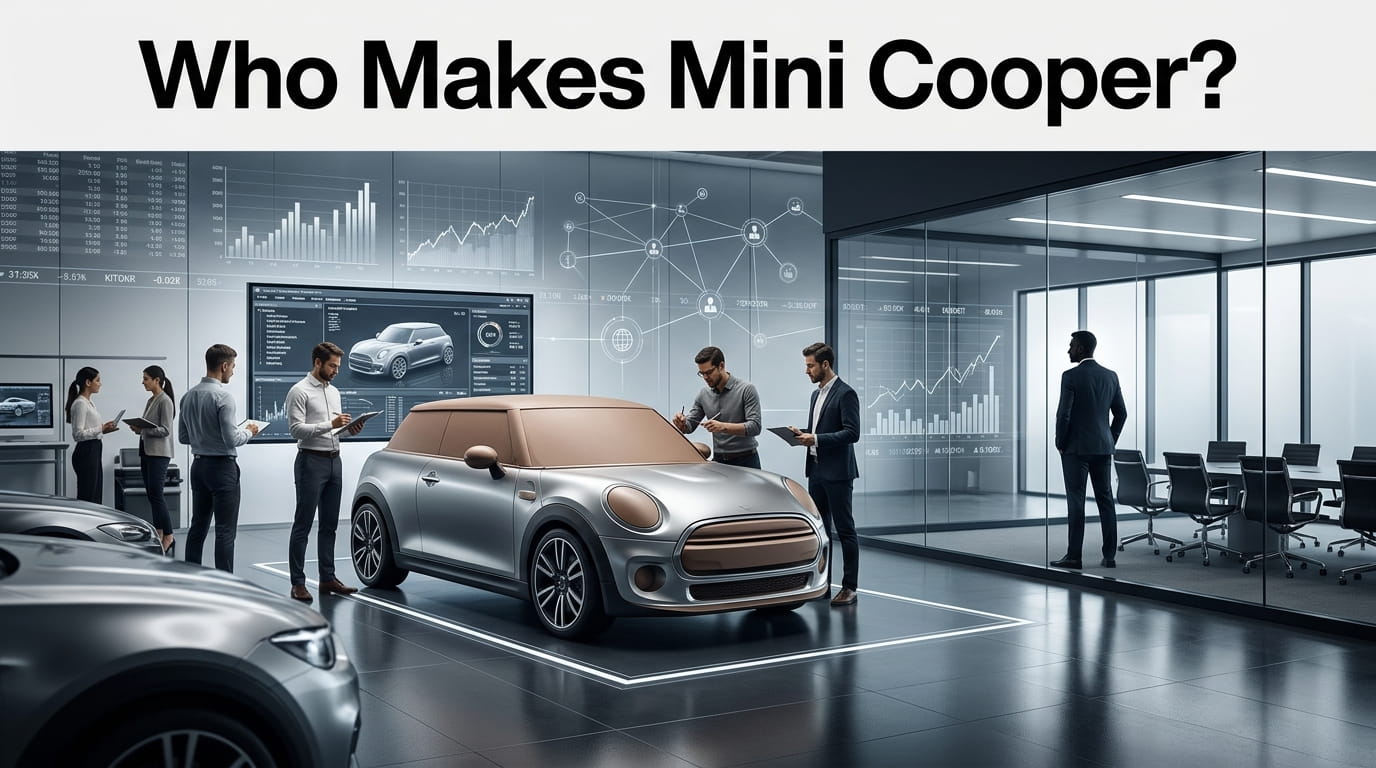
MINI Cooper vehicles are primarily made by the BMW Group, the German automotive conglomerate that also owns BMW and Rolls-Royce Motor Cars.
MINI is known for its go kart driving character, its distinctive retro modern styling rooted in the original 1959 Mini designed by Sir Alec Issigonis, and a level of personalization that allows buyers to configure their car in millions of combinations of colors, trims, and options.
MINI is a wholly owned brand within the BMW Group, with its primary manufacturing home at Plant Oxford in England, where the first modern BMW era MINI rolled off the production line on April 26, 2001.
Knowing who makes MINI Cooper helps buyers understand the engineering depth and quality standards behind what can appear to be a small, fun car, and appreciate how deep the BMW Group’s investment in the MINI brand actually goes.
This article covers MINI’s ownership, how BMW came to own the brand, where MINI vehicles are made today, the current model lineup, and what the electric future holds for the brand.
So let’s get started.
Table of Contents
Who Owns MINI Cooper?
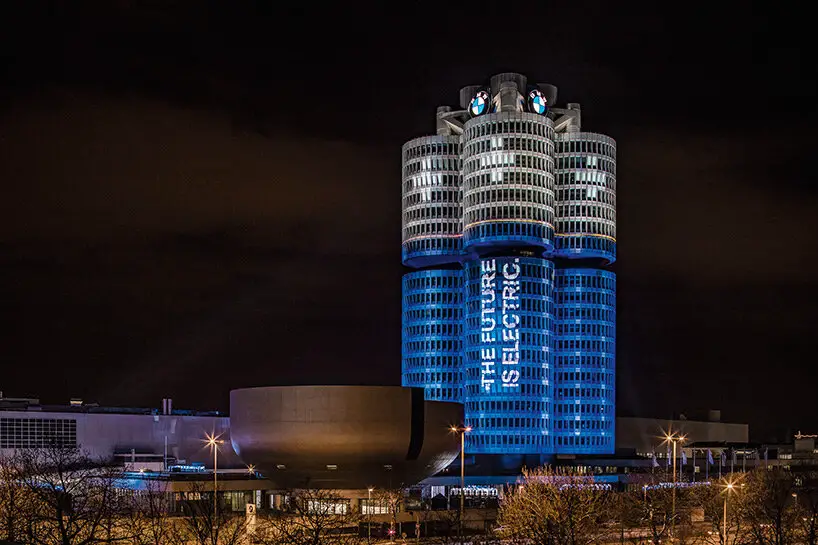
MINI is owned by BMW Group, the German multinational automotive company headquartered in Munich, Bavaria. BMW Group owns three automotive brands: BMW, MINI, and Rolls-Royce Motor Cars.
Each brand operates independently in terms of design identity, customer experience, and market positioning, but all draw on shared BMW Group engineering, manufacturing, and financial resources.
BMW Group acquired the MINI name as part of its takeover of the Rover Group in 1994.
When BMW sold most of the Rover Group to the Phoenix Consortium in 2000, it retained two key assets: the MINI brand and the Plant Oxford factory. BMW invested heavily in redesigning the MINI from scratch and launched the new model in 2001.
By 2026, Plant Oxford had produced more than 13 million cars under the MINI name across 14 different brands over its entire history. The plant celebrated 25 years of modern MINI production in April 2026, marking a quarter century of BMW’s stewardship of the British brand.
When Did BMW Take Over MINI?
The original Mini was created by the British Motor Corporation in 1959, designed by Sir Alec Issigonis as an economical small car for British drivers. It became one of the most iconic cars in automotive history and a symbol of British pop culture through the 1960s and 1970s.
BMW acquired the Rover Group, which owned the Mini brand, in 1994. After struggles with the broader Rover business, BMW sold off most of Rover in 2000 but retained the Mini name and Plant Oxford specifically because it saw long term potential in a reinvented premium version of the iconic brand.
The first BMW era MINI launched in April 2001. Over the following 25 years, more than 4.4 million MINIs were produced at the Oxford plant alone, with the brand expanding from a single model into a full family of vehicles including the Clubman, Countryman, Convertible, and Aceman.
Where Are MINI Cooper Cars Made?
The core MINI Cooper models are assembled at Plant Oxford in Oxford, England. The Cooper 3-door, Cooper 5-door, and Cooper Convertible are all built at this facility. Three BMW Group UK sites contribute to every Oxford built MINI: Plant Swindon in Wiltshire produces the body pressings and sub-assemblies, while Plant Hams Hall in North Warwickshire manufactures the petrol engines.
The MINI Countryman is assembled at BMW Group Plant Leipzig in Germany. The Countryman uses a larger platform more closely aligned with BMW’s own product family, which makes Leipzig the natural production home given its BMW infrastructure.
Electric MINI models for China are assembled at a joint venture factory in Zhangjiagang, Jiangsu Province, operated with Great Wall Motor. This facility produces the Aceman electric model for Chinese market buyers.
What Models Does MINI Currently Offer?
MINI’s current global lineup spans several body styles. The Cooper is available as a 3-door hatchback, 5-door hatchback, and Convertible, all assembled in Oxford. The Aceman is a compact crossover available in petrol and fully electric versions. The Countryman is the brand’s largest model, a midsize crossover built in Leipzig.
The John Cooper Works performance variants are available across most models and represent the pinnacle of MINI’s performance tuning, applying sportier suspension, more powerful engines, and aggressive exterior styling to the standard lineup.
In 2025, MINI recorded global sales of 288,290 vehicles. Battery electric vehicles accounted for more than one third of total deliveries, with electric penetration exceeding 50% in markets including the Netherlands, Turkey, and Sweden.
MINI vs BMW vs Rolls-Royce: Who Makes Each Brand?
All three brands belong to BMW Group. BMW is the core mainstream premium brand, manufactured primarily at plants in Munich, Dingolfing, Regensburg, and Leipzig in Germany, plus facilities in South Africa, China, and the US.
Rolls-Royce Motor Cars is the ultra luxury brand, manufactured exclusively at the Goodwood facility in West Sussex, England. MINI is the compact premium brand, manufactured primarily in Oxford, England.
Despite sharing corporate ownership, the three brands are completely distinct in character, customer, and price point. A MINI Cooper starts from around $30,000. A BMW 3 Series starts from around $44,000.
A Rolls-Royce Ghost starts from around $330,000. BMW Group manages these three identities without allowing any overlap to dilute each brand’s positioning.
All three brands share BMW Group engineering standards, safety testing, and supply chain resources, which is why a MINI benefits from the same rigorous quality benchmarks as a vehicle costing ten times the price.
Is MINI Cooper a Reliable Car?
MINI has a mixed reliability record in consumer surveys. Older models from the 2000s and 2010s were frequently cited for higher than average maintenance costs, particularly around cooling systems and electronics.
More recent generations have received improved scores as BMW Group applied greater reliability engineering to the platform.
The brand’s new generation of vehicles, including the Cooper 3-door launched in 2024 and the Aceman, are built on newer architecture with simplified electronics. Early reception from owners and reviewers has been more positive on quality than earlier generations.
Buyers considering MINI ownership frequently note that maintenance costs, particularly out of warranty, can be higher than non-premium brands. The driving experience and ownership community are consistently cited as strong positives that offset the higher cost of ownership for dedicated MINI fans.
What Is Next for MINI?
Plant Oxford is investing more than £600 million to prepare for all electric MINI production from 2026. The Cooper 3-door and Aceman electric models will be built at Oxford alongside petrol versions on shared production lines. By 2030, Oxford is planned to produce exclusively electric vehicles.
BMW Group has committed to spending more than £3 billion total across its three UK manufacturing sites, Swindon, Hams Hall, and Oxford, since 2000. That long term investment signals BMW’s intention to keep MINI production British for the foreseeable future despite the brand’s ongoing electrification.
MINI has also introduced the Paul Smith Edition for 2026 as part of its celebration of 25 years of modern production, continuing a tradition of collaborating with British designers and cultural figures that keeps the brand connected to its British identity even under German ownership.
Frequently Asked Questions About Who Makes MINI Cooper
Is MINI Cooper made in the UK?
Yes. The core MINI Cooper models, including the 3-door, 5-door, and Convertible, are assembled at Plant Oxford in England. The MINI Countryman is built in Germany at BMW Group’s Leipzig plant. Electric MINI models for China are made at a joint venture in Zhangjiagang, China.
Is MINI a German or British car?
MINI is a British brand owned by a German company. The original Mini was a British invention from 1959. BMW Group, a German corporation, has owned the MINI brand since 1994 and the Oxford plant since 2001. Most MINIs are still built in Britain, giving the car a genuine claim to both British heritage and German engineering standards.
When did BMW start making MINI?
BMW launched its modern version of MINI at Plant Oxford on April 26, 2001. BMW had owned the brand since 1994, spending seven years redesigning the car from the ground up before launching what became the most successful version of MINI in the nameplate’s history.
Does MINI share parts with BMW?
Yes. MINI shares engineering platforms, engines, and electronic systems with BMW vehicles in the same vehicle size class. The MINI Countryman and the BMW X1 share a platform and powertrains, for example. This shared engineering is a key reason why MINI benefits from BMW’s quality standards and safety technology despite being a much smaller brand.

I am Jack Neel, a mechanical engineer, researcher, and writer. I created this website to share my knowledge about different brands and products with you. I research the manufacturers behind the brands and provide you with the information you need to make smart buying decisions.