
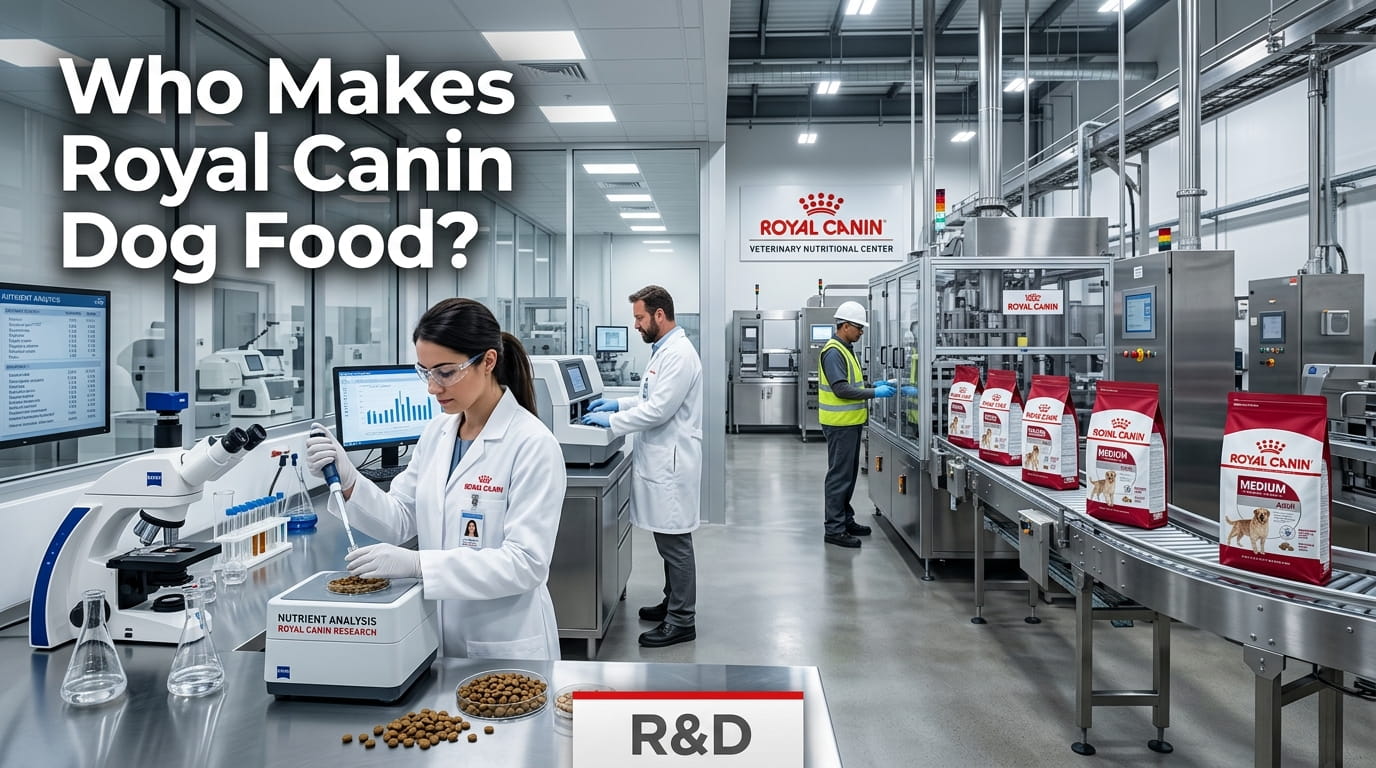
Royal Canin dog food is made by Mars, Incorporated, a global leader in confectionery, food, and pet care. For other dog food brand comparisons, also read about Blue Buffalo dog food, Kirkland dog food, and 4health dog food. and pet care products.
Royal Canin is a well-known pet food brand, recognized for its focus on breed-specific, age-specific, and health-specific nutritional formulas for dogs and cats.
Mars, Inc. is a privately held American multinational manufacturer. It owns many well-known brands across various industries, including numerous prominent names in the pet food sector.
What does Mars’s ownership mean for Royal Canin’s product philosophy and availability?
This article will discuss Royal Canin’s ownership, explore its manufacturing practices, detail its unique approach to pet nutrition, and examine its standing within the wider pet food market.
So let’s get started.
Table of Contents
Who Owns Royal Canin Pet Food?

Royal Canin joined the Mars, Incorporated family in 2001. This acquisition brought the specialized pet nutrition brand into one of the world’s largest consumer goods companies.
Mars, Inc. is a privately-held company headquartered in McLean, Virginia. Its portfolio extends far beyond pet food, including popular candy, food, and even pet services.
The acquisition enabled Royal Canin to expand its research and development and grow its global distribution, benefiting from Mars’s extensive resources.
Despite being part of a large conglomerate, Royal Canin has largely maintained its distinct brand identity and scientific approach to pet nutrition.
This ownership structure provides Royal Canin substantial backing for its research, manufacturing, and marketing efforts, supporting its position as a premium pet food brand.
Where is Royal Canin Dog Food Manufactured?
Royal Canin maintains several manufacturing facilities worldwide to produce its full range of dog and cat food products.
These facilities are strategically located to serve different regional markets, ensuring freshness and efficient distribution.
Key manufacturing sites are found in the United States, France (the brand’s origin country), Canada, Argentina, Brazil, Poland, Russia, and South Africa, among others.
Royal Canin maintains strict quality control and safety protocols at all its manufacturing plants, adhering to international standards for food production.
Each facility is designed to meet the precise specifications required for its specialized formulas, maintaining consistency across all product lines.
Is Royal Canin Considered a High-Quality Dog Food Brand?
Royal Canin is positioned as a premium pet food brand, recognized for its scientific approach to nutrition.
The brand sets itself apart by offering highly specific formulas tailored to particular breeds, sizes, ages, and health conditions.
Product development involves extensive research conducted by veterinarians, nutritionists, and breeders, focusing on precise nutrient profiles for targeted needs.
Many veterinarians recommend Royal Canin for specific dietary requirements, such as managing sensitivities, supporting joint health, or aiding recovery.
However, consumer opinions vary, as with any major brand. Some pet owners find the specialized diets highly effective, while others may prefer brands with different ingredient philosophies or price points.
Perceptions of quality largely tie to its effectiveness in addressing specific health concerns and its consistent formulation.
What is the History of Royal Canin?
Royal Canin was founded in 1968 by French veterinary surgeon Jean Cathary. He developed a cereal-based diet to treat skin and coat issues in dogs.
This initial success led him to establish a pet food production facility, driven by a vision of nutrition as a precise science.
From its inception, the brand focused on scientific research and tailored nutrition, setting itself apart from general pet food manufacturers.
During the 1970s and 1980s, Royal Canin expanded its product lines and international presence, building a reputation for veterinary-grade diets.
The company continued to grow, investing heavily in research and development, until its acquisition by Mars, Incorporated in 2001. This acquisition further propelled its global reach and capabilities.
What Other Pet Food Brands Does Mars, Inc. Own?
Mars, Incorporated is a dominant force in the global pet care industry. It owns a wide array of well-known pet food brands alongside Royal Canin.
Its extensive pet care portfolio includes popular names such as Pedigree, a widely available brand known for its dog food and treats.
Whiskas is another prominent Mars brand specializing in cat food, offering a variety of wet and dry options.
Other notable brands under the Mars Petcare umbrella include IAMS and Eukanuba, which focus on targeted nutrition for dogs and cats.
Nutro, Greenies (dental treats), and Temptations (cat treats) are also part of the Mars family. This further solidifies its presence across various segments of the pet market.
This broad ownership demonstrates Mars’s significant investment and influence in the global pet food and pet care sector.
How Does Royal Canin Develop Its Formulas?
Royal Canin’s approach to formula development is rooted in scientific research and collaboration with veterinary experts.
A team of nutritionists, veterinarians, and food scientists meticulously study the specific nutritional needs of different breeds, ages, and health conditions.
The brand conducts extensive research at its facilities, including the Royal Canin Research and Development Center in Aimargues, France.
The development process often involves partnerships with universities, breeders, and veterinary professionals to gather insights and validate formulas.
Each ingredient is chosen not only for its individual nutrient content but also for its overall impact on a dog’s health, digestibility, and nutrient bioavailability.
This commitment to precision nutrition means every formula is carefully balanced. It delivers targeted health benefits, from promoting a healthy coat to supporting digestive health or managing specific medical conditions.
The focus remains on nutrient composition rather than solely on trendy ingredients, aligning with its scientific philosophy.
Where Can You Buy Royal Canin Products?
Royal Canin products are available through specialized distribution channels, reflecting its premium and often veterinary-recommended status.
You can typically find Royal Canin dog food at veterinary clinics, where therapeutic diets are often prescribed for specific health issues.
Specialty pet stores, both independent and larger chains, also carry a selection of Royal Canin’s breed-specific and lifestyle formulas.
Online retailers are another key channel, with major pet supply websites and general e-commerce platforms offering the full range of Royal Canin products.
This targeted distribution ensures that consumers seeking specific nutritional solutions can access the appropriate formulas, often with guidance from pet care professionals.
Is Royal Canin Worth the Price?
The perception of Royal Canin’s value often correlates with its specialized nature and an individual pet’s specific needs.
Royal Canin products are generally priced at a premium compared to many mainstream pet food brands. This is due to their extensive research and development and targeted formulas.
For pet owners whose dogs have specific dietary requirements, allergies, or health conditions, the precise nutrition offered by Royal Canin can be highly beneficial.
Many veterinarians and pet specialists recommend Royal Canin for its consistent formulations and proven effectiveness in managing various health concerns. For some owners, this justifies the cost.
Ultimately, whether Royal Canin is “worth it” depends on your dog’s individual needs, your veterinarian’s advice, and your pet care budget.
Its value often appears in the tangible health improvements or maintenance it provides for pets requiring highly specific diets.

I am Jack Neel, a mechanical engineer, researcher, and writer. I created this website to share my knowledge about different brands and products with you. I research the manufacturers behind the brands and provide you with the information you need to make smart buying decisions.